

The complete guide
Floor Puzzles For Kids, A Practical Buyer's Guide
The problem with most kids' puzzles
Buy a jigsaw for a young child and you usually hit one of two walls. Either the piece count is so low that it is done in four minutes and never touched again, or the pieces are so small that tiny fingers cannot place them and the whole thing ends in a sulk. Neither is much fun for the child or the adult who has to pretend it is going well.
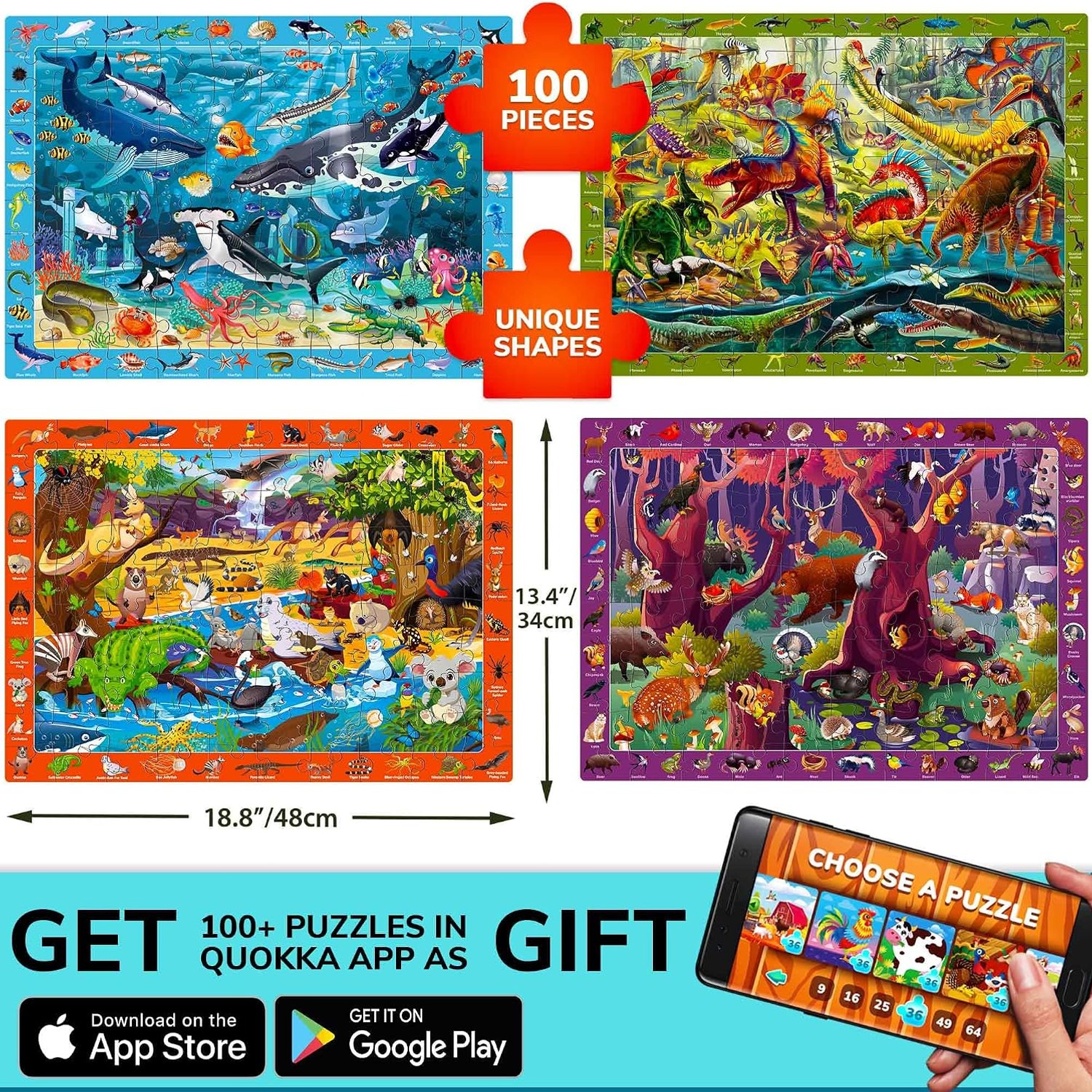
Floor puzzles sit between those two problems. They keep a respectable piece count, in this case 100, but spread it across a much larger finished picture. Each of the three puzzles in this set builds to 70 cm long by 50 cm wide. Divide that area by 100 and you get pieces that are genuinely easy to pick up, turn over and press into place. The challenge stays, the frustration drops.
That is the whole idea. A child gets the satisfaction of a hundred piece build without the fine motor demands of an adult jigsaw. It is why the best floor puzzles for kids tend to stay in circulation longer than the small boxed ones.
What you actually get
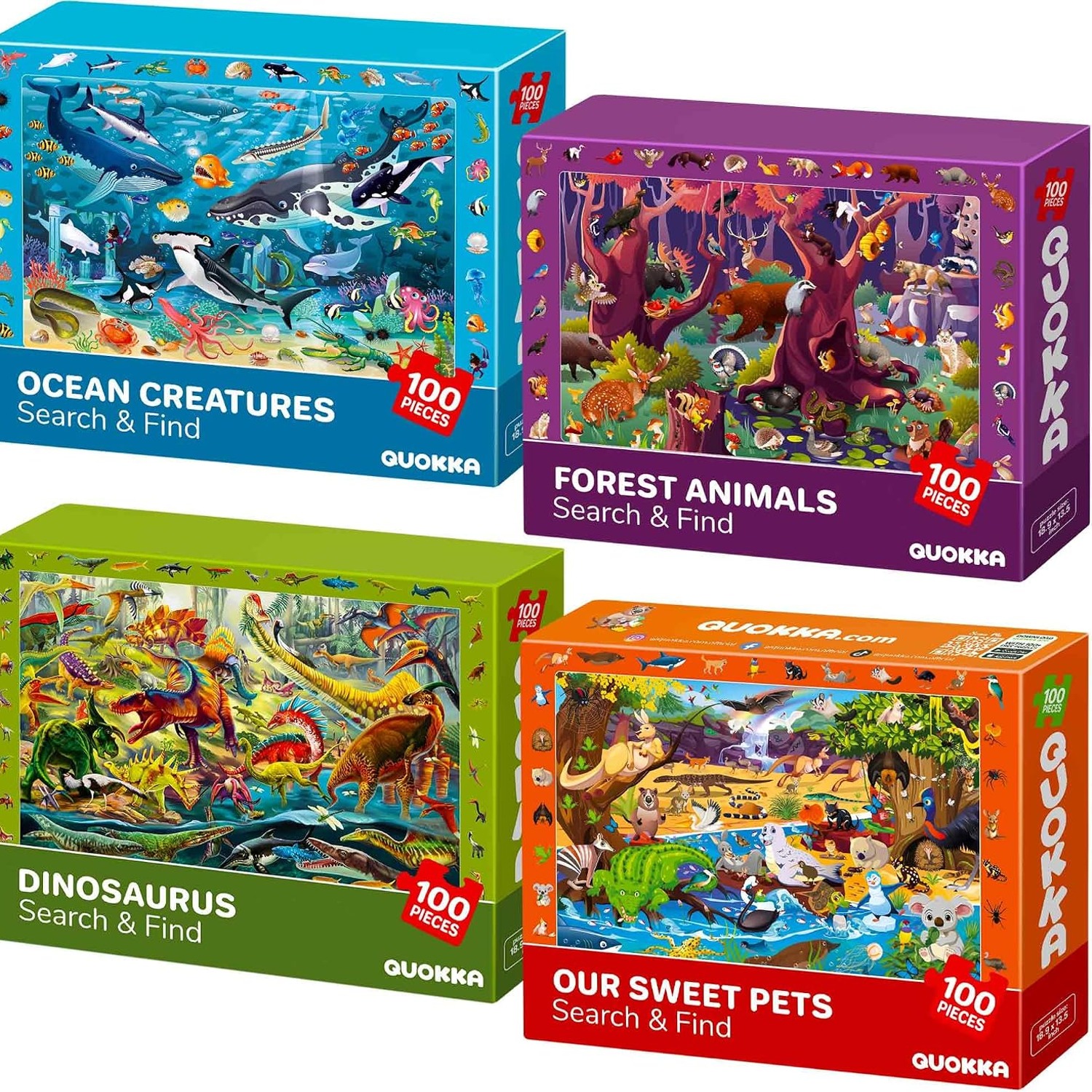
Three separate puzzles, each with 100 pieces, each in its own box. The artwork covers ocean life, wild animals and dinosaurs. That spread is deliberate. Children's interests swing hard and fast, and a child who is bored of sea creatures this month may be deep into a dinosaur jigsaw puzzle for kids by the next. Three themes buy you time.
The pieces are cardboard, described by the manufacturer as thick cardboard. The finished puzzle is rectangular. There is no assembly, no batteries, nothing to charge. The total set weighs 939 g and the packaging measures 34 x 47.8 x 0.1 cm, which is slim enough to slide onto a shelf or into a suitcase.
The manufacturer recommends ages 36 months through to 10 years and rates the skill level as beginner. That is a wide range, and in practice the lower end needs help while the upper end will fly through. More on that below.
How the pieces are cut, and why it matters
This set uses varied piece shapes rather than one repeating interlocking template. It sounds like a small detail. It is not.
When all the pieces look roughly the same, a child learns to try every piece in every gap, and eventually to push. You end up with a puzzle that is technically finished but bulging in the middle, and a child who has learned brute force rather than observation. When shapes genuinely differ, a piece either slots in or it obviously does not. The child starts looking at the shape and the colour before reaching, which is the actual skill a jigsaw is meant to build.
It also makes the finish cleaner. A puzzle with distinct shapes lies flat, and a flat 70 cm x 50 cm picture is far better for the second half of the activity.
The search and find part
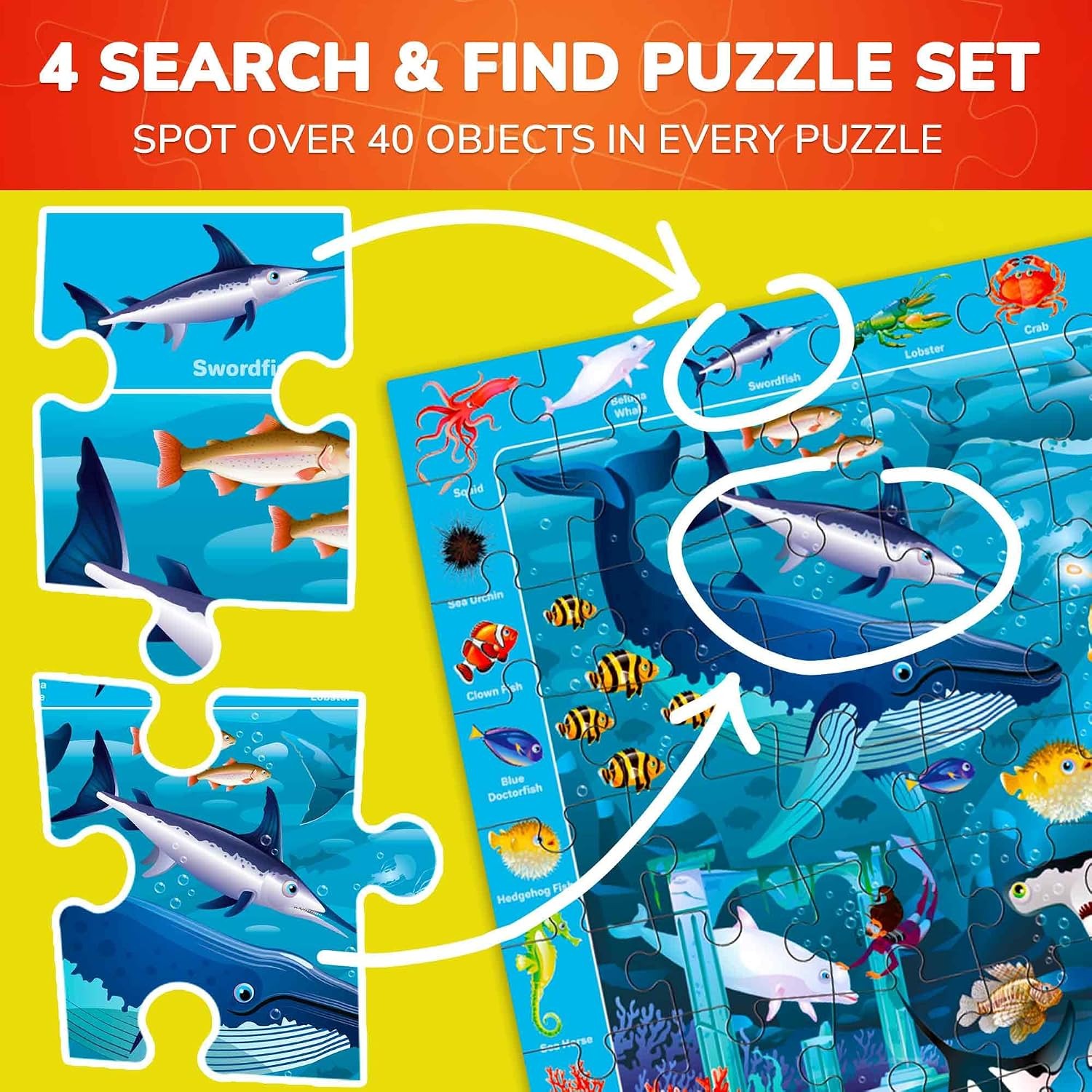
Once the puzzle is built, you are not done. These scenes are packed with small details, and that opens up a different kind of play. An adult names something, the child hunts for it on the picture. Then they swap and the child sets the challenges.
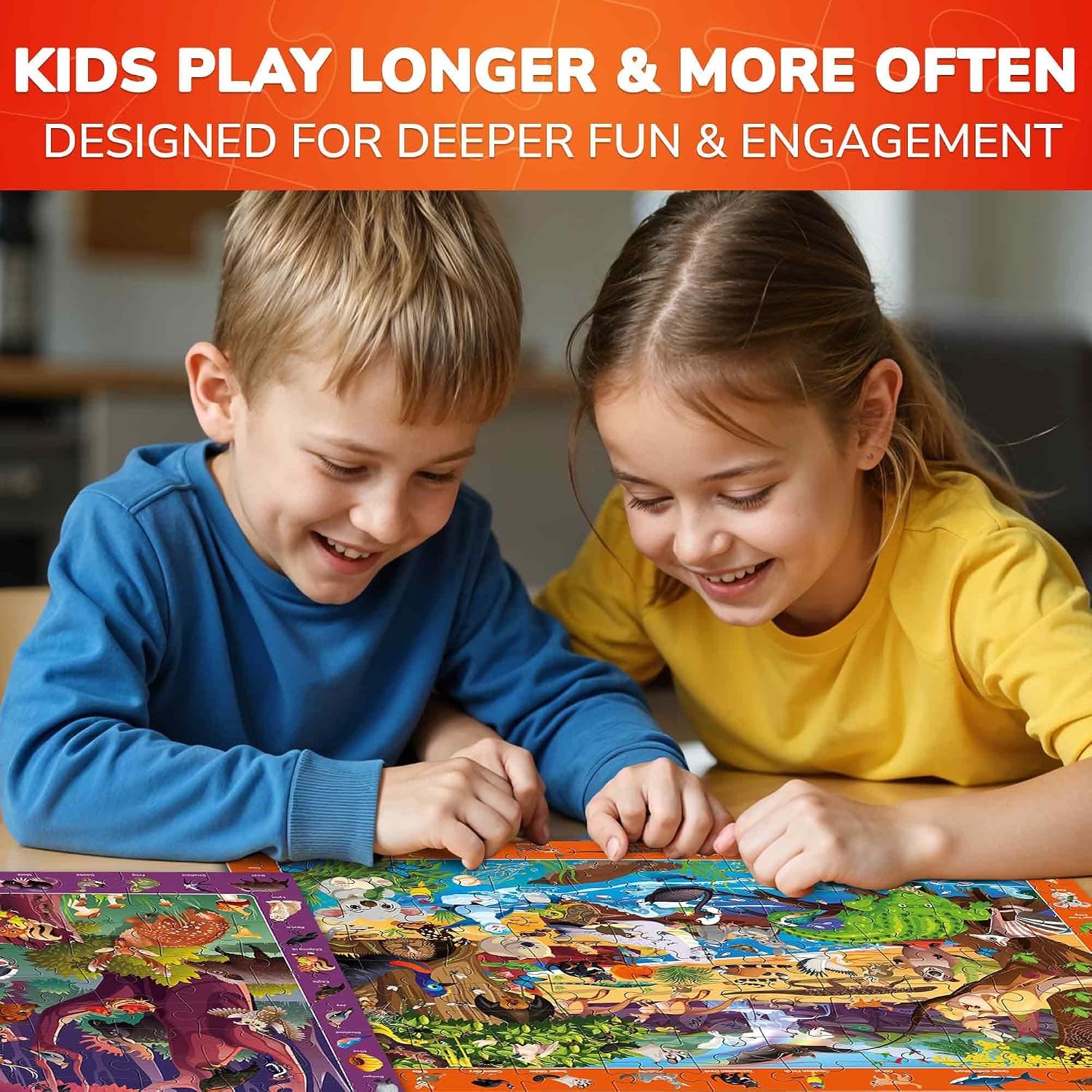
This is where a lot of the value hides. A search and find puzzle keeps earning its place long after the building is finished, and it pulls in vocabulary and attention in a way that feels like a game rather than a lesson. It is also one of the few activities where a four year old and an eight year old can play together on equal terms, because spotting a small fish in a crowded ocean scene does not depend much on age.
Matching the puzzle to the child
A three year old at the bottom of the recommended range will want company. Set them up with the edge pieces or one corner section while you handle the rest, and let them place the last piece. That last piece matters more to a small child than the ninety nine before it.
Four and five year olds can usually take a bigger share, especially with the box lid propped up as a reference. This is about the age where the best jigsaw puzzle set for preschoolers starts feeling too easy and 100 pieces feels like a real achievement.
Six to eight is the comfortable middle. Most children in that band will complete a puzzle in one sitting with minimal help, and will want to do all three in a weekend. By nine or ten, these become quick builds, which is fine for a wet afternoon or a younger sibling to share.
How to choose between this and other options
A few things worth weighing up.
Space is the first. A large floor jigsaw set needs a clear 70 cm by 50 cm area. If your living room is wall to wall furniture and your table is always covered, small tabletop puzzles may be the more realistic buy. If you have carpet and a rug to work on, floor puzzles win easily.
Piece count is the second. If your child has only ever done 24 or 48 piece puzzles, 100 is a step up but not a leap, especially with larger pieces. If they are already breezing through 100 piece boxes with small pieces, they may want something harder.
Number of children is the third. A three pack is better value and far less argumentative in a household with more than one child, because nobody has to wait their turn.
Looking after them
Cardboard is sturdy but not waterproof. Keep the build area free of drinks and snacks, which is easier said than done but saves a lot of grief. If a piece gets bent, flatten it under a heavy book overnight and it usually recovers.
Store each puzzle in its own box, and count the pieces back in before closing the lid. Mixed sets are a pain to separate and a missing piece discovered six months later is a small tragedy. Keep the boxes flat and somewhere dry rather than crushed under heavier toys.
Wipe any marks with a barely damp cloth and dry straight away. Never soak a piece.
Giving it as a gift
Three puzzles in one purchase reads as a generous present without taking up much room under a tree or in a bag. The themes cover enough ground that you do not need to know a child's current obsession to get it right. There is no assembly, no batteries to find at the last minute, and nothing that needs an adult to set up before the child can start.
It also works for the group gift problem, where a few families chip in. A puzzle gift set for children gives you something substantial at a sensible price point and does not add another noisy plastic thing to the house.
The short version
Three 100 piece puzzles, each finishing at 70 cm x 50 cm, in thick cardboard, with ocean, animal and dinosaur artwork designed to be searched as well as built. Recommended for ages three to ten, beginner level, no assembly. Light at 939 g and slim enough to store or travel with.
If you want a jigsaw that a young child can actually finish, and that keeps giving something back once it is done, this is a sensible place to look.