
The complete guide
Choosing a Wooden Cutting Fruit Set, A Parent's Buying Guide
The problem with pretend cooking
Ask any parent of a three year old and you will hear the same story. The play kitchen arrives, it looks wonderful, and within a week it is a cupboard full of nothing. The child opens the oven, finds it empty, and goes back to emptying the real pantry instead.
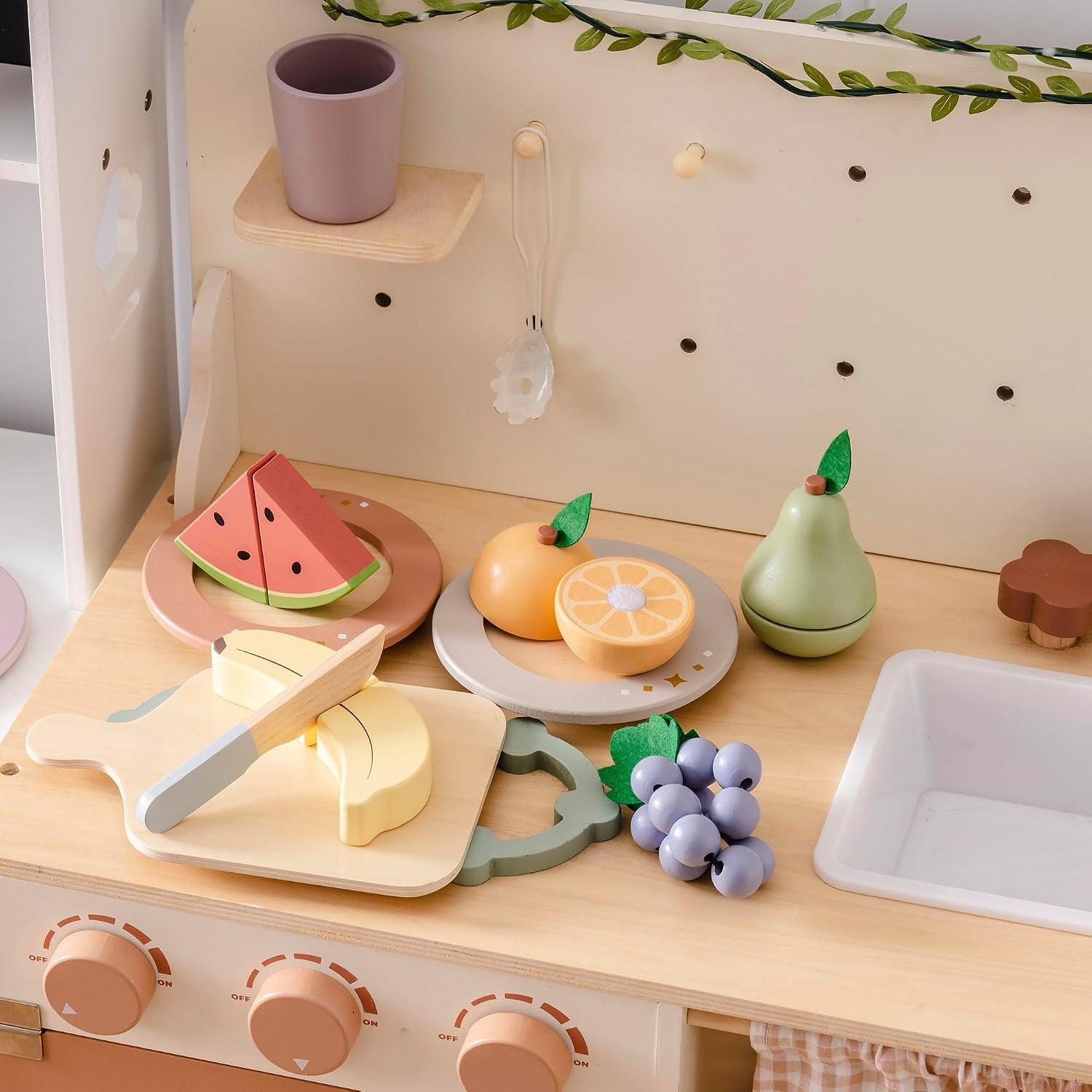
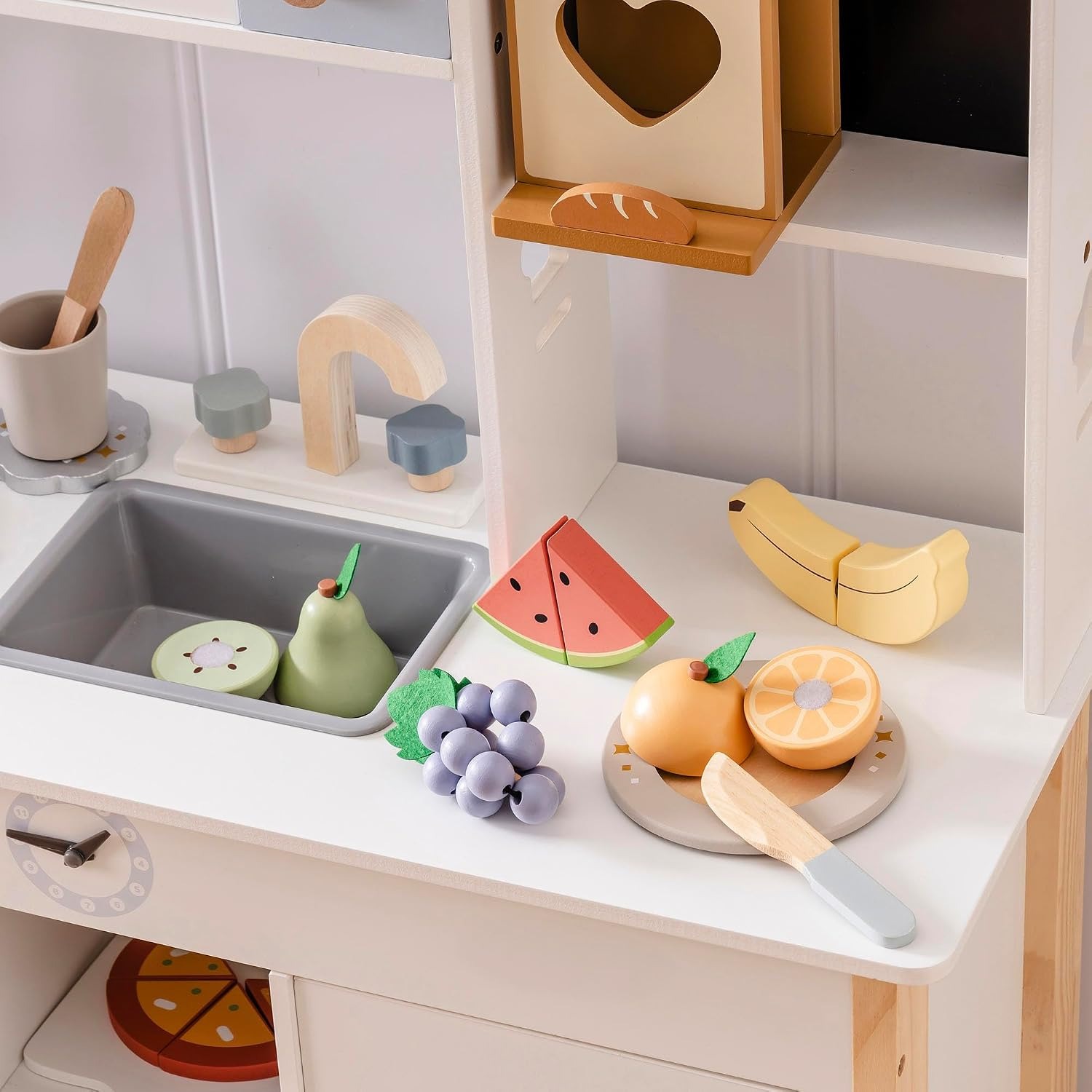
Pretend cooking needs props. Not fancy ones, just things a child can pick up, move, change and serve. That is the gap a wooden cutting fruit set fills. It gives the kitchen a purpose. Suddenly there is something to chop, something to put in the pot and something to hand to you on a plate while you are told it is very hot and you must blow on it.
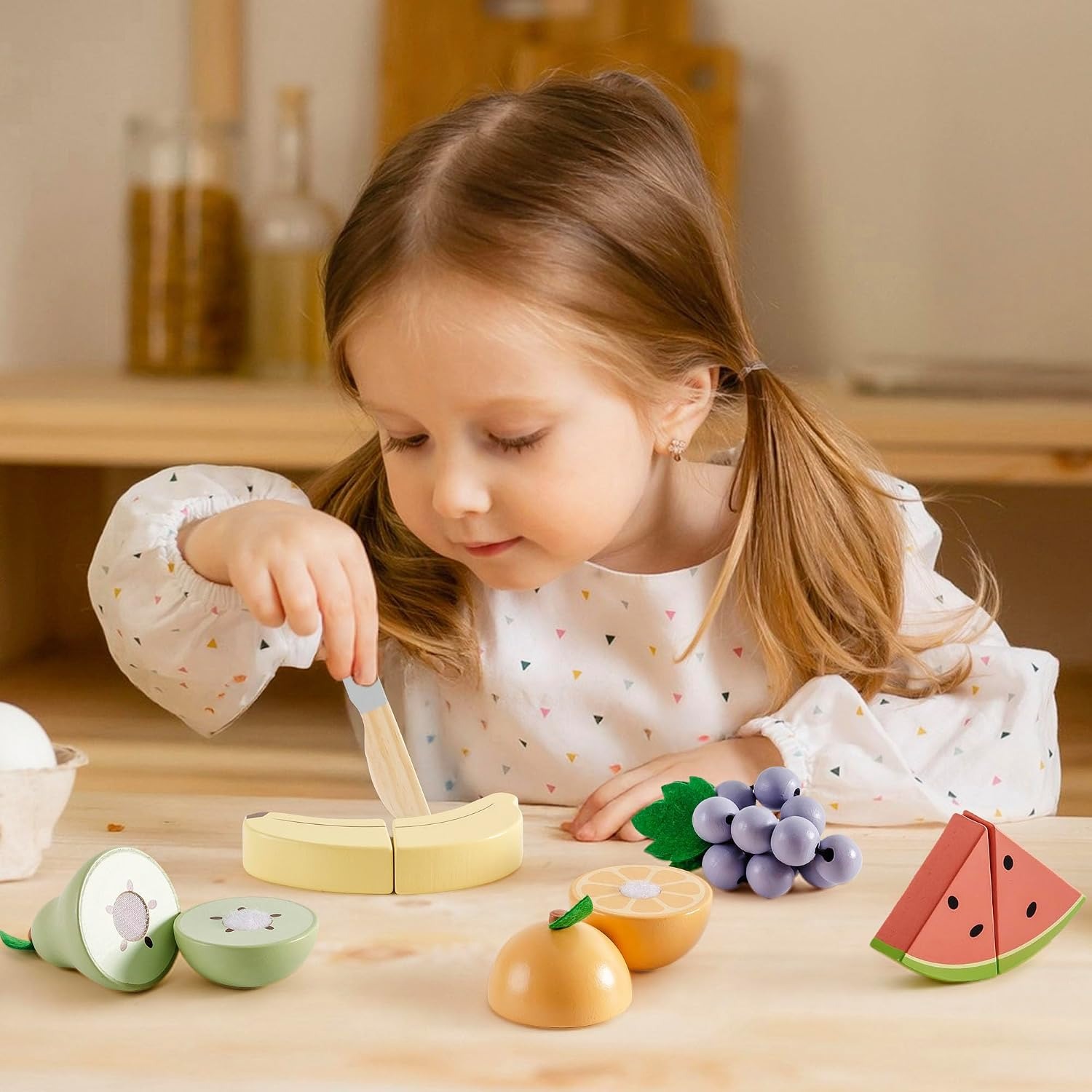
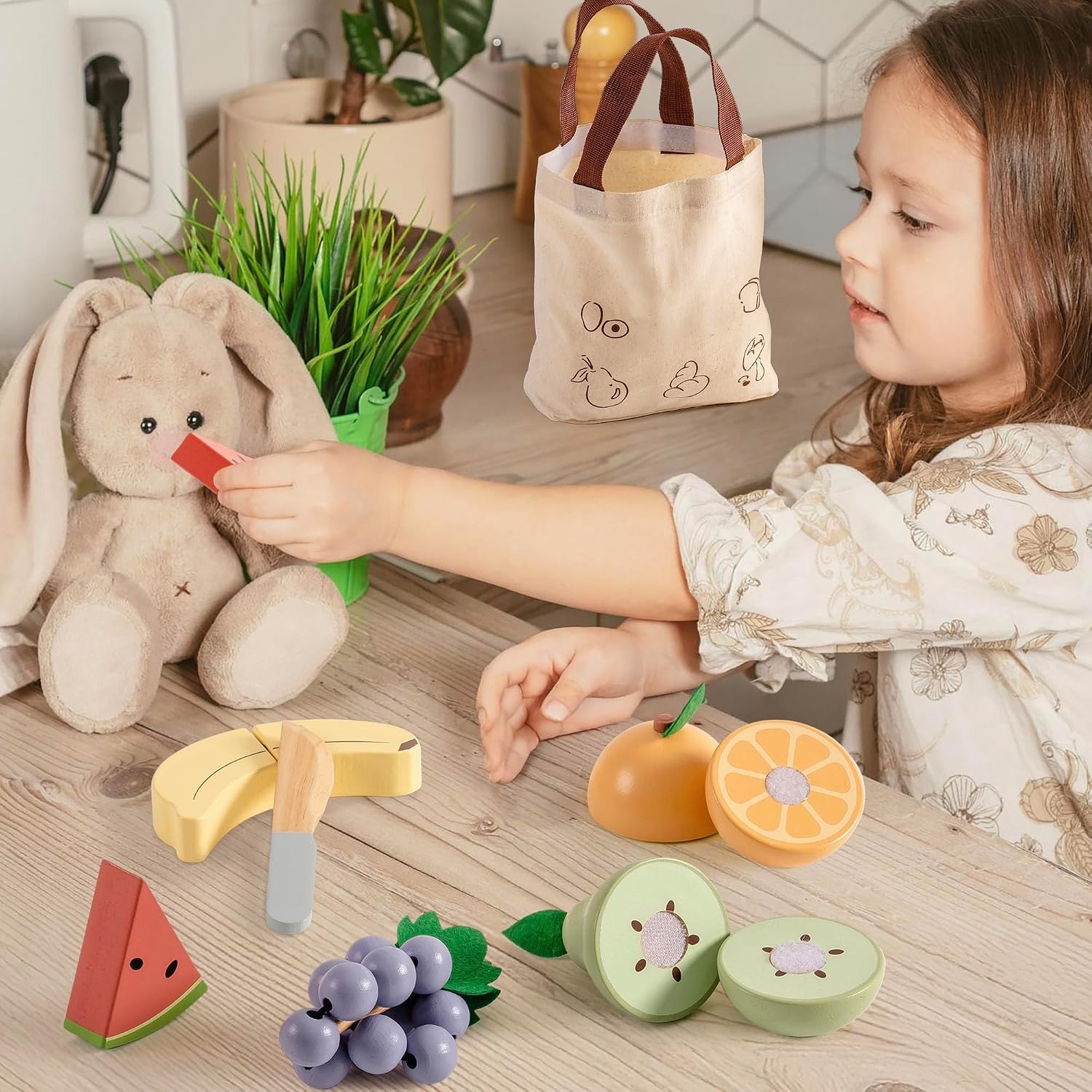
The cutting part matters more than you might guess. Most toys ask a child to imagine the action. This one lets them do it. Line up the knife, push down, and the fruit comes apart in your hands. Press the halves back together and it is whole again. That loop of break and restore is endlessly repeatable, and small children love repeatable.
How a cutting fruit set actually works
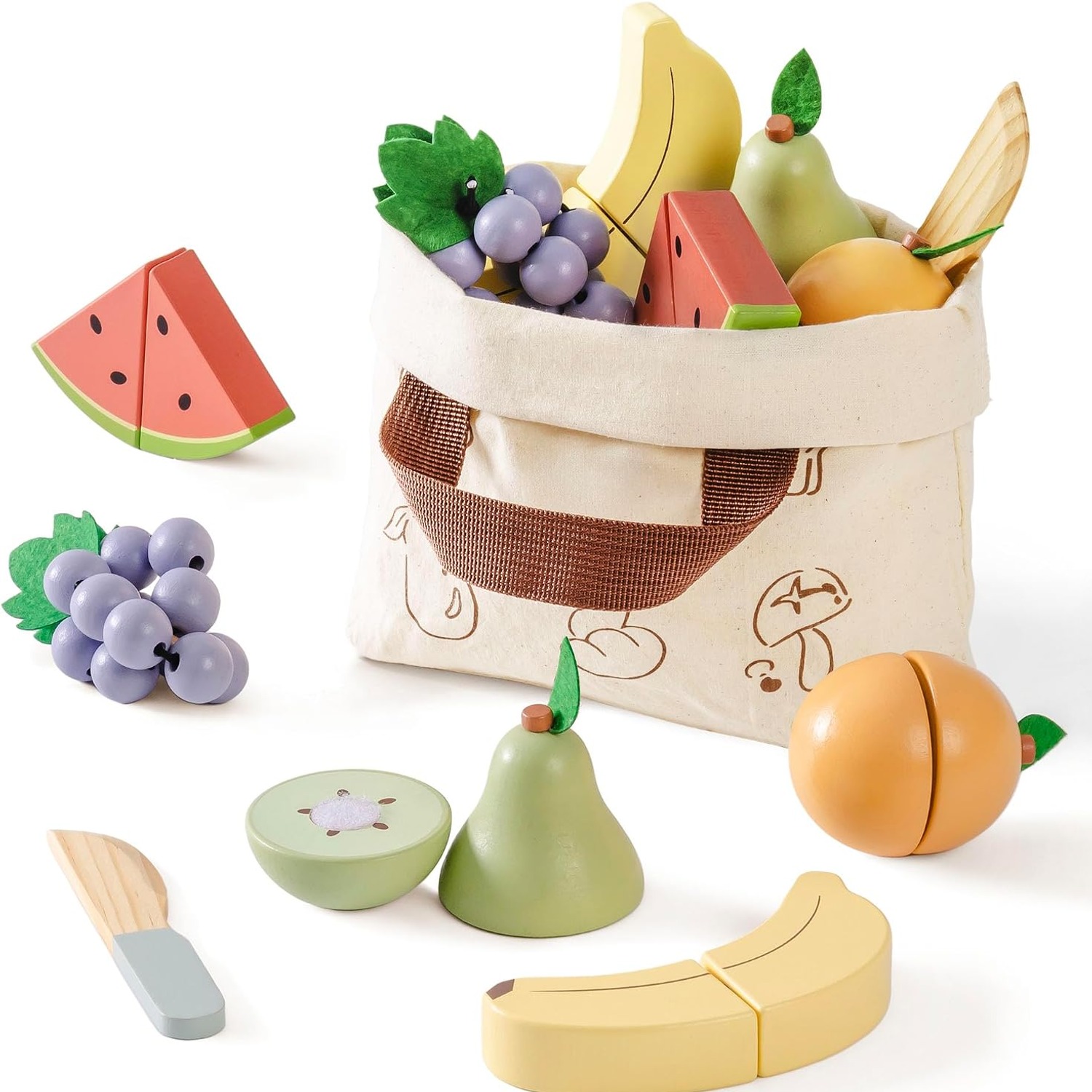
The mechanics are simple. Each piece of fruit is made as two halves joined together. The join holds well enough that a child can carry the fruit around whole, drop it in a bag and pull it out again. Push the wooden knife into the groove and the halves separate with a small snap.
The knife itself has no cutting edge. It is shaped like a knife so the grip and the motion feel right, but it is wood with a blunt profile and it will not cut anything other than the toy fruit. For a lot of families that is the appeal. A child who wants to copy what happens at the kitchen bench can do exactly that, safely, on the floor of the lounge room.
This ROBOTIME set also comes with a small shopping bag. It sounds like a minor extra. In practice it changes the game. Children start the story at the shop, fill the bag, carry it to the kitchen and then cook. You get two scenes instead of one, and at the end of the afternoon you have an obvious place to put everything back.
Who it suits
The sweet spot for a play food cutting toy is roughly three to six. By three, most children have the hand control to manage the cutting motion and the imagination to build a story around it. By six, many have moved on to more complex play, though plenty still return to it for a while.
Under three, be careful. Sets like this contain small parts, and the maker does not give an age rating. If your child still puts things in their mouth, wait. If they are past that stage, supervise and use your judgement.
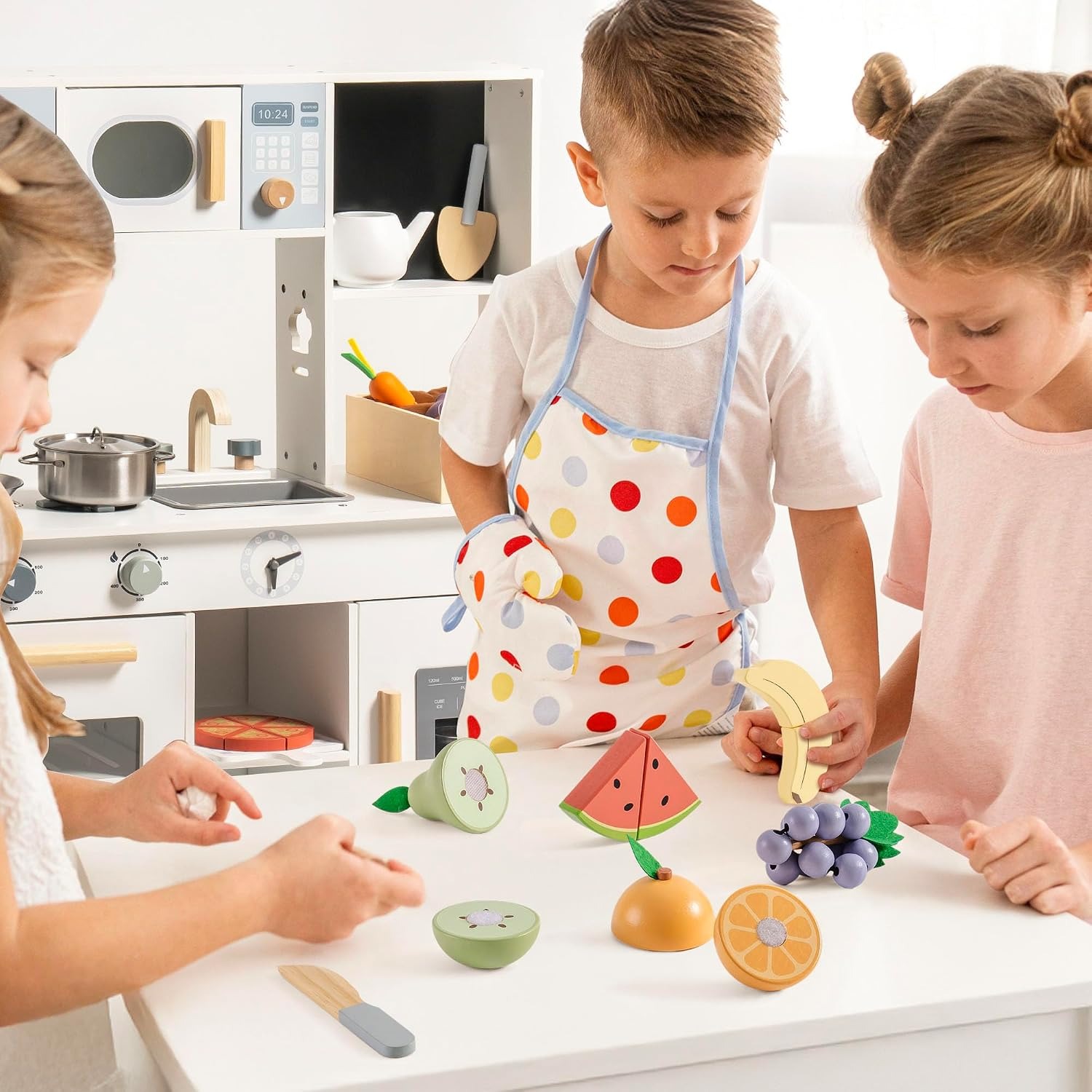
It suits a few different households. Families who already own a play kitchen get the food it has been missing. Families with no kitchen at all get a self-contained game that works on a rug or a coffee table. Grandparents often like it because it is quiet, needs no batteries and packs into one bag at the end of the visit.
It also works well as a shared toy. Two children can split the fruit, run a shop between them or cook together. One child will play with it happily too, but it comes alive with company.
What to look at when you are choosing
Material. Wood against plastic is the first decision most people make. This set is wood, which means more weight in the hand, a quieter sound on the floor and a surface that usually ages better than thin moulded plastic. Plastic is cheaper and washable, but it rarely feels as solid.
The join. The thing that gets used hardest on a cutting set is the fastener holding each fruit together. It needs to be firm enough that fruit does not fall apart in the bag, and loose enough that a small child can separate it without help. A join that is too tight causes frustration, and frustration ends playtime fast.
The knife. Look for something proportioned for a small hand with a safe, blunt profile. Oversized toy knives are awkward to aim and children give up on them.
Storage. Toy food scatters. A set that includes a bag, a crate or a tray has solved a real problem before you have even opened it. This one includes a bag, which works as both prop and storage.
Size and weight. This set measures 11.9 x 5.8 x 15 cm packed and weighs 0.35 kg. That is small, which is good for shelf space and for travel, and worth knowing if you were expecting a large hamper.
Scale. Toy food that is wildly out of proportion with the rest of a play kitchen looks odd to children, and they notice. Wooden play food tends to follow fairly consistent sizing, so this will sit comfortably with most wooden kitchen accessories for kids.
Getting the most out of it
A few things stretch the play beyond simple chopping.
Give it a setting. A tea towel becomes a market stall, an upturned box becomes a shop counter. Children follow a setup more readily than an instruction.
Order things. Ask for two pieces of a particular fruit, then change your mind. Counting, listening and sequencing all get a workout while a child thinks they are just serving a customer.
Eat the food properly. Pretend to chew, say what it tastes like, ask for seconds. Children invest far more in a game when an adult takes it seriously for five minutes.
Mix it with other toys. Dolls and soft toys become customers. A toy till turns it into a grocery play set. Real bowls and a wooden spoon bring in a bit of genuine kitchen feel.
And let them do the tidy-up. Packing the fruit back into the bag is part of the game if you treat it that way, and it is an easy habit to start early.
Keeping it in good shape
Wooden toys last for years with very little effort, as long as you avoid water. Wipe the pieces with a barely damp cloth and dry them straight away. Do not soak them, and never put any part in a dishwasher. Water swells wood, lifts paint and can loosen the joins that make the cutting action work.
Keep the set out of direct sunlight and away from heaters. Both will dry and fade wood over time. Store everything in the bag on a shelf or in a toy box rather than leaving it on the floor where pieces get stepped on.
Every few months, check the knife and the fruit joins for wear. If a join has worked loose, catching it early usually means a simple fix rather than a retired piece of fruit.
The short version
A wooden cutting fruit set is one of the few toys that earns its shelf space twice over. It gives a play kitchen something to cook, and it gives a child a real, physical action to master instead of a button to press.
This ROBOTIME set covers the basics well. Wooden fruit that splits and rejoins, a blunt wooden knife built for small hands, and a shopping bag that doubles as storage. It is compact at 11.9 x 5.8 x 15 cm and light at 0.35 kg, so it travels and stores without fuss.
If you are buying for a child between three and six who likes copying what happens in the kitchen, this is a safe bet. Keep it dry, keep it in the bag, and it will still be getting chopped up long after the batteries have run out on everything else in the toy box.