
The complete guide
Choosing a Safari Animal Figures Set, A Parent's Buying Guide
The problem with most animal toys
Walk into any toy aisle and you will find animal figures sold by the bag. Twelve lions, a handful of zebras, maybe a plastic tree if you are lucky. The child tips them on the floor, lines them up, and ten minutes later the interest has gone. The toy did not fail because the animals were bad. It failed because there was nothing for the animals to do and nowhere for them to be.
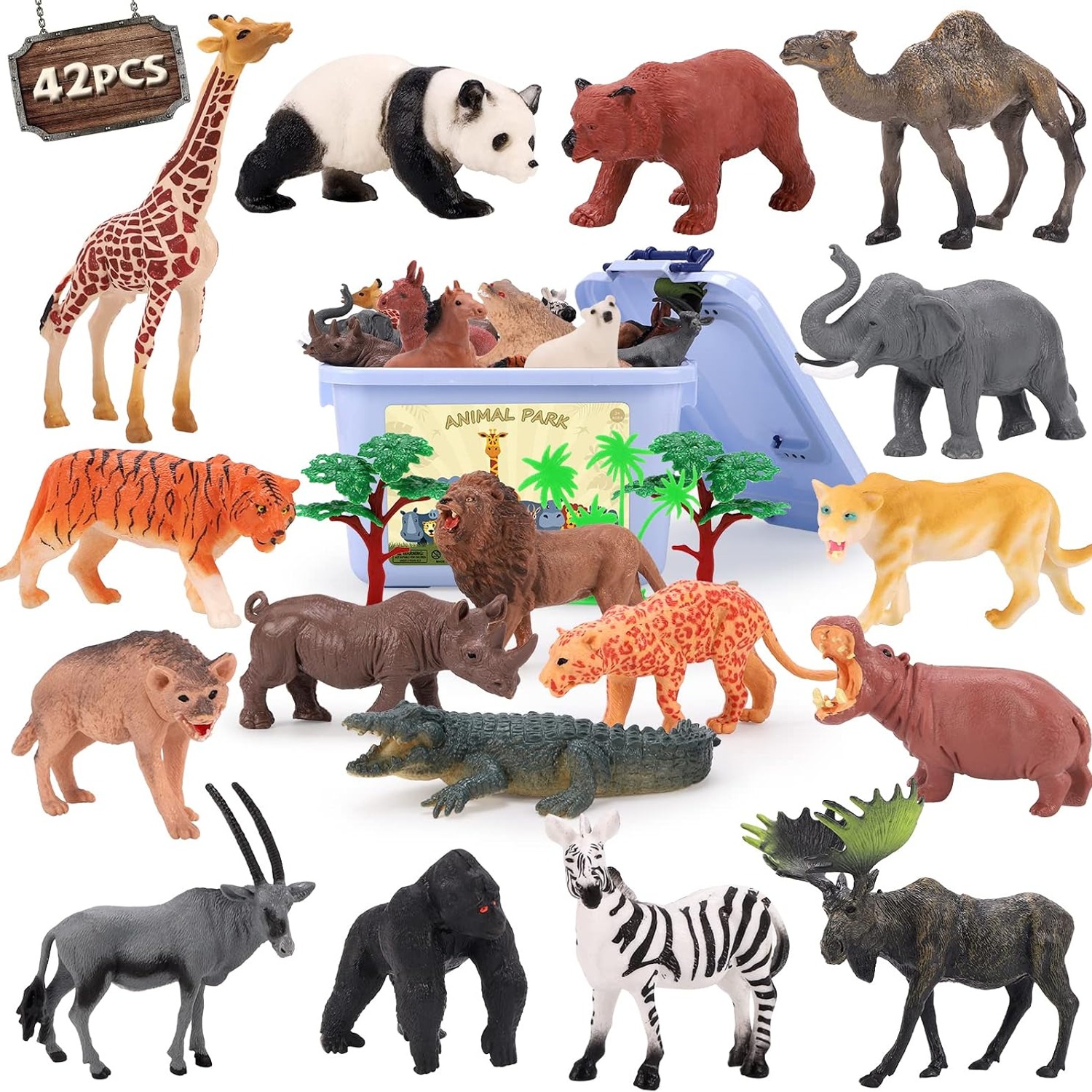
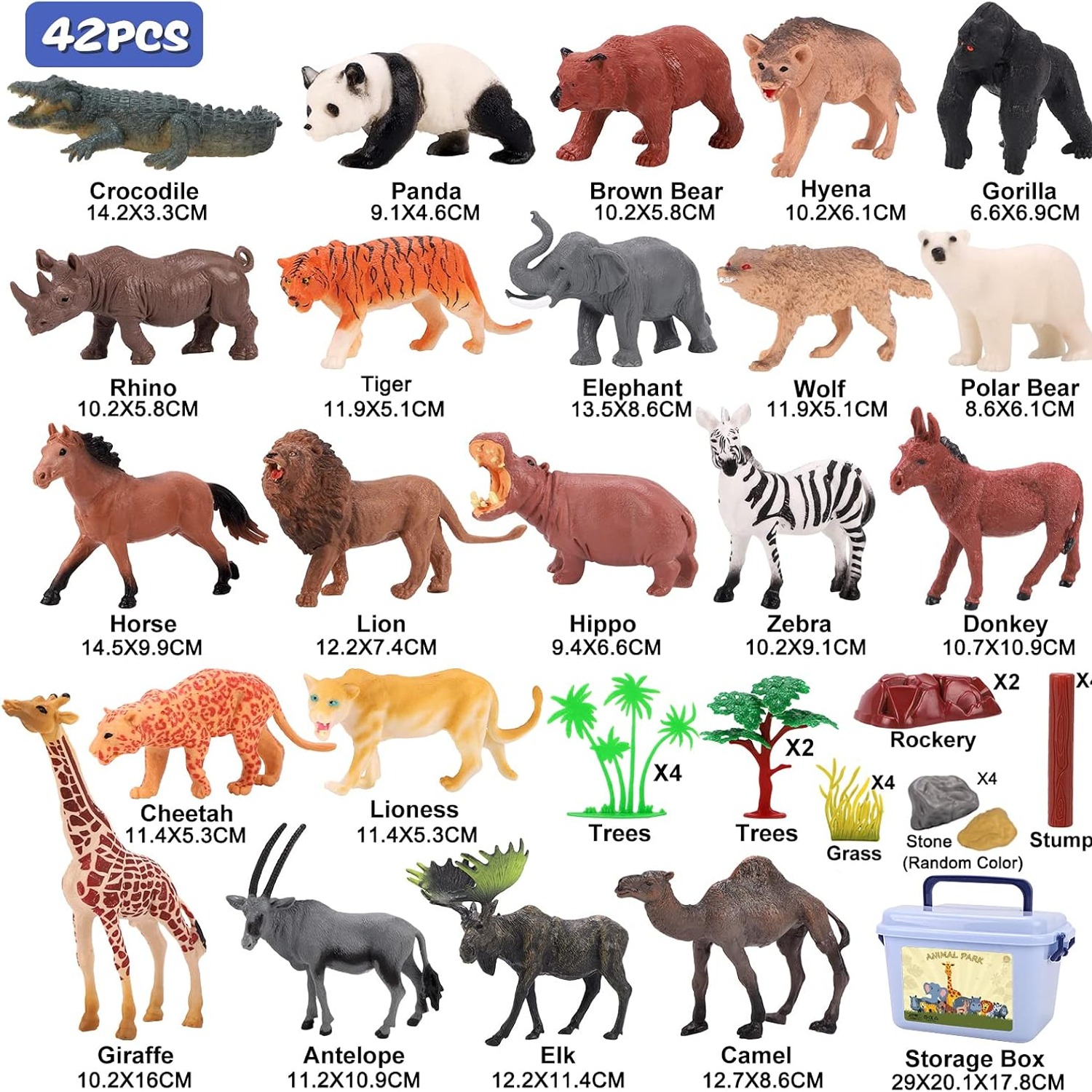
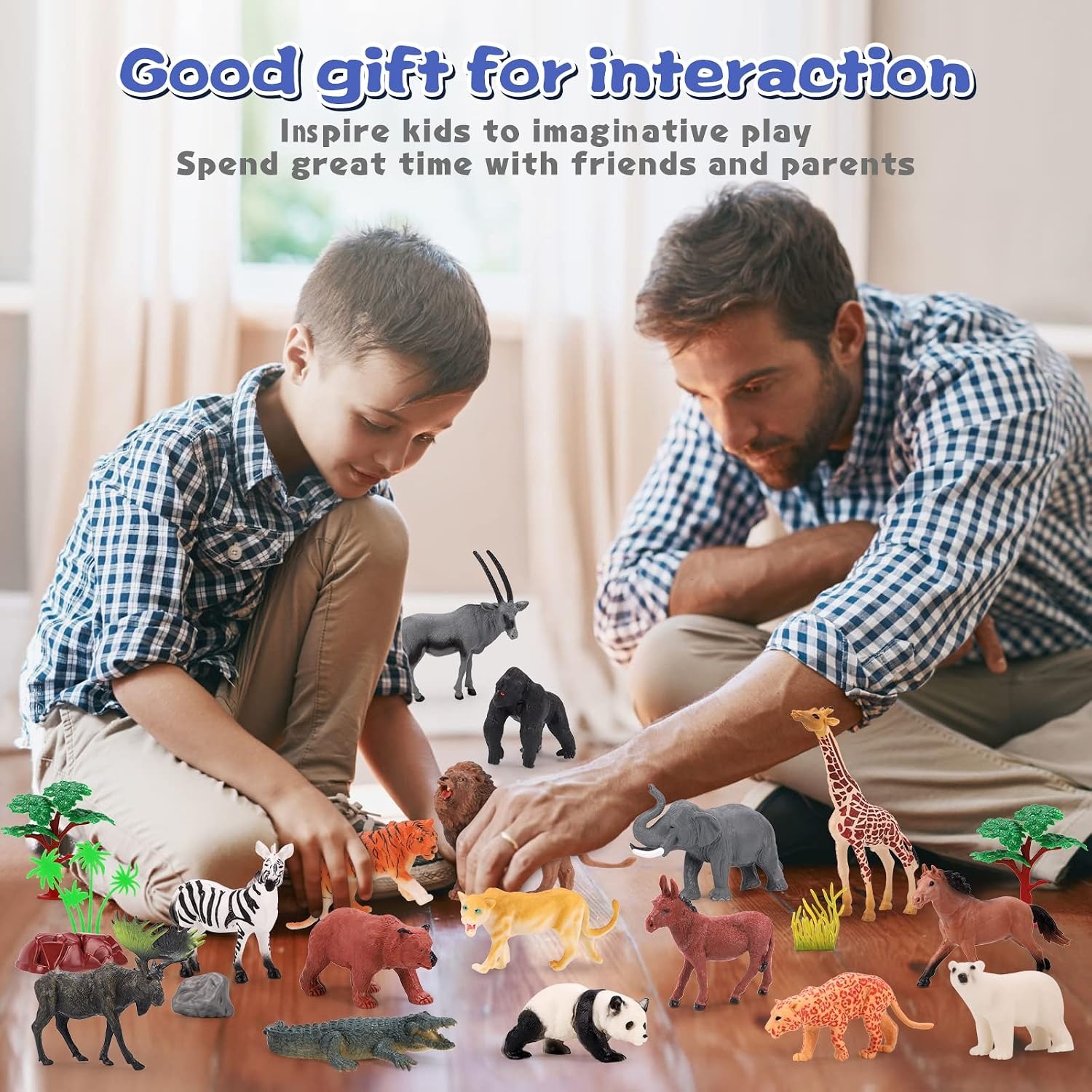
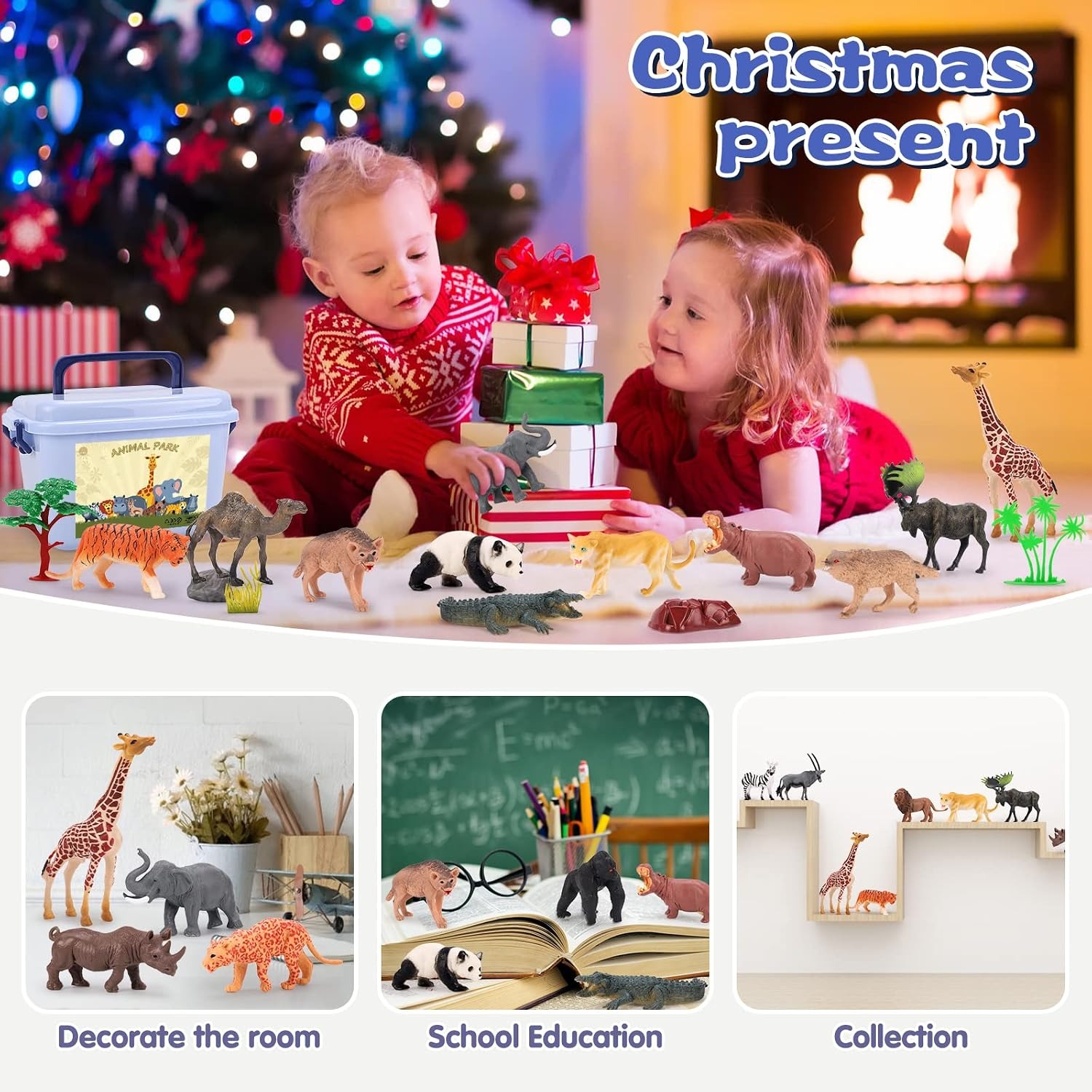
That is the gap this safari animal figures set tries to close. Alongside the twenty animal figures it includes fourteen trees and six rocks, which sounds like a small addition until you watch a four year old use them. Suddenly there is a waterhole. There is a place where the lion hides. There is a path the elephants walk along. The play stops being about the objects and starts being about the story, and story is what keeps children at the floor for an hour instead of ten minutes.
How a small world play set actually works
Early childhood teachers call this kind of toy a small world. The idea is simple. Give a child a scaled down version of a real place and they will fill it with everything they know, everything they have seen on television, and a fair amount they have invented. A small world does not need instructions because the child supplies the rules.
What makes one set better than another comes down to three practical things. The figures need to be distinct enough that a young child can tell a rhino from a hippo at a glance. There needs to be scenery, because bare carpet gives the imagination nothing to push against. And the whole lot needs somewhere to live when play is done, or the set slowly shrinks until only the giraffe is left.
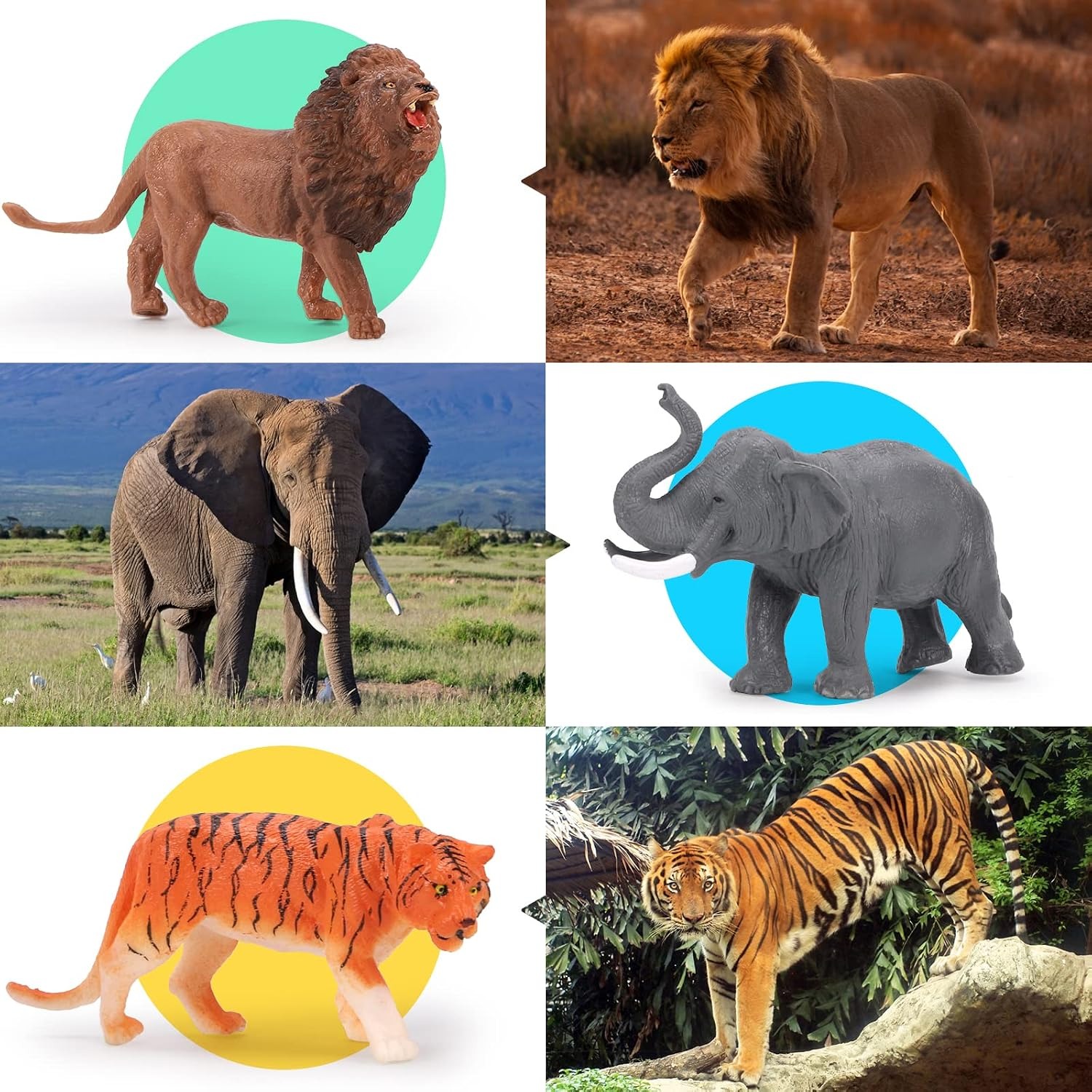
This set covers all three. The animal line-up spans elephants, tigers, lions, pandas, giraffes, cheetahs, elk, hippos and rhinos, among others, so the silhouettes are all different. The trees and rocks give the landscape. The storage case handles the tidy up.
Who it suits
The manufacturer recommends ages 3 and up, and that lines up with how most children use this kind of toy. At three, the appeal is naming and holding. Children pick up each figure, ask what it is, repeat it back, and sort them into piles by whatever logic makes sense that day. That is real learning happening in a form that looks like nothing much.
By four and five, the building starts. The trees go into clusters, the rocks become a cave, and the animals get assigned jobs. This is where the extra pieces earn their place. A set with no scenery runs out of road at this age.
At six and seven, children play less with the animals and more with the situations. Rescues, chases, families, migrations. Some children also start collecting, which is when the set works well next to dinosaur figures or farm animals they already own. Scale across common play figure ranges is close enough that the collections mix without looking odd.
It also works for adults who are not buying for their own child. Grandparents keeping a toy box, childcare staff needing a sorting activity, anyone hunting for an animal toy gift set that will not need batteries replaced in three weeks. A complete scene feels more substantial as a present than a single figure, without being much harder to wrap.
How to choose between animal sets
A few things are worth checking before you buy any wild animal toys for kids.
Piece count is the obvious number, but it can mislead. Forty two pieces sounds generous, and here it genuinely is, because twenty of them are animals and the rest are usable scenery. Some sets pad the count with tiny accessories that get lost in the first week. Read the breakdown, not just the headline.
Figure size matters more than people expect. Large figures are safer around younger siblings, easier for small hands to grip and simpler to recognise. The trade off is that they take up more shelf space. This set is described as using large animal figures rather than miniatures, which is the right call for the recommended age range.
Storage is the quiet decider. A set with a case survives. A set in a cardboard box that splits after a fortnight ends up scattered through the house. The included carry case here is the reason this set is likely to still be complete next Christmas.
Finally, think about whether the set is open ended or scripted. Toys with a fixed storyline, a specific character or a single intended game have a short life. A collection of animals and scenery has none of those limits, which is why small world animal toys have outlasted countless licensed play sets.
Setting it up at home
You do not need a dedicated table. A clear patch of floor, a rug, or a tray works fine. Many parents use a shallow plastic tray because it defines the edge of the world and makes clean up easy. Some add a tea towel for grass, a bowl lid for a waterhole, or a few wooden blocks for cliffs. None of that is required, but it extends the set at no cost.
If you want to turn it into a learning activity, keep it light. Ask which animals have spots and which have stripes. Ask which ones would be found near water. Ask your child to sort them into two groups and then explain the groups to you. That last one is the best of the lot, because children often invent categories adults would never think of.
Looking after the set
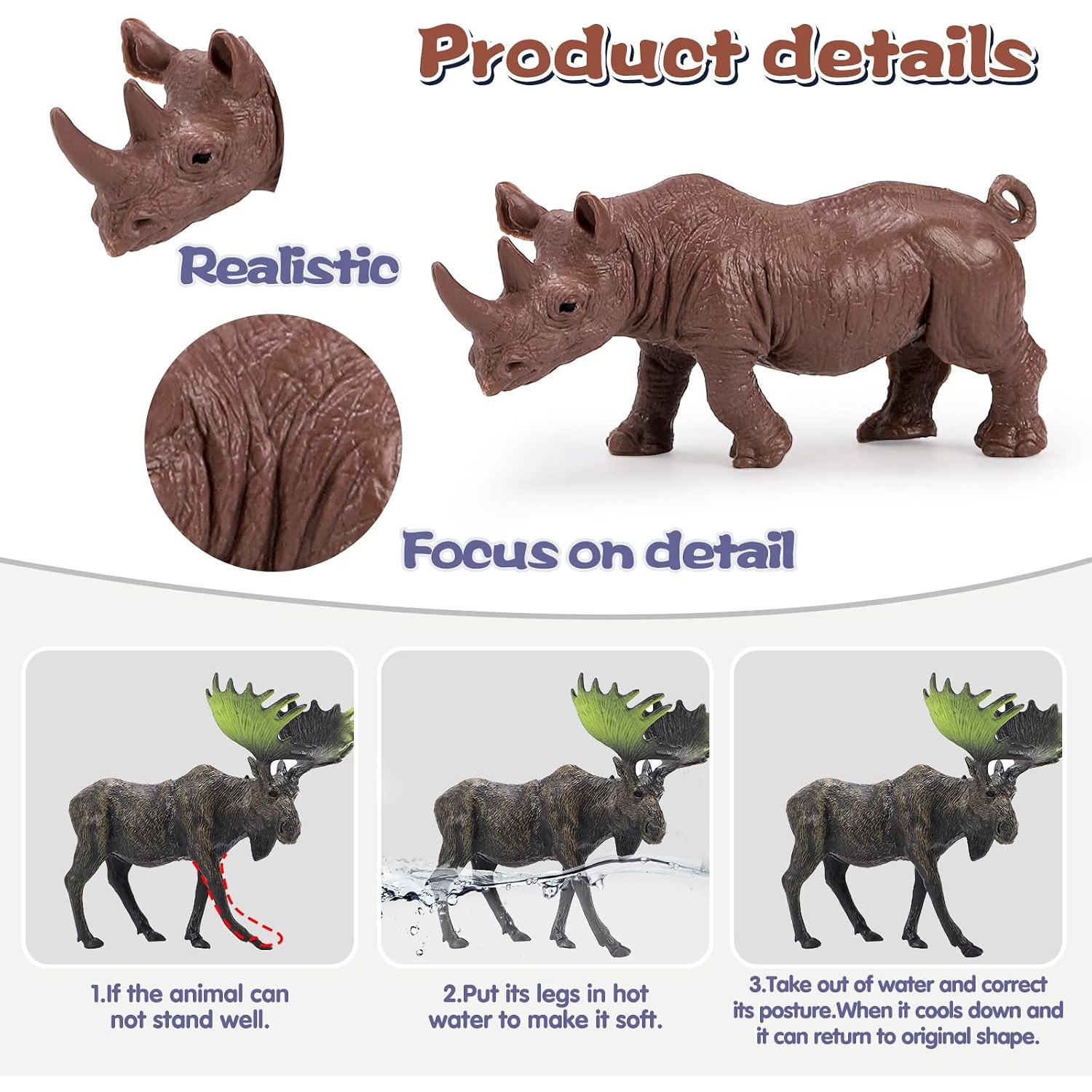
Care is straightforward. Wipe the figures with a damp cloth and a little mild soapy water, then let them dry completely before they go back in the case. Avoid the dishwasher, boiling water and strong cleaning products, since heat and solvents can lift paint detail on any painted figure.
If the animals get used as bath toys, which is common, dry them properly afterwards rather than leaving them sitting in water. The habit of packing everything back into the storage case after play is the single most useful thing you can teach. It takes a minute and it is the reason some sets last five years.
Keep the set away from direct sun on a windowsill for long stretches, as that can fade colours over time. Beyond that, these are toys built to be handled, dropped and handled again.
What this set does not tell you
Being straight about it, a few details are not listed by the maker we hold. The exact plastic used, the individual figure dimensions, the shipped weight and the country of origin are not specified. If any of those matter to your decision, contact us and we will chase the detail rather than guess at it. We would rather leave a field blank than fill it with something that turns out to be wrong.
The short version
Twenty animals, fourteen trees, six rocks and a case that keeps them all together. No assembly, no batteries, nothing to charge. Recommended for ages three and up, and genuinely useful through to about seven as the play shifts from naming to building to storytelling.
If you want a toy that sits quietly in the corner of the lounge and gets pulled out a hundred times over the next few years, a complete animal scene is a sound bet. If you are buying a gift and you know the child likes animals, this one is hard to get wrong.