
The complete guide
Choosing a Take Apart Dinosaur Set, A Practical Buyer's Guide
The toy that gets played with twice
There is a familiar pattern with children's toys. Something arrives, it gets a burst of attention for an afternoon, and then it joins the pile. Dinosaur figures are often guilty of this. They look great, they get carried around for a week, and then they sit on a shelf doing nothing.
A take apart dinosaur set breaks that pattern because the toy is never finished. The child builds it, plays with it, pulls it apart and builds it again. Every cycle is a bit faster and a bit more confident than the last. For a lot of parents, the real value is not the dinosaur at the end. It is the twenty minutes of focused, quiet concentration that happens while the dinosaur is being made.
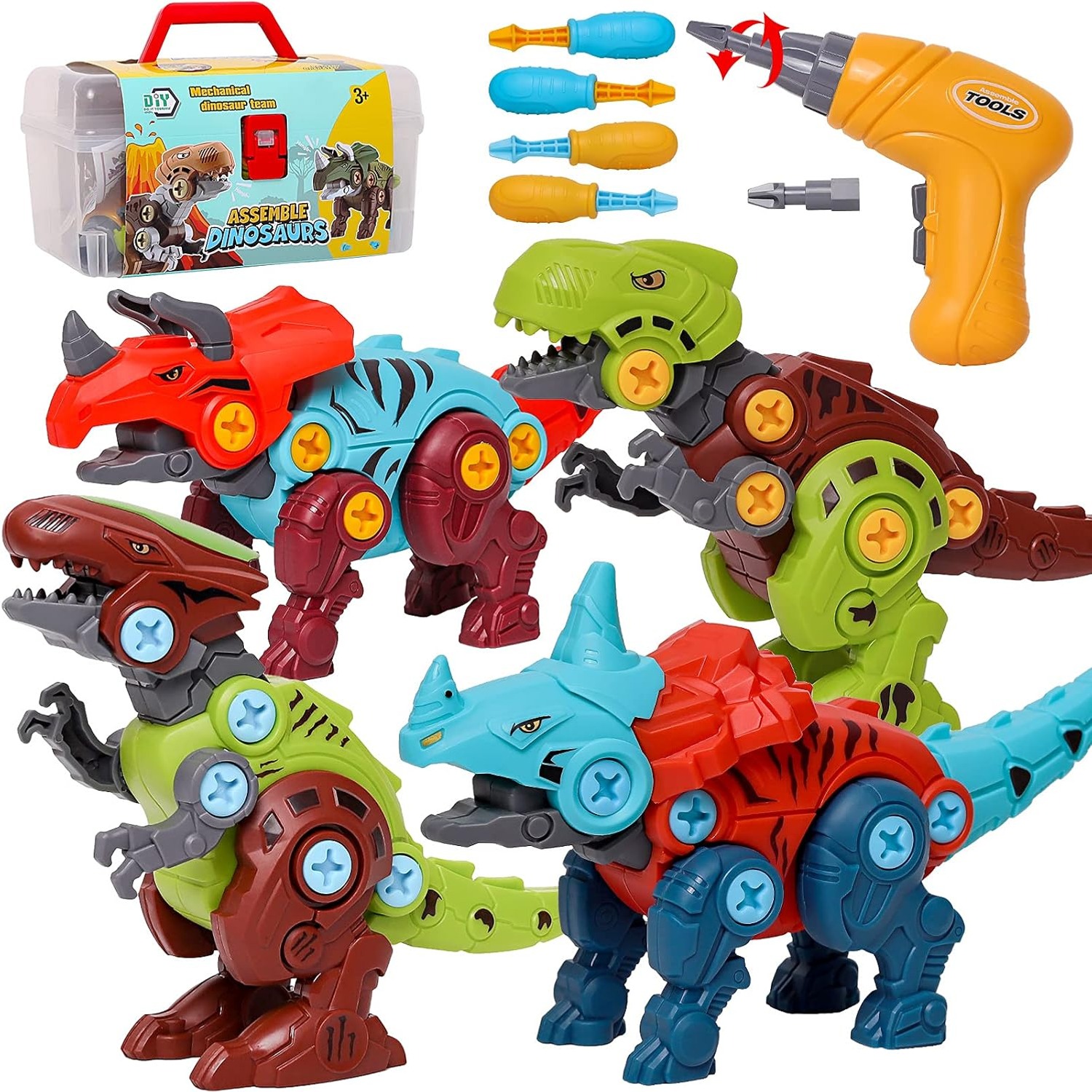
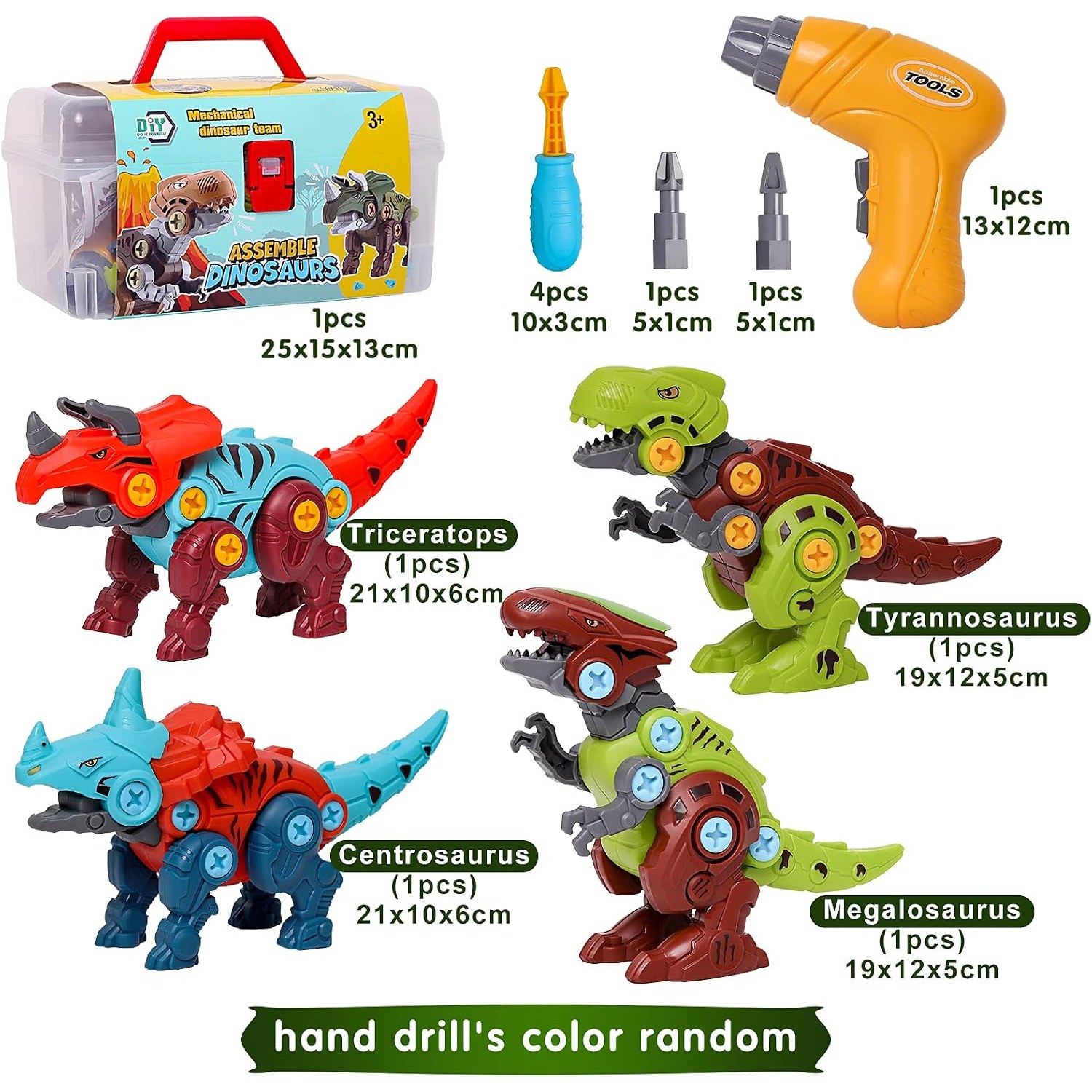
This particular set includes four dinosaurs, a Tyrannosaurus, a Triceratops, a Megalosaurus and a Centrosaurus, along with five tools and an instruction sheet, all in a storage box.
How a screw-together dinosaur toy works
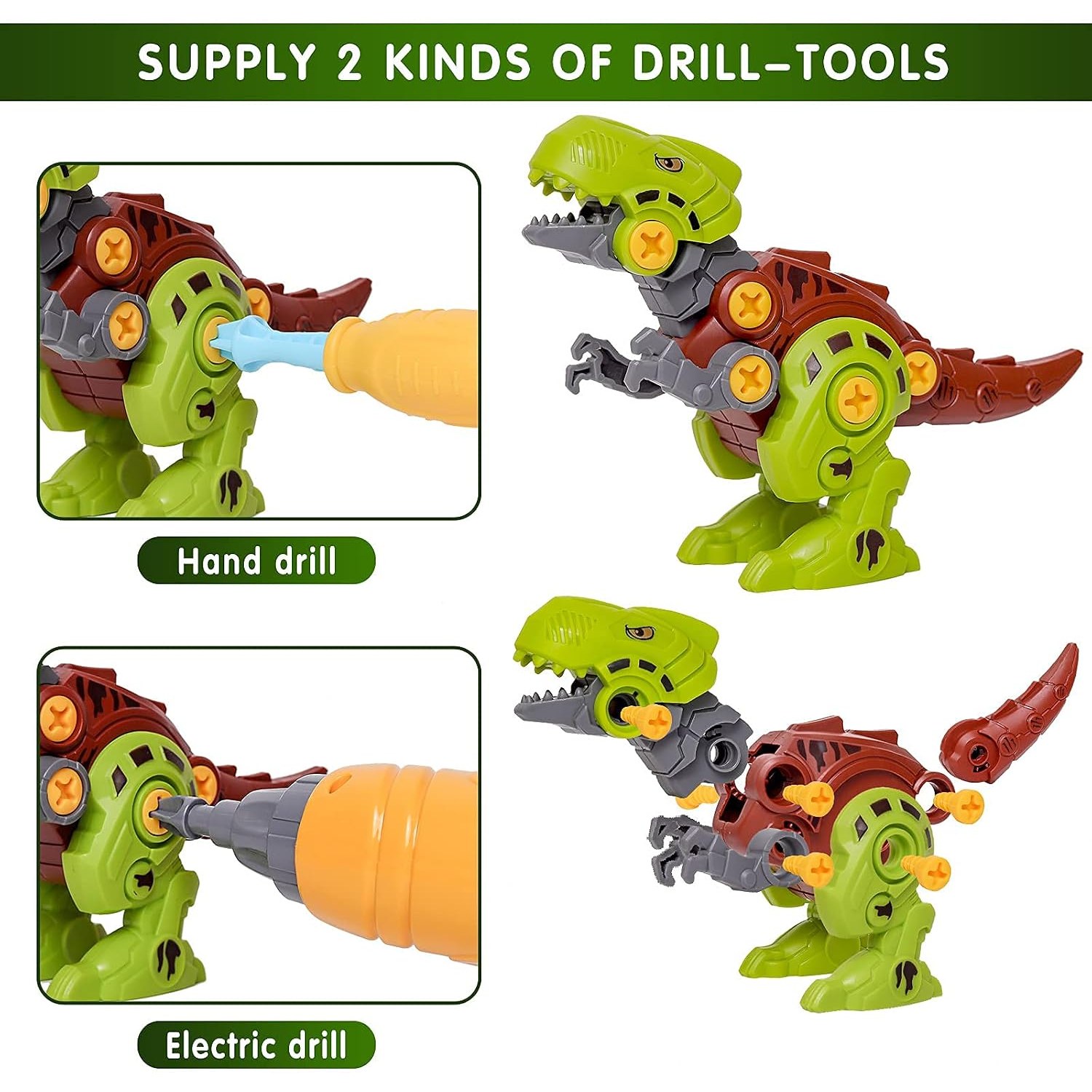
The idea is simple. Each dinosaur body is split into sections, and those sections are joined with plastic screws. The child lines up two parts, drops a screw into the hole, and drives it in with a tool.
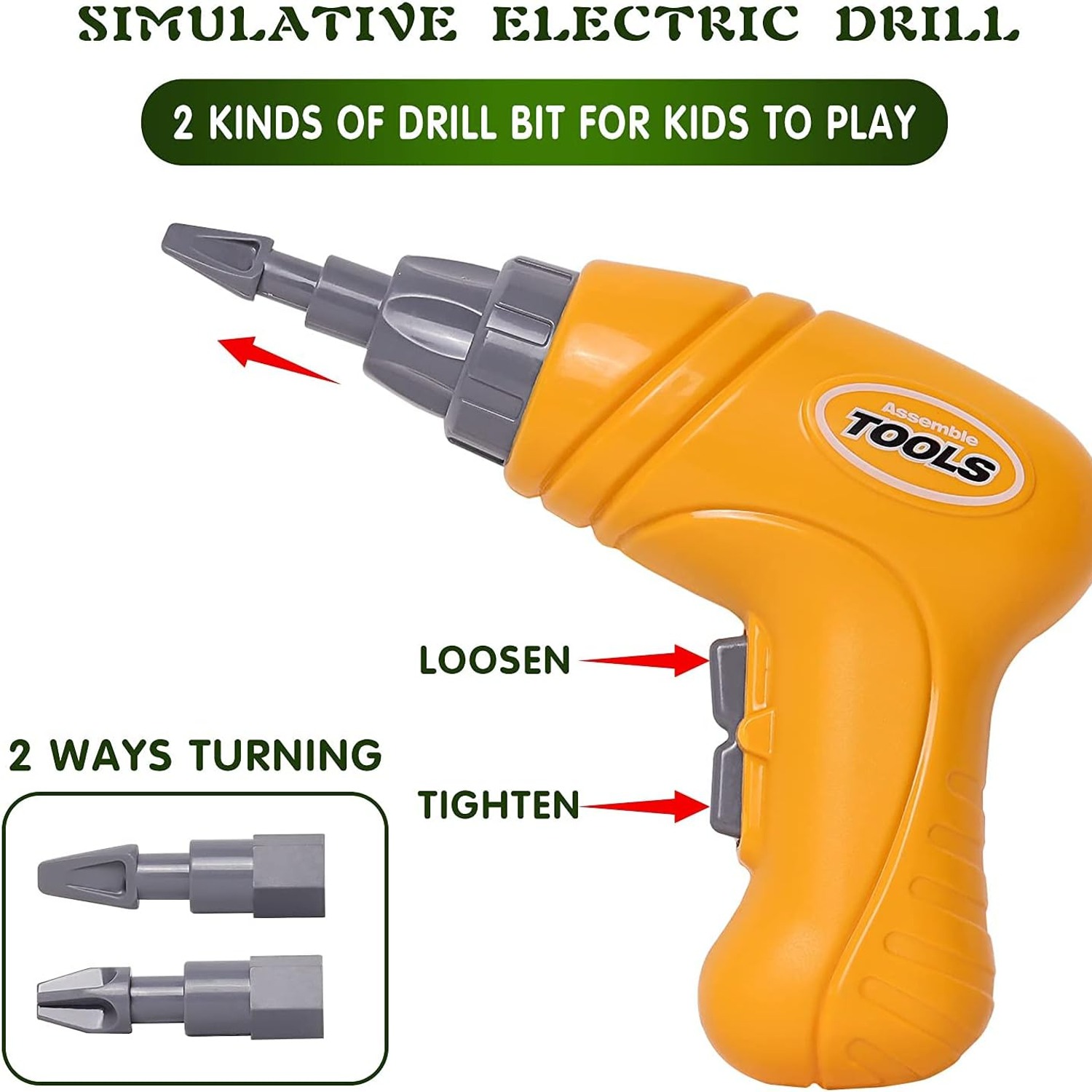
The set gives them two ways to do that. There is a toy electric drill that takes two interchangeable bits and runs at a low speed, which handles the screwing quickly and feels satisfyingly like the real thing. There are also four hand drills, which are slower but give the child more control and more of a sense that they did it themselves.
The low-speed drill matters. A fast motor in a child's hand is a recipe for stripped screw heads and frustration. Slow turning gives a three or four year old time to see what is happening and correct the angle before the screw goes in crooked.
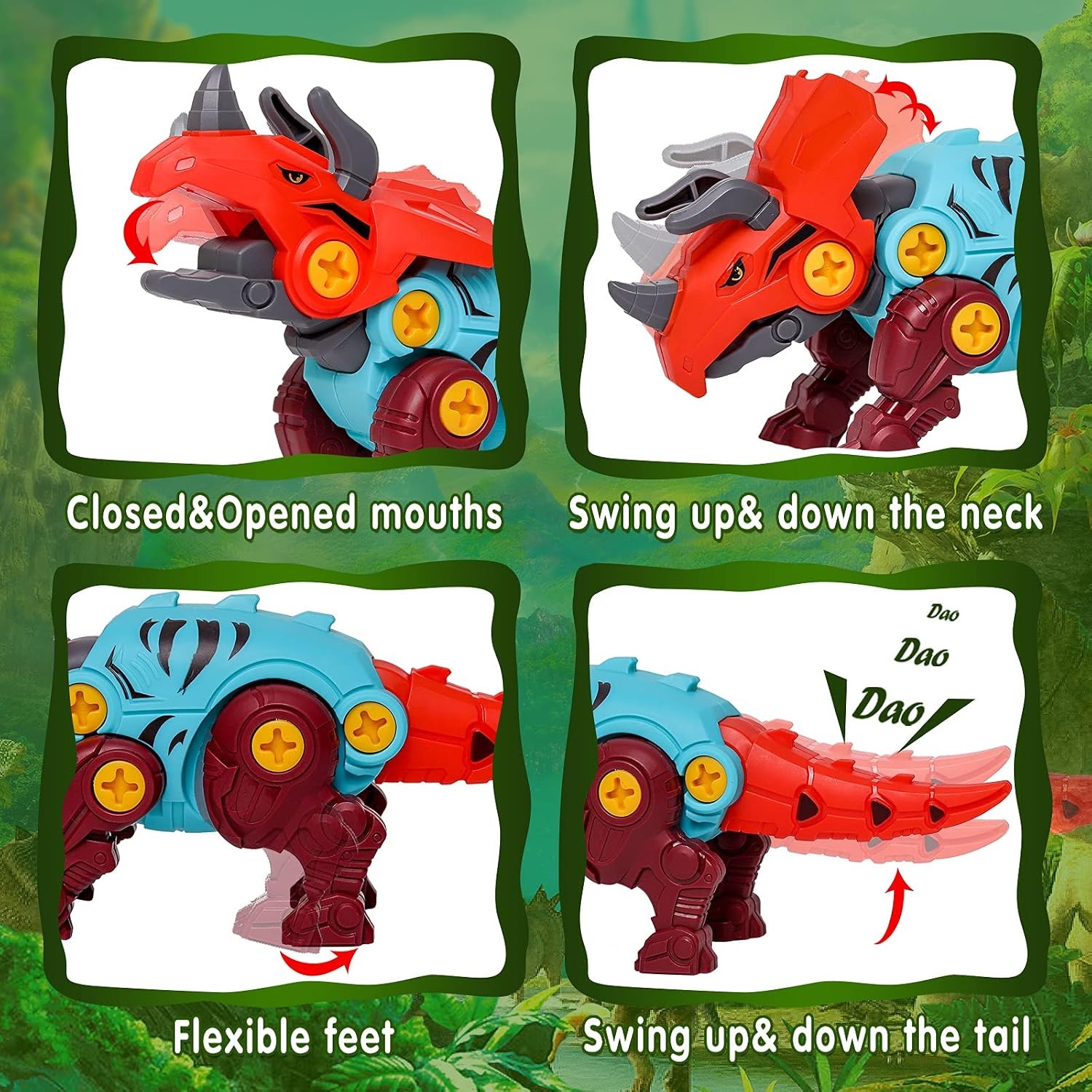
Once the dinosaur is together, the joints at the head, mouth, limbs and tail still move. So the build does not end in a rigid statue. The child can pose the finished figure, make it fight another one, or line all four up along the windowsill.
Who this suits
The recommended age is 3 years and up, and that range covers quite different kinds of play.
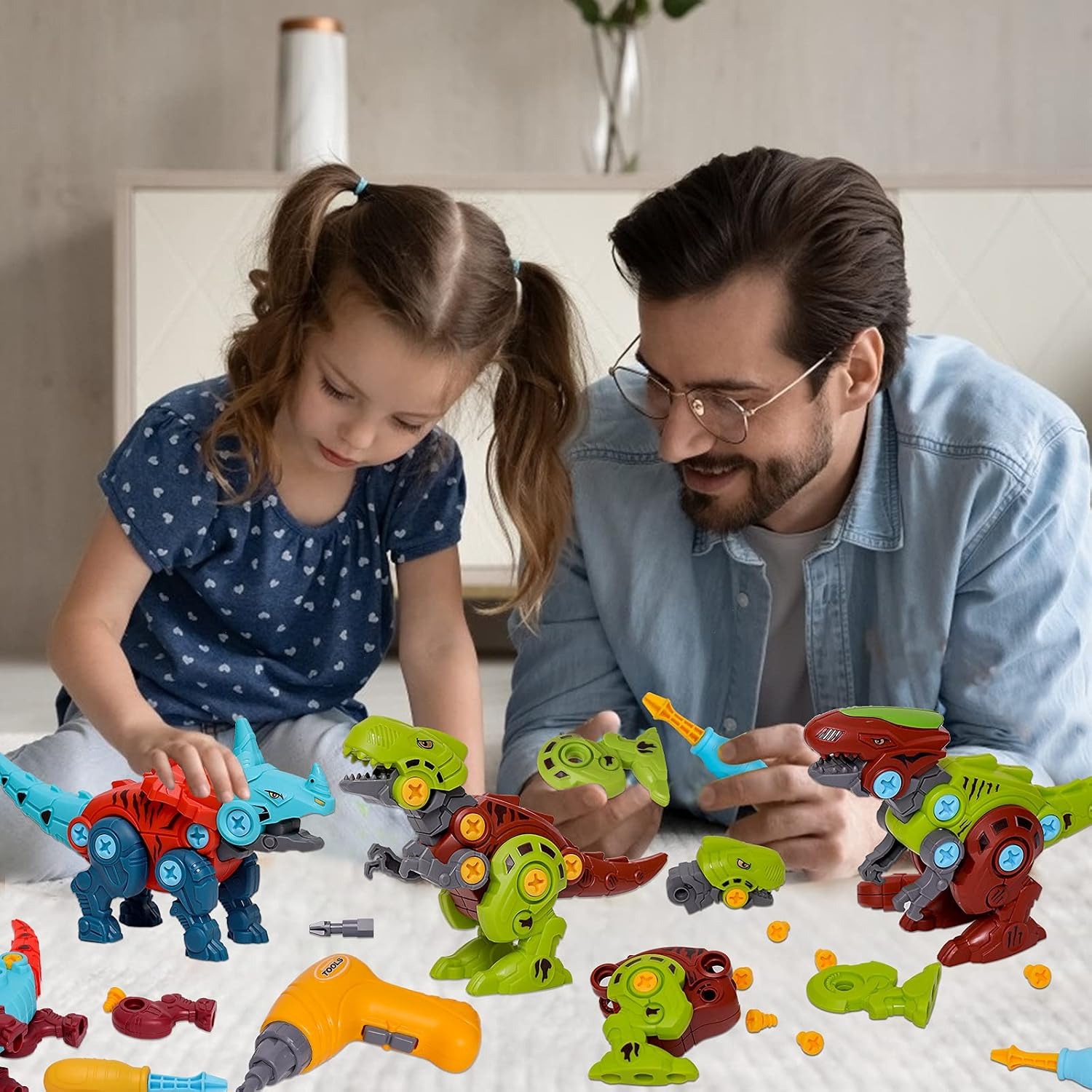
At three and four, most children need an adult to sit with them. They can hold the drill and drive the screws, but matching the right part to the right slot is harder than it looks. This is actually a nice stage for it, because the build becomes something you do together rather than something that keeps them busy while you do something else.
At five and six, children typically manage a dinosaur start to finish with the instruction sheet nearby. They will time themselves, race a sibling, and complain loudly if anyone helps uninvited.
At seven and beyond, the instructions usually get abandoned within minutes. This is where kids start swapping heads and tails between species to see what they can invent. If you want a hands on dinosaur toy that lasts past the first week, that stage is where it earns its keep.
It also works well for children who like tools and machines as much as they like animals. A screwdriver dinosaur toy sits neatly between those two interests.
What to look for when comparing sets
Not all take apart toys are built the same, and a few details separate the good ones from the ones that end up in the bin.
Tool count. A set with one tool is a one-child toy. Five tools, as here, means a sibling or a parent can join in without anyone waiting their turn. If you have two children, this is probably the single most useful thing to check before buying.
Whether joints move after assembly. Some take apart figures are rigid once built, which kills the imaginative play that should follow. Movable joints at the head, mouth, limbs and tail keep the dinosaur useful as a toy, not just as a puzzle.
Material. ABS plastic is the standard for this kind of toy for a good reason. It is hard enough to hold a screw thread repeatedly without the hole wearing out, and it survives being dropped. Softer plastics go loose after a dozen rebuilds.
Storage. This sounds boring and it is the thing parents care about most by week two. A set with a box has a fighting chance of staying complete. A set that arrives in a blister pack is scattered across the house by the weekend.
Battery requirements. The electric drill here needs two 1.5V AAA batteries and they are not included. Worth knowing in advance, particularly if this is a birthday gift and the child is going to want it working immediately.
Getting the first build right
A few small things make the first session go better.
Work on a tray, a large plate or a rug with raised edges. Screws roll, and they roll towards the gap under the sofa with impressive accuracy. A boundary saves a lot of crawling around.
Do one dinosaur first, not all four. Opening everything at once overwhelms younger children and makes it much harder to keep track of which part belongs to which species.
Let them do the screwing even if it is slow and slightly wonky. The temptation to take over is strong, especially when a screw goes in at an angle. Resisting it is the difference between a child who built a dinosaur and a child who watched one being built.
Keep the instruction sheet flat and visible. For pre-readers, point at the picture rather than explaining in words.
Looking after it
Maintenance is light. Wipe the parts and tools with a damp cloth when they get grubby and dry them properly before they go back in the box. Nothing here should be soaked, and the electric drill in particular needs to stay dry.
Screws can work loose with enthusiastic play. That is normal for anything held together with fixings, and tightening them takes a few seconds with one of the hand drills. If a dinosaur starts feeling floppy, that is usually all it needs.
If the set is going into storage for a few months, take the batteries out of the drill. Batteries left in a toy for a long time can leak and ruin the contacts.
Pack away into the box every time. It is a small habit, but it is the reason some sets are still complete two years later and others are missing a tail by March.
A few honest limitations
This is a toy, so set expectations accordingly. The dinosaurs are stylised rather than scientifically precise models, which is fine for play but not for a school project on anatomy. The drill is built for plastic screws in plastic parts and nothing else.
Very young children at the bottom of the age range will need help, and probably a second and third round of help. That is not a fault of the set, it is just the reality of fine motor skills at three years old.
Product weight, dimensions and country of origin are not listed by the makers for this item. If any of those matter to you, ask us before ordering and we will find out what the maker can confirm.
The short version
If you want a dinosaur gift that does more than sit on a shelf, this one gives you four figures, five tools and a reason for a child to concentrate for half an hour. The low-speed drill is safe enough for small hands, the ABS parts stand up to repeated rebuilds, and the movable joints mean the fun does not stop once the last screw is in.
Buy the AAA batteries at the same time, work on a tray for the first build, and use the box. Do those three things and this set will still be in one piece long after the wrapping paper is gone.