
The complete guide
Choosing a Glow Marble Run - What Actually Matters
The problem with most marble runs
Marble runs look brilliant on the box. A tall, colourful tower, marbles flying around loops, a child grinning. Then you get it home and the reality is slightly different. The marbles reach the bottom in about four seconds. Someone scoops them up. They go back to the top. Four seconds later, repeat.
For a lot of kids, that reload loop is where the interest drains away. The building part was fun. The racing part lasts long enough to be a tease. After a week, the box goes on a shelf.
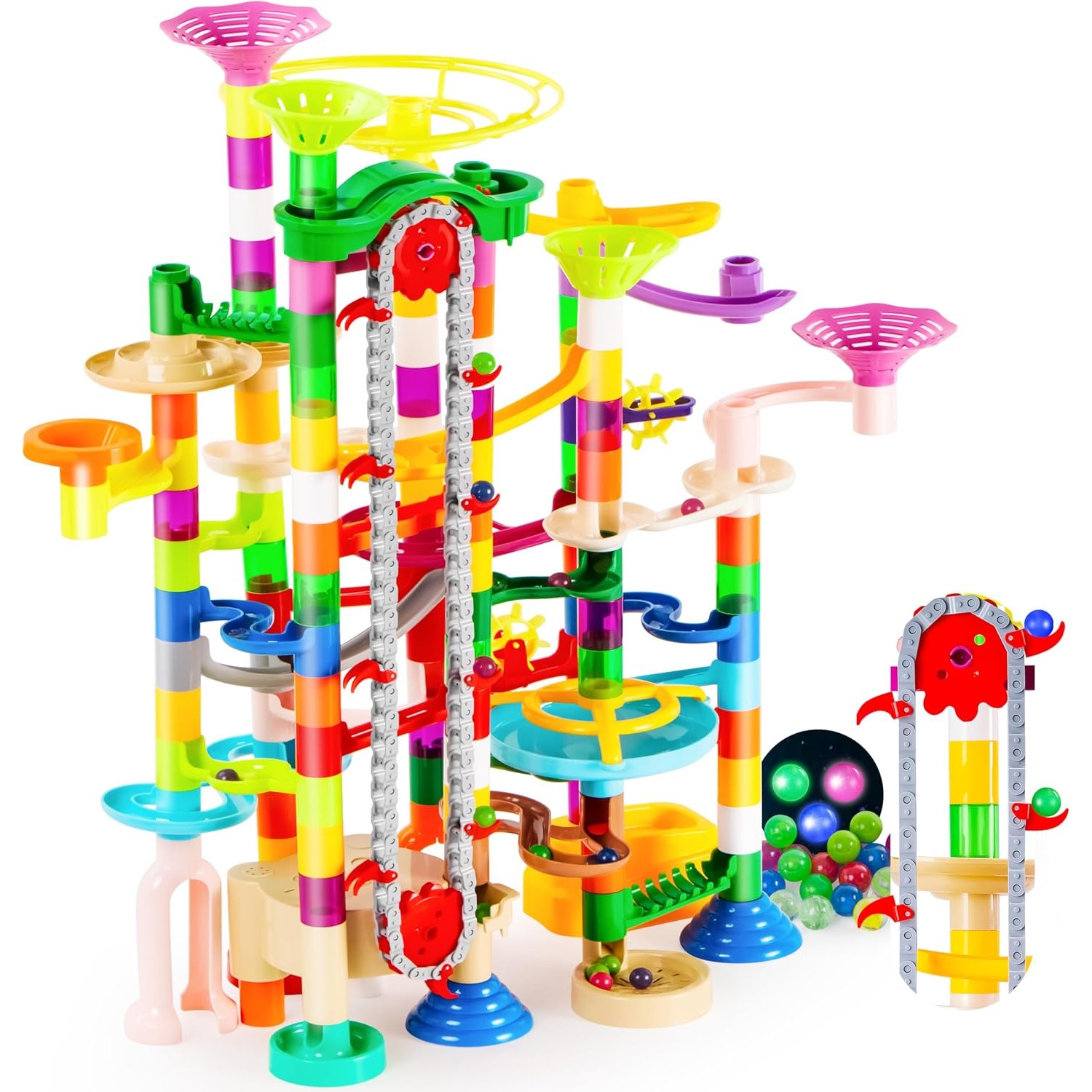
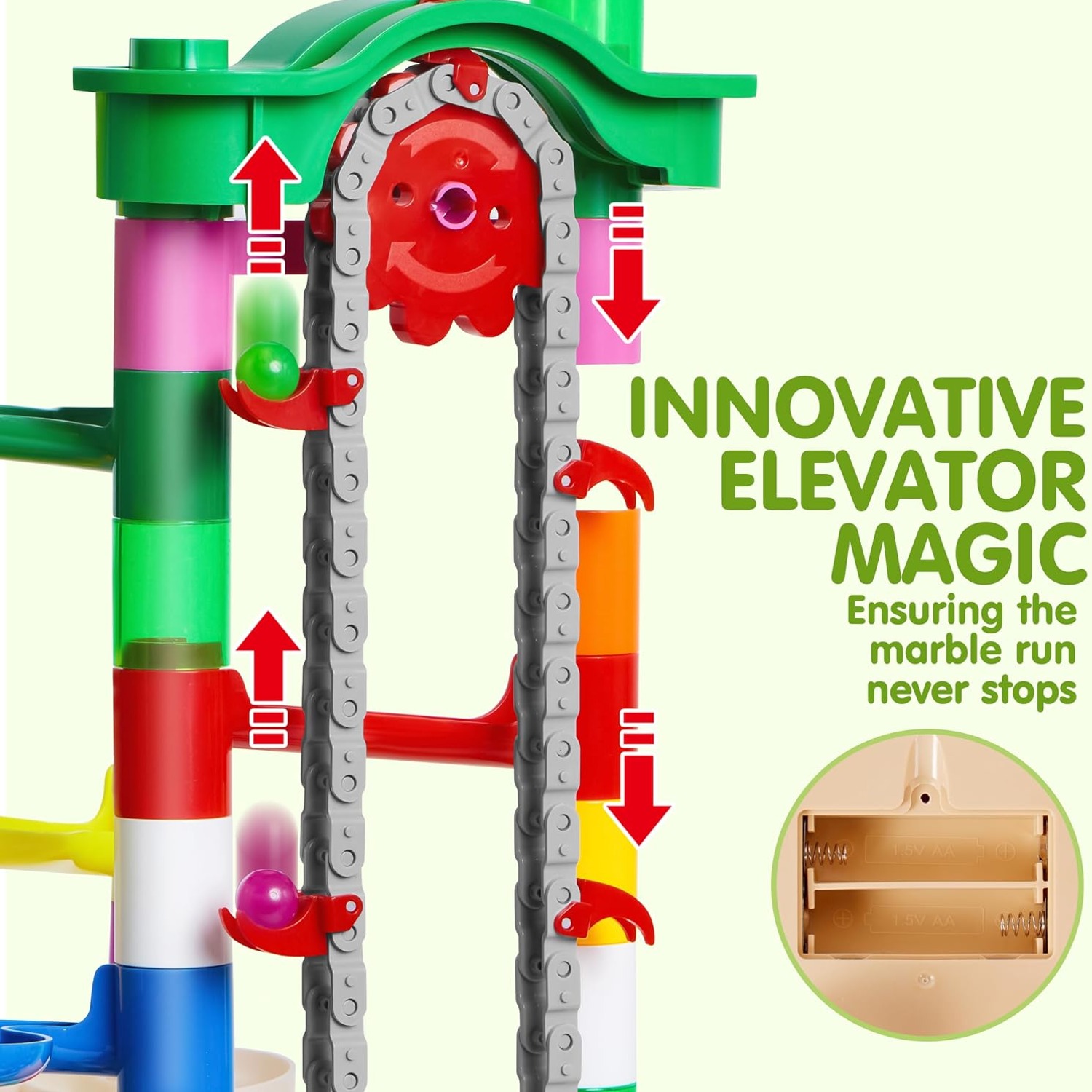
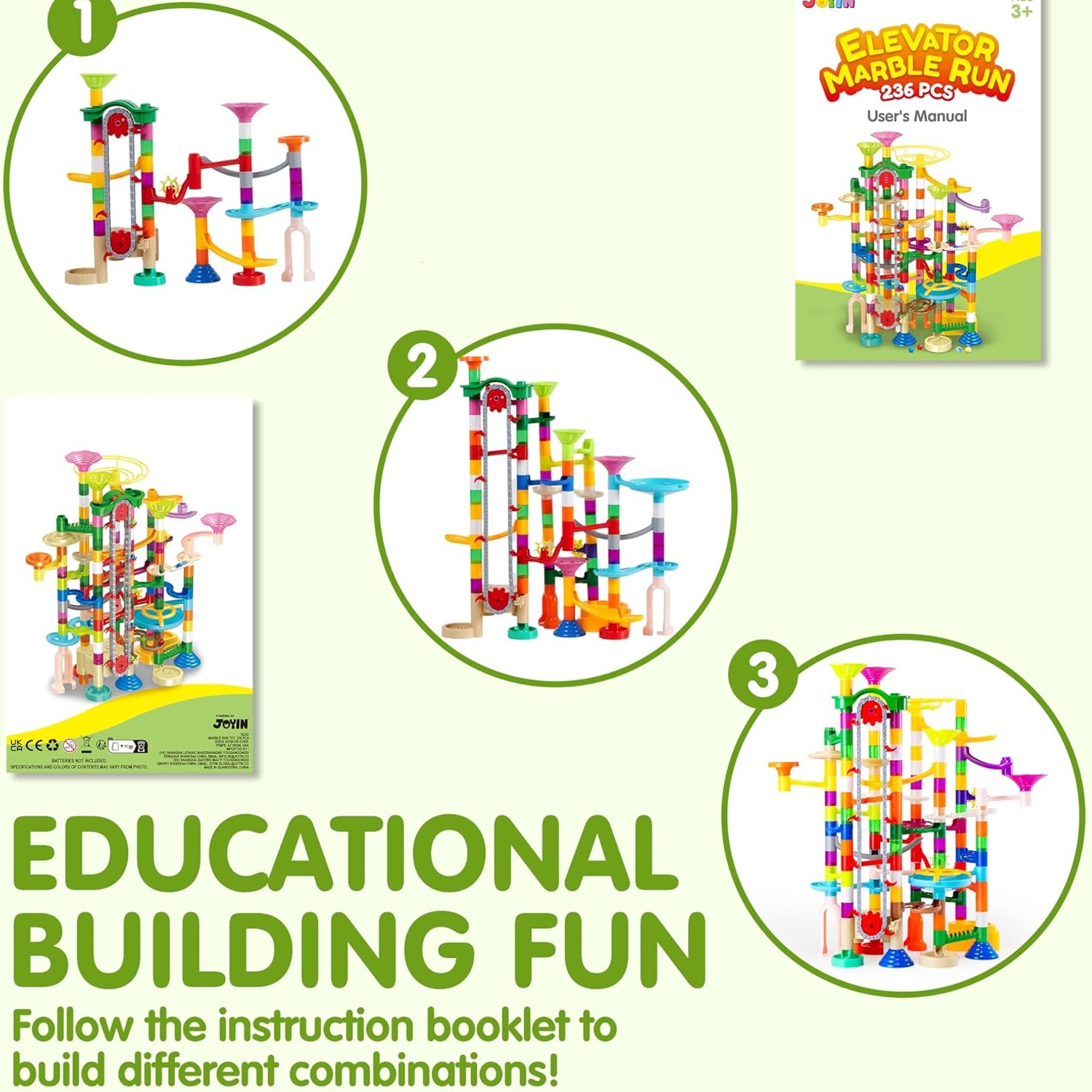
A motorised marble run changes the pattern. The elevator on this 236-piece set picks marbles up at the base and carries them back to the starting point on its own. The marbles keep circulating. The child keeps watching, and more importantly, keeps tinkering, because now they can adjust one corner and immediately see the result without resetting the whole thing.
That one difference is the main reason to spend a bit more on a powered set.
What you actually get
The headline number is 236 pieces, and it is worth breaking that down so you know what you are buying.
There are 176 track pieces. That is the bulk of the set, and it is a generous amount of track. It gives you enough to build a decent tower with real height, or to run a long horizontal course across a table, or to split the set between two children working on separate sections.
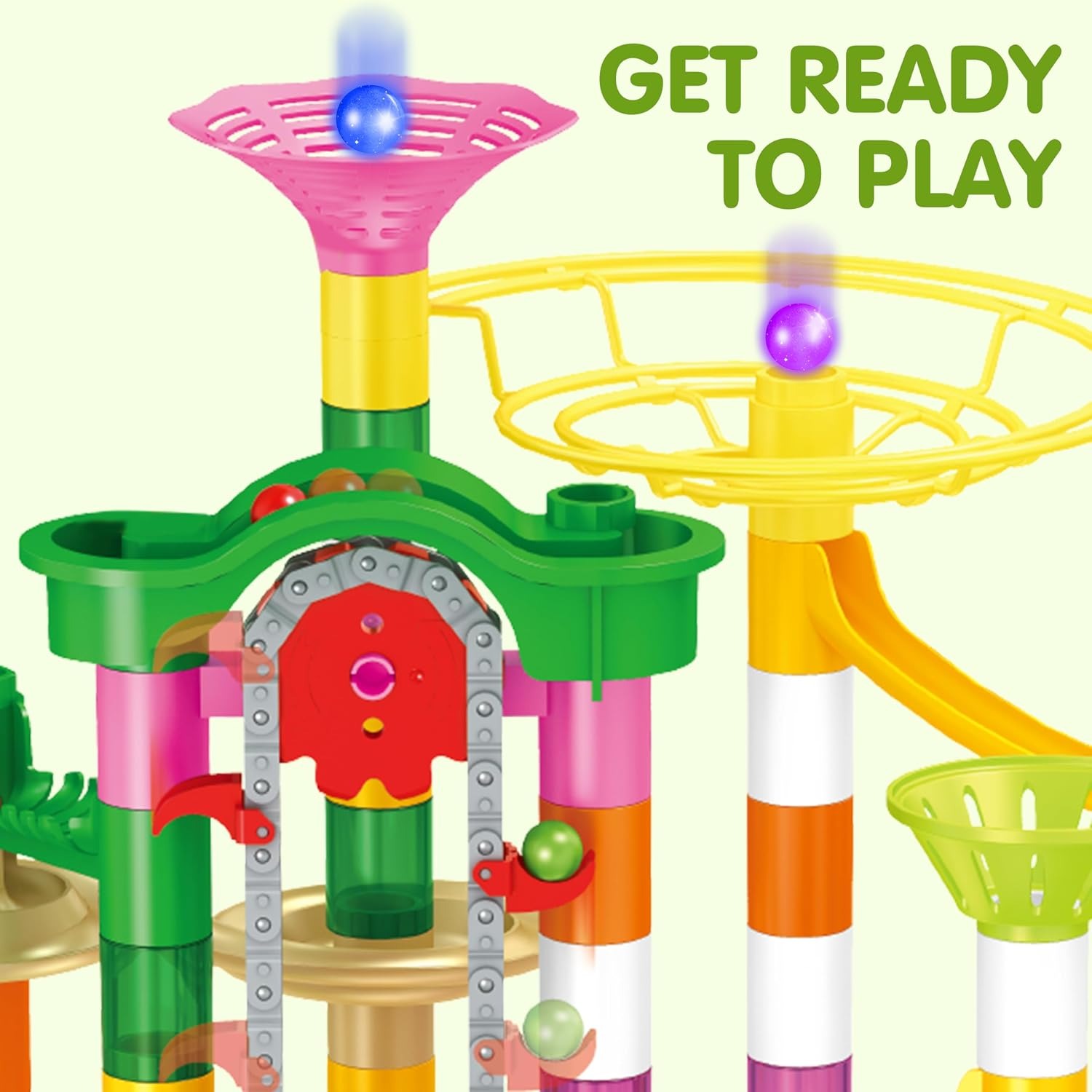
Then there are 60 marbles across three types. Fifteen are plastic, fifteen are glass, and thirty glow in the dark. The glow marbles are the ones kids remember. Charge them under a lamp, kill the room lights, and the whole track turns into a moving line of light. It is genuinely good, and it gives the set an evening use that most construction toys do not have.
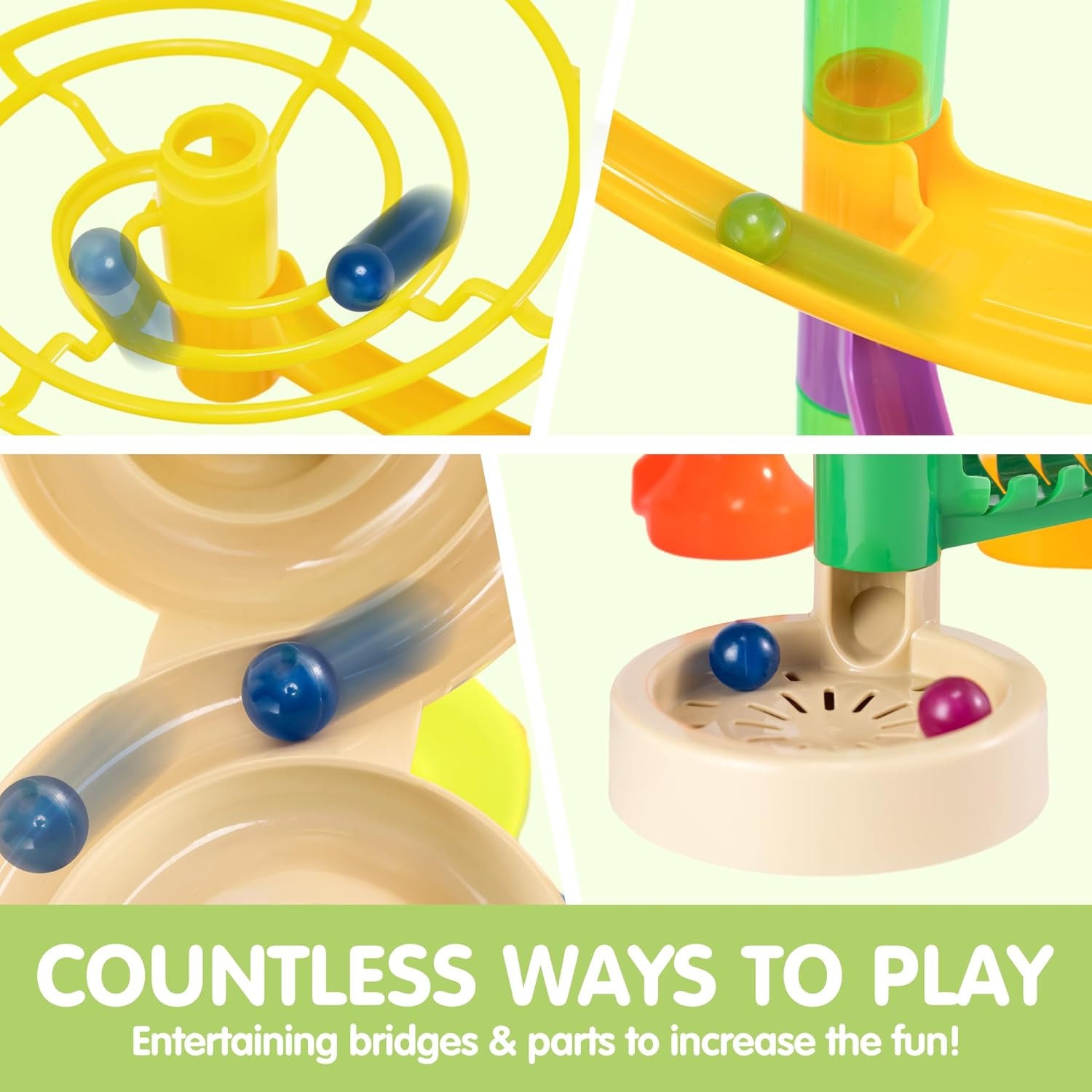
The glass and plastic marbles are not just filler either. They weigh different amounts, so they behave differently on the same track. A heavier glass marble carries more speed through a curve. A lighter plastic one may stall on a shallow slope. That contrast is a free physics lesson, and children work it out themselves within about ten minutes.
How it works
The track pieces clip together. Each connection sets the angle of the next section, so the build is really a chain of small decisions about slope and direction. Too steep and the marble leaps off the edge. Too shallow and it rolls to a stop halfway down.
Getting this right is the whole game. A child builds a section, drops a marble in, watches it fail, and adjusts. That cycle of test and fix is what the manufacturer means when it lists spatial awareness and logical thinking as the educational focus. Nobody has to explain gravity. The marble explains it.
The elevator sits at the base. Marbles finishing the run feed into it, and the motor lifts them back up to the top entry point. Once the loop is closed, the run becomes self-sustaining and the child is free to stand back and watch, or to start rebuilding a section while the rest keeps running.
Who this suits
The manufacturer recommends ages 3 and up. In practice the experience varies a lot across that range.
A three or four year old will enjoy watching the marbles and dropping them in, but will usually need an adult to do most of the building. That is not a bad thing. Building the tower together is one of the better shared activities you can do with a small child, and it beats another half hour of screen time.
From about six, most children can follow the connection logic themselves. They will build, knock it down, and build something different. This is where a marble maze building set earns its keep, because the set stops being one toy and becomes a system they return to.
Eight and up tends to bring the engineering instinct out. Taller towers, longer drops, deliberate attempts to make the fastest possible course. Some will start timing runs. Some will try to make a marble jump a gap.
It also works well with mixed ages, as long as the youngest in the room is over three. One child builds the tall section, another builds the base, and both argue about the middle.
Choosing between marble run sets
If you are comparing options, a few things matter more than the rest.
Piece count is the obvious one, but look at how it splits. A set that claims 200 pieces but counts 100 marbles is not giving you much track. Here, 176 of the 236 pieces are track, which is the ratio you want.
The powered element is the next thing. A plain gravity set is cheaper, and it is fine. But the stop-and-reload break is real, and if your child has a short fuse for repetitive tasks, a motorised marble run holds attention for much longer.
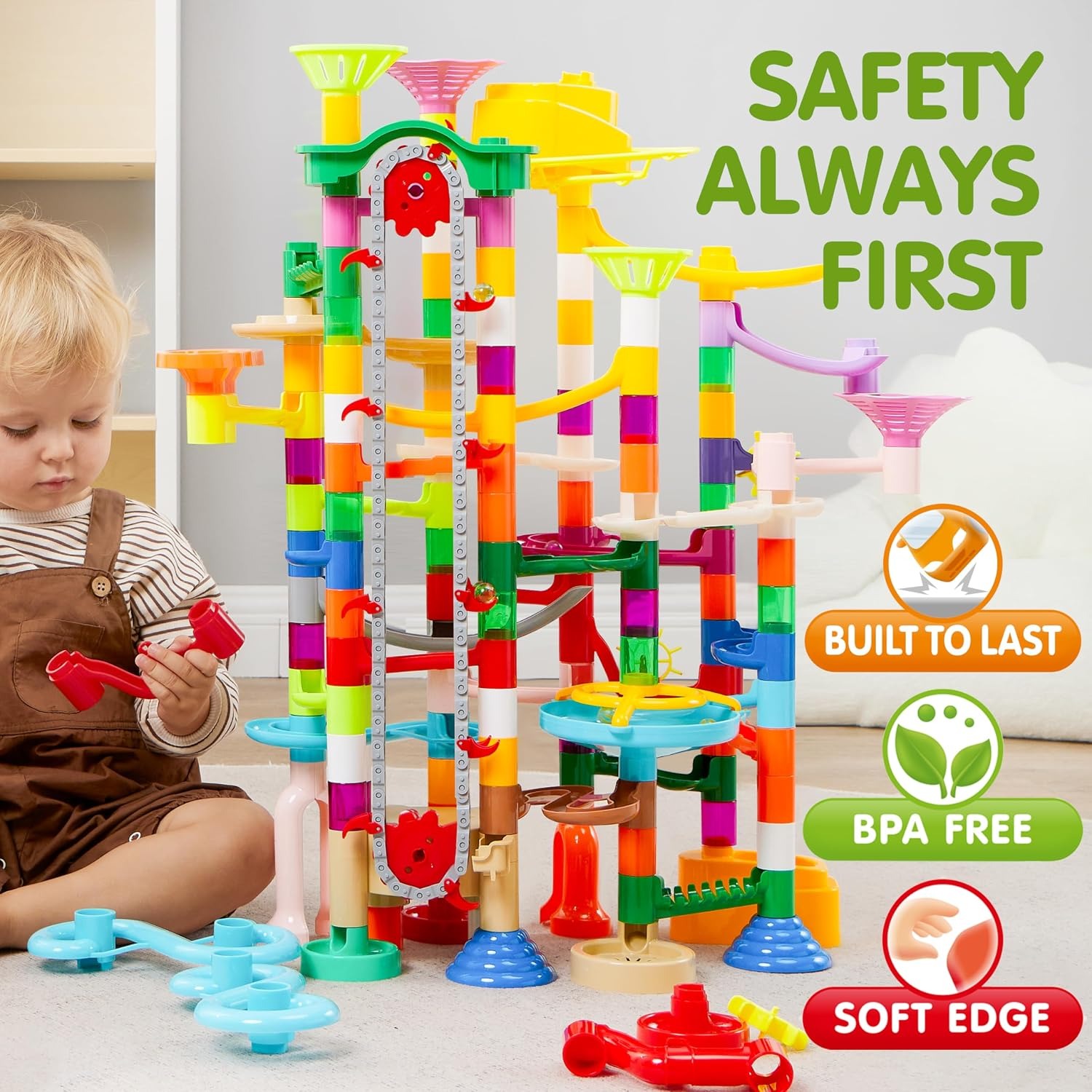
Material matters for durability. These track pieces are plastic, which is standard for this type of toy and handles being dropped, stood on and packed away repeatedly.
The glow feature is a nice-to-have rather than a must. But thirty glow marbles out of sixty total is a substantial share, and it genuinely does give the set a second mode of play for the evening.
Finally, think about where it will live. The listed dimensions are 44 x 28 x 13.5 cm, which fits comfortably on a table or a clear corner of a floor. If space is tight, build upward rather than outward.
Setting it up well
Pick a hard, flat surface. Carpet is workable but makes the base less stable, and marbles that escape the track disappear into the pile. A low table, a wooden floor, or a large tray all work better.
Build from the bottom up and press every joint firmly. Most "it does not work" complaints come down to a connector that was never fully clicked in. Marbles catch on the tiny lip and stall.
Test as you go rather than building the whole thing first. Drop a marble after every few sections. Finding the problem early saves pulling apart twenty pieces later.
For the glow run, charge the marbles under a bright lamp for several minutes before you switch the lights off. The longer the charge, the better the effect.
Care and keeping the pieces together
Cleaning is straightforward. A damp cloth over the track pieces and marbles, then dry them properly before storage. Nothing goes in the dishwasher or the washing machine.
Storage is the part that actually decides how long this set survives. Loose pieces in a toy box means missing pieces within a month, and a marble run with gaps in it is frustrating. Use a lidded tub or a drawstring bag and make packing away part of the routine.
If the set is going into storage for a season, take the batteries out of the elevator unit so there is no risk of leakage.
Count the marbles occasionally. Sixty is easy to check, and finding a shortfall early beats discovering it on the day you want a race.
The short version
This is a large marble run with the one feature that keeps the play going: a motor that returns the marbles to the top so nobody has to. The 176 track pieces give you real building scope, the thirty glow marbles add a night-time version of the game, and the mix of plastic and glass marbles makes the races genuinely different depending on what you drop in.
It suits ages three and up, though the sweet spot is roughly six to ten, where children can build independently and start experimenting with their own designs. Plastic construction, listed at 44 x 28 x 13.5 cm, from JOYIN.
If you want a screen-free toy that gets rebuilt rather than retired, this is a solid pick.