
The complete guide
Choosing a Kids Shopping Trolley Play Set That Gets Played With
The toy that fills the gap between shopping trips
Ask a three year old what they did at the weekend and shopping will come up. Trolleys, aisles, the beeping at the checkout, the moment the bag gets handed over. It is one of the few adult routines children see start to finish, which is exactly why they want to copy it.
The problem is that most homes have the bits and pieces of this game scattered everywhere. A plastic apple from one set, a basket from another, a handbag standing in for a trolley. Children end up spending more time gathering props than actually playing. A kids shopping trolley play set solves that by handing over the whole scene at once: something to push, something to fill, something to carry it home in.
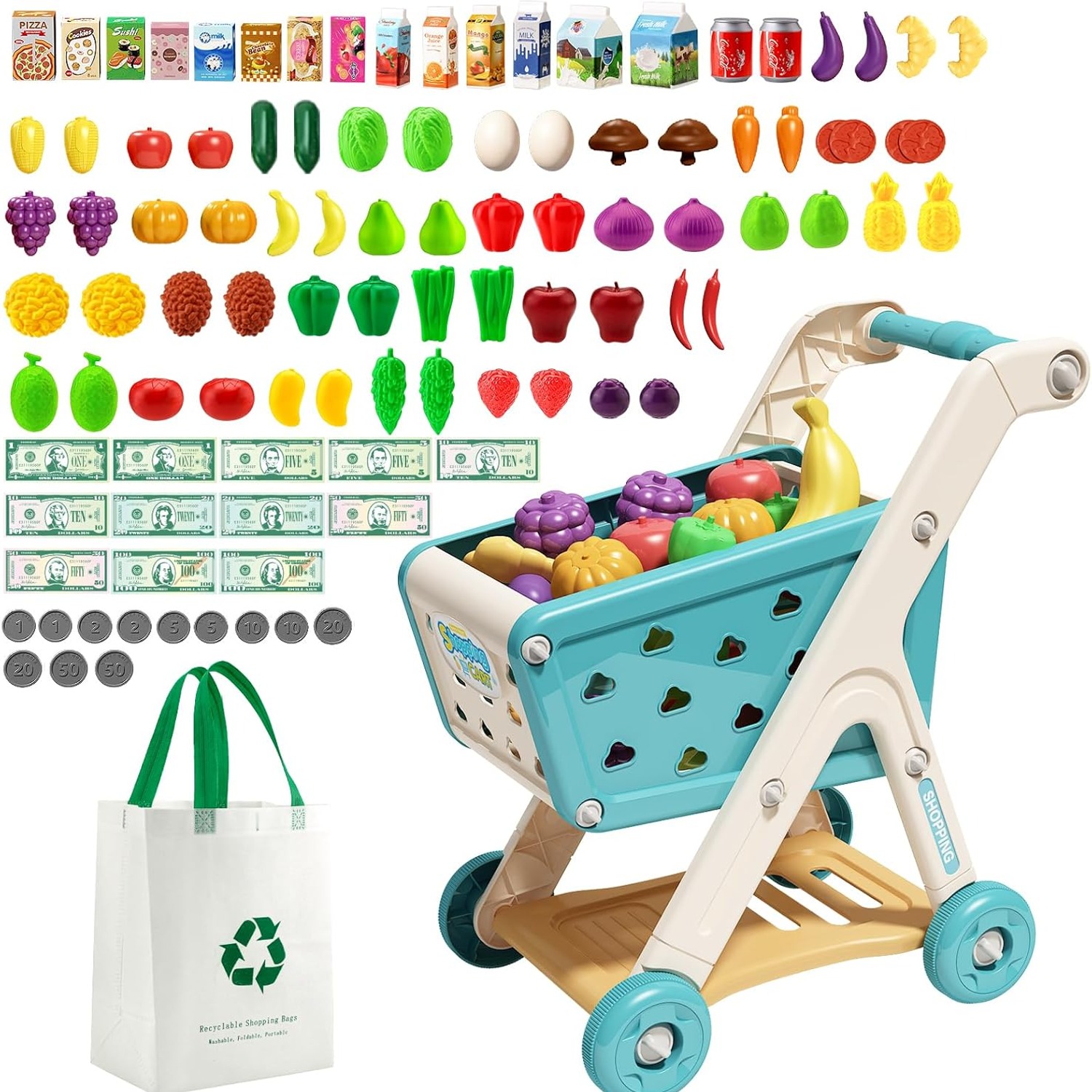
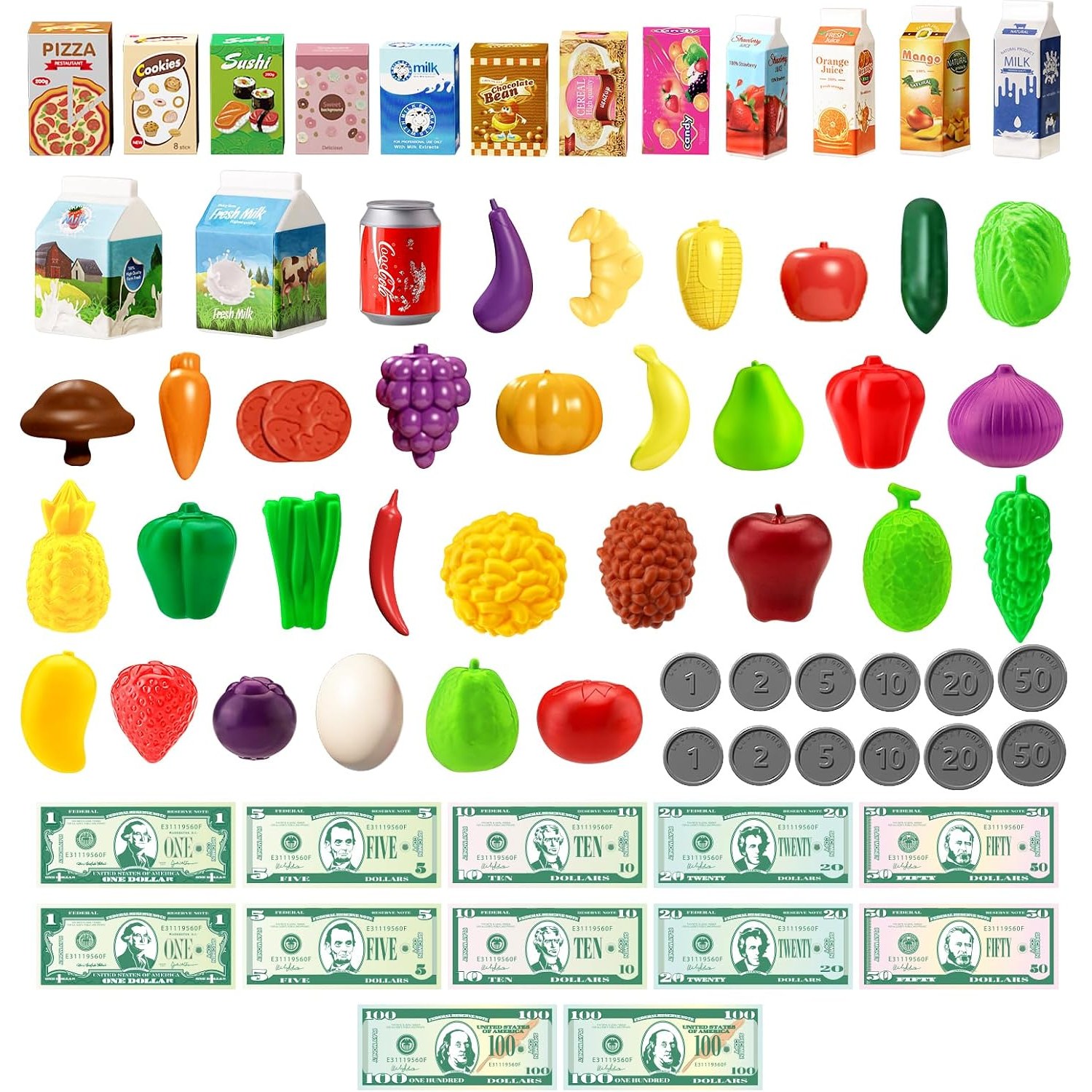
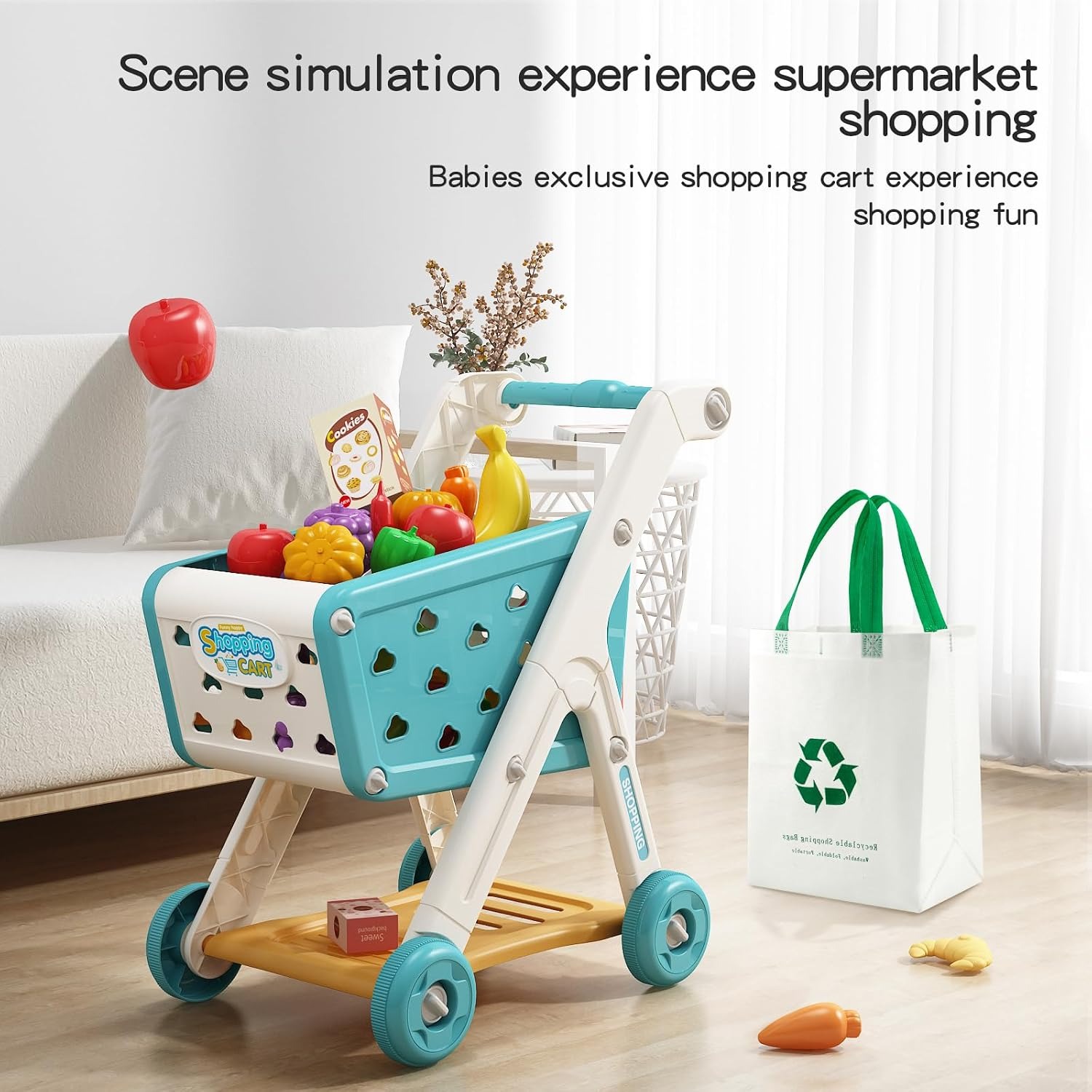
This one is the Jovow 102-piece set. It gives you a green child-size trolley with three levels of storage, a shopping bag, 60 fruit and vegetable pieces and 16 fast food pieces. That is enough to run a shop, a kitchen, a market stall and a delivery round, often in the same afternoon.
How a trolley set actually gets used
Watch a child with one of these for ten minutes and a pattern shows up. The first stage is loading. Everything goes in, as fast as possible, usually in no order at all. The second stage is sorting, which tends to arrive a bit later: fruit on one level, the takeaway food on another, the heavy stuff down the bottom.
That is where the three levels earn their keep. A single basket just becomes a bucket. Three levels invite decisions. Where does this go? What sits next to what? Children start grouping by colour, by type, by whatever logic they have invented that day. None of it needs an adult to explain.
The third stage is the transaction. A shop needs a shopkeeper, so a sibling, a parent or a patient stuffed bear gets recruited. Prices get made up on the spot. The bag comes out. The shopping goes home, gets unpacked, and then someone decides it all has to go back on the shelves so the shop can open again. That loop is the whole point of a good role play shopping set. It restarts itself.
What the cart is like to push
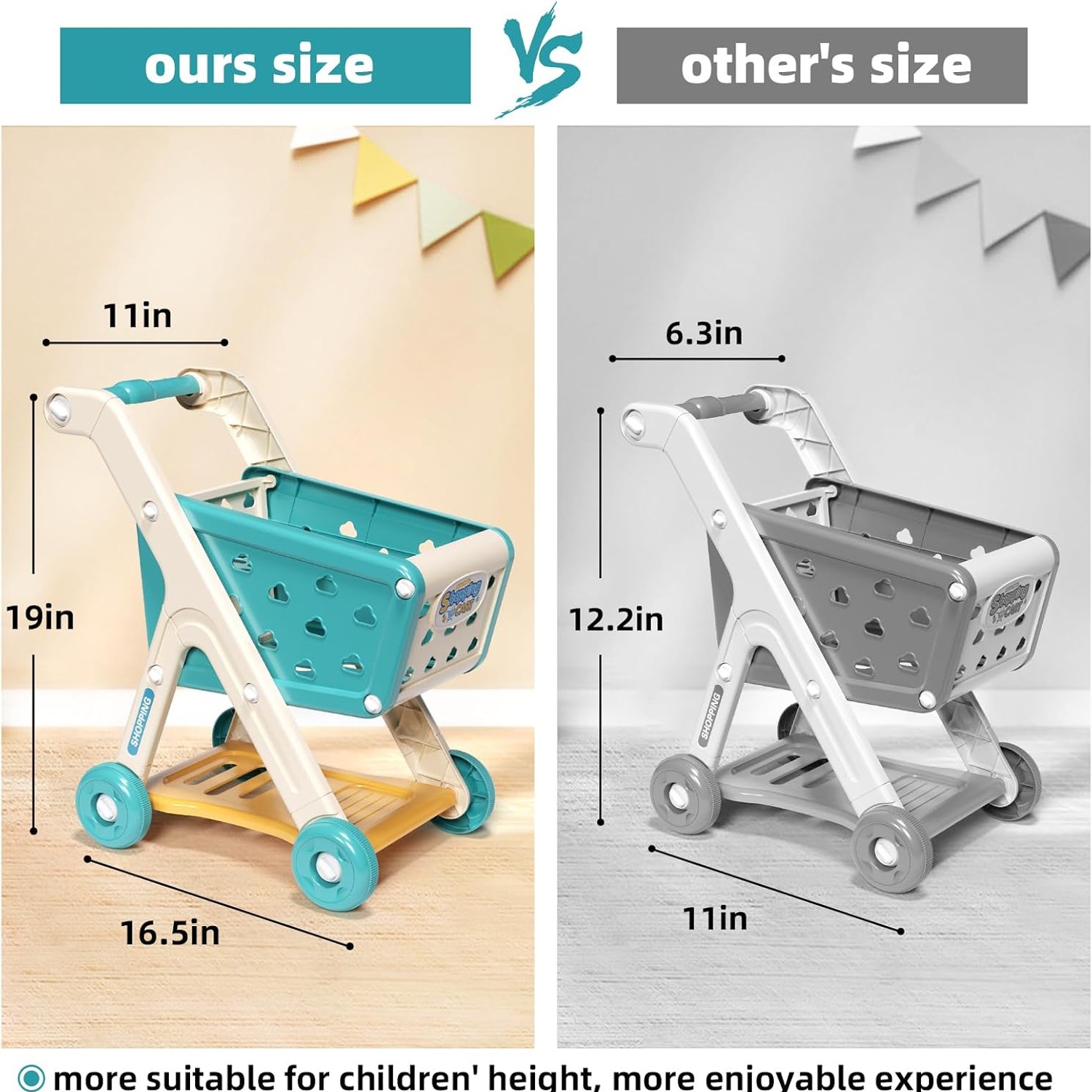
Size matters more than people expect with a toy trolley. Too tall and a child has to reach up and over, which means they steer with their chest instead of their hands. Too small and it is a basket on wheels, not a trolley. This one is listed as child-size, with packed dimensions of 32.3 x 25.4 x 16.8 cm and a weight of 1.09 kg.
Light is good. A child can lift it over a door threshold, drag it onto a rug and carry it to another room without help. It also means that when it inevitably gets pushed into a skirting board at full speed, there is not much force behind it.
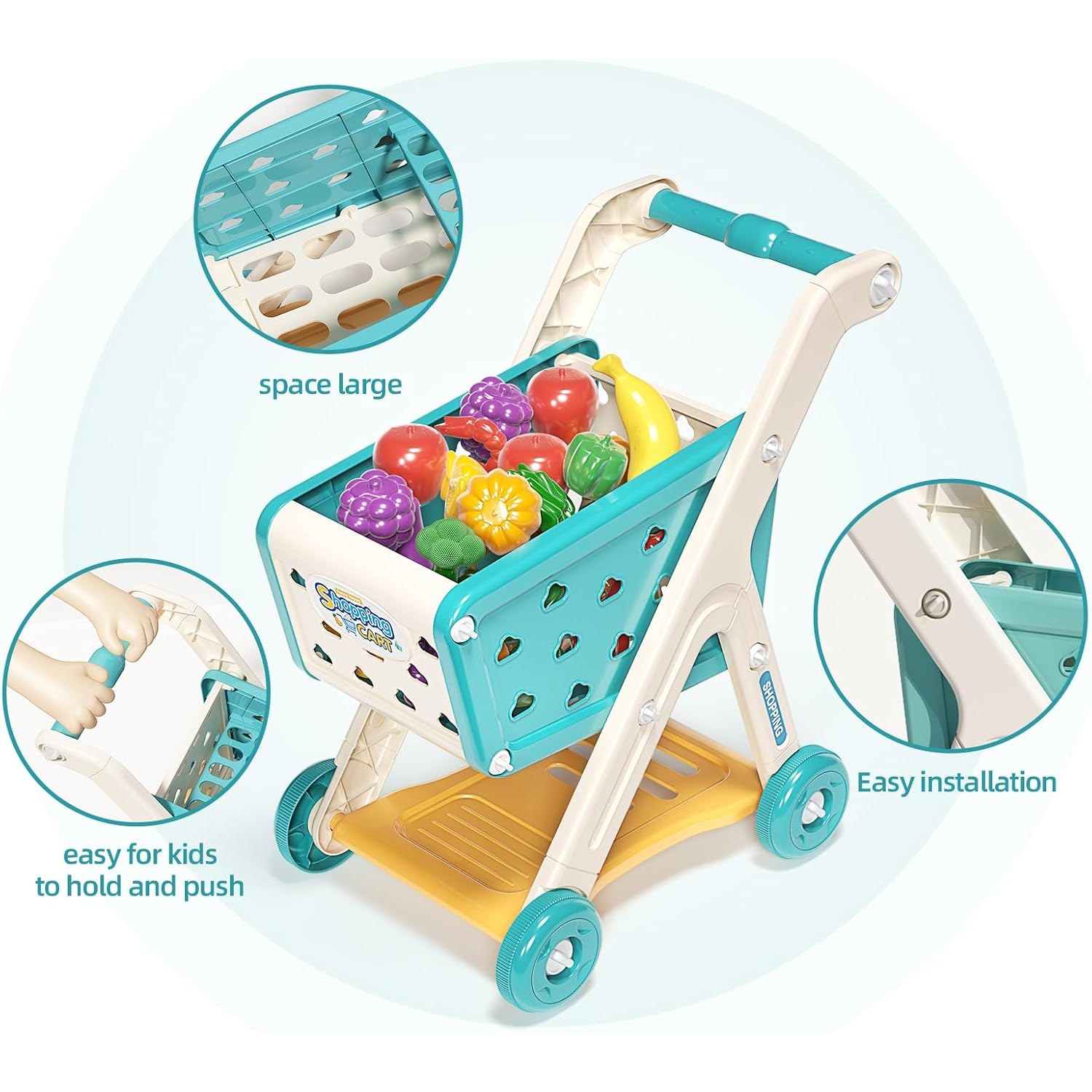
The frame is ABS plastic, a rigid material widely used in toys because it keeps its shape and copes with being knocked about. The edges are rounded rather than squared off. The wheels are round and suit a range of surfaces, and they are designed not to scratch floors, which is worth knowing if you have timber or polished concrete.
One practical note: the cart requires simple assembly out of the box. This is a few minutes with the supplied parts, not an afternoon project. Do it before the gift gets opened if you want to skip the waiting.
Who it suits
The manufacturer recommends ages 36 months to 14 years. That is a wide band, so it helps to think about where in it your child sits.
Around three to four, the appeal is mostly physical. Pushing, filling, tipping out, filling again. Vocabulary comes along for the ride as adults name things while they are being loaded. This is the age where a toy shopping cart for preschoolers really earns its space.
From five to seven, the pretend play gets more structured. There are rules, prices, opening hours and a lot of serious negotiation. Children at this age like a pretend play food set with variety, because they want their shop to feel stocked. Seventy six food pieces does that job.
Older children usually take on the organiser role. They set up the shop for a younger sibling, run the till and invent the system. That is still genuine play, and it keeps the set in use long after the first owner has moved on.
It also pairs naturally with a play kitchen. The theme on record is kitchen, and the food pieces move happily between shopping games and cooking games.
How to choose between sets
If you are comparing options, a handful of things separate the sets that last from the ones that get shoved in a cupboard.
Piece count is the obvious one, but look at the mix rather than the number. A hundred pieces of the same four shapes is less interesting than a smaller spread of recognisable items. Here the split is 60 fruit and vegetable pieces plus 16 fast food pieces, so there are two distinct play worlds in one box.
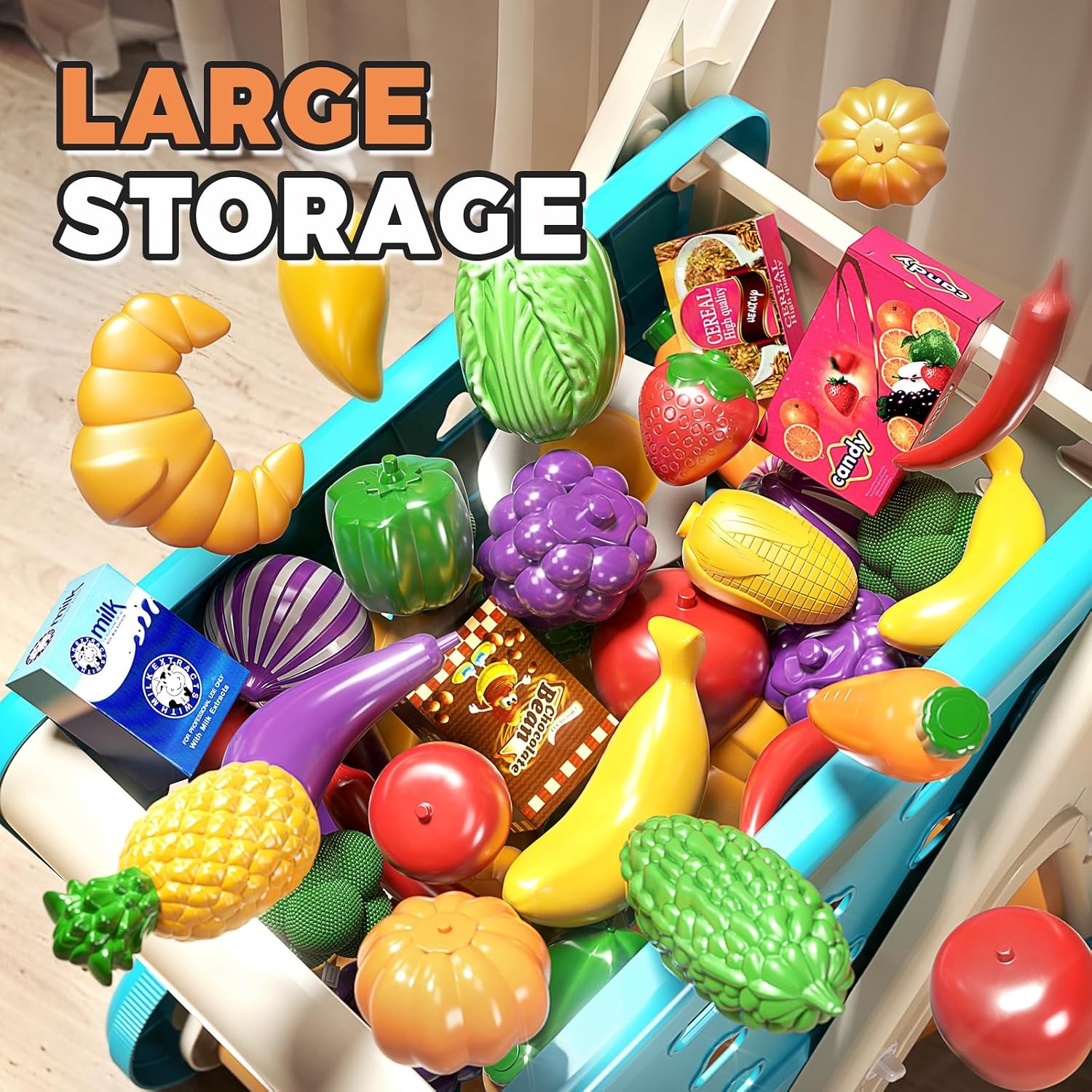
Storage is the quiet differentiator. Single-basket carts fill up and the game stalls. Multiple levels keep the sorting going and let children run a bigger shop.
Material is worth a glance. Rigid plastics like ABS hold their shape through years of being stood on. Thin, flexible plastic tends to crack at stress points where the wheels meet the frame.
Then there is the bag. It sounds like an afterthought, but carrying the shopping home is half the fun, and it doubles as storage when play is over.
Keeping it in good shape
Care is simple, which is the way it should be with a toy this busy.
Wipe the frame and the food pieces with a damp cloth and a little mild soap. Dry everything before it goes away so nothing sits damp in a tub. Skip the dishwasher and the washing machine entirely. Heat and plastic toys do not mix, so keep the set away from heaters, hot plates and sunny windowsills where plastic can warp or fade.
Every now and then, check the wheels and the joints. Toys that get pushed hard work their fittings loose over time, and a quick tighten keeps the cart rolling straight. Pull hair and carpet fluff out of the wheel axles if it starts to drag.
For storage, the trolley is its own container. Food in the bag, bag in the basket, trolley parked in a corner. If pieces start turning up under the sofa, a shallow lidded tub kept beside the cart gives everything a home and makes the tidy-up a part of the game.
The short version
A kids shopping trolley play set works because it copies something children already understand. This Jovow set gives you a green ABS trolley with three storage levels, a shopping bag, and 102 pieces in total including 60 fruit and vegetable items and 16 fast food items. It weighs 1.09 kg, measures 32.3 x 25.4 x 16.8 cm, needs a quick assembly, and is recommended for ages 36 months to 14 years.
It suits children who are already playing shops with whatever they can find, and it suits households that would rather have one complete set than a drawer of mismatched bits. Keep it indoors, wipe it down now and then, and it will keep opening for business.