
The complete guide
How to Choose a Robot Building Kit That Actually Gets Built
The toy that gets opened once
Every house with children has one. A building set that came out on a birthday, got halfway through step four, and has been in a cupboard ever since. Usually it was not the child's fault. The instructions were confusing, a part did not fit, or the finished model just sat there looking at nobody.
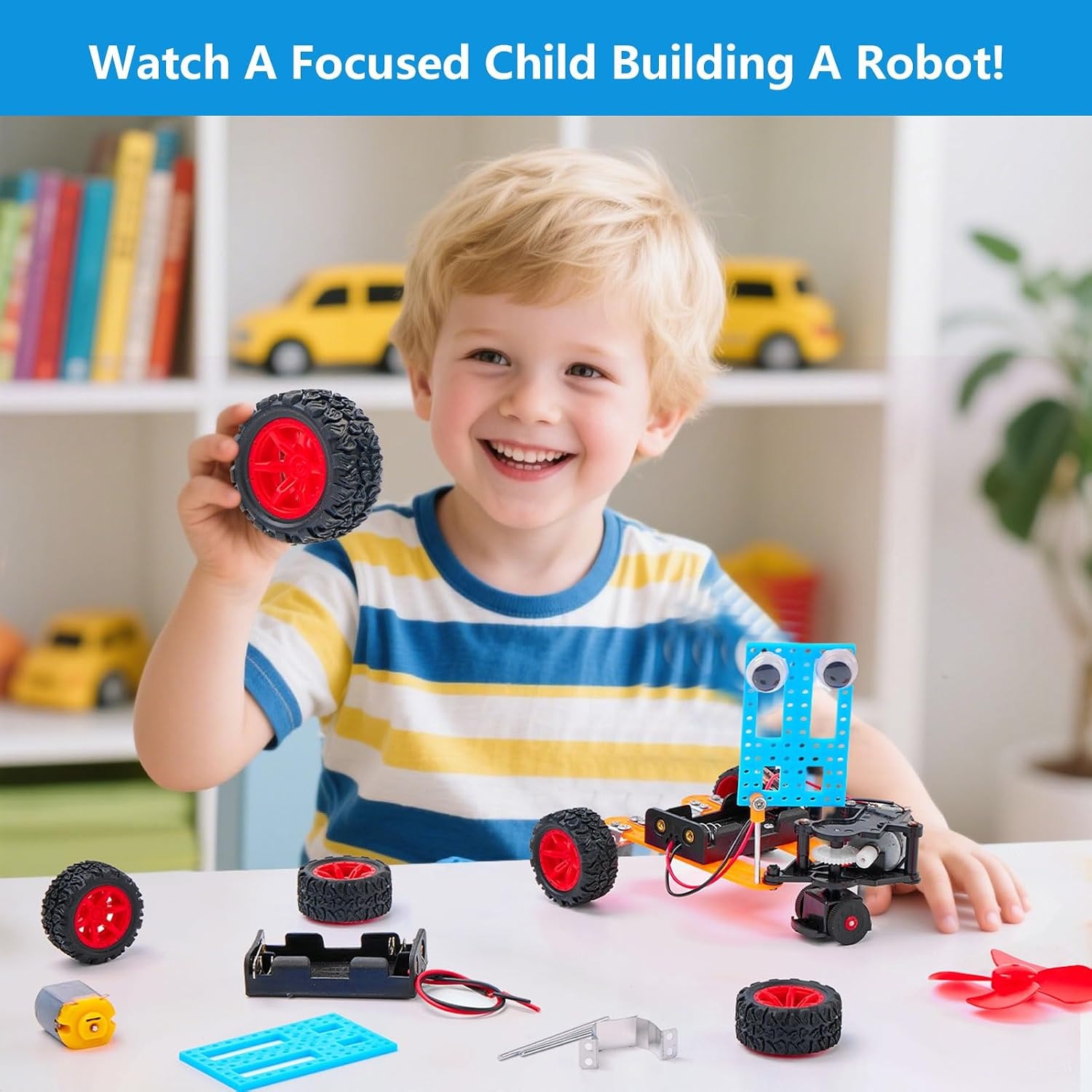
A motorised robot kit sidesteps a lot of that. The build has a payoff you can see. When the last screw goes in and the motor spins up, the thing moves. Children who are not naturally patient will push through a tricky step if they know something is going to crawl across the carpet at the end of it.
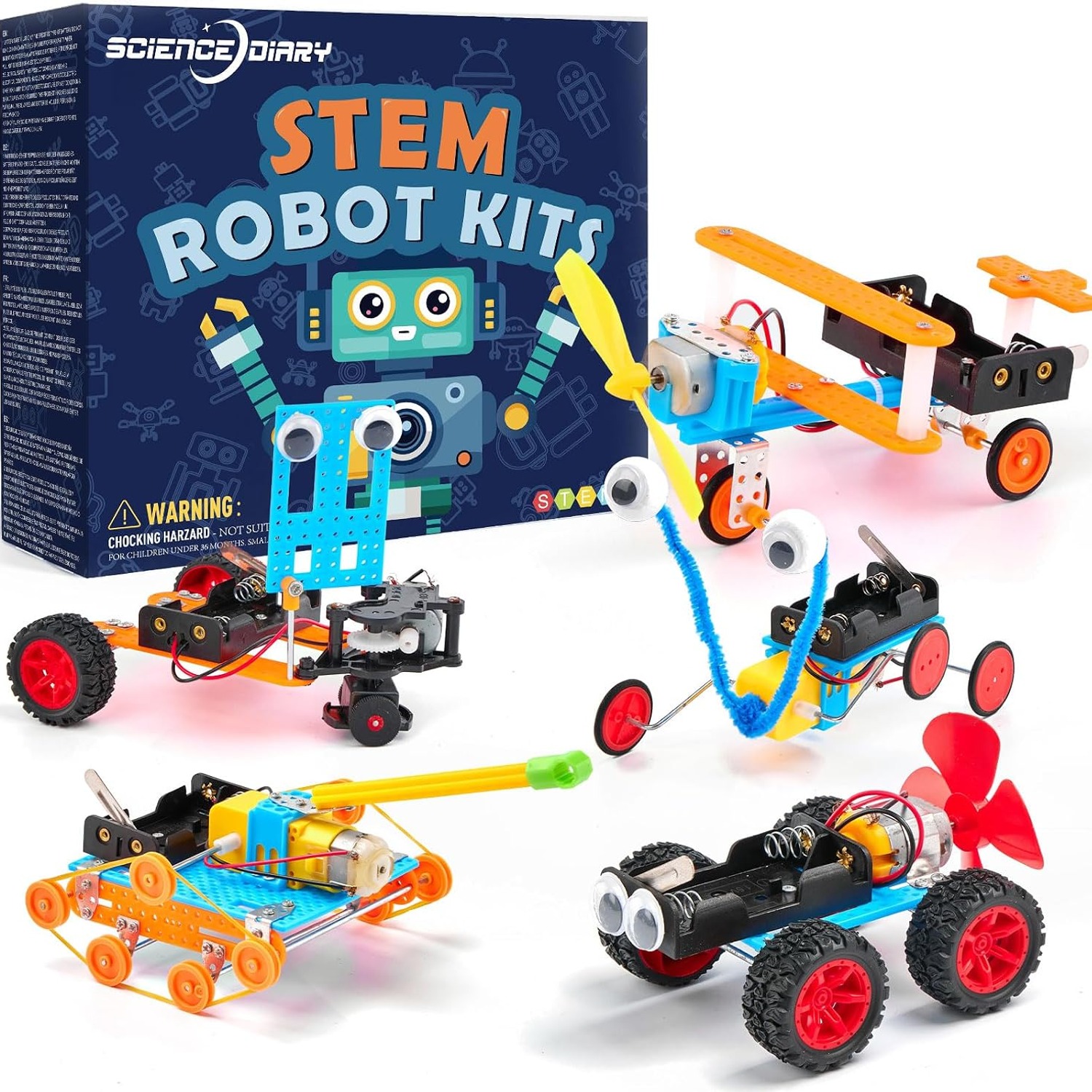
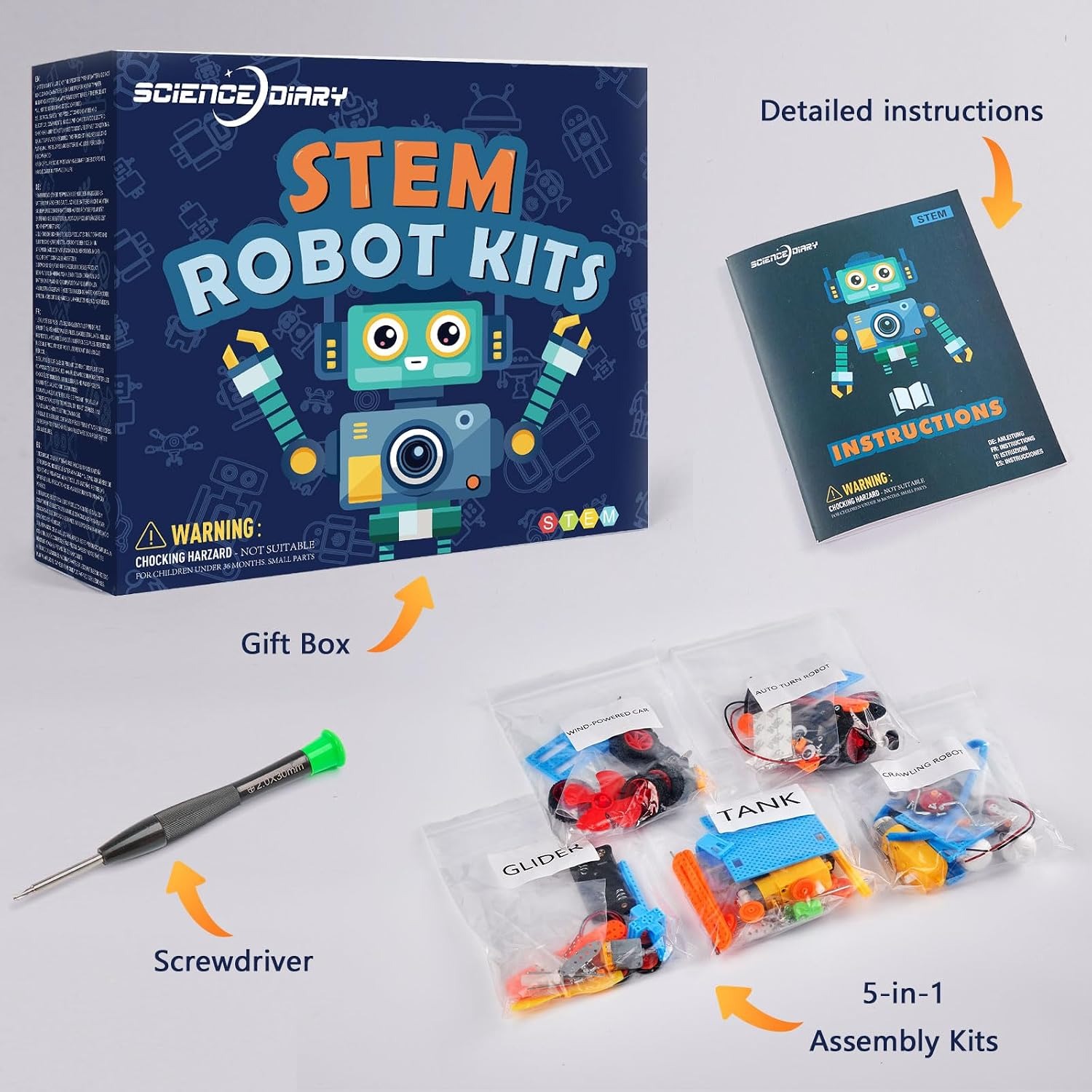
The 5-in-1 Robot Building Kit from SCIENCE DIARY is built around that idea. Five models, one set of parts, a motor and a screwdriver in the box. It is aimed at ages 8 and up, and it is the kind of set that gets rebuilt rather than shelved.
How a 5-in-1 kit works
The "5-in-1" bit is worth explaining properly, because people sometimes expect five finished robots sitting on a shelf. That is not how it works.
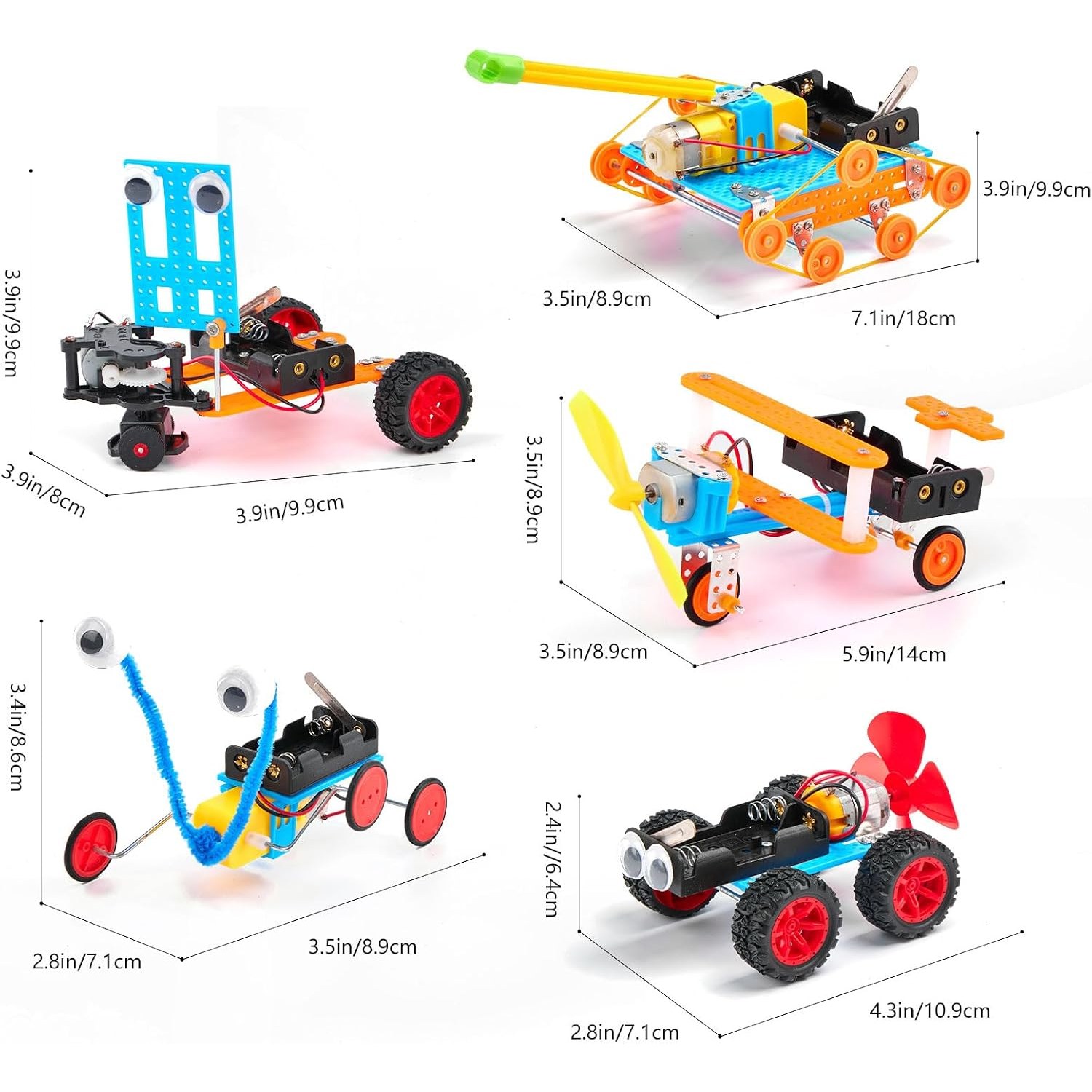
You get one set of parts. Those parts build a wind-powered car. When your child is done with that, they take it apart and build the tank. Then the glider, then the crawling robot, then the auto-turn robot. Each model uses the same components arranged differently.
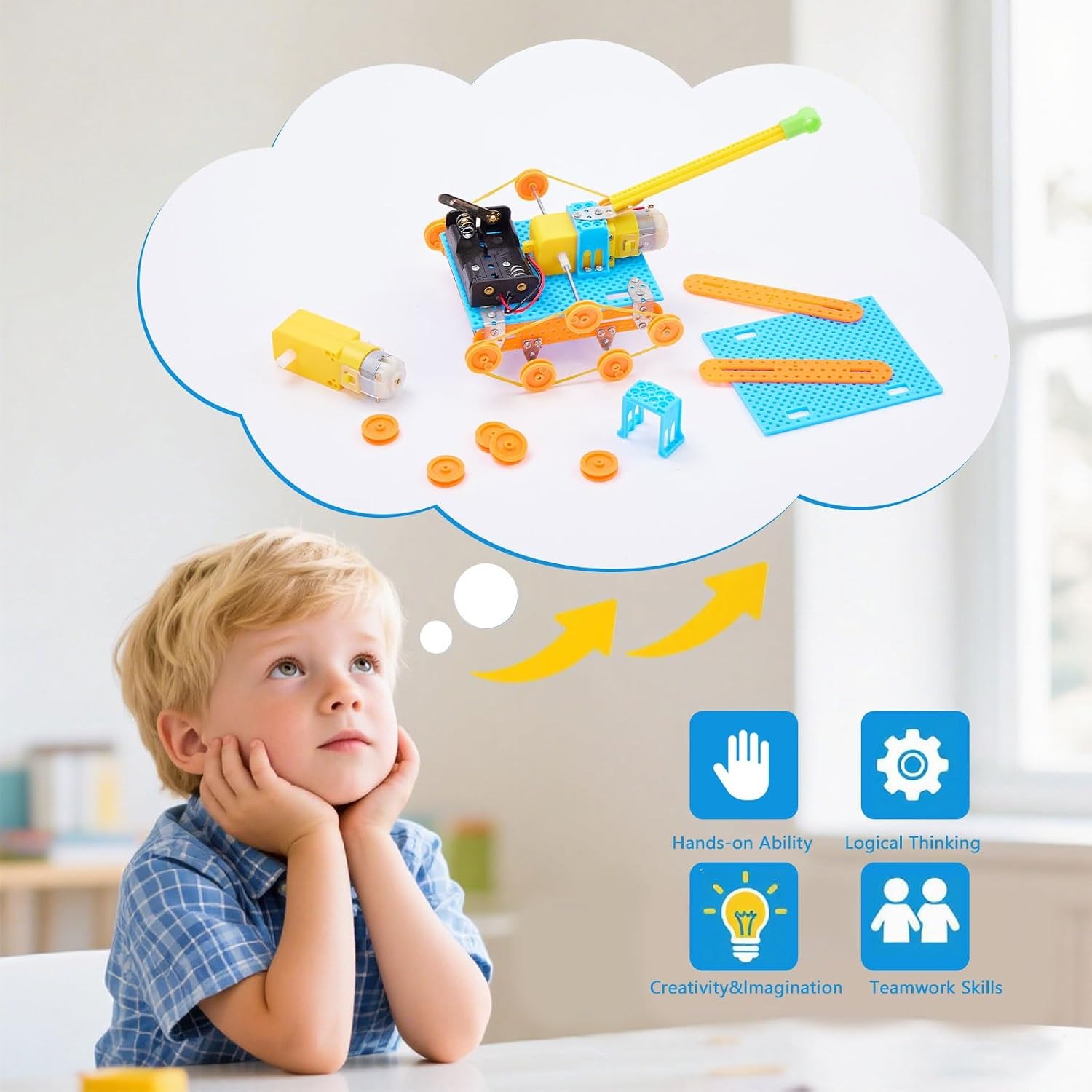
That sounds like a limitation. It is actually the most useful feature. Taking something apart and rebuilding it into something else is where the learning happens. A child who has built all five has handled the same gear five different ways and started to understand what it does. That understanding does not come from clicking pre-made modules together.
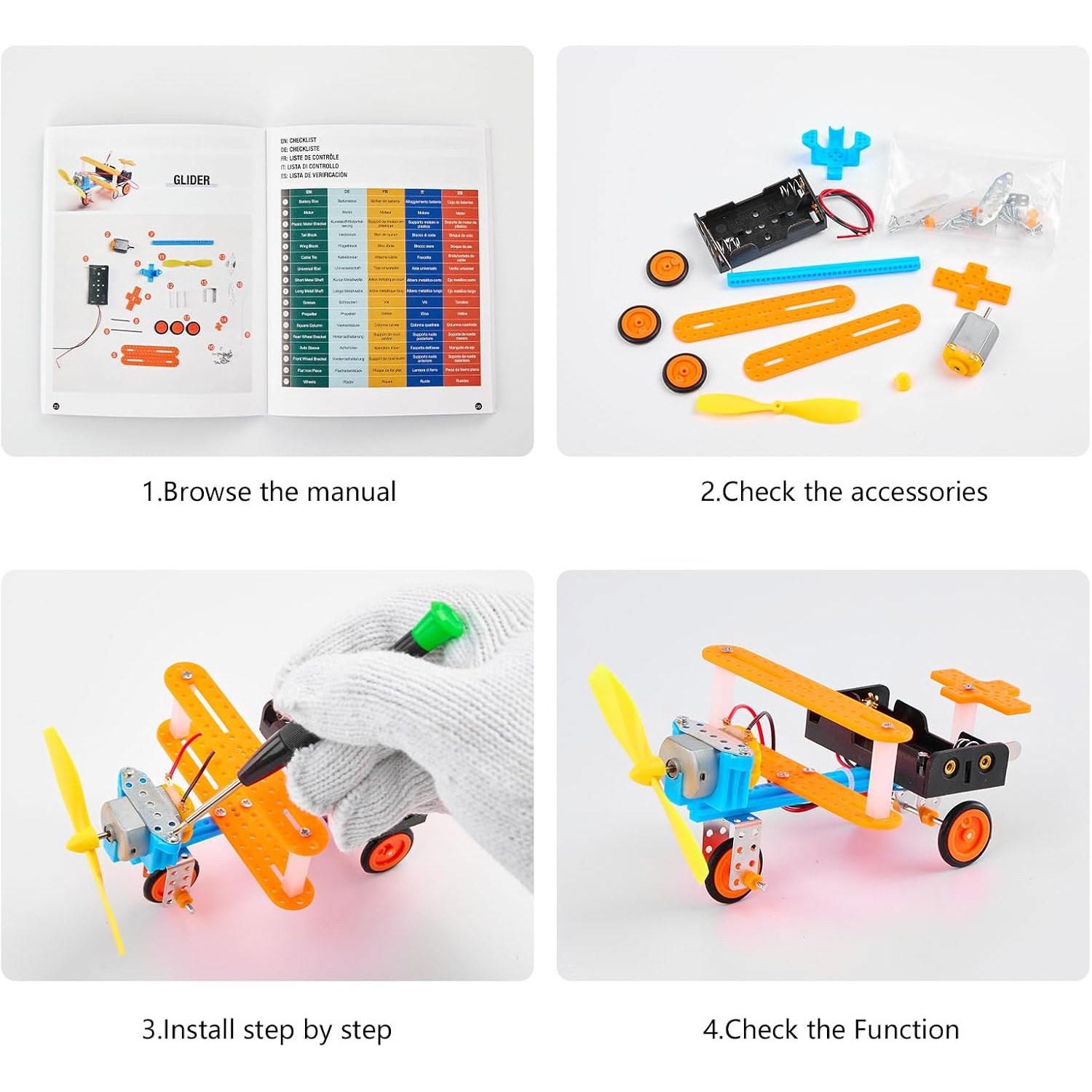
The screwdriver in the box matters more than it sounds like it should. Screws mean the build is reversible. A child can undo a mistake instead of forcing a part and snapping it. It also means the models hold together properly once finished, so they survive being carried into another room to be shown off.
Who this kit suits
The recommended age is 8 and up, and that is a fair call. At 8, most children can read a step, find the right part, and get a screw started without help. They can also handle the frustration of a step that does not work first time, which is honestly the bigger hurdle.
Children of 6 or 7 can absolutely do this, but with an adult alongside. The adult reads the step, the child fits the part, and the adult handles anything fiddly. Done that way it becomes a shared project rather than homework, and that is often when these kits are at their best. Some of the best rainy day activity for kids options are the ones where everyone is at the table.
Older children, say 10 to 12, will move through the builds faster. For them the interest shifts from "can I build it" to "what happens if I change this". That is a good sign. The set is simple enough that experimenting does not break anything expensive.
It also works for children who are not sporty, not loud, and not that interested in team games. A quiet builder who likes figuring out how things fit together will get a lot out of a set like this.
What to look for when comparing kits
If you are weighing this against other options, a few things separate a kit that gets used from one that does not.
Does the motor come with it? Plenty of listings show a moving robot and then sell the motor separately. This one includes it. Check the fine print on anything you compare.
Are batteries included? Here, they are not. Neither are they in most kits at this price. The practical fix is simple, buy a pack when you buy the kit. Nothing takes the shine off a birthday faster than a finished robot that cannot move because the shops are shut.
How clear are the instructions? This is where most kits fall down. The SCIENCE DIARY manual is illustrated at every stage and printed in English, German, French, Spanish and Italian. Pictures carry a child further than paragraphs do, especially at 8.
How many builds do you get? One model means one afternoon. Five models means five, and probably more once a child starts rebuilding favourites. For families comparing a best educational building kit against a single fixed model, that repeat value is the deciding factor.
Is there a tool in the box? A screwdriver sounds minor until you are hunting through a drawer for one that fits. A best screwdriver toy set includes the right tool sized for small hands.
Setting up for a good first build
A little preparation makes a big difference.
Clear a table rather than working on the floor. Screws roll, and carpet swallows them. Put a shallow bowl or a lid on the table and empty the small parts into it.
Read the first page of the manual together, even if your child wants to dive in. Knowing which model they are building and roughly how many steps it takes helps them pace themselves.
Pick a build time when nobody is tired. A first attempt at 7pm on a school night usually ends in a half-built tank and a sulk. Saturday morning works better.
Fit the batteries before the final step, not after. There is nothing worse than finishing a crawling robot and then discovering the battery compartment needs a part removed to get at it.
Keeping it usable long term
The single biggest threat to a kit like this is losing parts. Not breakage, not wear, just a screw that ends up under the sofa.
Make the box the home for everything. Parts, screwdriver, manual, all back in the box at the end of each session. If your child is partway through a build and wants to leave it, that is fine, just put the loose parts back in the box rather than leaving them on the table.
Keep it dry. The motor and the plastic parts do not like water, so indoors only, and nowhere near a sink or a bath.
Wipe the parts with a dry cloth now and then if they get dusty. If something is sticky, a barely damp cloth is enough. Let it dry fully before rebuilding.
If the kit is going to sit unused for months, take the batteries out. Leaking batteries ruin motors, and that is an avoidable problem.
Gifting it well
This kit comes in colourful retail packaging, so it does not need much help looking like a present. Two small things lift it though.
Add a pack of batteries, taped to the box or dropped in the gift bag. It costs very little and it means the build can be completed the same day.
If you are giving it to a younger child at the 6 or 7 end, think of it as a gift for both of you. Say out loud that you will build the first one together. That turns a slightly intimidating box into something fun rather than a test.
For anyone searching around the best stem gift under 100 mark, this sits comfortably in that range and gives more than one session out of it, which is the main thing.
The short version
A 5 in 1 robot building kit earns its place when the build leads somewhere. This one includes the motor, the tools and clear illustrated instructions, and it builds five different machines from one set of parts. It is pitched at 8 and up, works well as a joint project for younger builders, and needs batteries you supply yourself.
The box is small, the weight is under half a kilo, and the warranty is listed at one year. If you have a child who likes taking things apart to see how they work, this gives them a legitimate reason to do exactly that.