
The complete guide
How To Choose A Beach Sand Toy Set That Actually Gets Used
The problem with most beach toys
Nearly every family owns a bucket and spade. Most of them live in the shed with a crack down one side, a handle that snapped on the second outing, and a pile of dry sand inside. The toys were cheap, the child used them twice, and nobody bothered replacing them properly.
That is a shame, because sand play is genuinely good for kids. It is open-ended, it is physical, it involves water and dirt, and it does not need a parent to run it. A child who is building something out of sand is concentrating in a way that is hard to manufacture any other way. The thing that usually goes wrong is not the child. It is the kit.
A set that works gives a child enough variety to keep going past the first ten minutes, is comfortable to hold, and does not come home as a sandy mess that you quietly throw away. That is a low bar, and plenty of sand toys still miss it.
What twenty pieces actually buys you
The number sounds like marketing until you watch children play. One shovel and one bucket means one activity. Dig, fill, tip, repeat. Fun for a while, then done.
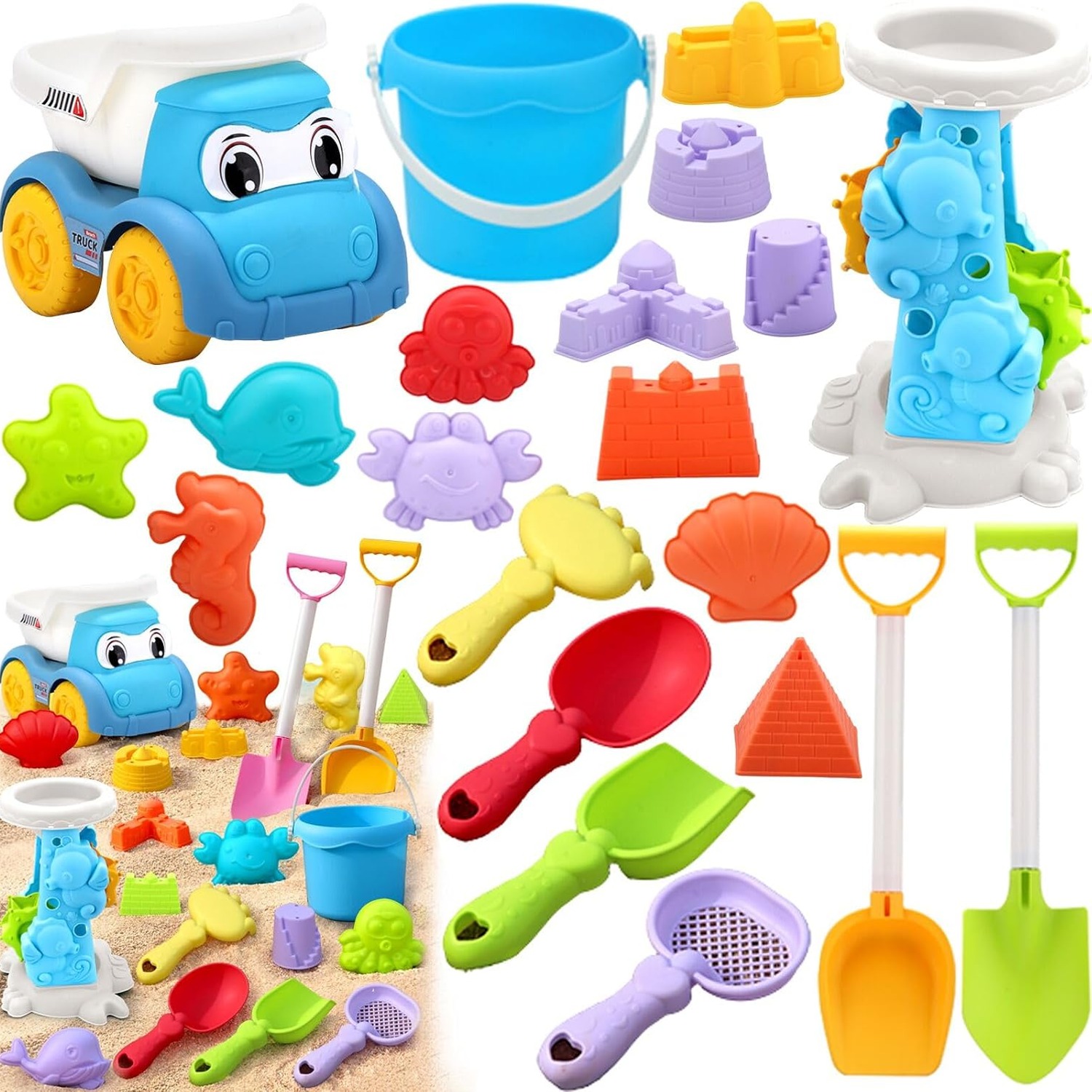
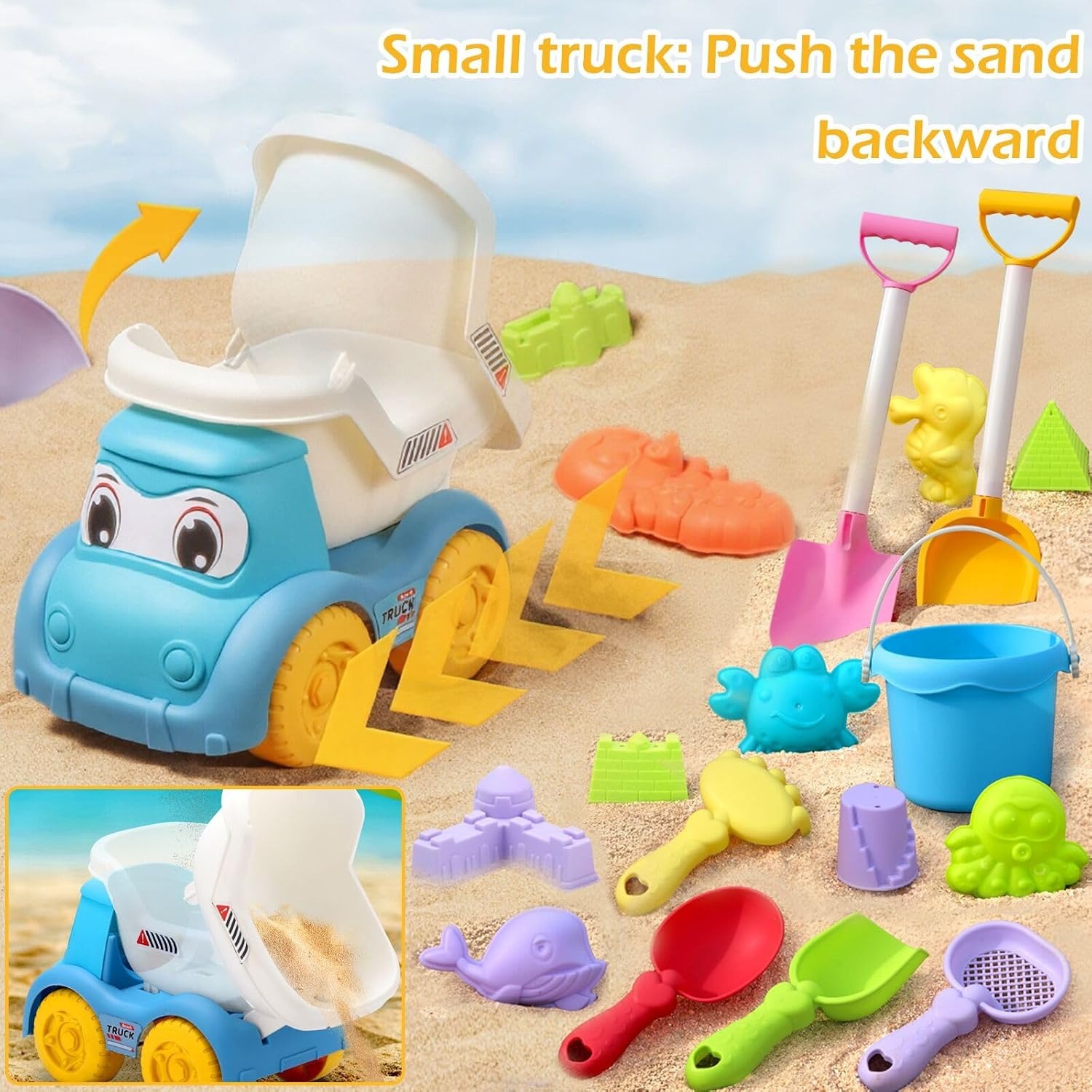
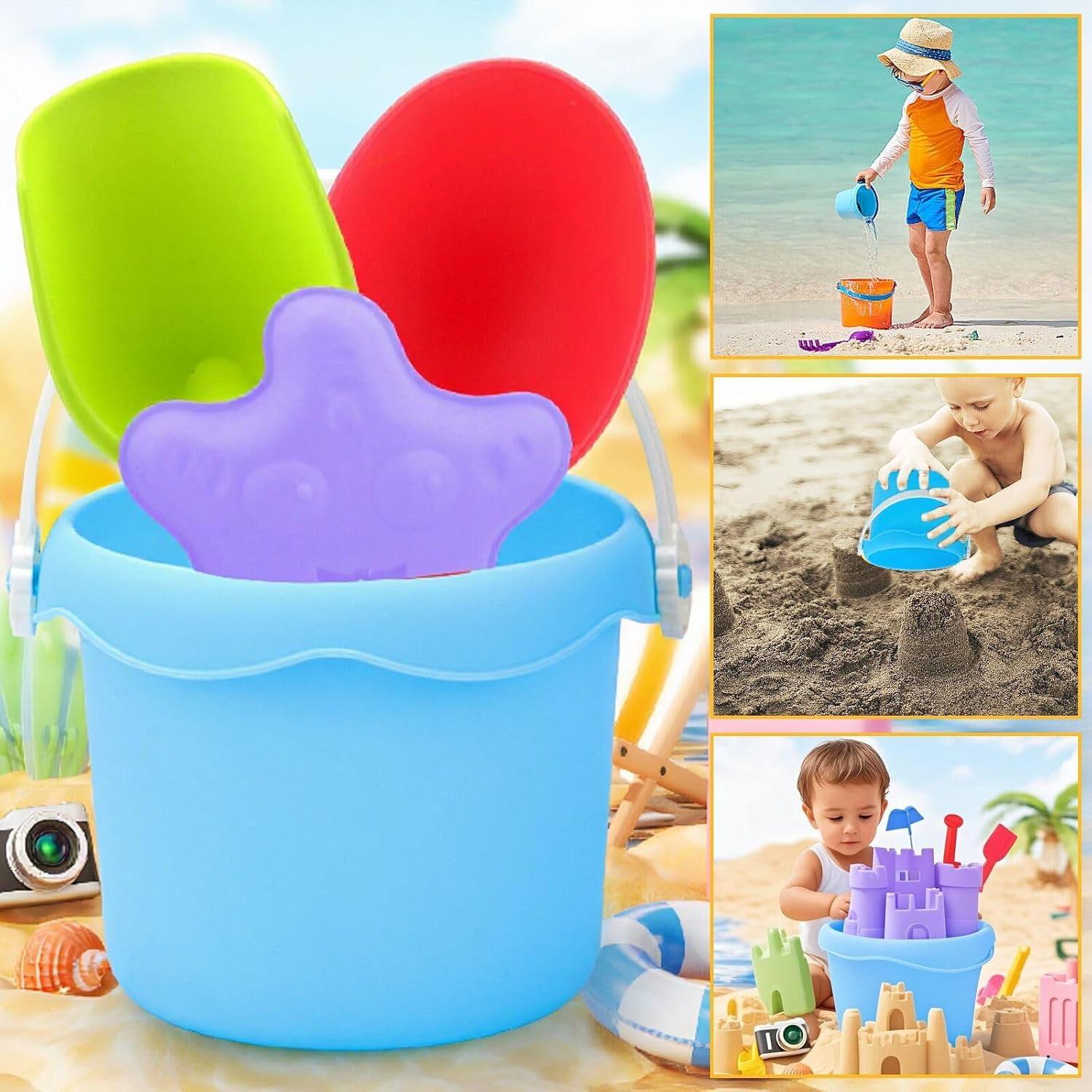
A set with buckets, shovels, spoons, moulds, a sand clock and a beach car gives them several games stacked together. They dig a trench, drive the car through it, mould a row of castle walls along the edge, fill a bucket from the shoreline to flood it, and time how long the water takes to sink in. One activity leads into another without an adult suggesting anything.
The other practical benefit is sharing. If you go to the beach with cousins, neighbours or a friend's family, twenty pieces means everyone has something in their hand. Turn-taking is a fine skill, but it is not what you want to be refereeing on a hot afternoon.
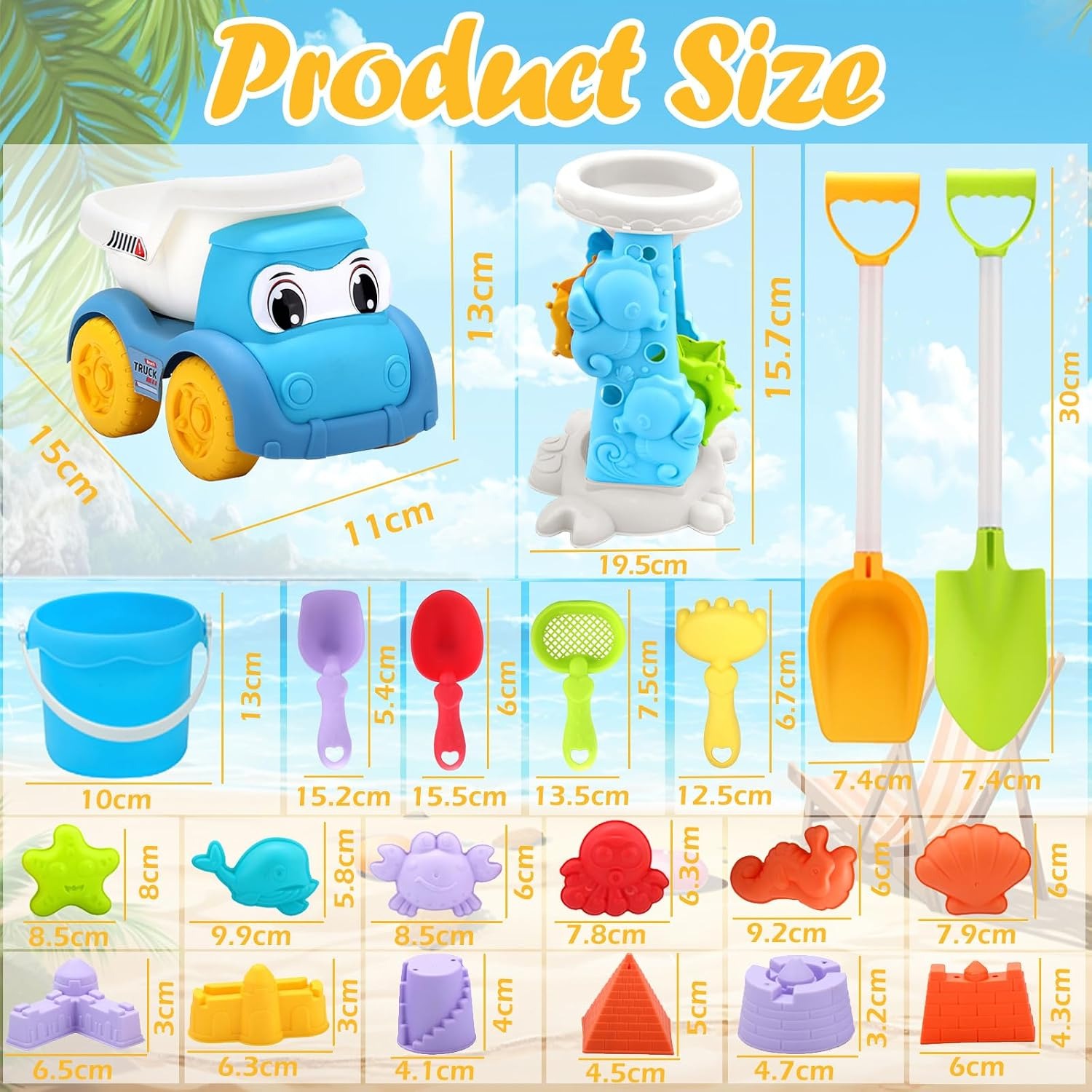
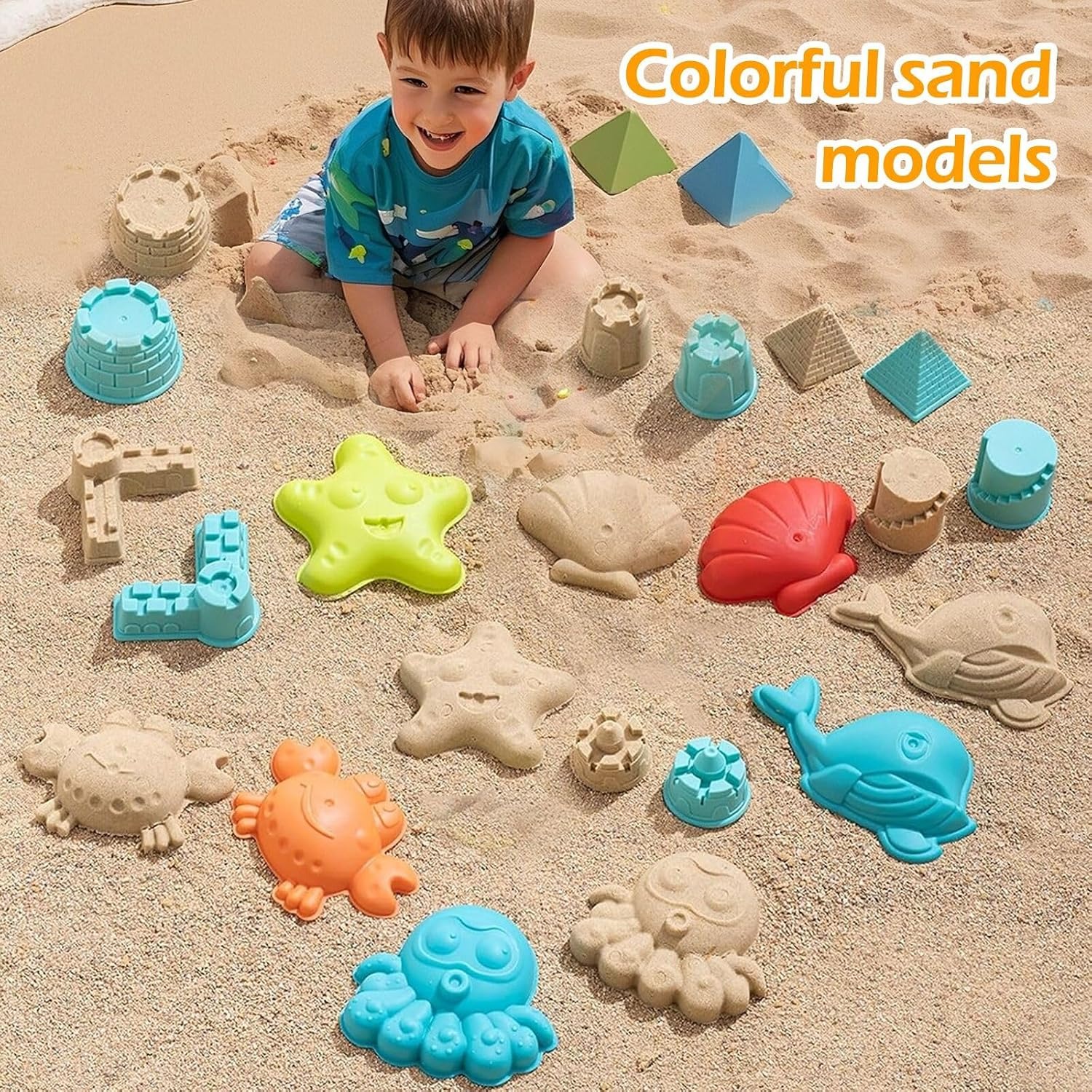
This set includes beach buckets, shovels, spoons, a sand clock, a beach car and a run of sand castle moulds. That spread covers digging, carrying, pouring, stamping and pretend play, which is most of what sand play consists of.
How the moulds work
Castle moulds look simple and they are, but there is a technique worth teaching once. Dry sand will not hold a shape. The sand needs to be damp enough to clump when you squeeze it, which usually means digging down a little or walking closer to the water.
Pack the mould right to the top, press down firmly with your palm, then turn it over, tap the base once, and lift straight up without twisting. If the shape collapses, the sand was too dry. If it sticks, the mould probably has old dried sand in the corners and needs a rinse.
Once a child has it, they tend to go into production mode. Rows of towers, walls, battlements, a moat around the outside. That is the point where you get half an hour to sit down.
Who this set suits
The manufacturer recommends ages three and up, which is the right guideline. By three, most children have the hand strength to pack a mould and the patience to see a build through. Younger preschoolers will still enjoy the buckets and scoops, but they need supervision and they will mostly be tipping things over rather than constructing.
It suits boys and girls equally. There is no theme, no character licensing and nothing gendered about a shovel. For a family that travels, the mesh bag matters because the whole thing squashes into a suitcase corner. For a family with a backyard sandpit, this is a solid upgrade over whatever came with the pit.
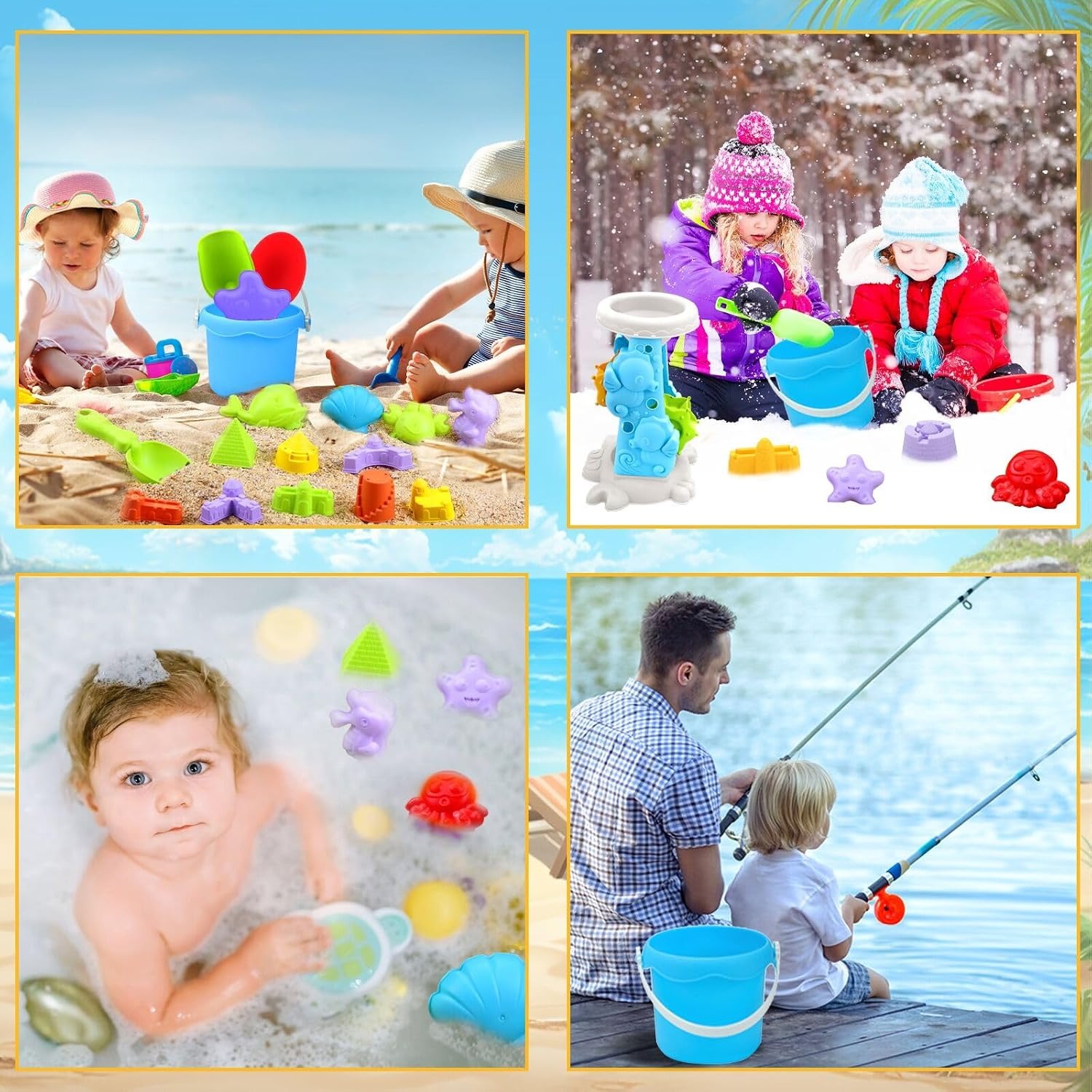
It also works for people who never go to the beach. Snow is the obvious substitute, and the moulds behave much the same way in packed snow as they do in wet sand. Kinetic sand on a tray indoors is another option for rainy days, and it keeps the set earning its place in winter.
The mesh bag is not an afterthought
It is worth saying plainly. The single biggest reason sand toys get abandoned is the mess they create on the way home.
A solid plastic tote traps wet sand. You carry it to the car, it leaks, the boot gets gritty, the bag goes in the laundry room and three days later someone finds the toys still damp inside. Next trip, you leave them behind.
Mesh solves it. You dunk the bag in the shallows, give it a shake, and most of the sand and water drops straight out as you walk. Hang it on a hook at home and it dries on its own. The toys stay usable and they stay in circulation, which is the whole game.
How to choose between sets
If you are comparing options, a few things separate the good from the forgettable.
Look at handle size. A spade with a thin, straight handle is awkward for small hands. Rounded, chunky grips get used. This set is moulded with rounded corners and shaped handles rather than scaled-down adult tools.
Look at the piece count against how many children will use it. Ten pieces is fine for one child. Twenty makes sense for siblings or for families who regularly meet up with others.
Look at how it packs away. If the storage is an afterthought, the set will not survive a season.
Finally, think about where it will be used. Something marketed only as a beach toy is still perfectly good in a sandpit, a pool or snow. The best sand moulds for kids are the ones that are not fussy about what you press them into.
Looking after them
Care is straightforward. Rinse in fresh water after each use to clear the sand and salt. Shake the bag out and let everything air dry before storing. Warm soapy water and a soft cloth handle any stubborn marks.
The one thing to avoid is long-term storage in direct sun. Constant UV will make any plastic brittle eventually, so a shed, garage or cupboard is better than the back step. Count the pieces back into the bag before you leave the beach and you will not be buying another set next summer.
A note on gifting
Sand toys are an unusually easy gift. There is nothing to charge, nothing that makes noise at six in the morning, and nothing a parent has to assemble on Christmas Eve. The set is flat-packable, it travels, and it suits a wide age range from three upwards.
It works particularly well as a gift for a family about to go on holiday, because it is the sort of thing people forget to buy until they are standing on the sand wishing they had.
The short version
Twenty moulded plastic pieces. Buckets, shovels, spoons, a sand clock, a beach car and castle moulds, all in a mesh bag that drains itself. Rounded edges, grip handles, no batteries, no assembly, ages three and up.
It is enough kit for a group of children, it works in sand, snow and water, and it comes home clean enough that you will actually take it out again next weekend. That last part is what most sand toys get wrong.