
The complete guide
Choosing a Wooden Breakfast Play Food Set, A Practical Buyer's Guide
The problem with most pretend food
Walk into any home with young kids and you will probably find pretend food scattered in at least three rooms. A plastic banana under the couch. Half a cupcake in the bath. A fried egg that lost its pan two Christmases ago.
The toys themselves are usually fine. The trouble is that cheap play food tends to arrive as a random grab bag of items with no theme, no storage and no real link to anything a child recognises. So it gets played with for a week, then it drifts.
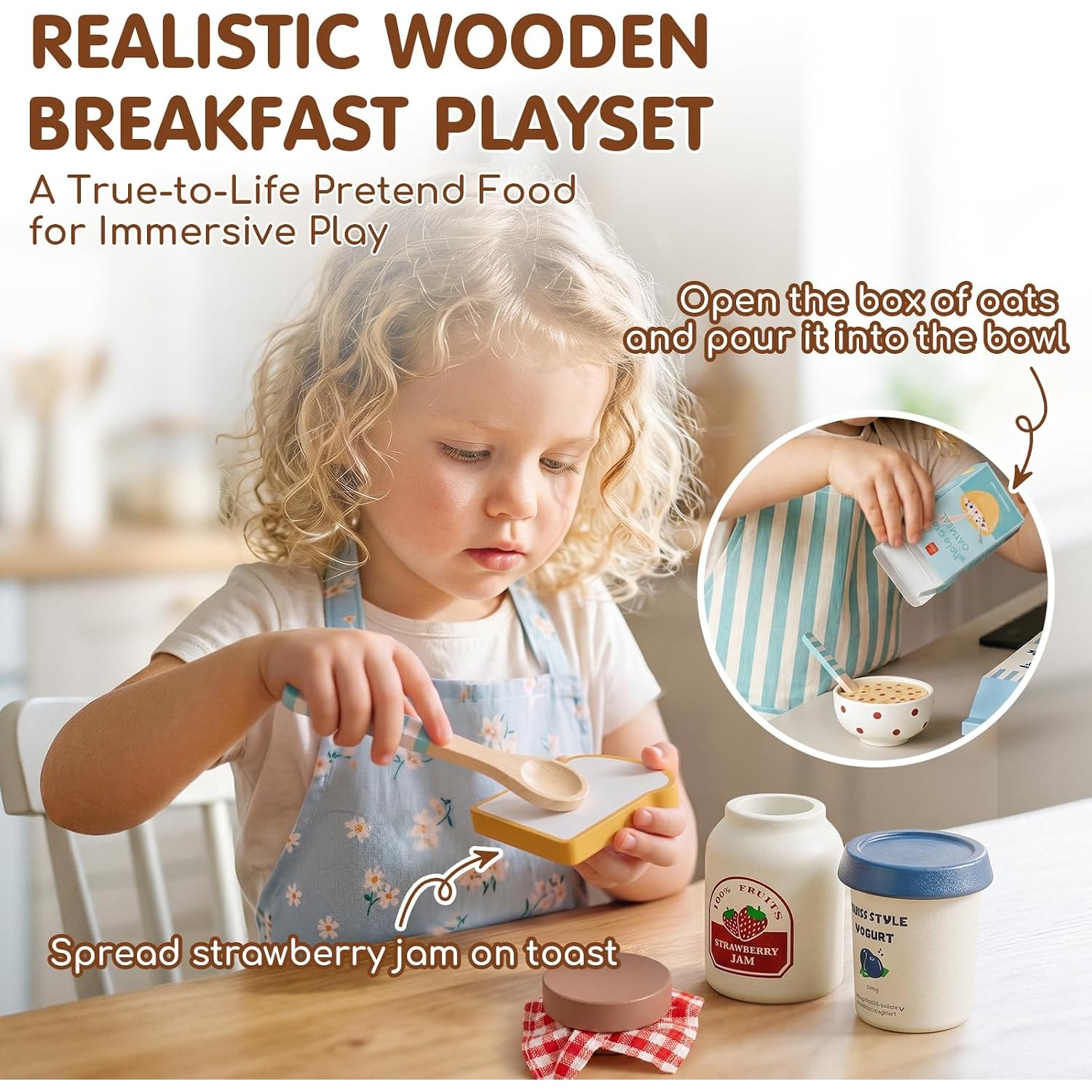
A themed set works differently. When all the pieces belong to one familiar scene, like breakfast, children have an instant story to step into. They are not inventing a world from nothing. They are copying the one they live in every morning, which is far easier and far more satisfying.
How a breakfast play set actually gets used
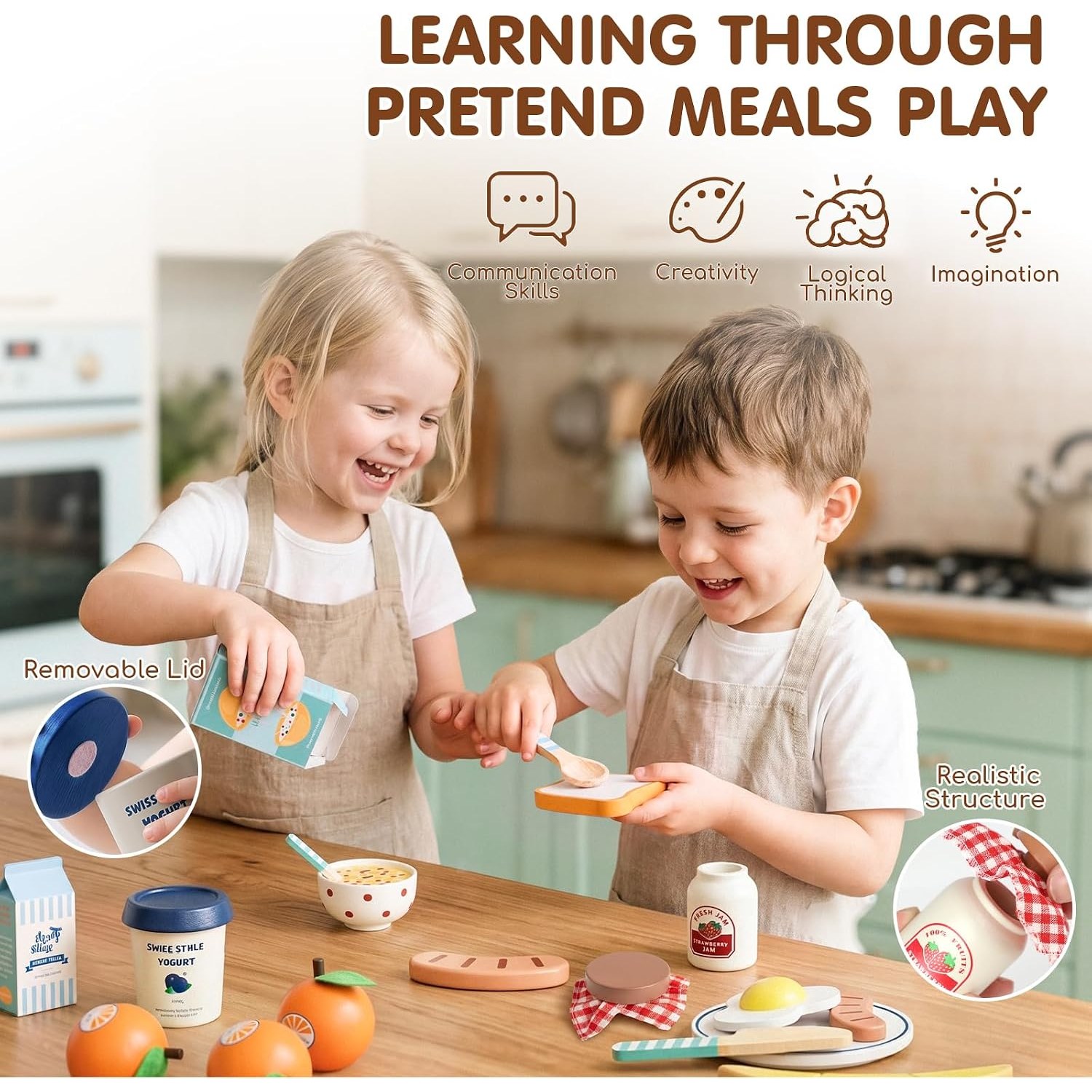
The first few plays are usually about naming. A three year old picks up each piece, says what it is, and waits for you to agree. That is the vocabulary stage, and it is more valuable than it looks.
After that, the games get more complex. Children start making you breakfast. They take orders. They tell you that you cannot have the egg because it is not cooked yet. Suddenly there are rules, sequences and negotiations. This is where role play does its real work, giving children a safe place to practise being in charge.
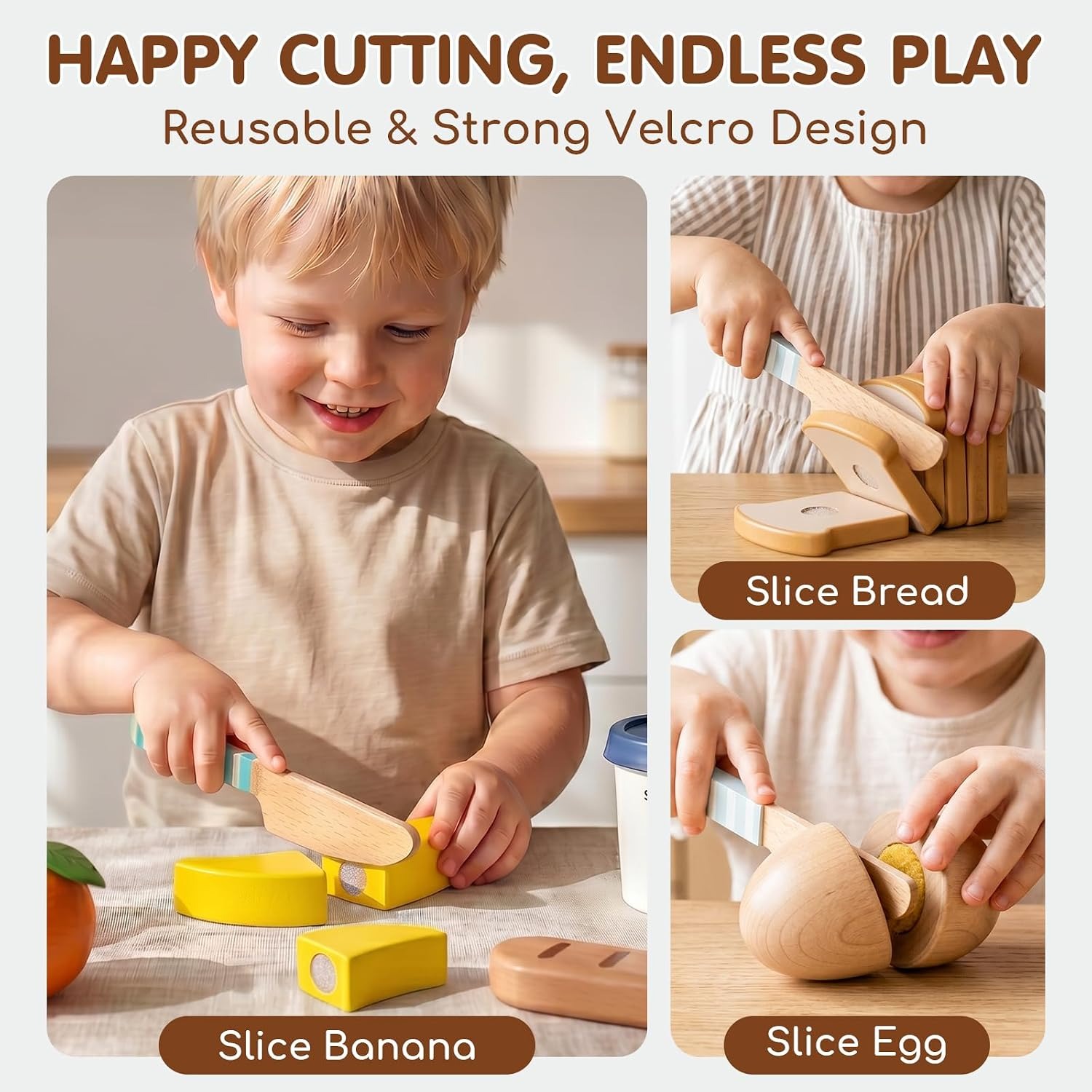
Older children push further. A six or seven year old might set up a cafe with a written menu, charge imaginary money and get genuinely annoyed when the customer changes their order. Those games can run for an hour. The same wooden toy food supports both the naming stage and the cafe stage, which is why the recommended range stretches from 36 months all the way to eight years.
There is a quieter benefit too. Pretend cooking gives you an easy, low-pressure way to talk about food with a fussy eater. Nobody has to actually eat anything. You are just chatting about what goes on toast.
Why wood, honestly
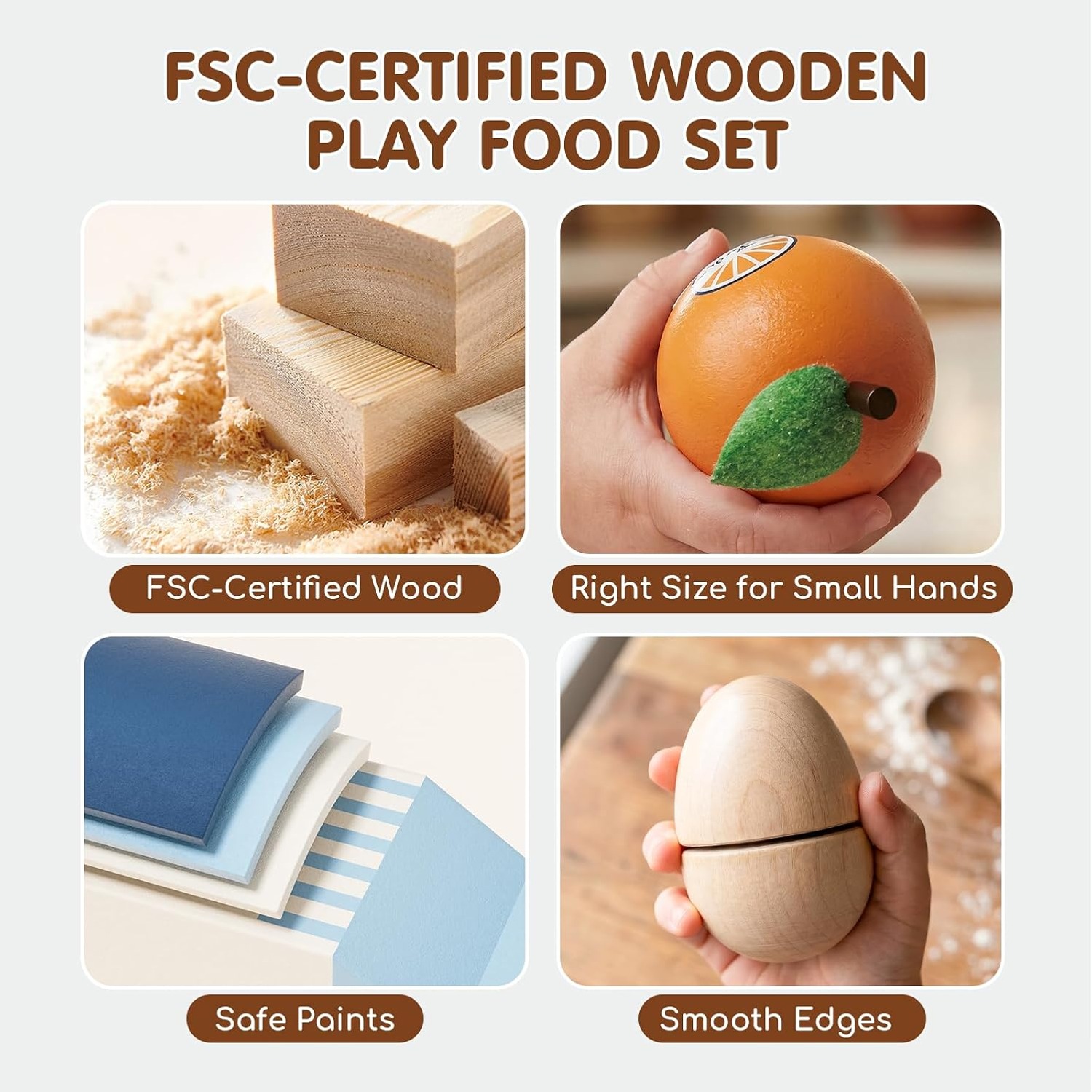
Wood gets talked about a lot in toy marketing, and some of that is just aesthetics. But there are a few real practical differences worth knowing.
Weight is the first one. Wooden pieces have enough heft that they sit where you put them. They balance on a plate, stack on a tray, and do not blow off the table. For a child building a careful breakfast arrangement, that stability is part of the fun.
Durability is the second. Thin plastic food cracks and the broken edge can be sharp. Wood is more likely to dent or scuff than shatter, so the set ages rather than breaking. It is also easier to pass down to a younger sibling.
Then there is the feel. Wooden toys make a soft knock instead of a hollow rattle, and there are no batteries, speakers or flashing lights. Plenty of parents notice the difference in how calm the play feels, especially indoors on a wet afternoon.
Wood does have one weakness, and it is moisture. Soaking, dishwashers and damp cupboards will all ruin a wooden toy faster than rough play ever will. Keep it dry and it will outlast nearly everything else in the toy box.
Who this suits
This set is a strong fit if you have a child between three and eight who already shows interest in copying household routines. Cooking, cleaning, feeding dolls, serving drinks. If you see that behaviour, pretend food will land well.
It also suits families who already own a play kitchen that came with almost no food, which happens constantly. A themed top-up set fills the shelves and makes the kitchen worth playing with again.
Group settings work well too. Kindergartens, playgroups and early learning rooms get a lot from a durable set because several children can play at once, each taking a different role. That is where you see cooperation and conversation skills build fastest.
It is less suited to a child under three who still puts things in their mouth. The manufacturer's minimum age of 36 months is there for a reason, and it should be followed.
How to choose between sets
If you are comparing a few options, these are the things actually worth checking.
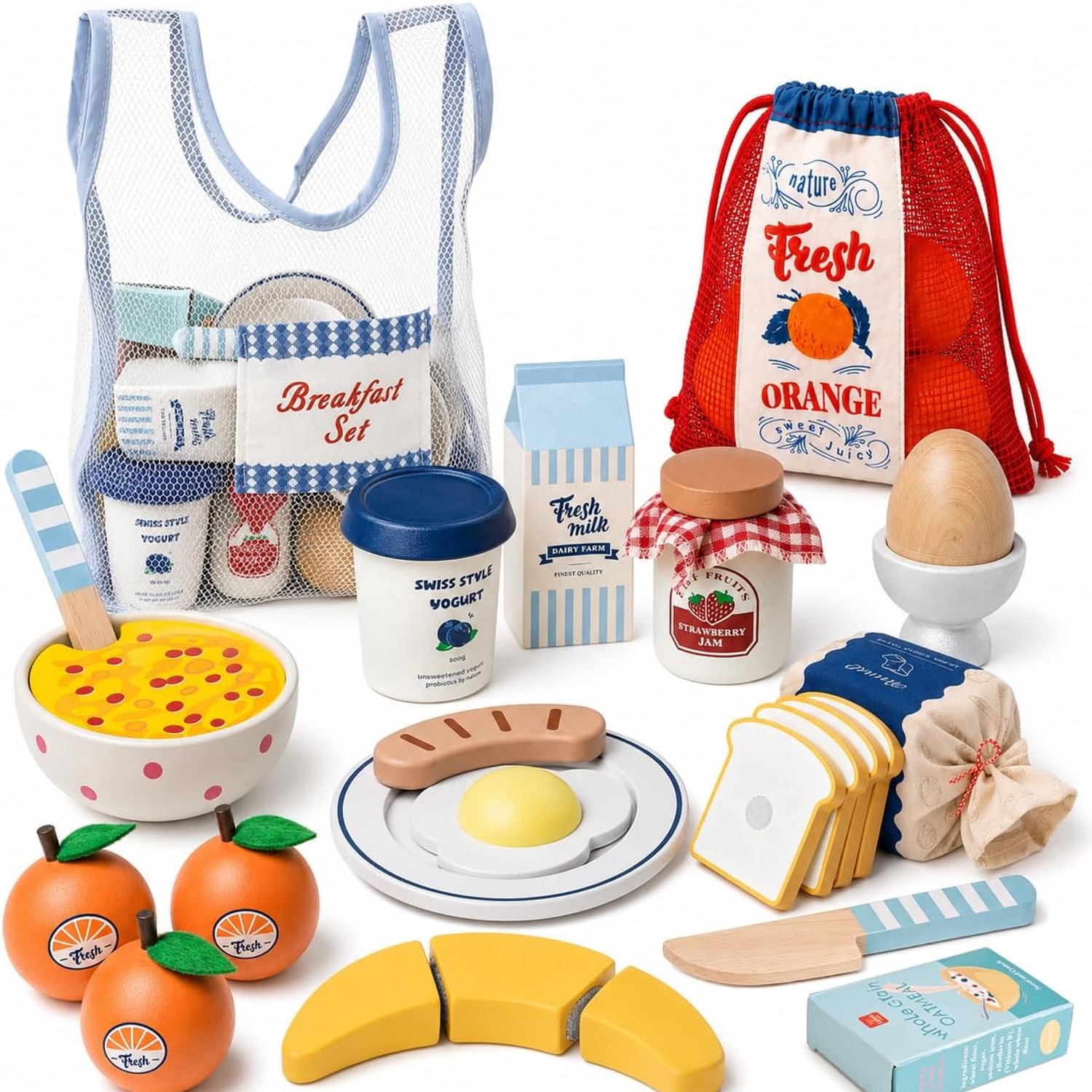
Theme coherence matters more than piece count. A set of eight breakfast items that belong together will be played with more than twenty random pieces from four different meals. Children need a scene, not a pile.
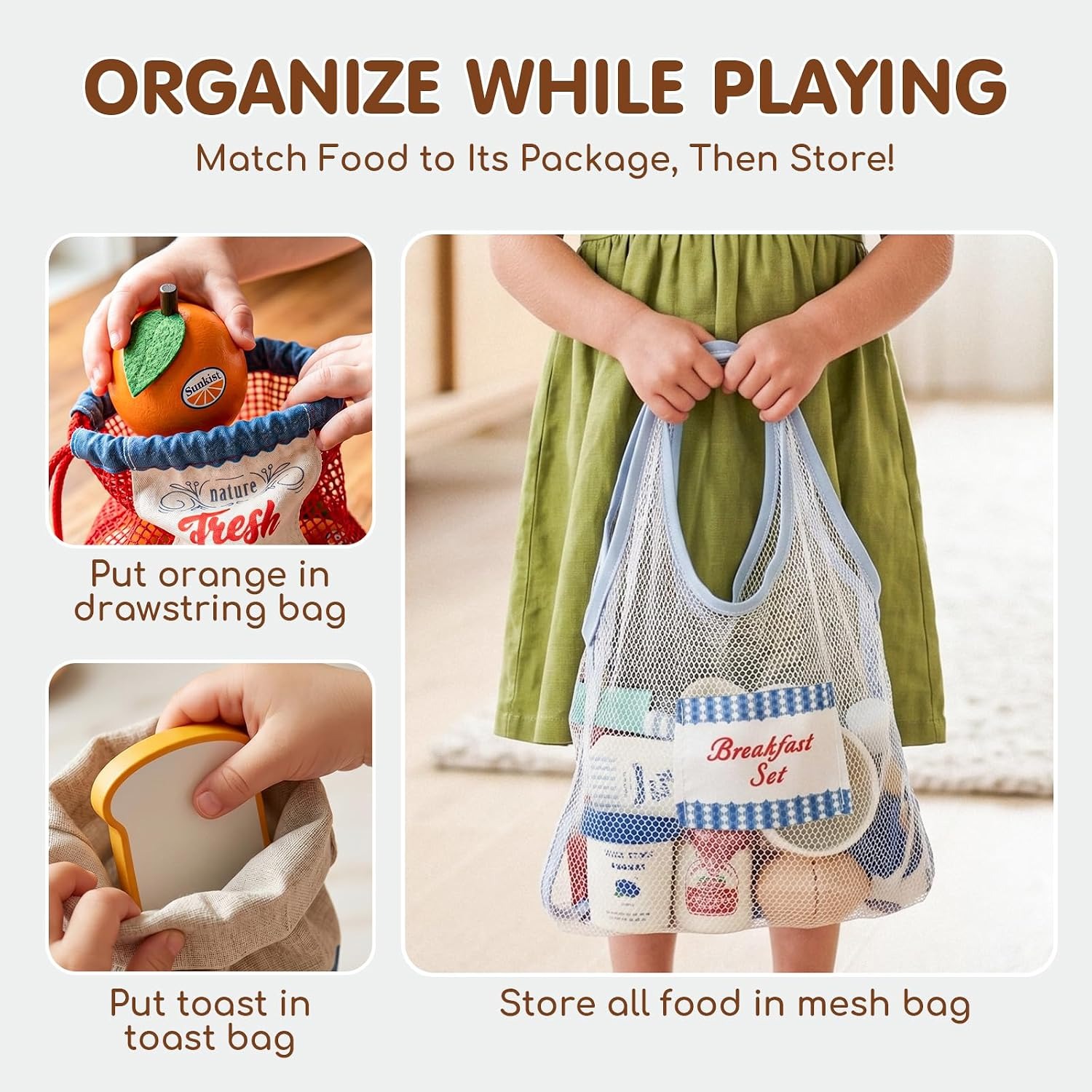
Storage is the sleeper feature. A set with a bag or pocket stays together. A set without one spreads through the house within a fortnight and never fully regroups. The mesh pocket included here is the difference between owning a set and owning scattered bits of wood.
Size is worth a look too. This set measures 22 x 19 x 9 cm packed and weighs 848 g, which is small enough to shelf and light enough for a child to carry around. Bigger is not always better, especially in a small home.
Finally, think about how long you want it to last. A set with a one or two year window is a quick win. A set rated 36 months to eight years sits in the cupboard across multiple phases of childhood, and that usually works out better value even if the sticker price is higher.
Looking after it
Care is simple, but it needs to be the right kind of simple.
Wipe pieces with a slightly damp cloth, then dry them straight away. A drop of mild soap in the water is fine for sticky hands. Never soak the pieces, never run them through a dishwasher, and never put them in a washing machine.
Store the set in its mesh pocket somewhere dry. Direct sunlight fades paint and dries out timber, so a sunny windowsill is the worst spot you can pick. A shelf, a cupboard or a toy basket indoors is all it needs.
Every few months, have a quick look over the pieces for chips or rough edges, especially if the set has been through heavy play or a few house moves. A light sand on a rough spot fixes most of it. Anything badly damaged should be retired rather than repaired.
If the toy comes inside after being used in the garden, dry it properly before it goes back in the pocket. Trapped moisture in a closed bag is the fastest way to spoil wooden toys.
A note on gifting
Pretend food is one of the more reliable gifts for the three to six age group, because it does not depend on the child already liking a particular character or franchise. It also plays well with toys they already own, which means it adds to the collection instead of competing with it.
If you are buying for a household you do not know well, a themed set with storage is the safe pick. It looks considered, it packs neatly, and it does not add another battery-powered noise machine to someone's living room.
The short version
A wooden breakfast play food set gives children a scene they already understand, which is why it gets picked up quickly and played with for years. Wood holds up better than thin plastic, feels more satisfying in small hands and keeps the play quiet.
This set is made by Lehoo Castle, model FT-005, measures 22 x 19 x 9 cm, weighs 848 g and is recommended for ages 36 months to eight years. It includes a mesh storage pocket, which is the feature most likely to keep the set intact over time.
Keep it dry, wipe rather than soak, and store it in the pouch. Do that, and it will still be in the cupboard when the child who got it has moved on to running a very serious imaginary restaurant.