
The complete guide
How To Choose An Amphibious RC Truck That Lasts More Than One Weekend
The problem with most remote control cars
Buy a cheap remote control car and you learn its limits in about ten minutes. It runs well on the kitchen floor. It struggles on the lawn. It stops dead the first time a wheel finds a patch of mud, and if it goes through a puddle, that is usually the end of the story. Ten minutes later the batteries are flat and there is only one pack.
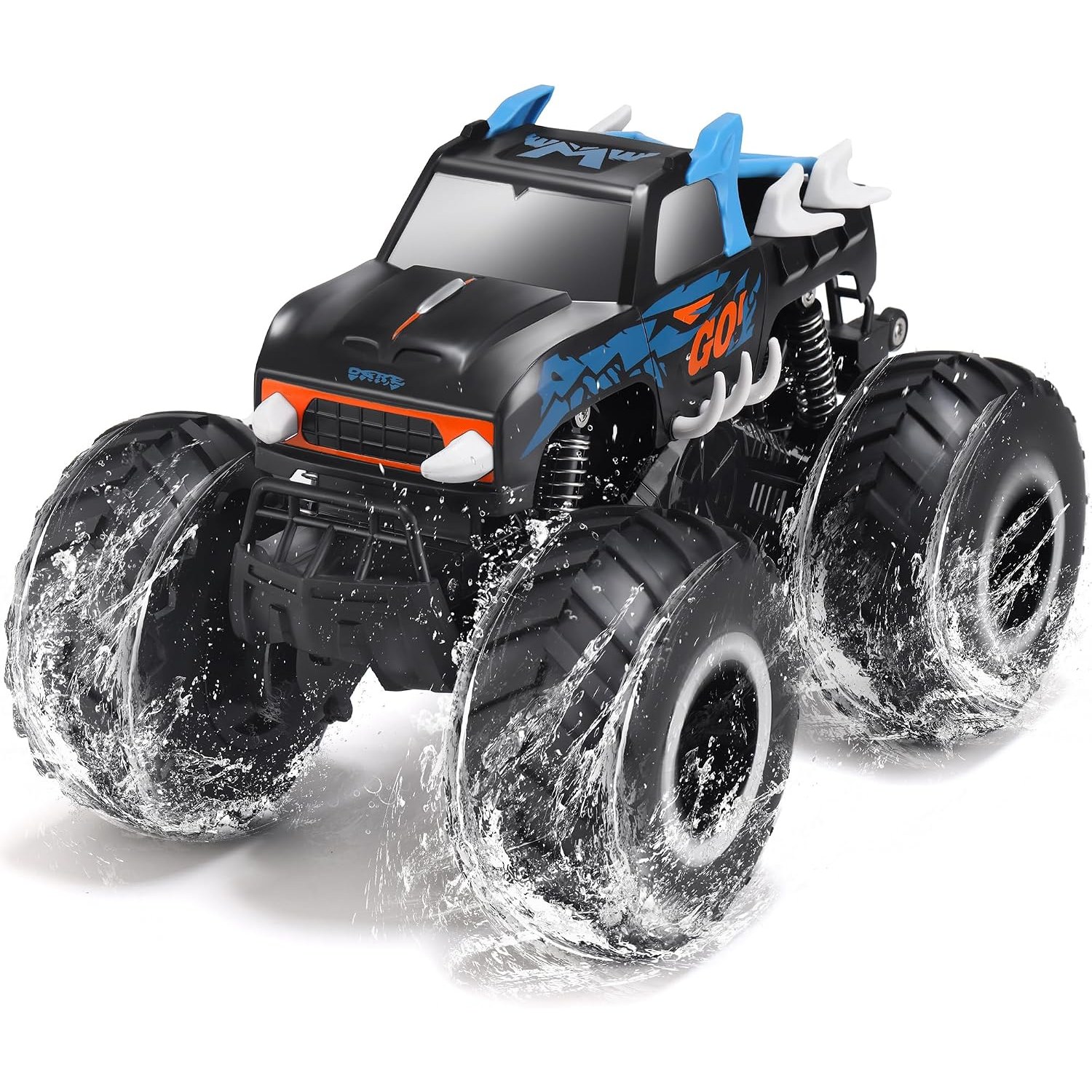
That is the pattern this truck is built to break. It is a 1:16 scale pickup with a sealed IPX6 rated body, four-wheel drive, independent suspension on each corner, and two rechargeable batteries in the box. The design assumption is that kids will take it outside, drive it through whatever is in front of them, and keep going for close to an hour.
What amphibious actually means here
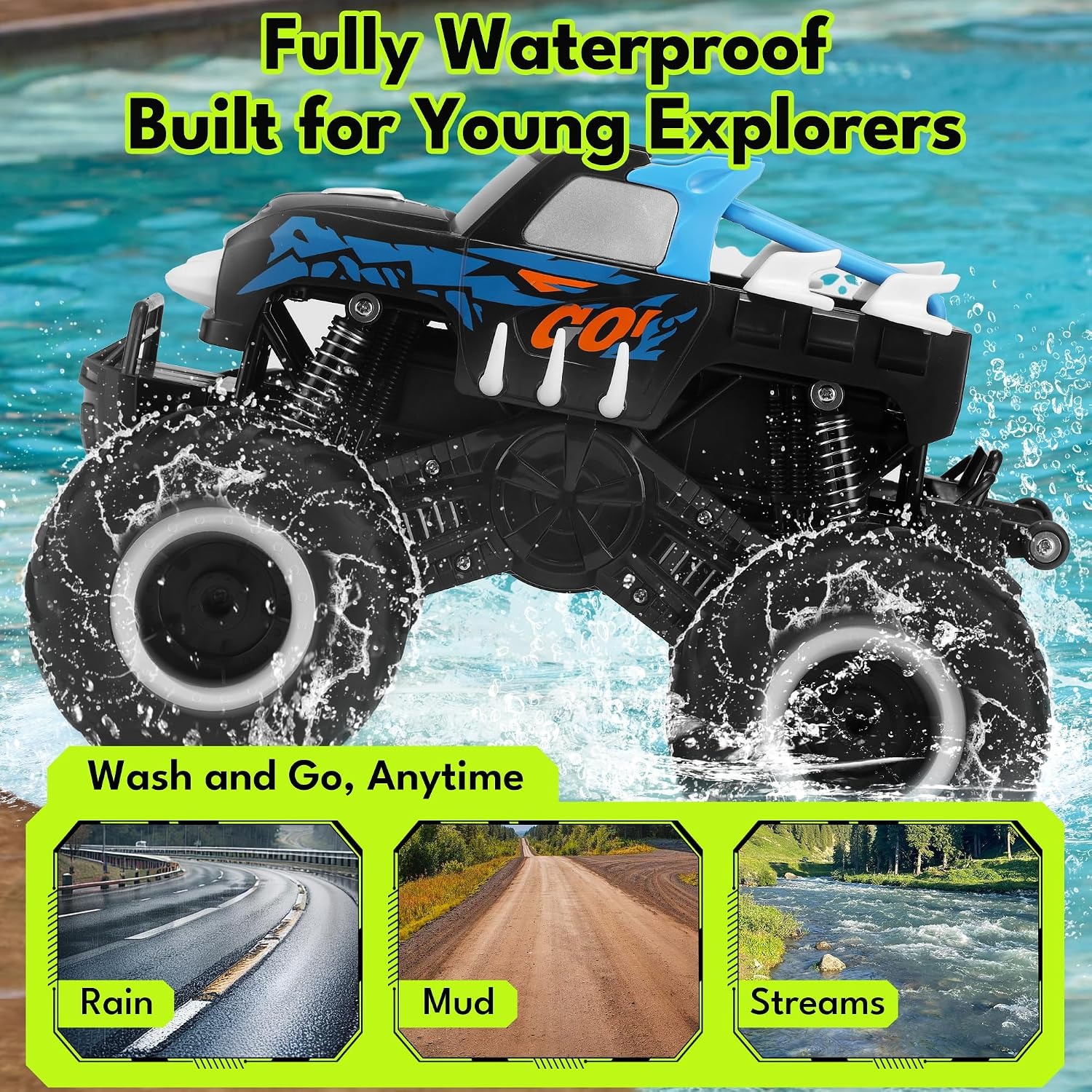
Amphibious is a word that gets stretched in toy marketing, so it helps to be precise. This truck is sealed to an IPX6 standard, which covers strong water jets from any direction. In real use that means rain, splashing, wet grass, puddles and shallow stream crossings. The body is built to float rather than sink, so a short trip across pool shallows is within its ability.
What it is not is a submarine. Deep water, fast-flowing creeks and extended submersion are outside the design. The practical rule is simple. If a child can wade through it without going over the knee, the truck is probably fine. Anything deeper, leave it.
There is one maintenance habit that makes or breaks the waterproofing, and it is worth learning on day one. The battery compartment seal is the barrier. If the seal is clean and the cover is firmly closed, water stays out. If there is sand on the seal or the cover is half-latched, water gets in and the electronics suffer. The manual covers the correct installation, and it takes about fifteen seconds to check before a water run.
The remote is a separate matter. It is not waterproof. Keep it dry, keep it out of the splash zone, and dry it immediately if it does catch a spray.
How the drivetrain handles rough ground
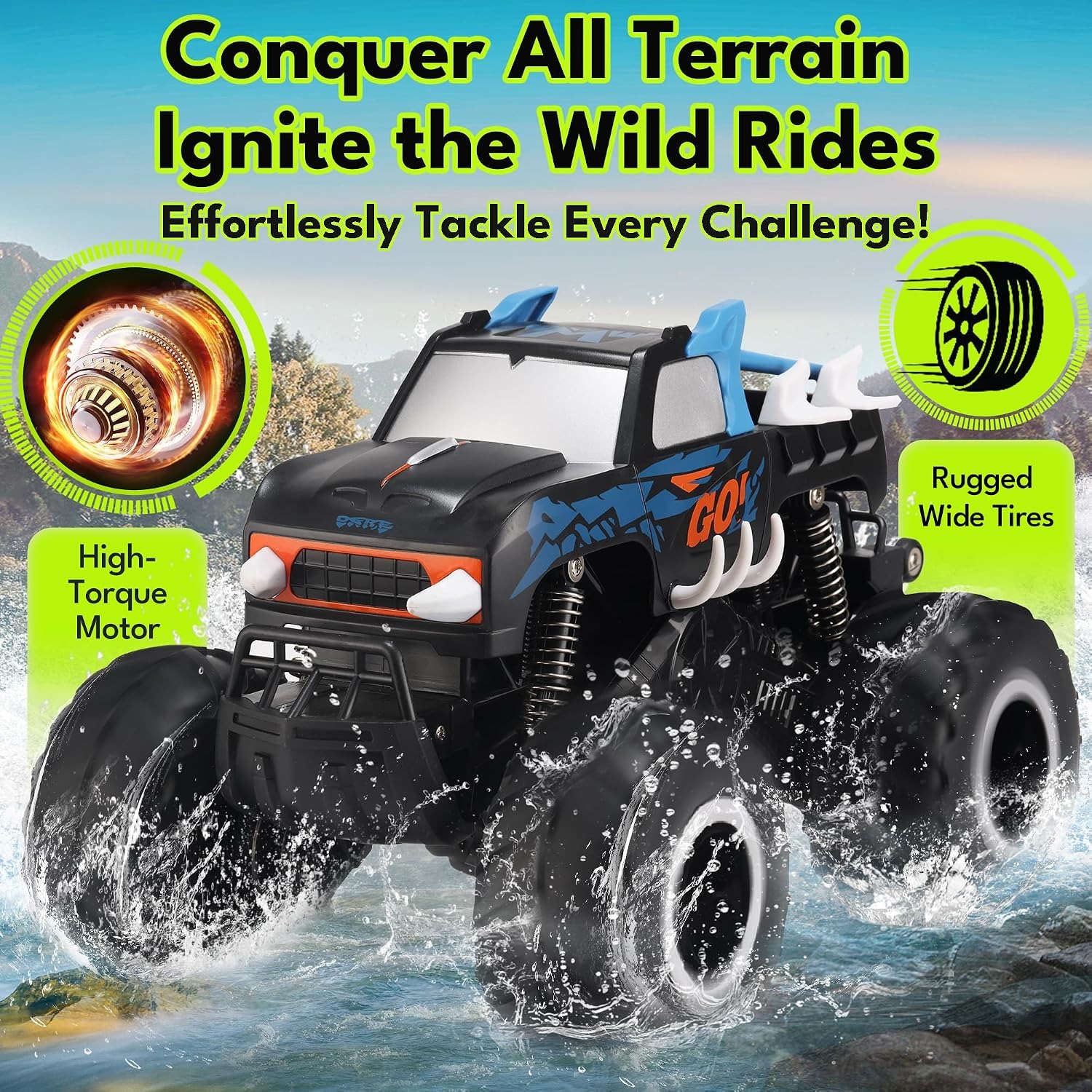
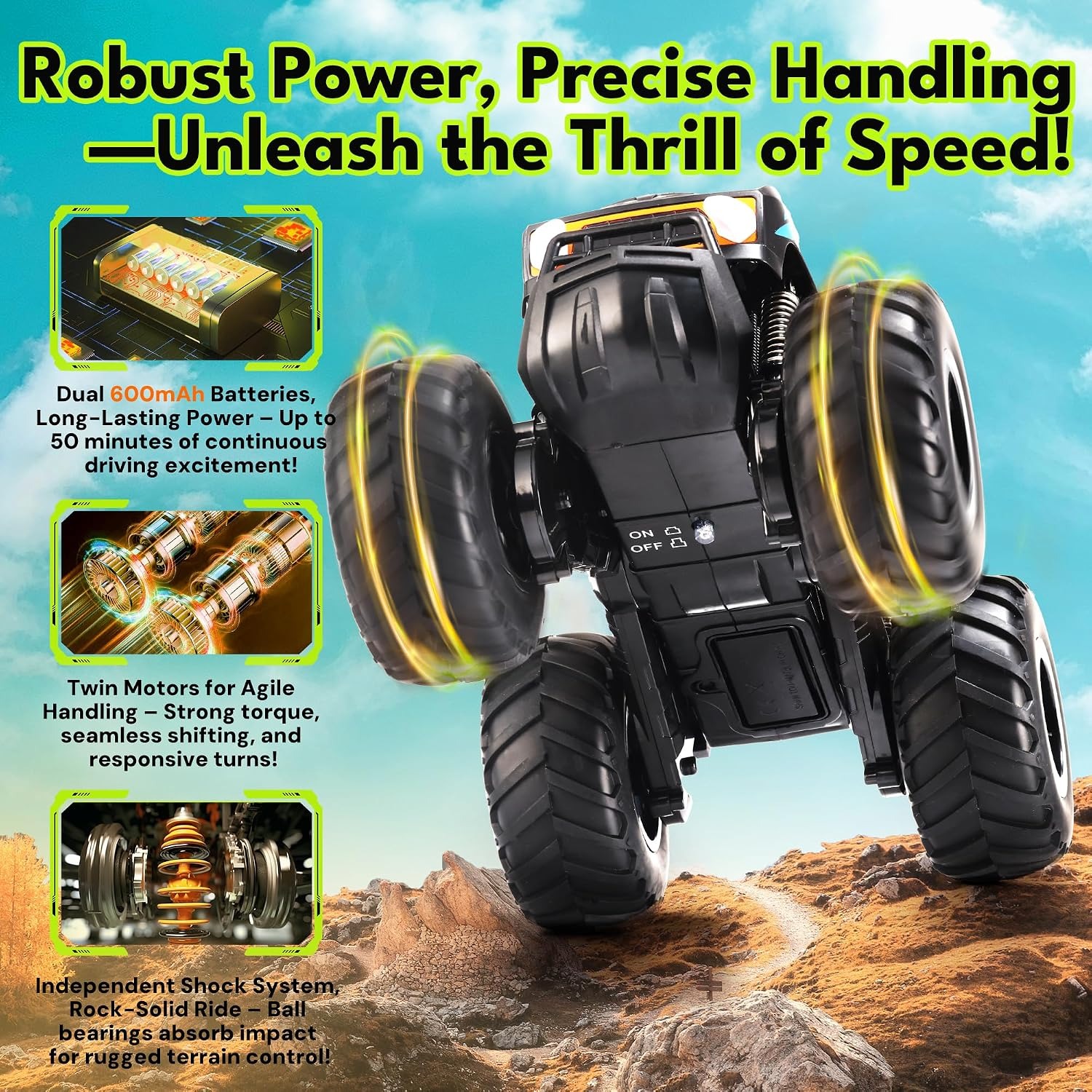
Four-wheel drive matters more than most buyers expect. On a lawn, a two-wheel drive toy spins one tyre and goes nowhere. With power going to all four corners, the truck finds traction somewhere and keeps moving.
The second half of the equation is the suspension. Each wheel has its own independent travel, so when the front left drops into a rut, only that corner reacts. The other three stay loaded and keep pushing. This is why the truck feels settled on gravel and bark chip instead of skittering sideways. Combined with grippy, shock-absorbing tyres, it behaves more like a small off-road vehicle than a toy car.
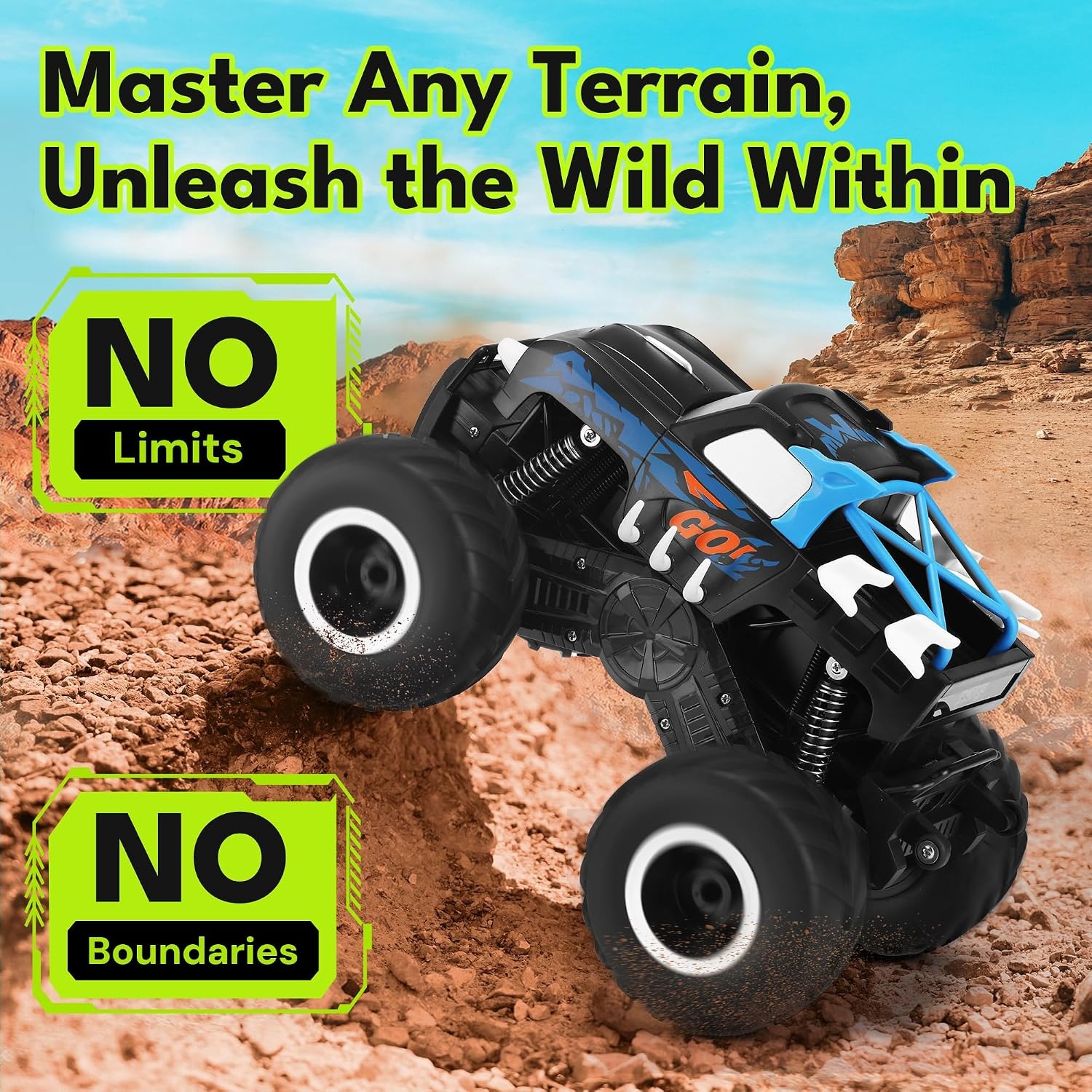
Realistically, the surfaces it loves are short to medium grass, gravel paths, packed dirt, driveways, sand and concrete. The surfaces that slow it down are tall tangled grass and deep soft sand, which defeat most remote control crawlers at this size.
Who it suits
The maker recommends 6 to 12 years, and that range is about right. Six and seven year olds take to it quickly because the controller does four things and nothing else: forward, reverse, left, right. There is no mode button to get lost in, no trim dial to accidentally knock. A child who has never held a transmitter will be driving laps within a few minutes.
Older kids get a different kind of value. They start hunting for terrain. Kerb edges, garden beds, the gravel at the side of the driveway, the shallow end of a creek. The truck has enough ability that it rewards that curiosity instead of getting stuck every second attempt.
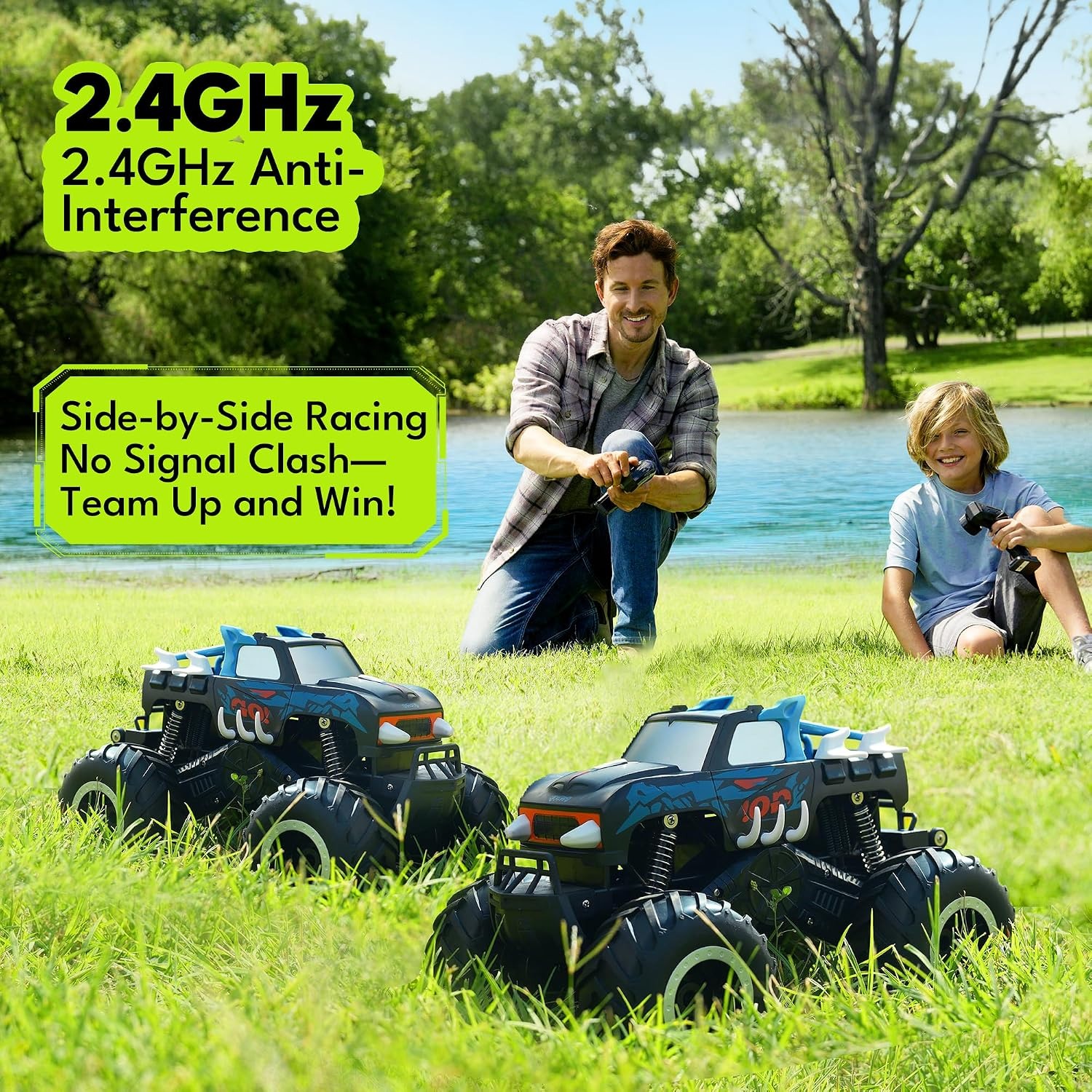
It also works well in groups. The radio is stable enough for six trucks to run at once without crossing signals, which is genuinely useful at a birthday party or when two or three neighbourhood kids all have one. Racing is more fun than solo driving, and interference is what usually ruins it.
How to choose between models
If you are comparing waterproof remote control cars, a few things separate the good from the forgettable.
Run time comes first. A single battery that lasts twenty minutes means the toy spends most of the afternoon on charge. Two batteries changes the experience completely. Here you get roughly 25 to 30 minutes per pack and around 50 to 60 minutes total, which is long enough that the kids usually finish before the truck does.
Scale is next. At 1:16 this truck measures 25.4 x 17.5 x 16.5 cm and weighs 907 g. That size has a real advantage outdoors. Smaller 1:24 and 1:32 cars get stopped by grass that this one drives straight over, and heavier large-scale trucks are awkward for a child to carry back from the far end of the park.
Then look at how the waterproofing is implemented. A stated rating like IPX6 and a sealed battery compartment is a design decision. Vague claims of water resistance usually are not. Ask whether the seal is serviceable and whether the instructions tell you how to check it.
Finally, consider assembly and what comes in the box. This one arrives built, with the truck, the remote, a battery, a charging cable and the manual. Nothing to screw together, no separate battery order, no trip out for AAs because the remote battery is included too.
Looking after it
Care is not complicated, but a few minutes of it adds months of life.
After any run in saltwater or sand, rinse the truck with fresh water and dry it with a soft cloth. Salt corrodes and sand grinds, and both do their damage slowly enough that you do not notice until something seizes. Fresh water driving needs less, though a wipe-down before storage is still a good idea.
Check the battery seal regularly, not just before water use. Grit builds up around it over time. Keep the remote dry and pull the AAA out if the truck is being packed away for a season.
Store everything indoors, away from heat and damp. Lithium-ion batteries do not enjoy a hot car boot or a freezing shed. If the truck is going to sit unused for a long stretch, take the pack out.
The short version
This is an outdoor truck first and a water toy second, and that balance is the right way round. The IPX6 sealing and floating body mean a puddle is a feature rather than an ending. The 4WD and independent suspension mean grass, gravel and uneven dirt are genuinely drivable rather than technically possible. Two batteries mean the session runs for an hour, not twenty minutes.
Keep the seal clean, keep the remote dry, rinse after salt and sand, and this amphibious RC truck should stay in service through a lot of weekends. For a child aged six to twelve who would rather be outside, it is one of the more sensible ways to spend an afternoon.