
The complete guide
Choosing a Kids Tool Set That Actually Gets Played With
The toy that gets abandoned, and the toy that does not
Most toy tool sets end up at the bottom of the box within a month. The reason is usually simple. They look like tools but they do not do anything. A plastic hammer that cannot hit, a saw that cannot cut and a drill that just sits there will hold a child's attention for about one afternoon.
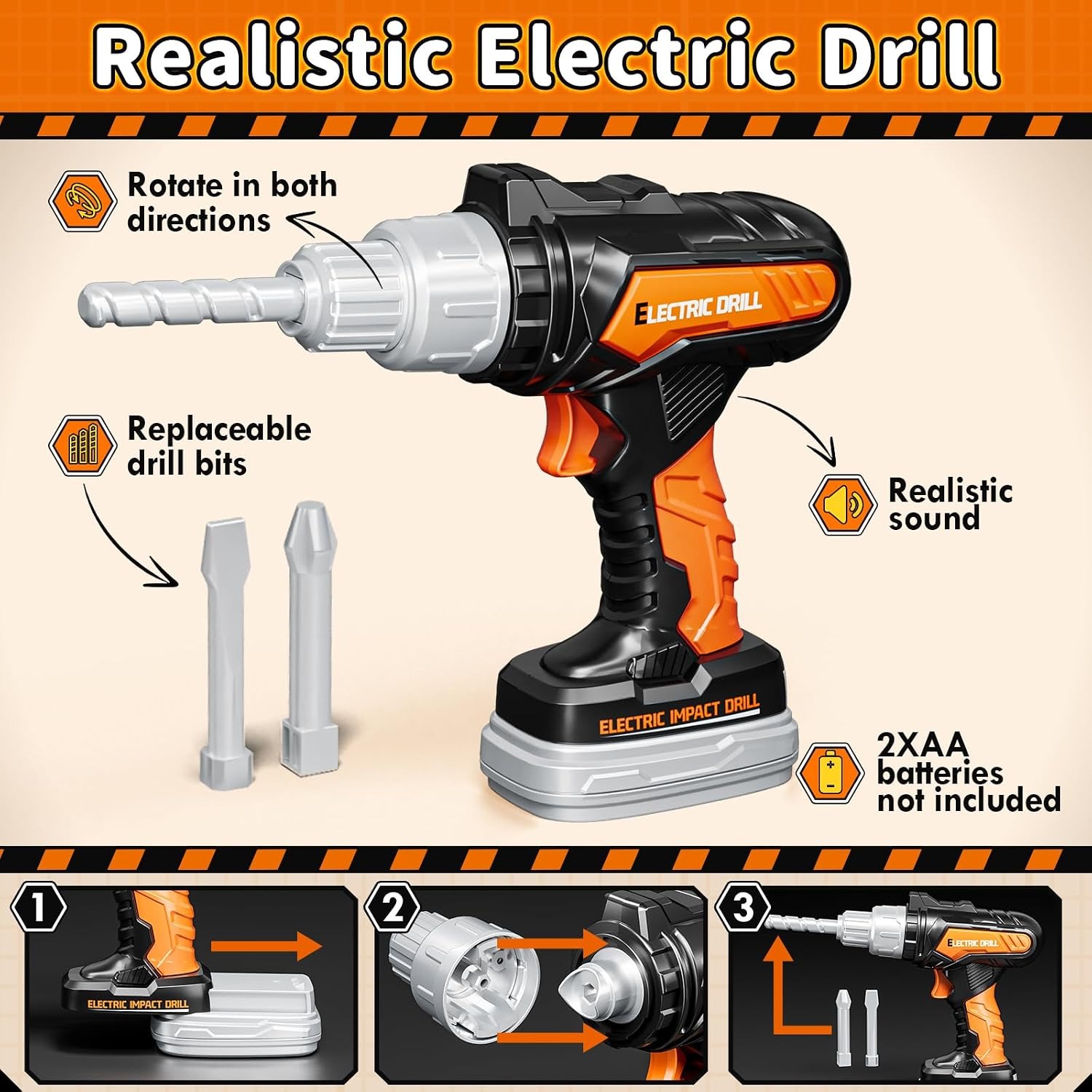
What keeps a child coming back is feedback. Press something, and something happens. That is why the drill in this set matters more than the piece count. The bit spins. A three year old lines it up against a hole strip, pulls the trigger, and gets a result. That little loop of action and reaction is the engine behind the whole thing.
The second reason these sets get abandoned is mess. Fifty small parts across a lounge room floor is a problem for everyone, and problems get packed away. A belt and a tool box solve that. Tools live on the hip while playing and go back in the case when it is done.
How a kids tool belt set works in practice
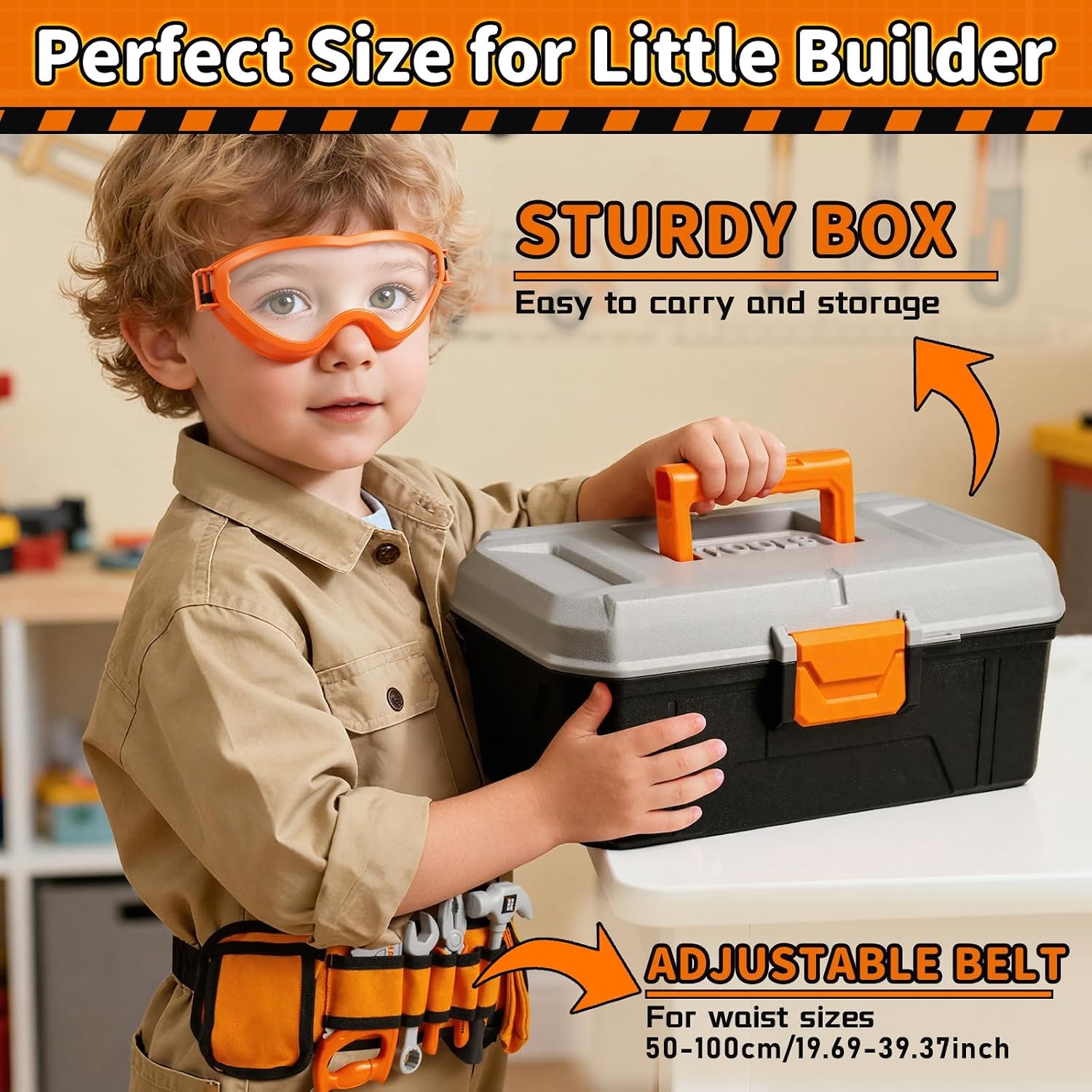
The belt buckles around the waist and adjusts from roughly 50 cm to 100 cm. Tools slot in, so the child can walk around with their gear instead of carrying an armful. That sounds minor. It is not. Being able to move from job to job without dropping things is a big part of why kids act out roles, and a construction play set with no belt loses that.
The drill runs on two AA batteries, which are not in the box. Put a pair in the drawer before a birthday. Nothing deflates a gift faster than a toy that needs a shopping trip.
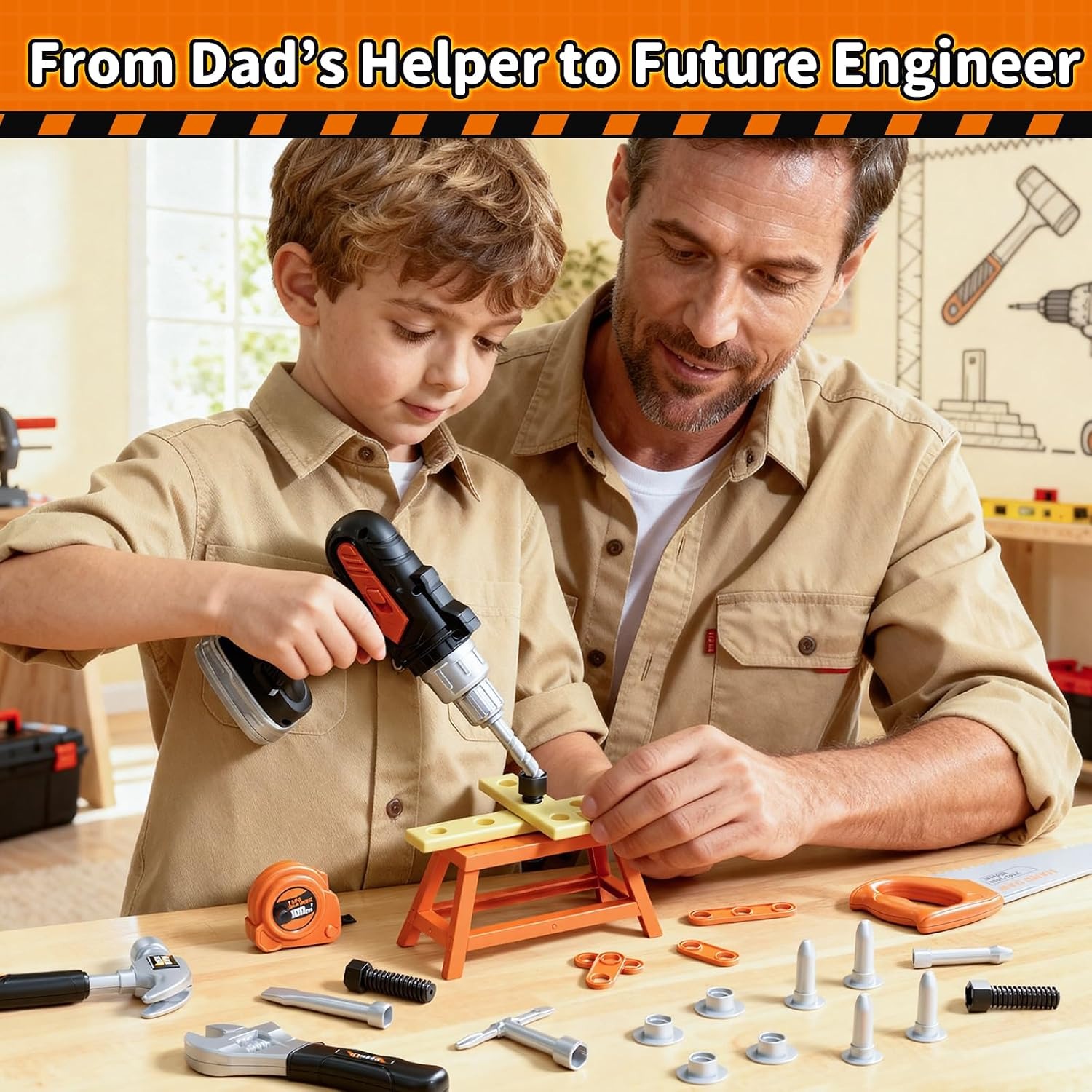
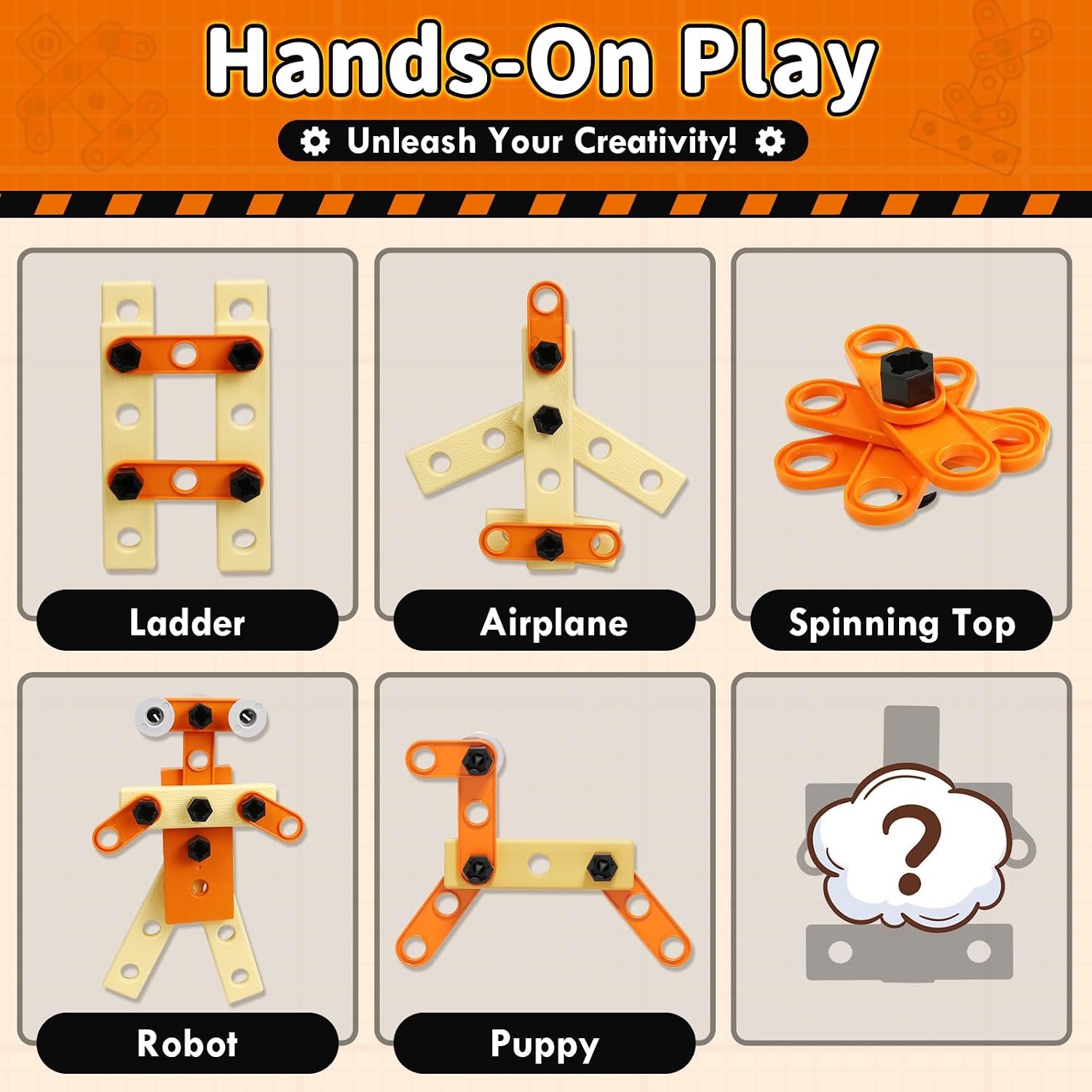
The build side of the set comes from the plastic strips, the hole strips, the screws, the nuts and the three iron nails. The instruction manual shows how to put together a small chair. Younger kids will need a hand lining things up. Older ones work it out and then go off and invent their own thing, which is the better outcome anyway.
Everything is plastic with rounded edges rather than scaled-down adult shapes. That is deliberate. The grips are chunky because small hands close around a fist, not a finger grip.
Who it suits
The listed age is 3 years and up, with a manufacturer range of 36 months to 12 years. In reality, the sweet spot is roughly three to seven.
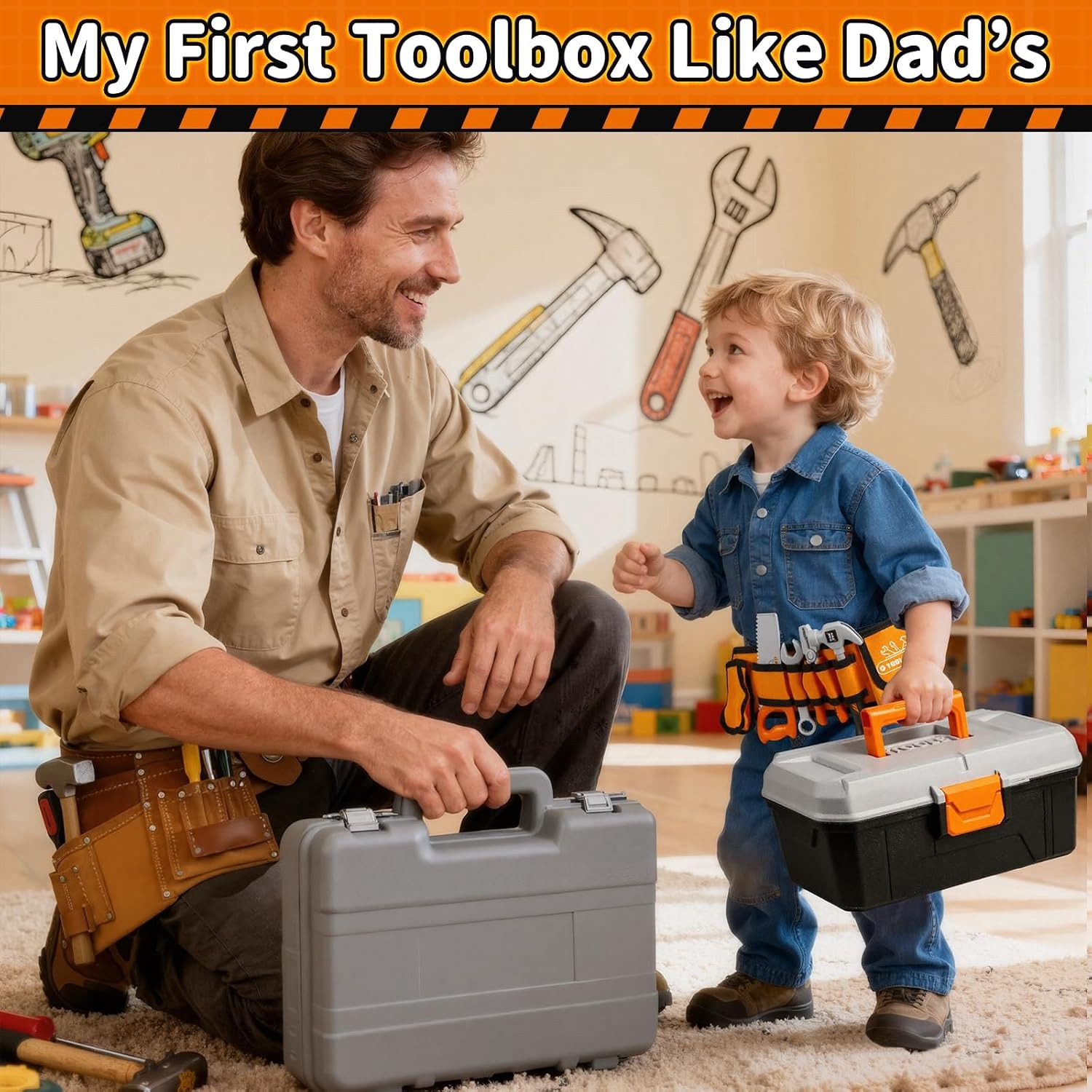
A three or four year old plays this as costume and role play. They wear the belt, they carry the box, they "fix" the dishwasher while you load it. The drill is the whole show. A five or six year old starts caring about the building. They want the chair built, then taken apart, then built differently. Older kids past about eight will usually treat it as a prop for a bigger game rather than a construction challenge, and that is still a fine use.
It is not right for under threes. There are screws, nuts and nails in there, and those are small parts. Stick to chunky blocks at that age.
As a gift it is easy. The box is a regular shape, it is 0.9 kg so posting is cheap, and it does not need adult assembly on the morning. For anyone hunting for the best construction toys for 3 year olds, that low-friction start counts for a lot.
How to choose between tool sets
A few things actually separate one set from another.
Does something move? A powered drill with a rotating bit outranks a set with twice as many static pieces. Check this first.
Is there storage? A tool box or a belt, ideally both. Sets without storage get lost, and a lost set is a dead set.
Are the fasteners real fasteners? Screws that turn into nuts teach something. Pieces that just press together are fine for preschoolers but get boring fast for a four year old.
Is the piece count honest? Fifty pieces sounds enormous, and part of that number is screws and nuts. That is normal across the category, and screws and nuts are genuinely the parts kids use most, so it is not padding. Just read the component list rather than the headline number.
Does it fit the child you have? A quiet, careful builder and a loud, destructive one want different things. The careful builder will follow the chair instructions. The other one wants the belt and the noise. This set handles both, but it is worth knowing which child you are shopping for.
Making it last
Plastic toys survive a long time if two things happen. Pieces stay together, and nobody cooks them.
Pack the set back into the tool box after each session. It takes a minute and it is the single biggest factor in whether the set is still complete next year. Make it part of the game. "Pack the ute" works better than "tidy up" with most kids.
Clean with a damp cloth and a bit of mild soap, then dry. Keep everything out of the dishwasher, the washing machine and the microwave. Hot water warps thin plastic and clouds it up.
Take the batteries out of the drill if the set is going into storage for a season. Leaking cells are the most common way a toy drill dies, and it is completely avoidable.
Check the belt stitching and the drill bit occasionally. If a piece cracks or splits, retire it rather than gluing it. Split plastic edges can be sharp.
Outdoor play is fine. Just bring it in afterwards. Weeks of rain and direct sun will make plastic brittle, which is the one thing that really shortens the life of a set like this.
Getting more out of it
Give the work a purpose. A child with a belt and no job wanders. A child with a job stays on task for twenty minutes.
Simple ideas that work. Ask them to "inspect" the chairs in the kitchen and report back. Give them a cardboard box and a mission to fix it. Let them build the chair from the manual, then challenge them to build something taller. Set up a repair shop where family members bring in broken toys for "assessment".
Pairing the set with something physical helps too. A cardboard box, a blanket fort, a few offcuts of timber on the lawn under supervision. The best role play toys are the ones that attach to something in the real world.
And let them see you use real tools. The whole appeal of a toy tool set is that it copies something they have watched you do. Fix a hinge while they "fix" one next to you and you will get a much longer play session than if you hand the box over and leave the room.
The short version
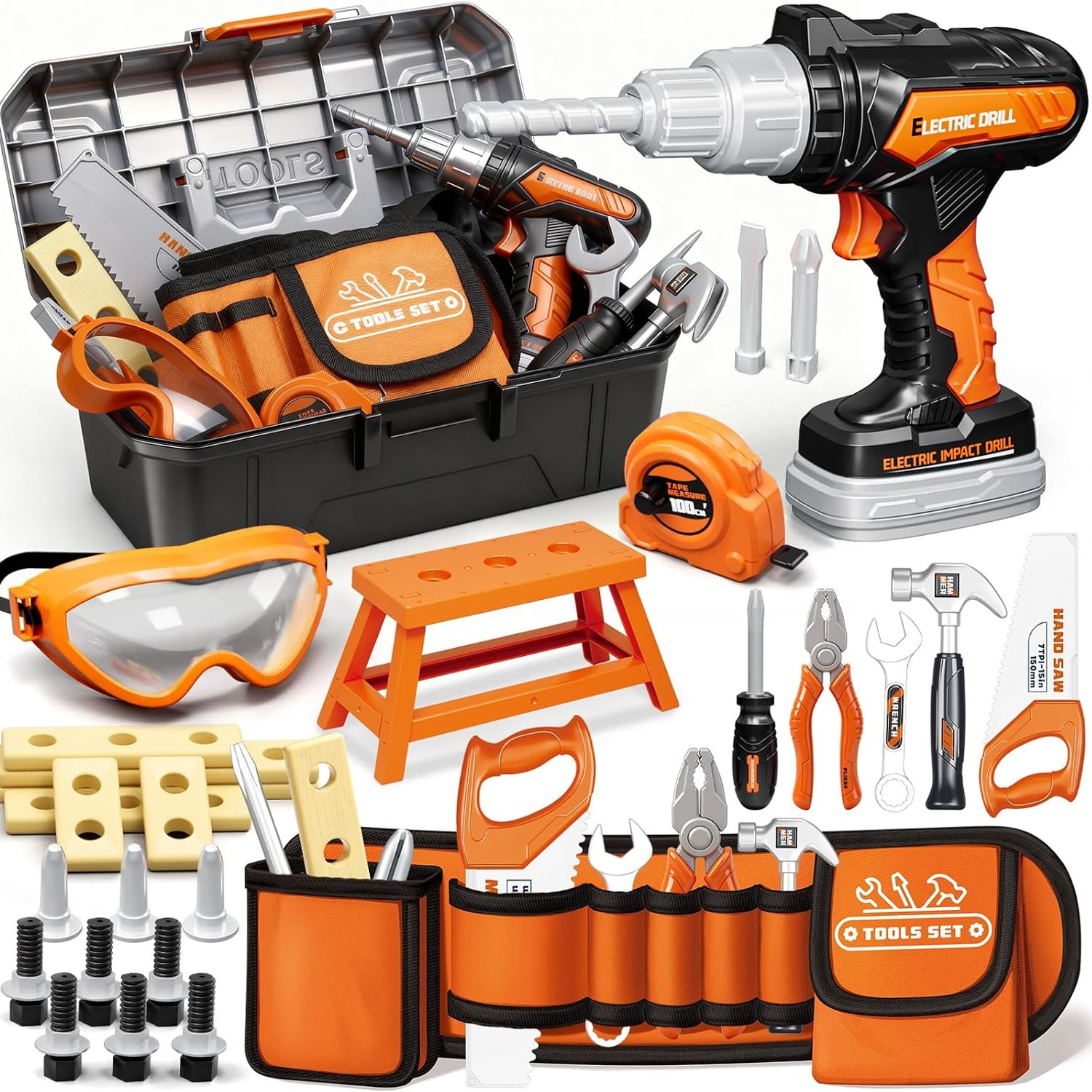
This is a 50 piece construction play set built around a battery-powered toy drill that actually spins, with a hand saw, hammer, wrench, screwdriver, pliers, goggles, tape measure, adjustable belt and a tool box to hold it all. There are strips, screws, nuts and nails for building, plus a manual for making a small chair.
It is rated 3 years and up, weighs 0.9 kg, measures 30 x 15 x 12 cm packed, and the tools are plastic in orange. You will need two AA batteries for the drill.
If you want a first workshop toy that a preschooler can use alone and still enjoy at six, this covers it. Keep the pieces in the box, keep it out of the dishwasher, and it will see a lot of pretend jobs done.