
The complete guide
Choosing a Tambourine That Actually Gets Played
The problem with "first instruments"
Most instruments punish beginners. A recorder squeaks. A keyboard sits silent until someone explains which key is which. A guitar needs tuning before it makes a single pleasant sound, and small fingers hurt on the strings within about four minutes.
A tambourine does none of that. You shake it and it works. That is the whole appeal, and it is not a small thing. Children stick with music when the first attempt feels like a success rather than a failure. A hand held tambourine gives them that success immediately, which buys you the attention span to start teaching actual rhythm.
The same logic applies to adults. Plenty of people want to join in at a community singing group, a church band or a folk session without committing to months of practice first. Percussion is the open door, and a six inch tambourine is about the most forgiving instrument behind it.
How a tambourine actually works
There are two sound sources in one instrument, which is why a tambourine does more than people assume.
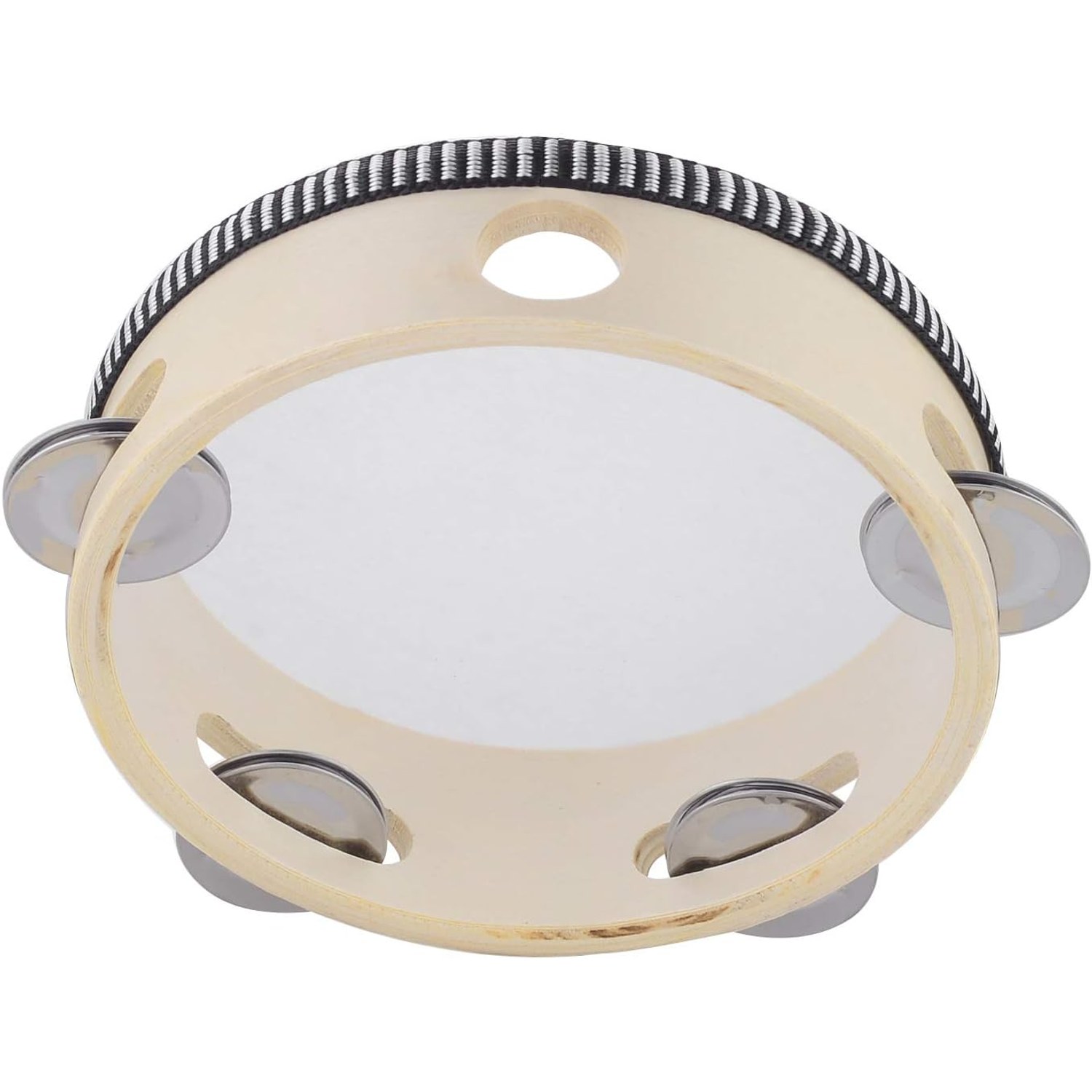
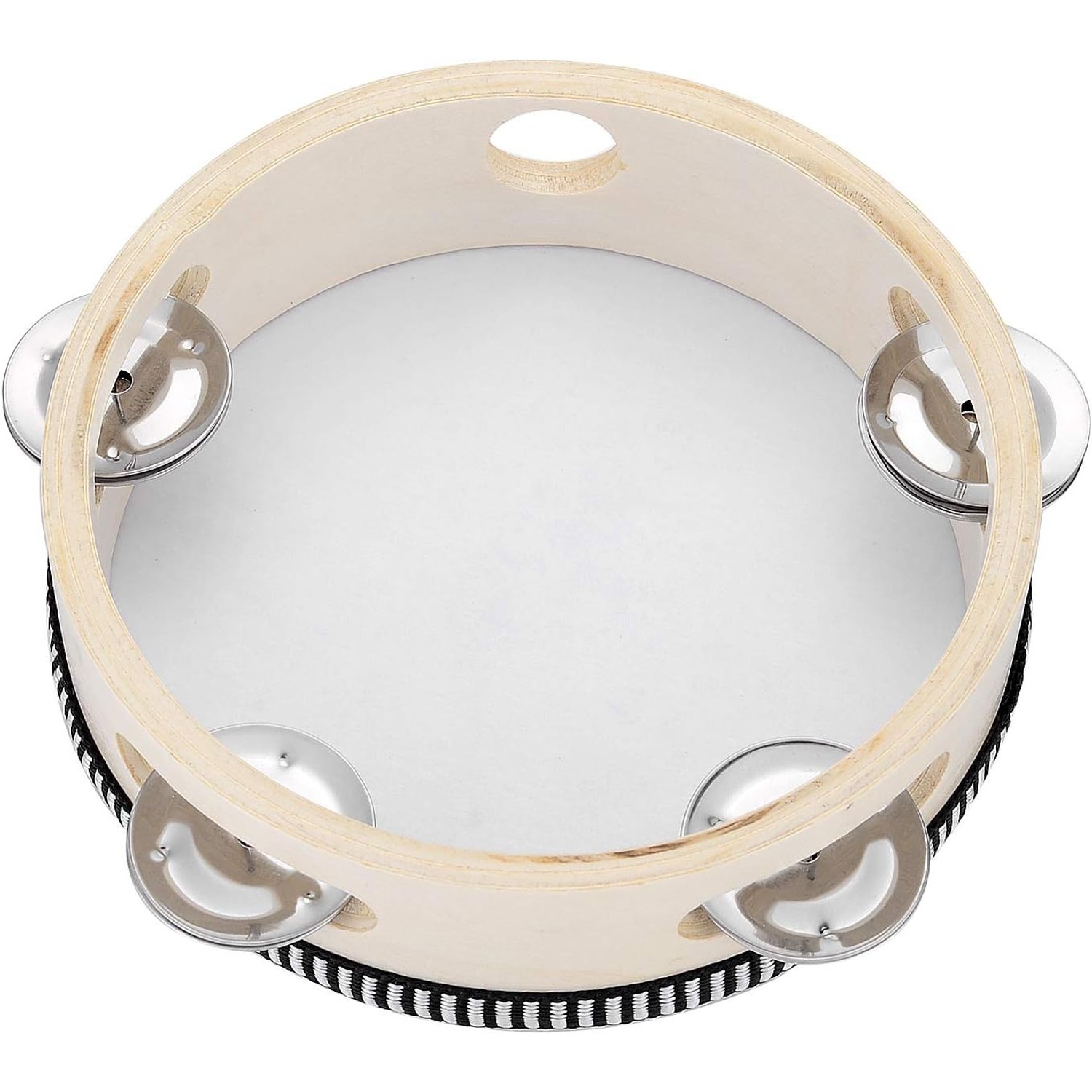
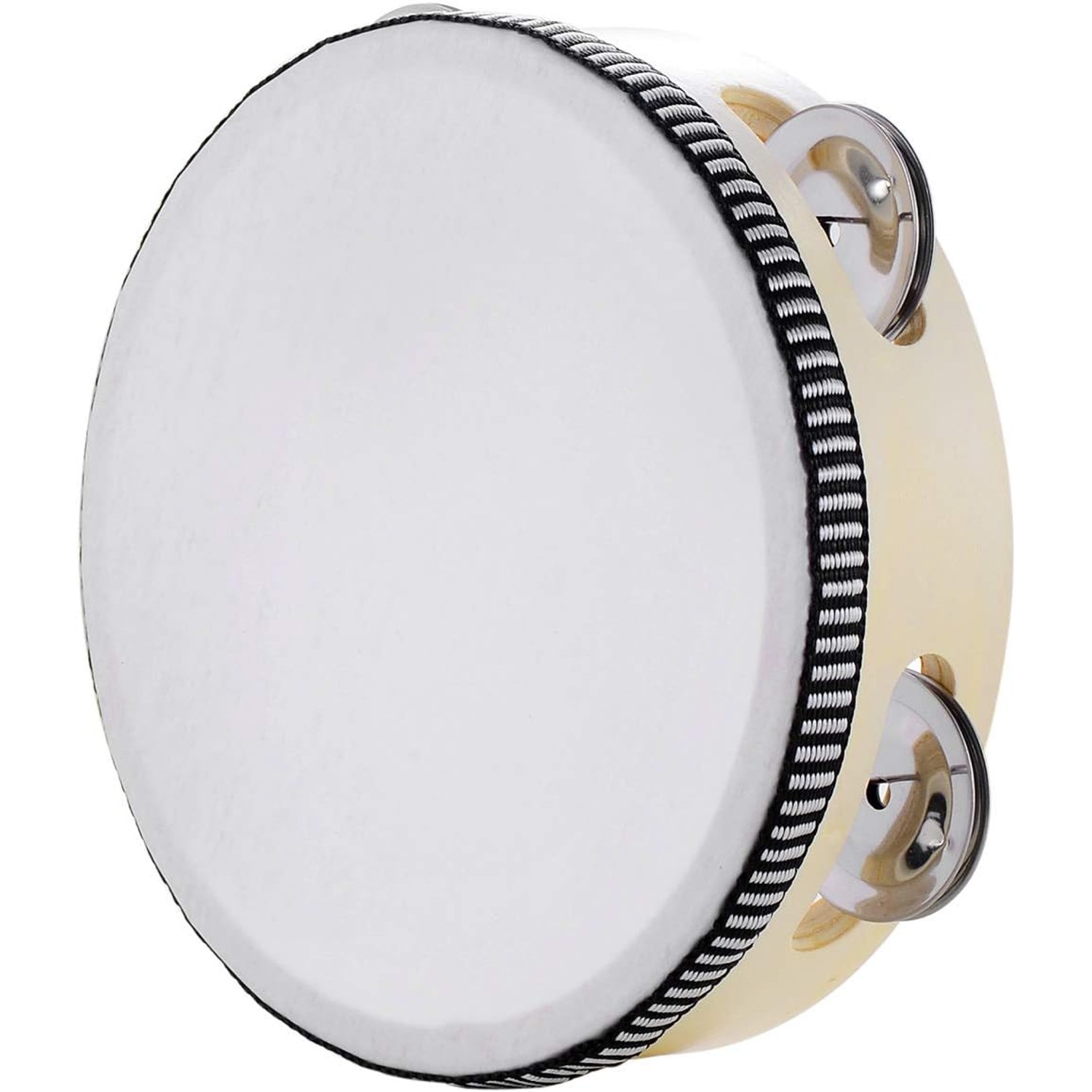
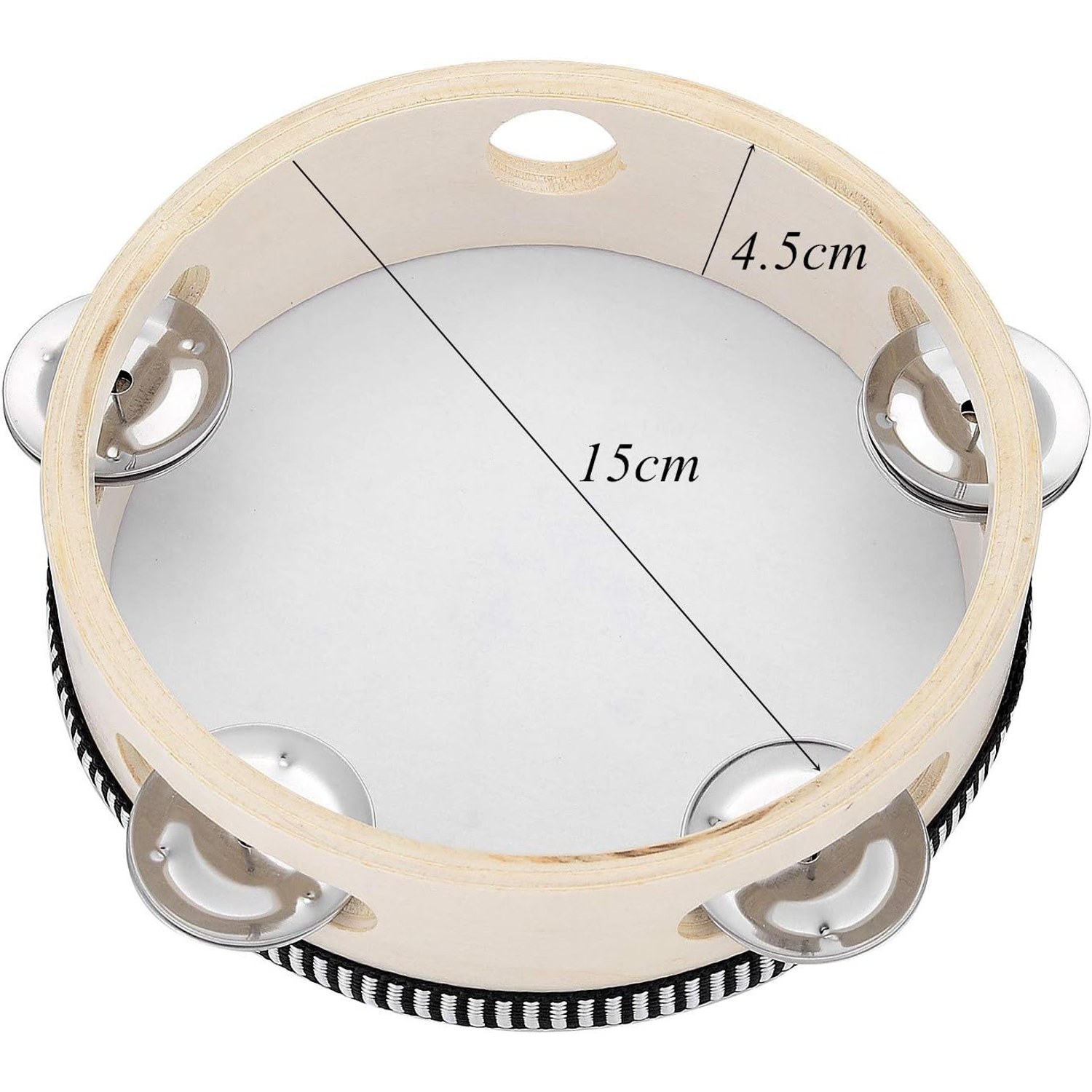
The first is the jingles. These are small metal discs mounted in pairs through slots cut into the shell. When you shake or strike the frame, the discs clash against each other and ring. The sound is bright and sustains for a moment after the movement stops, which is what gives a tambourine its shimmer.
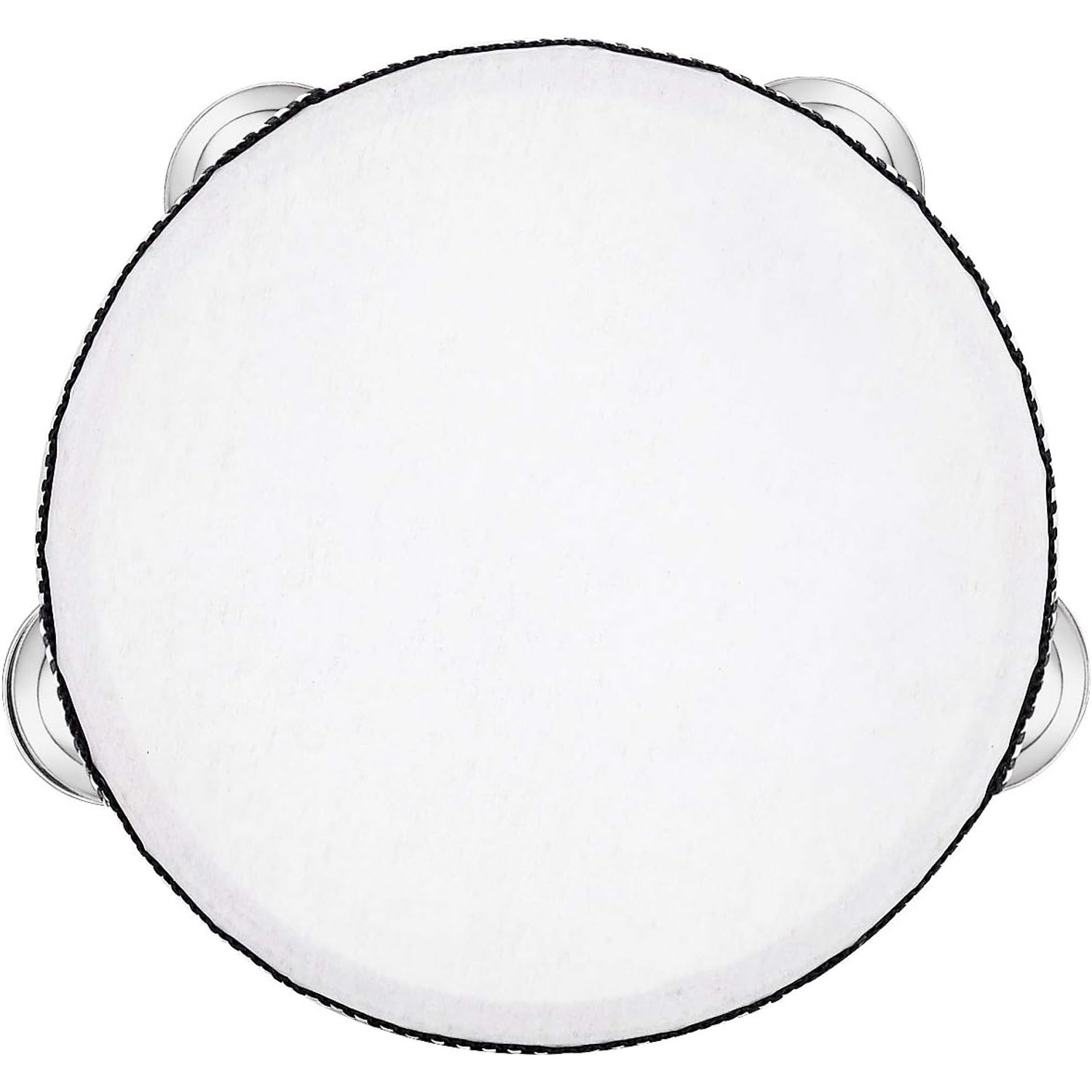
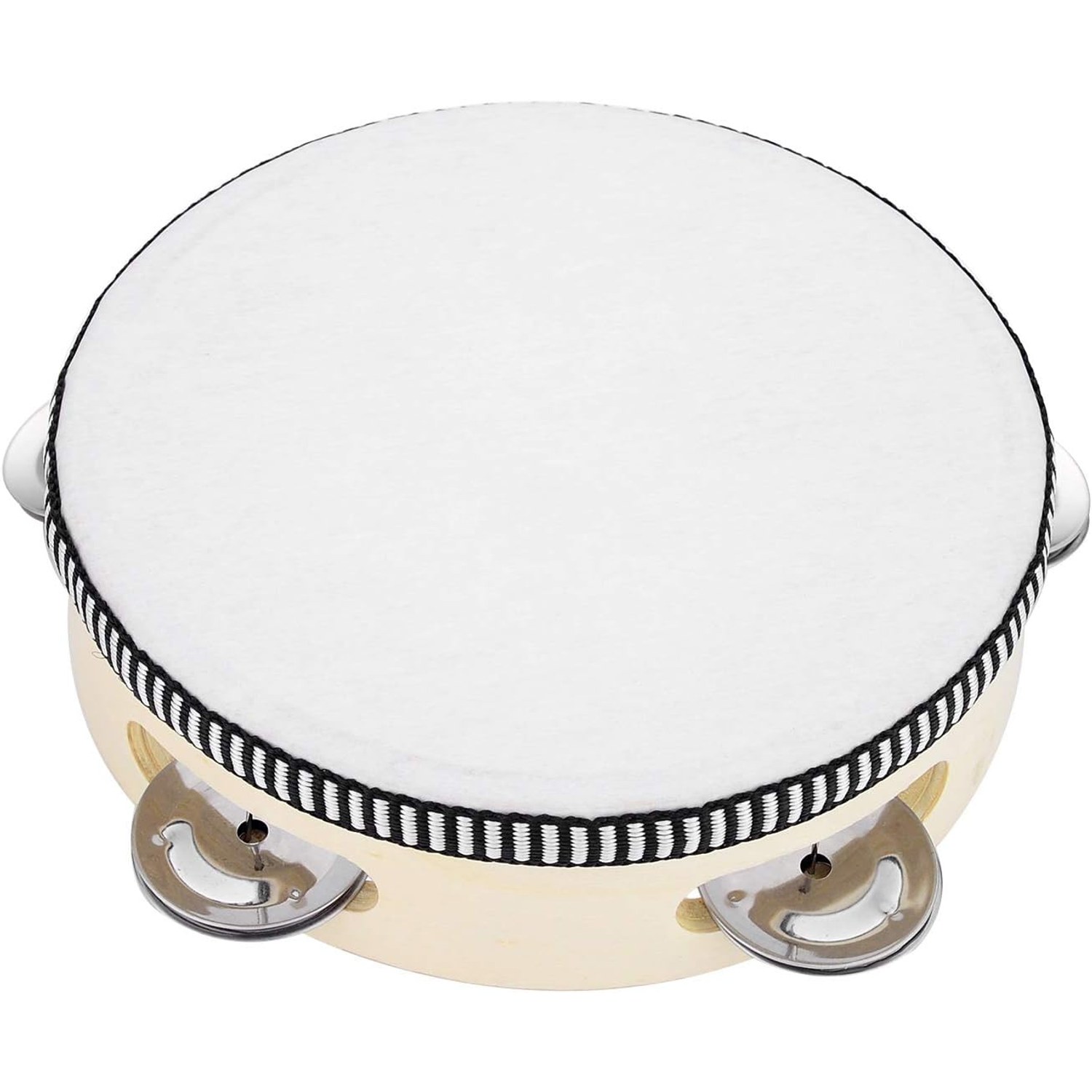
The second is the head. This model has a polyester leather head stretched over the birch shell. Tap it with your fingertips or the heel of your palm and you get a short, low thud under the jingle sound. That lets you play a beat with weight to it instead of just a continuous rattle. Headless jingle rings cannot do this, which is why they sound thinner.
Put the two together and you have real range. Gentle wrist movement gives you a soft shimmer for a quiet verse. A firm slap on the head with a flick of the wrist gives you a sharp accent. Rest the frame against your thigh and tap the head with alternating hands and you can keep a surprisingly complex pattern going.
Why birch and why six inches
The shell material matters more than it sounds. Birch is a standard timber in drum building because it has a good stiffness-to-weight ratio. A stiff shell keeps its round shape, and a round shell keeps the jingle slots properly aligned so the discs swing freely rather than binding. Light weight matters too, because the player is holding the whole thing up for the length of a song.
Six inches, roughly 15 cm across, is the useful middle ground. Go smaller and the jingles get quiet and the instrument starts feeling like a baby toy. Go larger, to eight or ten inches with a double row of jingles, and you get volume and projection but also noticeably more weight. A ten inch tambourine held at shoulder height for a forty minute rehearsal is genuinely tiring, and for a child it is simply too much.
So the six inch frame is where most beginner percussion instrument buying lands. It is loud enough to lead a group, light enough that nobody gives up halfway through, and small enough to slide into a bag.
Who this suits
Families. If there is a child in the house who taps on every surface, this gives that energy somewhere to go. It is one of the better options for a childrens rhythm instrument because it is a real instrument, not a battery-powered box that plays a tune for them.
Teachers and group leaders. A small tambourine for music class works hard. You can use it to call attention, set a tempo, or hand out to a circle so everyone plays together. Buying a few at once makes more sense than one, since a single tambourine in a group of twelve causes more arguments than music.
Dance and movement instructors. Keeping time with one hand while your body demonstrates the step is standard practice, and a light frame makes that sustainable.
Worship and community musicians. In a small or unamplified room, a six inch frame sits nicely in the mix. It adds lift without burying the singing.
Therapists and support workers. A preschool music instrument that responds to any amount of physical effort is useful far beyond preschool. Someone with limited movement can tilt it and still make a sound, which is a meaningful thing.
How to choose between tambourines
A few questions sort out most of the decision.
Headed or headless? A headless jingle ring is lighter and cheaper but makes only one sound. A headed tambourine like this one gives you both the jingle and a tapping surface. For anyone who wants to play actual rhythms rather than just shake along, headed wins.
Wood or plastic? Plastic frames survive abuse and cost less. Wood sounds warmer, feels better in the hand, and lasts well if it is not left in the rain. A birch wood tambourine is the sensible pick where sound quality matters at all.
Single or double jingle row? Double rows are louder and more complex but heavier. Single rows are clearer and lighter. For a child or a casual player, single is plenty.
Size. Match the frame to the hand. Six inches covers most people from school age upward.
Looking after it
Wood and moisture do not get along. Keep the tambourine out of bathrooms, away from the kitchen sink, and off the back seat of a car in summer. Heat dries wood and can slacken a head. Damp can swell it.
Cleaning is simple. A soft dry cloth over the shell and head after a session handles everything a tambourine normally picks up. Skip the sprays and the damp cloths.
Store it where it will not get squashed. Flat on a shelf is fine. Hanging on a hook by the frame is better. What you want to avoid is a pile of other gear sitting on the head for weeks.
Every so often, look at the jingle pins. On any tambourine, enthusiastic play can work a pin loose over years. Spotting it early means a small fix instead of a lost jingle. This is standard maintenance on timber-framed percussion, not a flaw in this particular model.
A note on what we do not know
The maker's details for this item is complete on the things that matter most, including the birch shell, the polyester head, the 15 x 15 x 4 cm size and the metallic matte finish. It is blank on product weight, country of origin and any formal age rating. Rather than fill those gaps with guesses, we have left them empty. If one of those details is a deciding factor for you, message us first and we will tell you what we can actually verify.
The short version
A six inch tambourine is the easiest way to put a working instrument in someone's hands today. Birch shell, polyester head, metal jingles, nothing to assemble and nothing to learn before the first sound comes out.
It suits children starting out, teachers running group music, dancers marking time and adults joining a band without wanting to practise for six months first. It is light, it travels, and it costs less than almost anything else that counts as a real instrument.
If the person you have in mind already drums on the table, this is the obvious next step.