
The complete guide
How To Choose A Marble Run Kit That Kids Actually Keep Building
The toy that gets built once and then ignored
Most parents have bought it at some point. A construction set comes home, gets assembled on a Saturday morning, sits on a shelf looking impressive for a week, then migrates to the bottom of a cupboard. The problem is not usually the quality of the toy. It is that the toy only has one correct answer, and once a child has found it, there is nothing left to do.
A marble run works in the opposite direction. There is no finished model and no instruction booklet telling a child they got it wrong. There is only a marble, a tower and the question of whether the marble makes it to the bottom. When it does not, the child adjusts something and tries again. That loop can run for a very long time, which is why a marble track building set often outlasts far more expensive toys in the same cupboard.
How a gravity track actually behaves
Everything in a marble run comes down to height and angle. The marble starts with potential energy because it is up high. As it rolls, that becomes speed. Every turn, funnel and flat section takes a little of that speed away through friction. If a child builds a long flat run, the marble stops halfway. If they build a steep drop into a tight curve, the marble flies out the side.
Children work this out by watching, not by being told. After a few failed runs, most kids start raising the starting point without anyone suggesting it. Then they notice that a funnel slows a marble down and spits it out in a different direction. Then they start using that on purpose. This is real physics learned through the hands, and it sticks better than a diagram ever will.
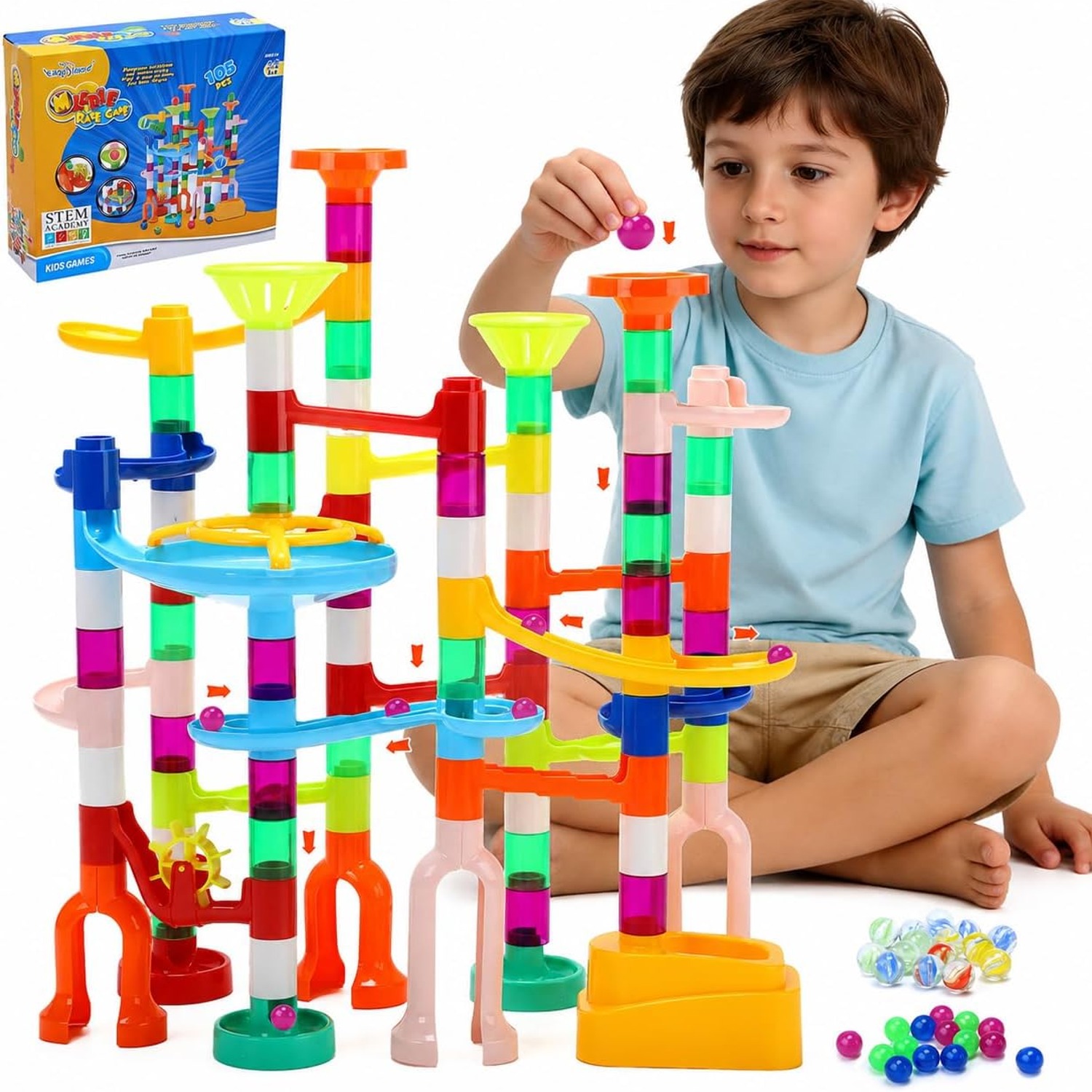
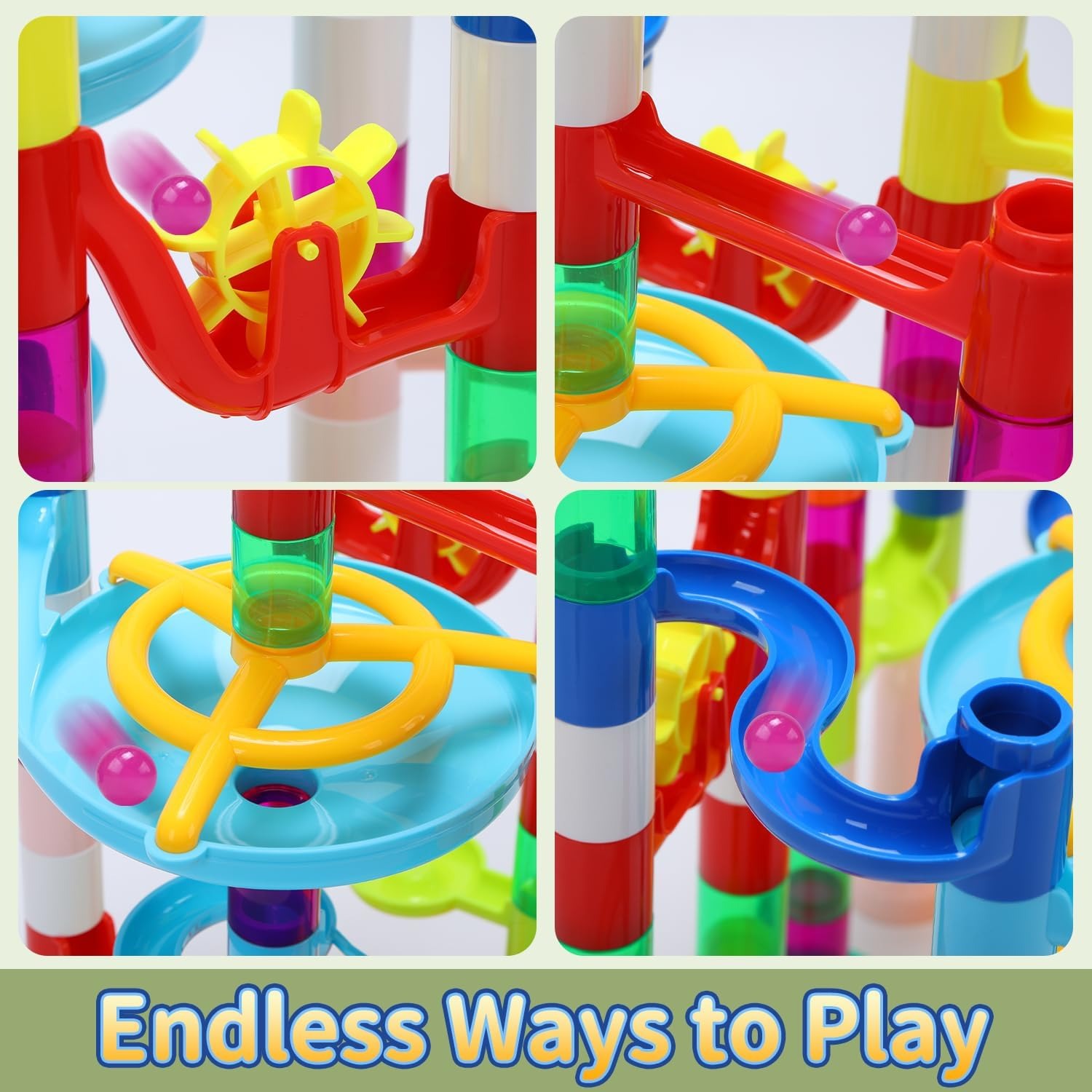
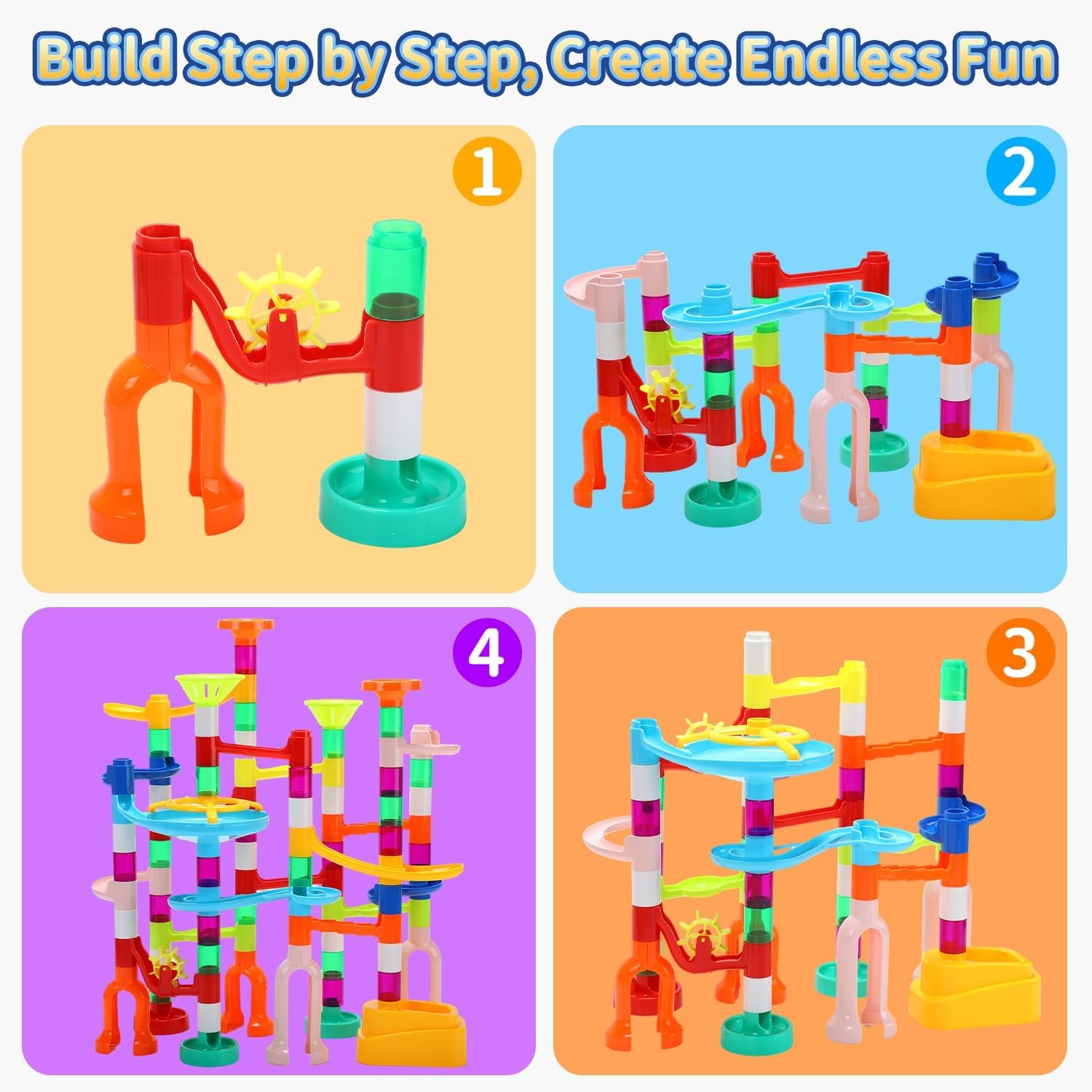
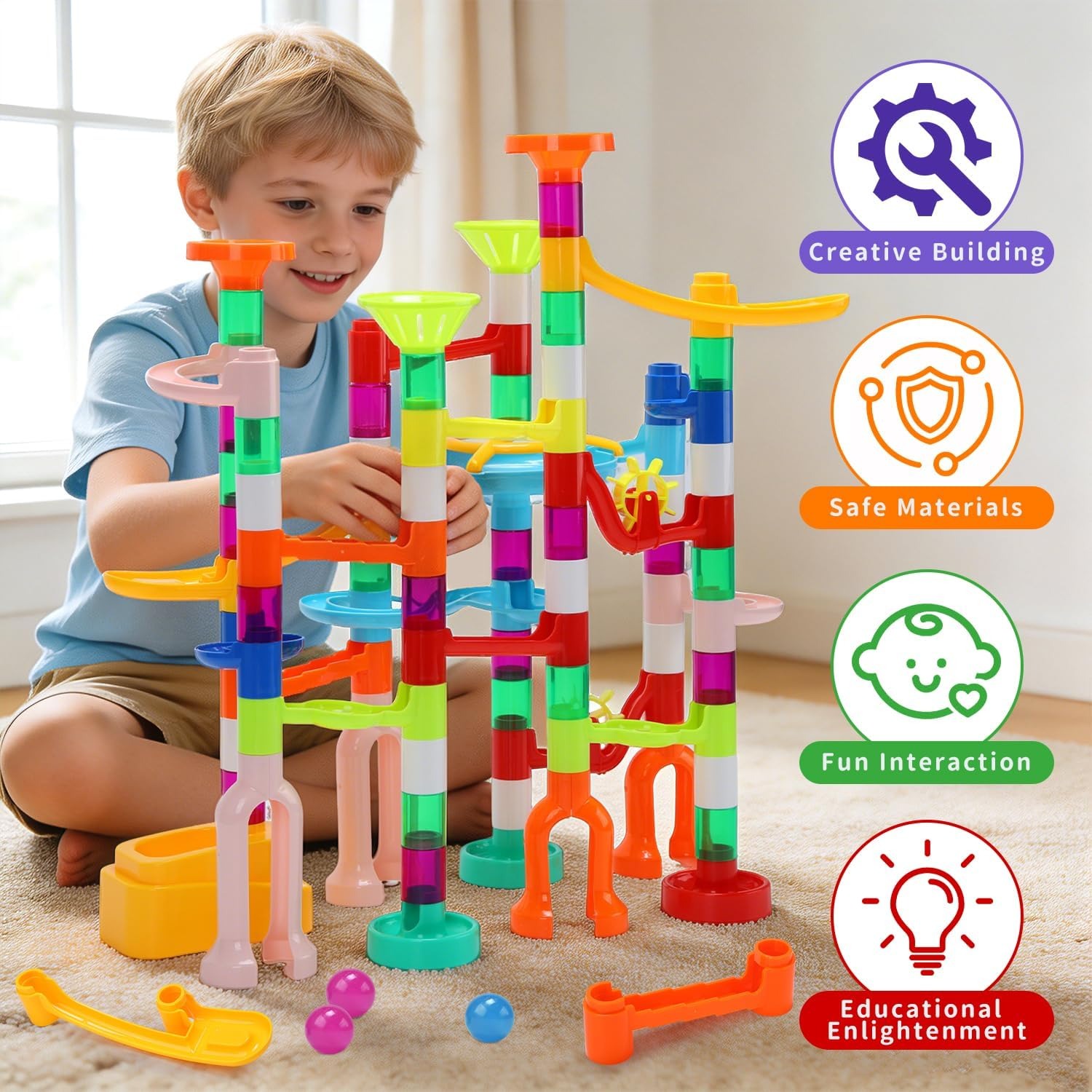
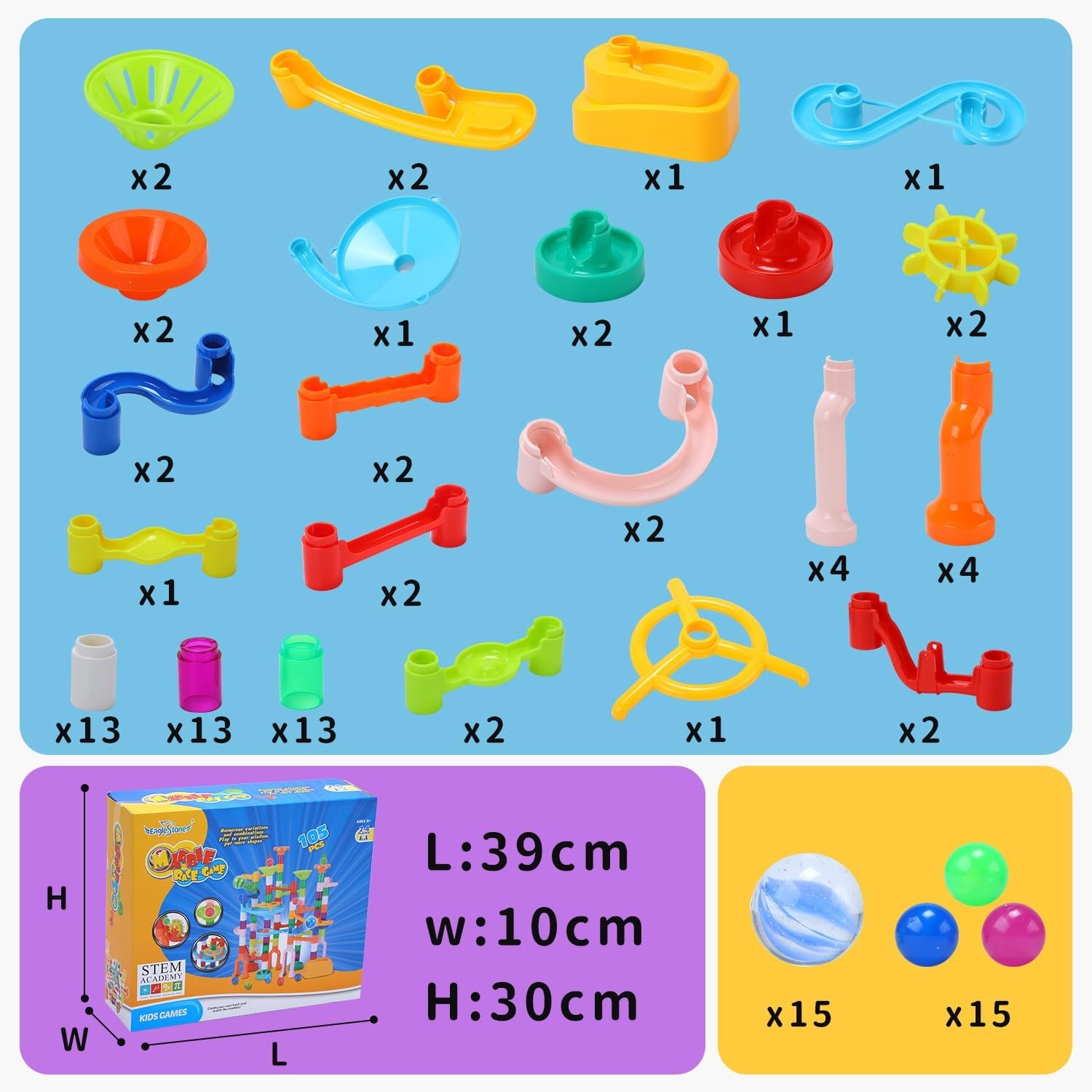
The 105 pieces in this set include curves, slides, funnels and spinning track parts. That mix matters more than the raw number. A hundred straight pieces would only make long ramps. A mix of shapes lets a child branch a route, send a marble around a spiral and then drop it into a funnel, which is where the real designing starts.
Four ways in, four ways out
One detail that changes how this set plays is the four entrances at the top and four collection zones at the base. A single-entry track gives you one marble, one path and one result. Four entry points turn the same structure into a race course.
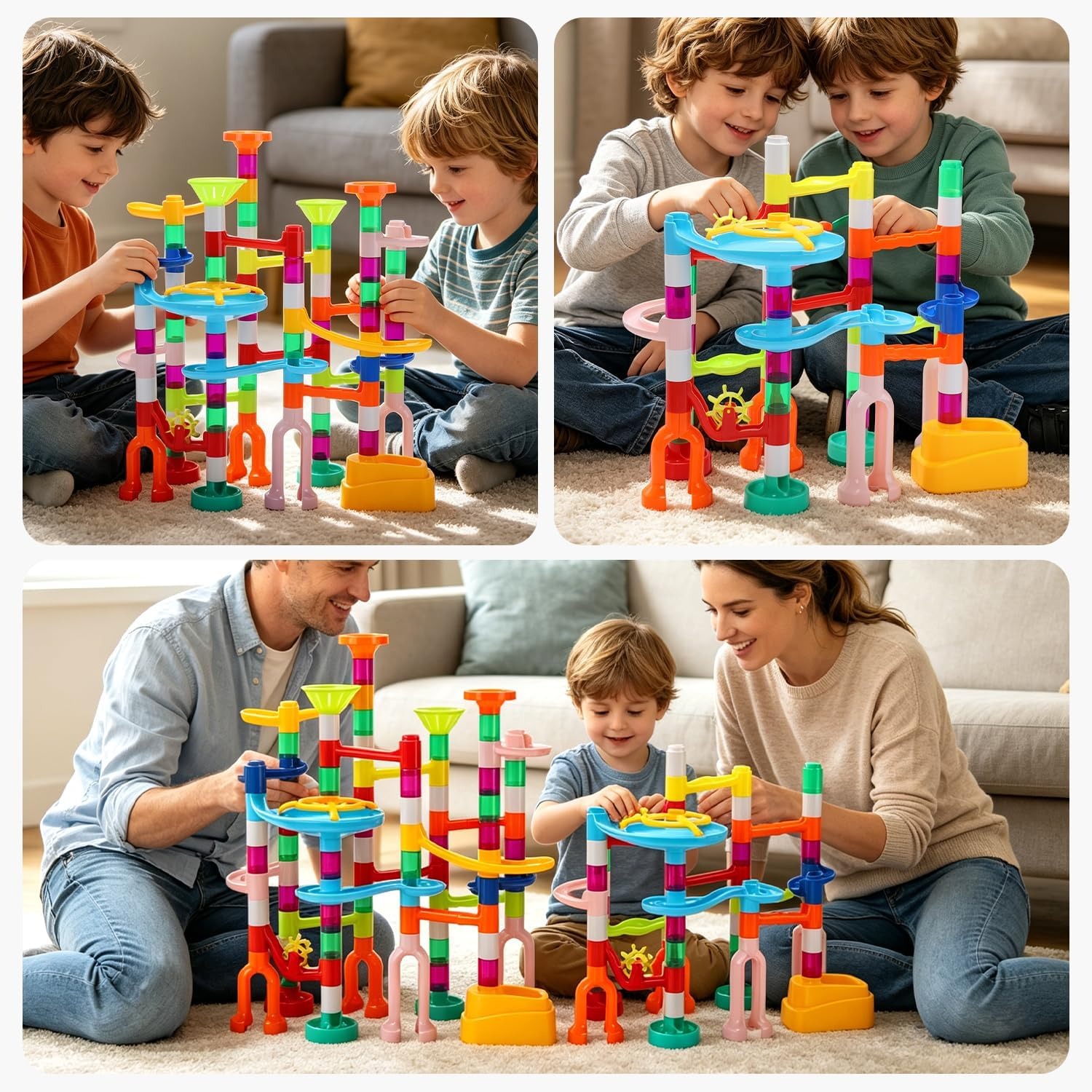
Children use this in ways that are hard to predict. Some build four separate routes from four entrances and time which one wins. Some funnel all four into a shared section halfway down to create a pile-up. Some make rules, assign colours to players and keep score. Siblings who struggle to share a single toy often cope better with this one because there is genuinely enough track for two people to work on at the same time.
For parents, that is the practical benefit. A toy that supports two children at once is a toy that reduces arguments rather than causing them.
Who this suits
The manufacturer recommends 3 years and up. In practice, the way it is used shifts a lot across that range.
At three and four, building is usually a joint activity. An adult assembles the frame and the child drops marbles in, over and over. That repetition looks pointless to grown-ups but it is how young children confirm that the world behaves consistently. Keep a close eye on marbles with this age group.
From around five to seven, children start building sections themselves. They understand that steeper means faster and they begin to plan a route before they place the pieces. This is often the sweet spot for an educational building toy, because the child is capable enough to succeed and still young enough to find it genuinely surprising.
From eight upwards, the play gets more deliberate. Older kids set themselves challenges, build to the maximum height they can manage, and try to make the slowest possible run rather than the fastest. Some combine it with other construction toys to add supports or bridges. If your child already enjoys building, the open-ended format gives them plenty to work with.
What to look for in any marble run
If you are comparing sets, a few things matter more than the headline piece count.
Stability is first. A track that falls over every third marble kills the fun fast, and it is the single most common complaint about cheap sets. Secure connectors that hold position while marbles rattle through are worth more than twenty extra pieces.
Piece variety is second. Count the types of part, not just the total. Funnels, spirals and spinning sections create interest. Twenty identical straights do not.
Surface matters too, and that is down to you rather than the toy. Hard, flat floors and solid tables give the best results. Thick carpet makes tall builds unstable because the base pieces sink unevenly. A thin play mat is a good compromise if you want to cut the noise without losing the flat surface.
Finally, think about storage before you buy. A 105 piece set needs somewhere to live. A clear lidded tub costs very little and makes the difference between a toy that gets used weekly and one that is too annoying to find.
Keeping it in good shape
Plastic track parts are tough but not indestructible. Wipe them with a damp cloth and a little mild soap when they get grubby, then let them dry completely before packing away. Trapped moisture in a sealed box is how plastic toys start to smell.
Keep the set away from heaters, hot cars and direct summer sun, since heat can warp pieces enough that they stop clicking together properly. Skip the dishwasher entirely for the same reason.
Every so often, check connectors for hairline cracks. A cracked joint is the usual cause of a tower that keeps collapsing for no obvious reason, and pulling that one piece out of circulation solves it. Marbles should be counted back into the box after each session, especially in homes with preschoolers or pets.
Making it last beyond the first week
A small amount of adult input goes a long way with this kind of toy. Try setting a challenge rather than building the track yourself. Ask for the slowest possible run, or a route that uses every funnel, or a track where two marbles arrive at the bottom at exactly the same time. Challenges give a child a reason to rebuild rather than abandon.
Photographing good builds also helps. Children like recreating and improving on something they made last month, and a photo on a phone is enough of a record to make that possible.
The short version
This is a 105 piece plastic marble run kit from EagleStone, model 8104, recommended for ages 3 and up. It includes curves, funnels, slides and spinning parts, with four entrances at the top and four collection zones at the base, so racing and multi-player building both work well. The stated educational objective is logical thinking, and the building process supports spatial awareness, hand eye coordination and problem solving along the way.
It suits a child who likes figuring things out, a household that wants a screen-free activity with a long life, and a gift-giver who needs something safe across a wide age range. Give it a flat surface, a storage tub and the occasional challenge, and it will earn its place in the toy cupboard.