
The complete guide
The Complete Buyer's Guide to Choosing a 17 Key Kalimba
The instrument most people give up on, and the one they do not
Almost everyone has a story about an instrument that did not stick. A guitar with a warped neck under the bed. A keyboard that went to the garage. Recorder lessons at school that nobody enjoyed, including the teacher.
The common thread is the gap between starting and sounding decent. On most instruments that gap is months long. You practise, it sounds bad, you practise more, it still sounds bad, and at some point your brain quietly decides this is not for you.
A kalimba closes that gap to about sixty seconds. The notes are already in tune. There is no bowing, no breath control, no finger pressure to get right. You pluck a metal tine and a clear note comes out. That is the whole mechanism. Because of that, the thing people usually quote back about a thumb piano is not how hard it was, but how surprised they were that it sounded nice straight away.
How a kalimba actually works
Seventeen flattened metal tines are clamped across a bridge on the face of a wooden body. Each tine sticks out a slightly different length. Longer tine, lower note. Shorter tine, higher note. Pluck one with your thumbnail and it vibrates. The bridge passes that vibration into the wood, the hollow body amplifies it, and the sound leaves through the hole on the front.
Nothing about it is electronic and nothing is adjustable while you play. The pitch is fixed by physics.
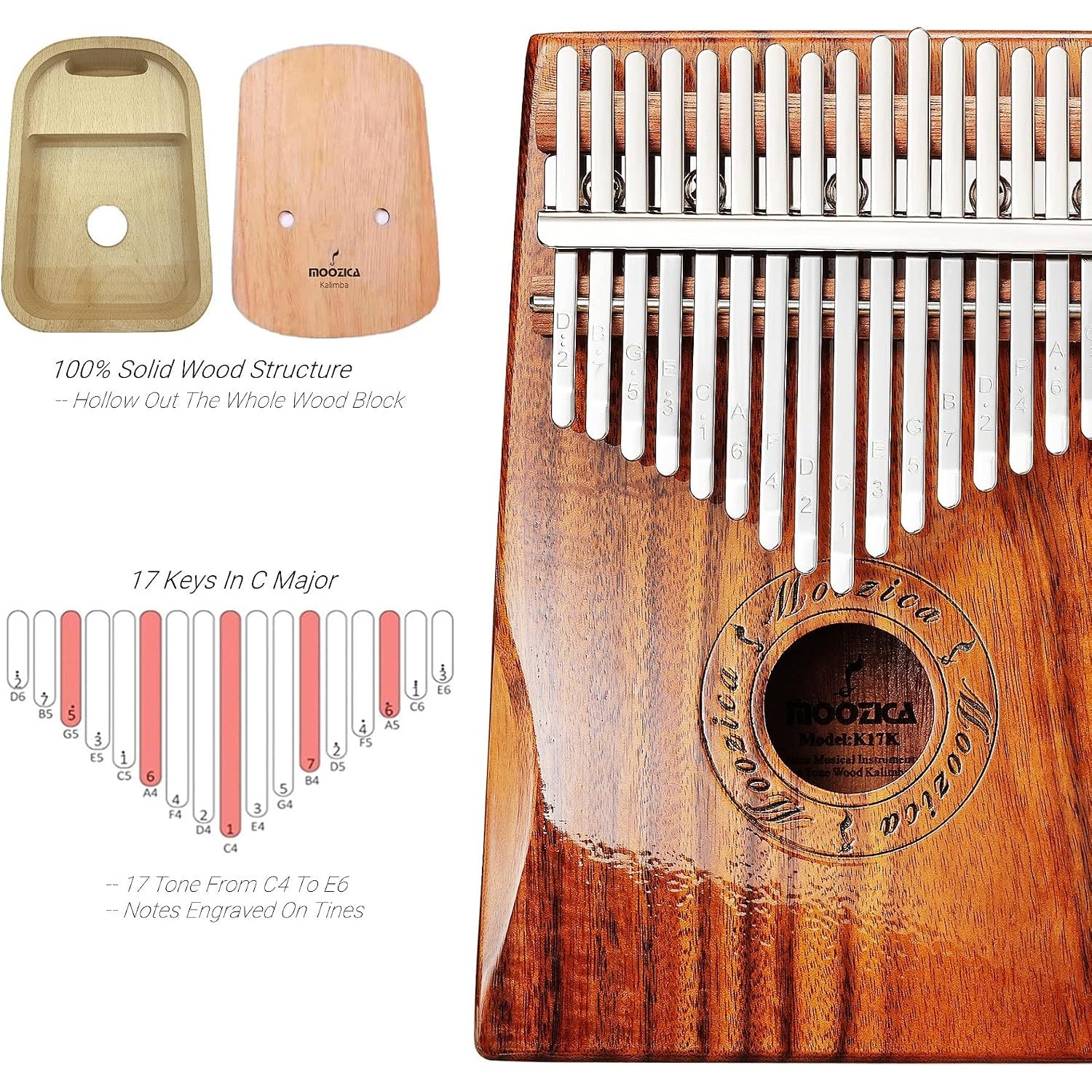
The layout is the one thing that catches people out. A kalimba does not run low to high across the row like a piano. The lowest note sits in the middle, and the scale alternates outward, one tine left, one tine right, climbing as it fans out. Once you know that, the pattern makes sense and your thumbs settle into a comfortable rocking motion. Before you know it, it feels like reaching for the middle of a book rather than the start.
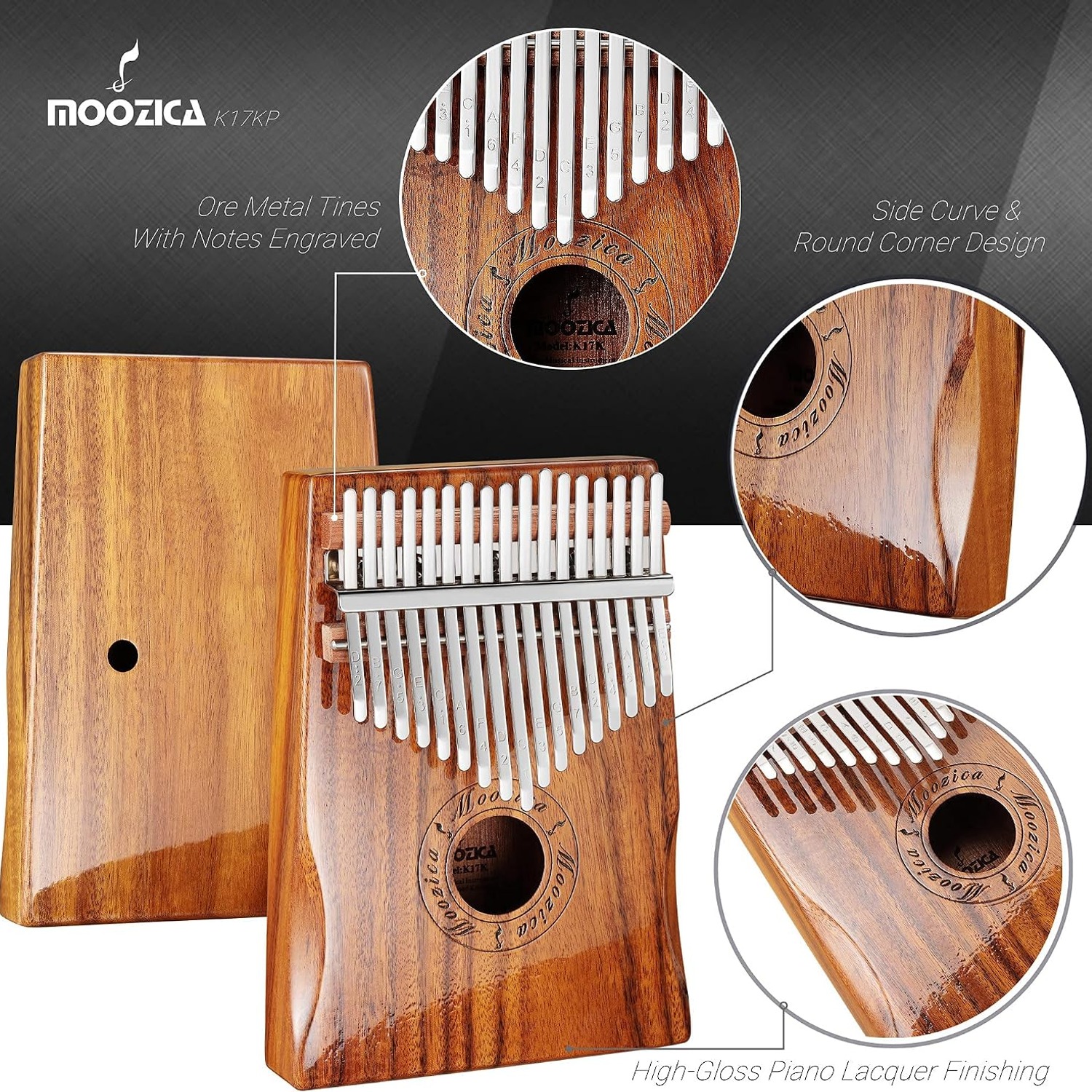
That is exactly why the engraved note scales on this model earn their place. Having the letters marked on the metal turns an unfamiliar layout into something readable. Beginners who start with marked keys tend to play real songs weeks earlier than those who do not.
Why the wood is the thing worth paying for
Kalimbas sit in a wide price range, and the gap is almost entirely about the body.
At the low end you get thin plywood or a flat board with no resonating chamber at all. The notes come out thin and stop quickly, like plucking a comb. It is fine for working out whether you like the idea, but it does not reward playing.
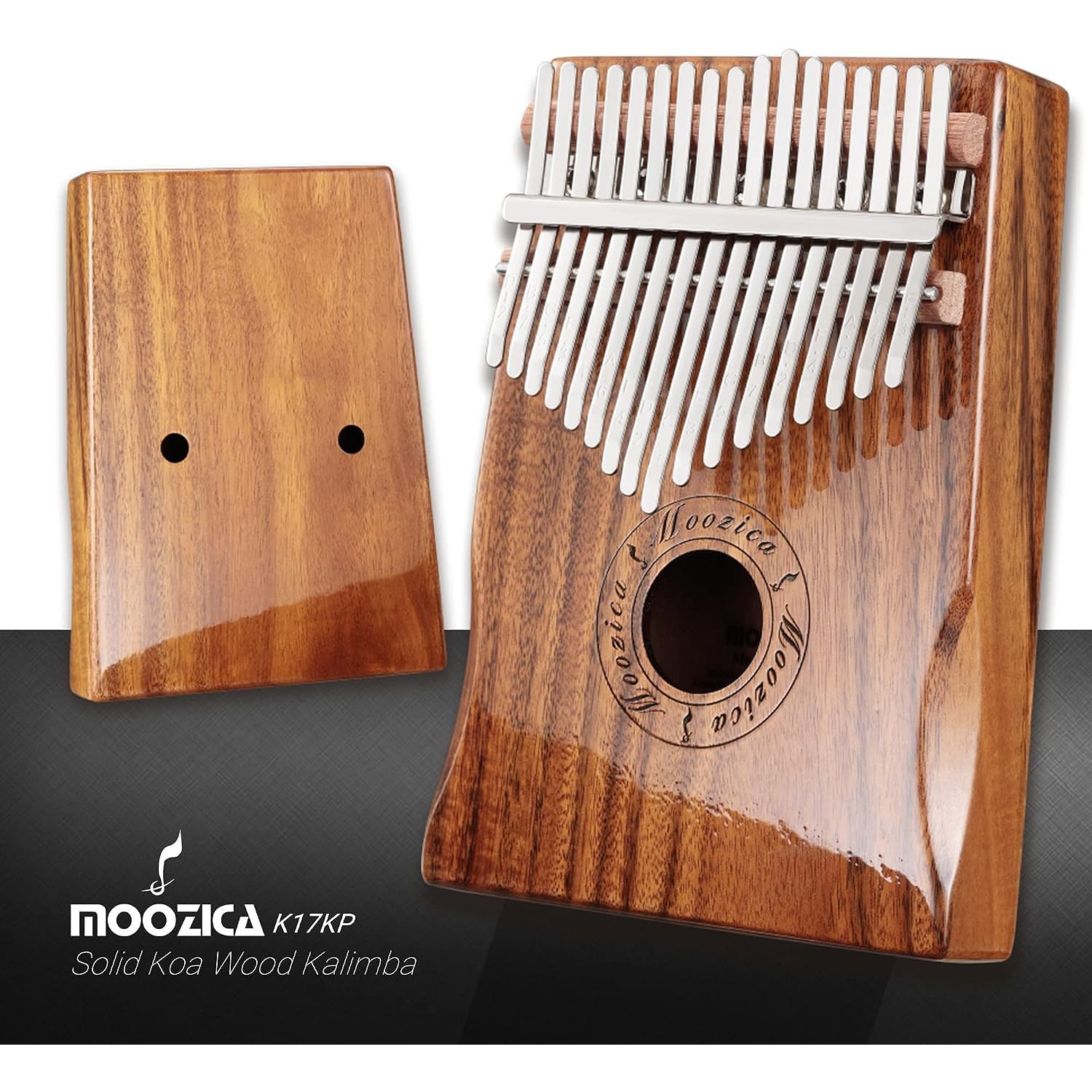
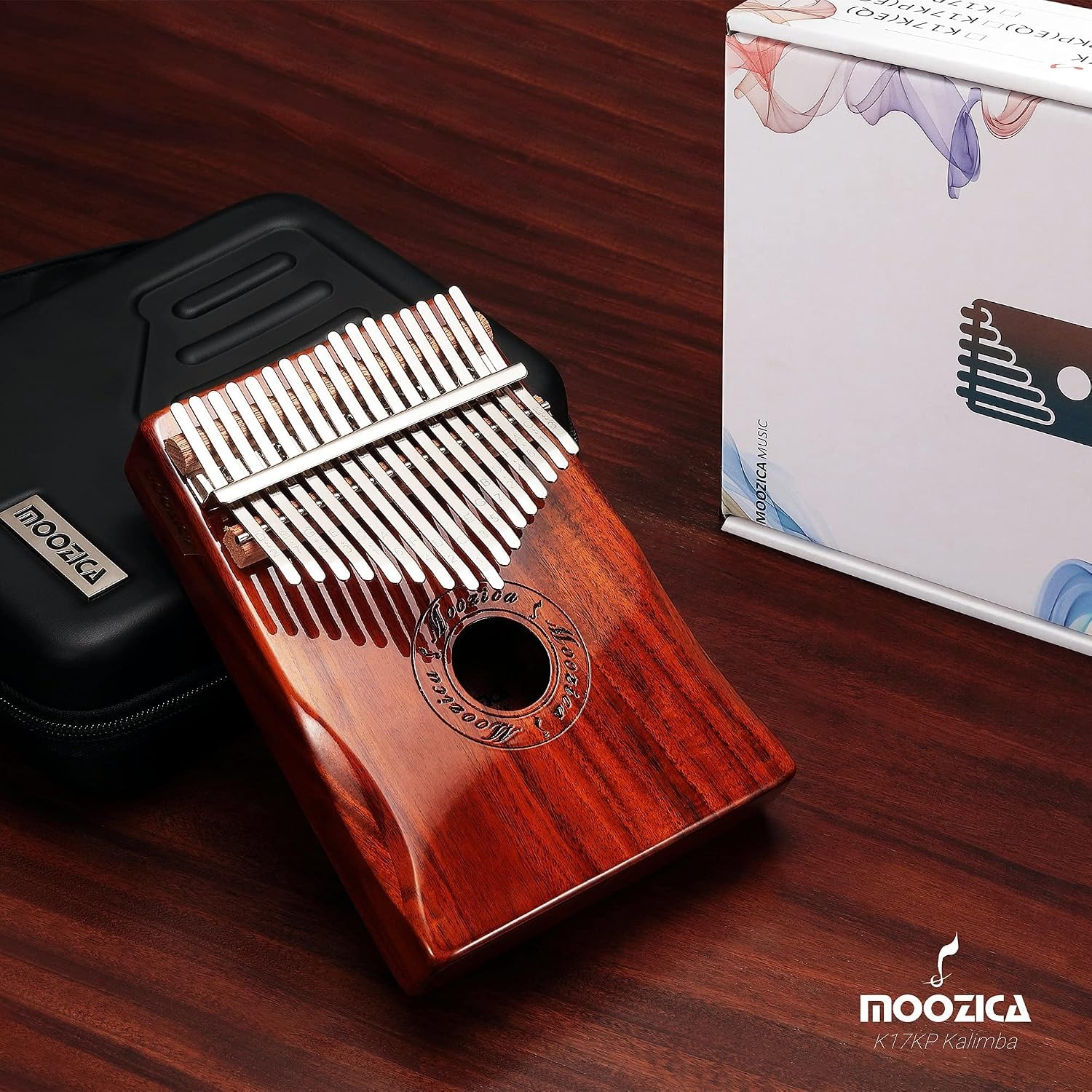
This Moozica model uses a solid acacia koa body, hollowed from a block rather than glued up from layers. Solid construction matters because a single piece of wood vibrates as a whole. Glue lines between laminated sheets absorb some of that energy, so laminated bodies tend to sound flatter and die away faster.
Koa specifically is a wood luthiers have used for a long time in ukuleles and guitars. It has a reputation for a warm midrange with the harsh top edge taken off. On a kalimba, where the sound source is bare metal, that warmth does a lot of work. The listed sound profile here is warm and deep, which lines up with what the material is known for.
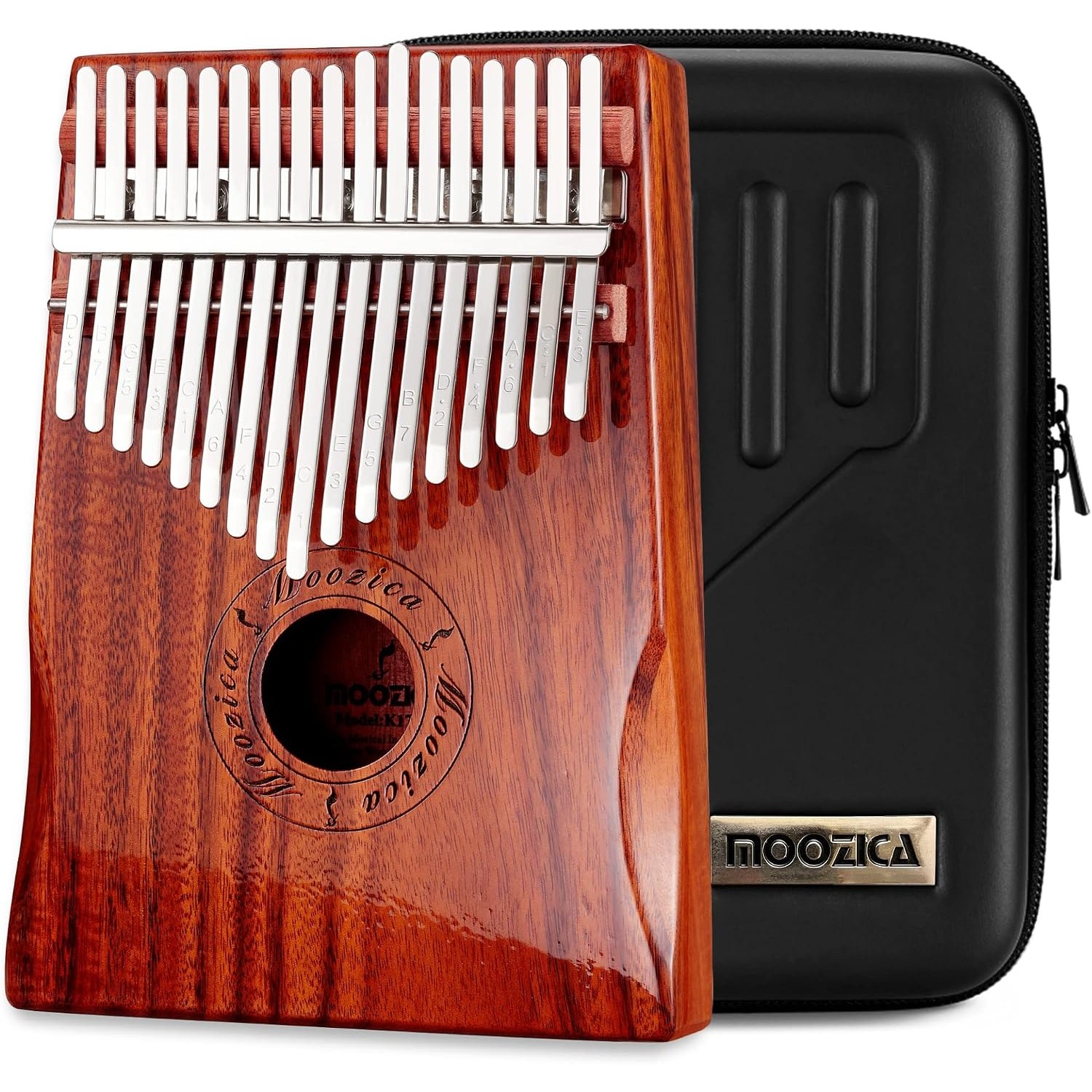
The finish is high-gloss piano lacquer over that koa grain, with a curved hand rest moulded into the edge. The curve is a small design decision with a large effect, because the base of your thumb sits against that edge for the whole time you play. A sharp edge makes twenty minutes uncomfortable. A rounded one does not.
Who this suits
Adults who want something calming after work are the biggest group. A kalimba is quiet, it sits in your lap, and it does not need a stand, a cable or a corner of the room. Ten minutes of it genuinely slows your breathing down, which is why it keeps turning up in recommendations for the best calming instrument to learn later in life.
Teenagers and older children take to it quickly too, because the reward comes fast and the instrument is small enough to carry to a friend's house. Younger kids can manage it with help, though bear in mind the tines are exposed metal and soft fingernails make plucking harder.
Travellers and campers are another natural fit. With the hard case on, it goes in a backpack without ceremony. If you have been looking for the best travel instrument that does not need tuning pegs and a spare set of strings, this is close to the answer.
Experienced musicians buy them as well, usually as a writing tool. The fixed diatonic layout means everything you play is in key, which is a quick way to find melodies when a guitar has you stuck in old habits.
How to choose between kalimbas
Four things decide it.
Number of keys. Ten and eight key models exist and they are cheaper, but the range runs out fast and you start hitting songs you cannot finish. Twenty-one key models give you more notes but become wider in the hand. Seventeen is the size most tab books, tutorials and YouTube lessons are written for, which makes it the safest choice.
Body type. Hollow box bodies like this one resonate and sustain. Flat board kalimbas are louder in the attack but much drier, and they are usually meant to be played against a table or amplified. For acoustic playing at home, hollow wins.
Wood. Mahogany is bright and punchy. Koa is warmer and rounder. Bamboo sits somewhere in between. None of them is wrong, but if you want something easy on the ear for long evening sessions, the warmer woods are the ones to look at.
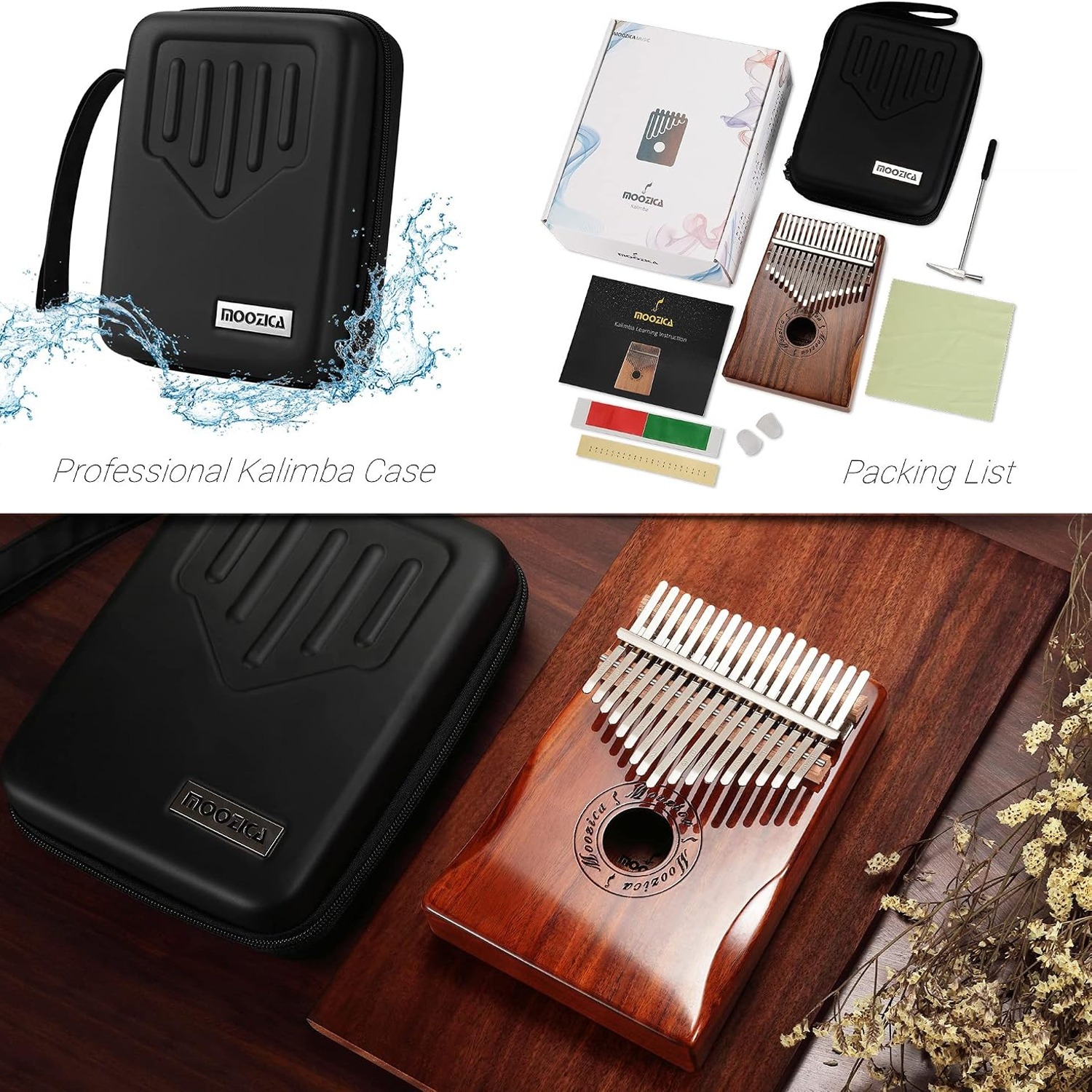
What comes with it. A hard case is the extra that matters most. Tines bend if the instrument gets compressed in a bag, and a bent tine means retuning at best. Soft pouches do not stop that.
Living with it
Care is simple but not optional.
Wipe the wood and the tines down with a dry cloth after you play. Finger oils sit on metal and dull the surface over months. A single pass takes five seconds.
Keep it away from heat sources and damp. Wood responds to humidity by swelling and shrinking slightly, and that can nudge the tuning. A kalimba left on a radiator shelf all winter will not sound the same in spring. The case solves most of this by keeping conditions around the instrument stable.
Expect to touch up the tuning occasionally. This is normal for any acoustic instrument, not a fault. You tap a tine forward with a small hammer to flatten it or back to sharpen it, checking against a free tuner app as you go. Work in tiny increments, because a tine moves pitch faster than you expect.
Finally, play it where you can see it. Instruments that live in cases get forgotten. Instruments that sit on a coffee table get picked up.
The short version
A 17 key kalimba is about as low as the barrier to playing music gets. There is no technique to master before you make a nice sound, and the instrument is small, quiet and portable enough that it ends up in your hands rather than in storage.
This Moozica model is built around a solid acacia koa body hollowed from a block, finished in high-gloss lacquer with a curved hand rest. The 17 ore metal tines are engraved with their note scales, which is the detail that makes it a sensible first instrument rather than a puzzle. A tremolo chain adds an optional jingle, and a PU leather hard case comes in the box. The warranty on record is 3 months from the manufacturer, and the stated country of origin is China.
Weight, overall dimensions and the finished colour name are not specified by the maker, so ask us if those details affect your decision.