
Toy Warehouse
Company
Shop By Category
T&Cs
Shop Online
  • Box contents listed
  • Free tracked Australia-wide delivery over $150
  • 14-day returns

Wooden Tangram Set | Pattern block puzzle | Tangram puzzle for kids

Wooden Tangram Set with 60 Double-Sided Pattern Cards

$47.99 $57.99 Save $10
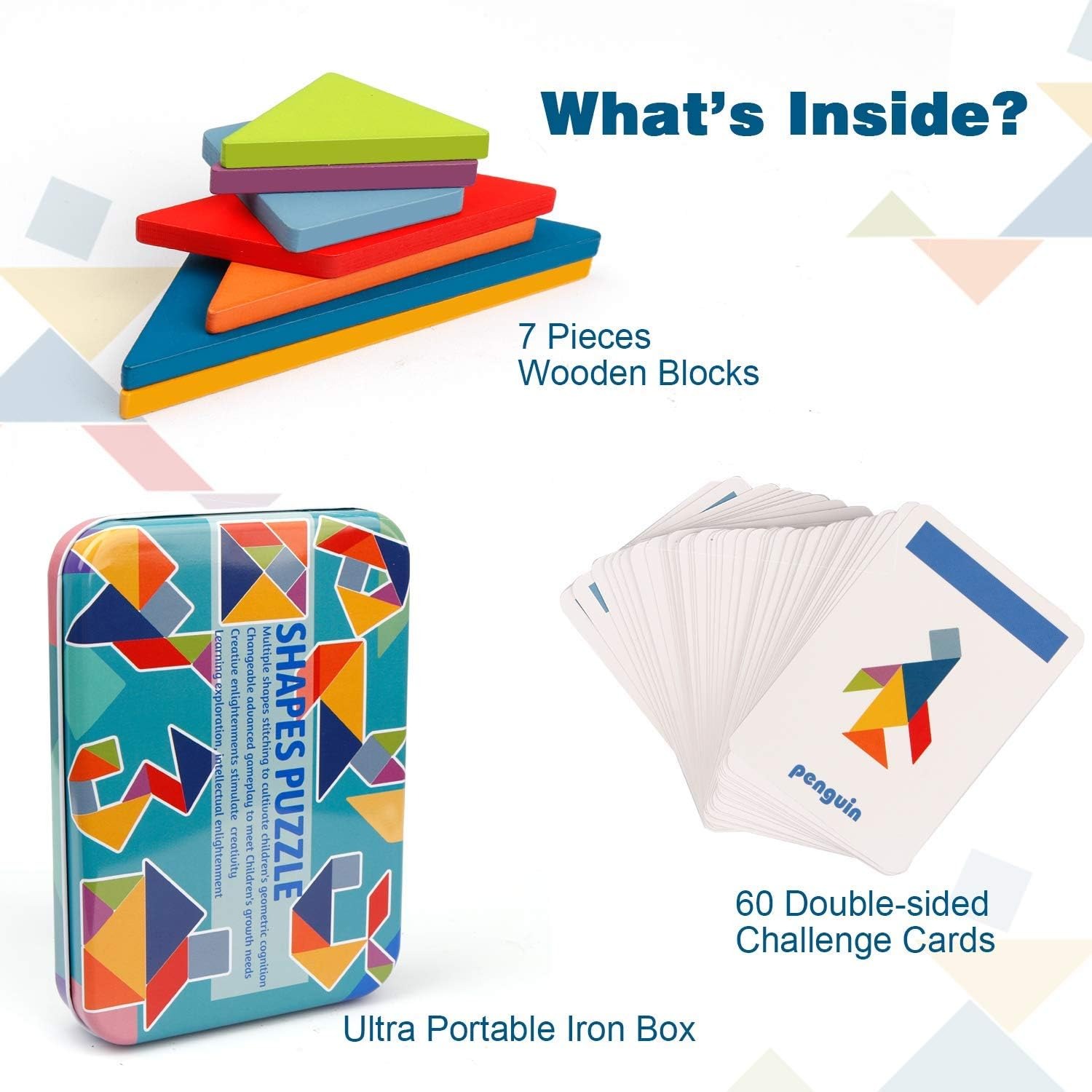
  • Seven classic tans
  • 60 double-sided cards
  • Sanded wooden pieces
  • Packs up small

Price: $47.99 $57.99

  • Free tracked Australia-wide delivery on orders $150+, otherwise a flat $15
  • Pay by card or PayPal, handled by the payment provider
  • 14 days to change your mind, plus your statutory rights
Product specifications
BrandVanmor
Model NumberVM- WT002-CA
Included Components7 wooden tangram blocks, 60 double-sided cards, 1 portable box
Number of Pieces7
MaterialWood
ColourMulticoloured
Item ShapeTriangular
Puzzle TypeJigsaw
Recommended Age36 months to 12 years
Skill LevelAll
Number of Players1
Play LocationTabletop
Assembly RequiredNo
OperationManual
Item Dimensions16.7 x 12.3 x 0.1 cm
Item Weight186.3 g
ThemeGames
Subject CharacterAnimal
Weight186.3 g
Shipping & returns

Tracked delivery anywhere in Australia. It is free on orders of $150 or more, and a flat $15 below that.

If it is not right for you, send it back within 14 days of delivery in resaleable condition and we refund the price you paid, including standard delivery. That is a voluntary policy we offer on top of your legal rights. You cover the cost of returning it unless the item is faulty.

If it arrives faulty, damaged or not as described, we put it right at no cost to you under the Australian Consumer Law and the Competition and Consumer Act 2010, return postage included.

Shipping details · Refunds and returns

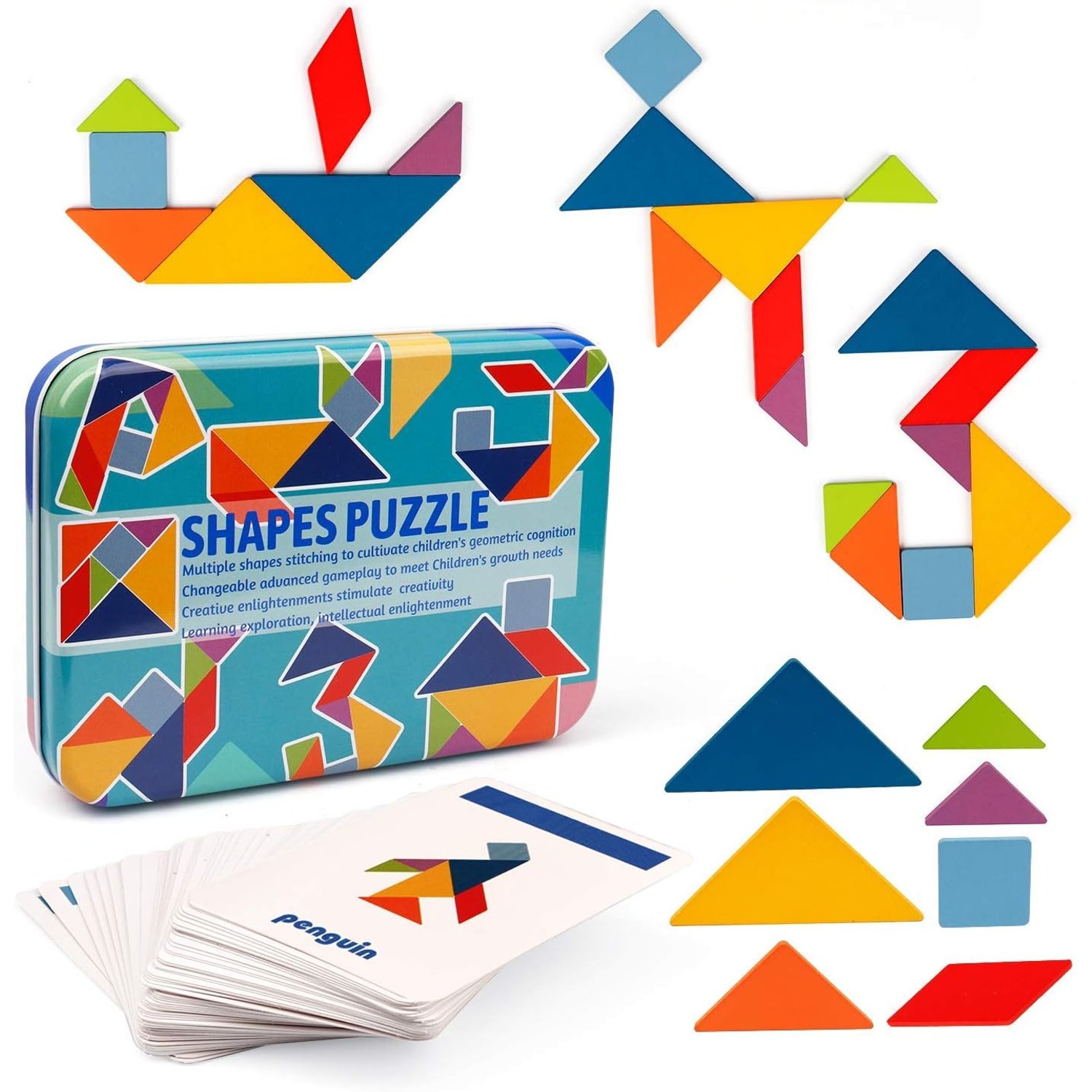
Seven classic tansThe traditional tangram cut, so every classic puzzle layout works.
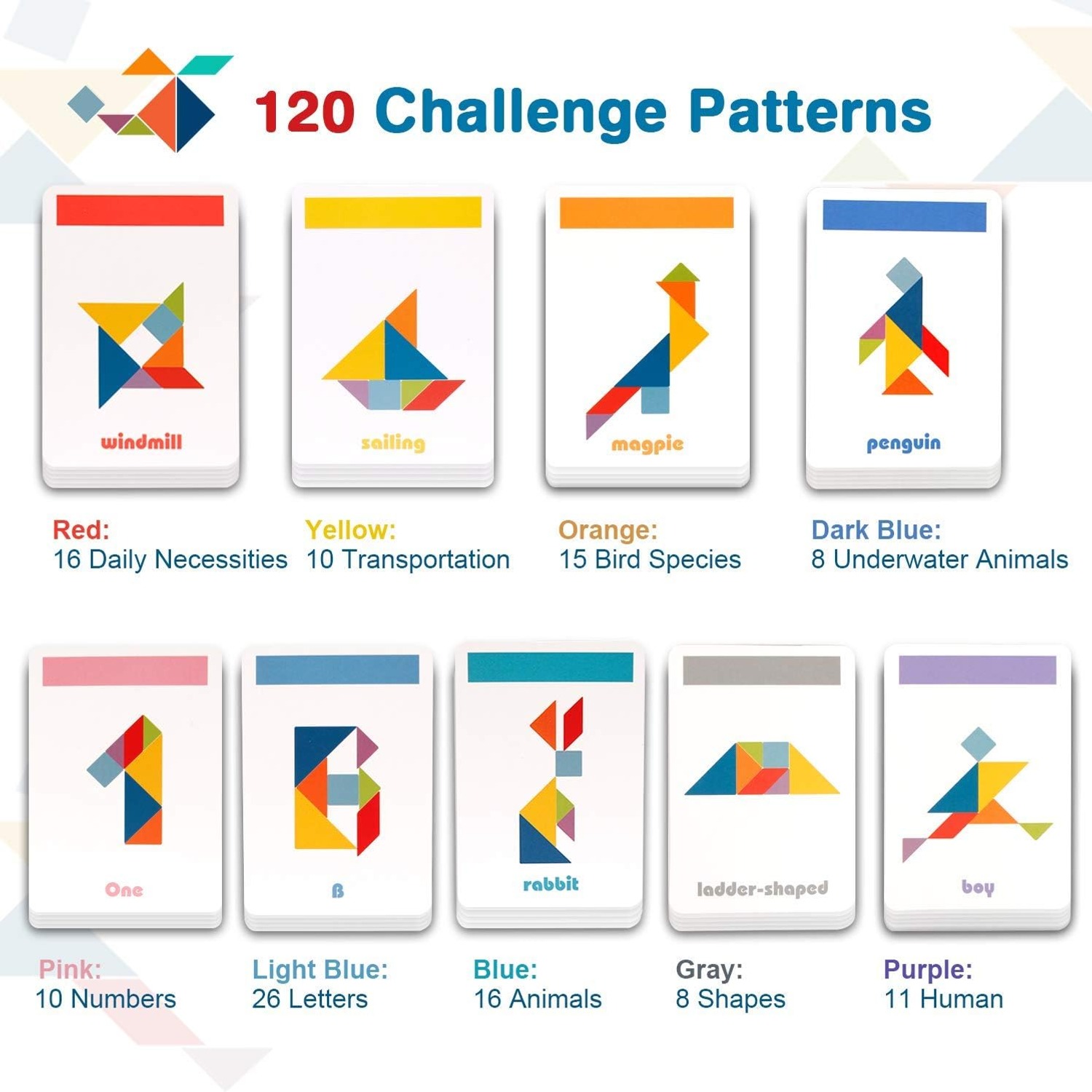
60 double-sided cardsAnimals, vehicles, letters and numbers to copy or riff on.
Sanded wooden piecesFlat, smooth blocks sized for smaller hands to pick up and place.
Packs up smallEverything lives in one portable box for car trips and cafe waits.

A wooden tangram set that turns seven simple shapes into hundreds of quiet, screen-free moments.

Seven smooth wooden tans, 60 double-sided pattern cards and a portable box, built to grow spatial thinking, shape recognition and patience in kids from three upwards.

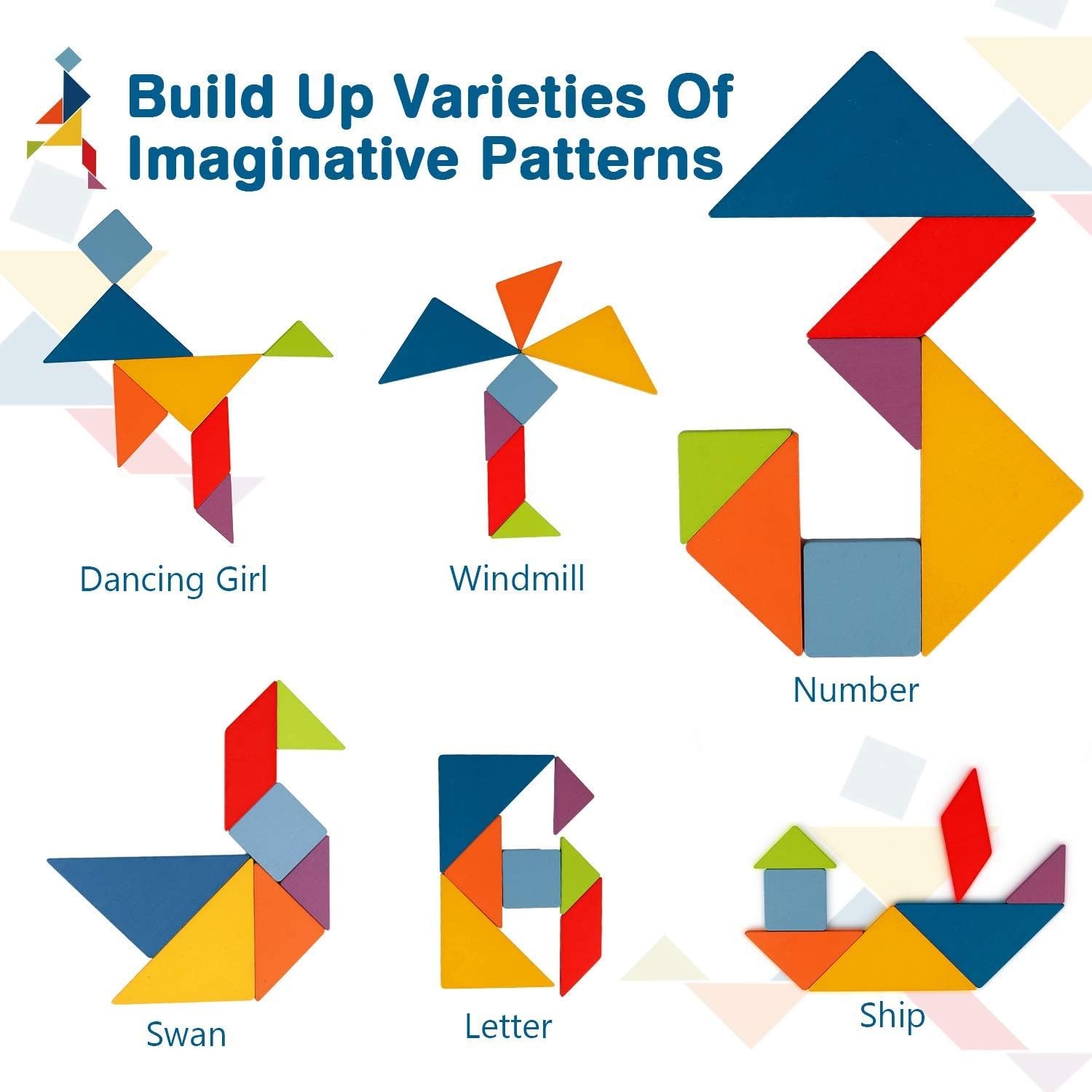
Seven wooden tans rearrange into hundreds of pictures, from a running cat to a sailing boat, using nothing but shape and angle.

Sixty double-sided pattern cards give kids a starting point when inspiration runs dry, with animals, vehicles, letters and numbers to copy.

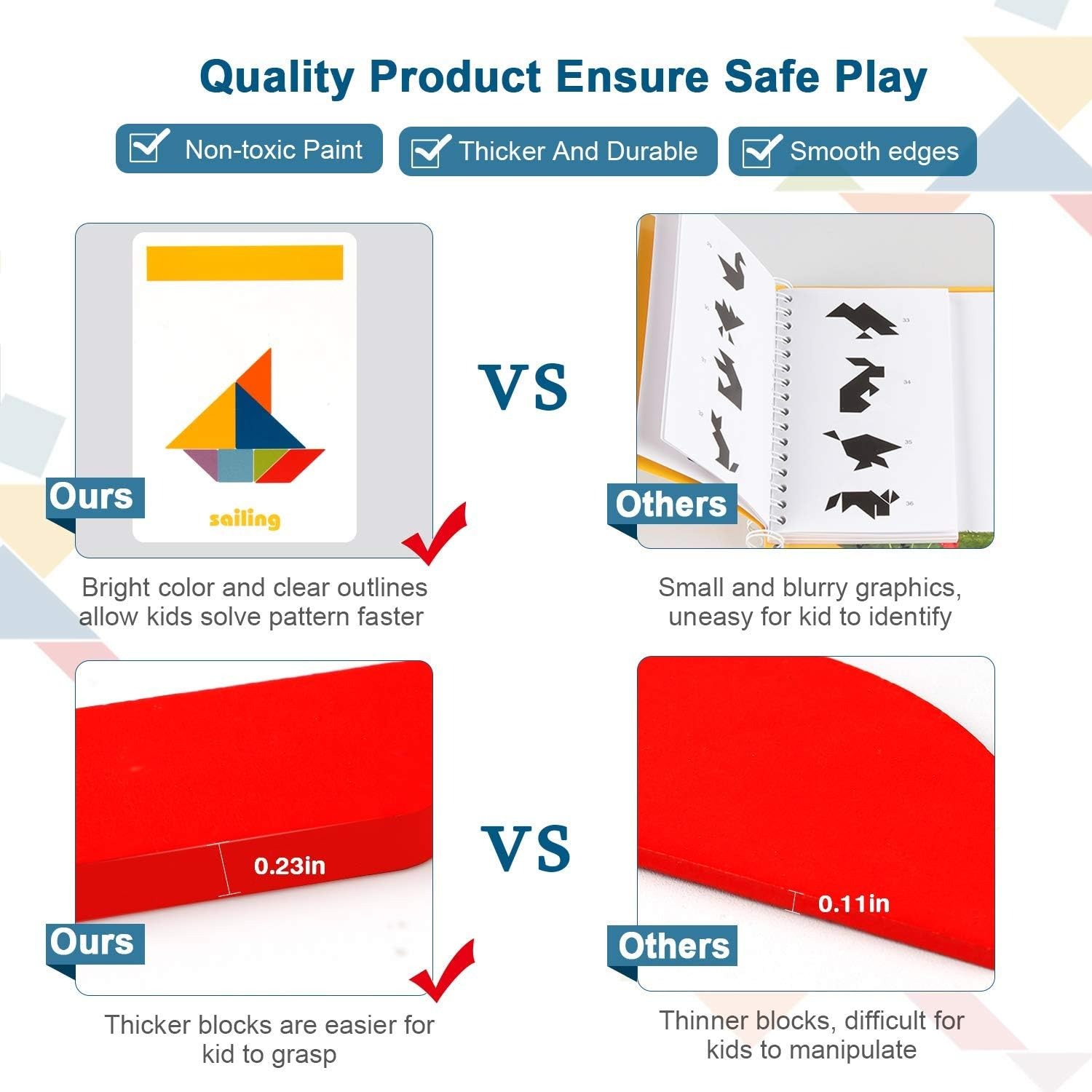
The pieces are cut from wood and sanded flat, with a painted finish that makes each shape easy to tell apart at a glance.

Everything packs into one small box, so the whole set fits in a backpack, glovebox or handbag for travel days.

Recommended by the manufacturer for ages 36 months to 12 years, which covers early shape play right through to tricky silhouette puzzles.

Wooden Tangram Set with 60 Double-Sided Pattern Cards

A tangram is one of the oldest puzzle ideas still in regular use. You get seven flat shapes, called tans, and the challenge is to arrange all seven into a given outline with no overlaps and no gaps. That sounds simple until you try it. The same seven pieces can become a rabbit, a house, a running figure or a letter of the alphabet, and the only tool involved is your own sense of how shapes fit together.

Wooden Tangram Set with 60 Double-Sided Pattern Cards

This set holds seven wooden blocks plus 60 double-sided pattern cards, which gives a lot of material to work through. The cards cover animals, vehicles, letters and numbers, so a child can copy a picture exactly, or glance at it and then try to build it from memory. Older kids often skip the cards entirely and invent their own silhouettes, which is where the set stops being a copying exercise and starts being design practice.

Wooden Tangram Set with 60 Double-Sided Pattern Cards

The pieces are wood, sanded flat and painted in different colours so each tan is easy to pick out on a table. Wood has a weight and a sound that plastic does not, and it tends to stay put on a hard surface rather than skidding away mid-puzzle. The blocks are flat and small, sized to be gripped and turned rather than clutched, which is a large part of why tangrams work so well for hand control.

Wooden Tangram Set with 60 Double-Sided Pattern Cards

Everything stores in one portable box. That matters more than it sounds. Loose puzzle pieces disappear into sofas and car seats within a week, and a tangram with six tans is just a pile of wood. Because the box holds the blocks and the card deck together, the set survives being thrown in a bag for a flight, a waiting room or a weekend away. It is a genuinely quiet activity, which is useful in places where quiet is appreciated.

Wooden Tangram Set with 60 Double-Sided Pattern Cards

The manufacturer recommends ages 36 months to 12 years. At the younger end, children mostly sort and name shapes and copy the easiest cards with help. Somewhere around five or six, most start solving cards alone and get noticeably faster. By eight or nine, the harder silhouettes become the draw, and plenty of adults find they cannot resist having a go. It is one of the few toys where a parent and a child can sit at the same table and both be genuinely stuck.

Not sure yet? That is fine.

A toy has to suit the child it is for, and you cannot always judge that from a photograph. If it is not right for you, send it back within 14 days of delivery in resaleable condition and we refund the price you paid, including standard delivery. That is on top of your Australian Consumer Law rights if anything arrives faulty.

If it turns up faulty, damaged or not as described, that is on us. The Australian Consumer Law and the Competition and Consumer Act 2010 covers you, and we pay the return postage. Read the full detail on our refunds and returns page, or ask us anything before you order.

Frequently Asked Questions

What exactly is a tangram?

A tangram is a dissection puzzle made of seven flat shapes called tans. The goal is to arrange all seven into a given outline without overlapping them or leaving gaps. The seven pieces in this set are the traditional cut, so any classic tangram outline you find elsewhere will also work with it.

How many pieces are in this wooden tangram set?

Seven wooden tans, which is the standard tangram count. The set also includes 60 double-sided pattern cards and one portable box. Every puzzle uses all seven pieces, so keeping the full set together matters.

What age is this tangram puzzle for kids suited to?

The manufacturer recommends 36 months to 12 years. Younger children usually start by sorting and naming the shapes and copying the simplest cards with a hand from an adult. Older kids tend to move on to the harder silhouettes and their own designs.

Can adults enjoy it too?

Yes. Tangrams are an old adult puzzle tradition as much as a children's toy, and the harder outlines are properly tricky. Many parents end up finishing the card their child abandoned. It makes a decent desk fidget as well.

What are the pieces made from?

The pieces are wood, listed in the product details as a wooden material type. They are sanded flat and finished in several colours. The maker does not specify the exact wood species.

What do the 60 cards show?

The cards are double-sided and cover a range of subjects including animals, vehicles, letters and numbers. That gives a large bank of outlines to work through without repeating. Each side is a separate puzzle to attempt.

Does it come with a storage box?

Yes, one portable box is included with the blocks and cards. That is a big part of what makes this one of the best travel puzzle for kids options, since the pieces stay together between sessions. Loose tangrams lose pieces fast.

How big is the set?

The listed item dimensions are 16.7 x 12.3 x 0.1 centimetres with a stated item weight of 186.3 grams. That is roughly the footprint of a paperback and slim enough for a bag pocket.

Is any assembly required?

No. The set arrives ready to play, with no batteries, charging or setup. Open the box, spread the tans out and pick a card.

Does it need batteries?

No. Operation is manual and the power source is listed as manual, which is a polite way of saying hands and brain only. Nothing to charge and nothing to run flat halfway through a trip.

How many people can play at once?

The set is listed as a single-player tabletop activity. That said, two children often work a card together, or you can call out a target shape while they build it. For competitive play you would want two sets.

Is it a Montessori-style toy?

It fits the general approach, in that it is a simple wooden material with a clear self-correcting task and no electronics. A child can see for themselves whether the shape matches the card. The maker does not claim any formal Montessori certification.

What skills does it help with?

The stated educational objectives are spatial awareness, colour recognition, shape recognition, hand-eye coordination, problem solving, creative thinking and the ability to create independent designs. In practice, most parents notice the patience and the rotation skill first. Turning a triangle in your head before turning it on the table is the whole game.

Is this a good pattern block puzzle for a classroom?

It works well for a quiet corner or a small-group maths station, especially around shape, angle and symmetry. One set serves one child at a time, so a class would need several. The card deck gives teachers a ready-made set of tasks.

Can it be used for sight-word or flashcard games?

The cards can be used as prompts in simple naming or recall games, since many feature recognisable animals, letters and numbers. Hold a card up, name the subject, then build it. That turns a puzzle into a vocabulary session without much effort.

Do the pieces fit back in the box easily?

Yes, the box is designed to hold all seven tans and the card deck. Flat pieces slot in without wrestling. Count the tans before closing it, since a missing piece makes most outlines impossible.

How do I clean the wooden pieces?

Wipe them with a dry or barely damp cloth and dry them immediately. Avoid soaking, dishwashers and strong cleaners, because water swells wood and can lift paint. The cards should only be wiped dry.

Will the colours wear off?

Painted wood will show some scuffing over years of heavy use, as any wooden toy does. Keeping the set dry and stored in its box slows that down. Normal table play is not a problem.

Are the pieces safe for a three-year-old?

The manufacturer recommends the set from 36 months, and the pieces are sanded flat rather than sharp. As with any small-part toy, keep it away from children who still mouth objects and supervise early play. Use your own judgement about your child.

Is it suitable for a two-year-old?

It sits below the recommended starting age of 36 months. We would wait. The puzzles will be beyond a two-year-old, and the maker's age guidance starts at three. Many families buy it slightly early and shelve it for a few months.

What makes a good first tangram for a beginner?

Start with outlines that show the internal lines rather than a plain silhouette, since those tell you where each tan goes. Build up to solid outlines once the shapes feel familiar. This set's card range lets you work from easy pictures toward harder ones.

Can my child make their own shapes?

Absolutely, and that is often where the set earns its keep. Once the cards get familiar, kids start building houses, robots, boats and nonsense creatures of their own. Sketching their inventions on paper gives you a homemade card deck.

Is this a good screen-free activity for travel?

It was built with that in mind. The flat box, light weight and lack of batteries make it easy to carry, and it works on a tray table, a hotel bed or a picnic rug. Just be mindful of pieces sliding off on a moving train.

Does it work well as a gift?

It makes a solid birthday or Christmas gift for a primary-aged child, especially one who likes building or drawing. The box presents neatly and needs no extra batteries or accessories. It also suits grandparents looking for a quiet shared activity.

What is the brand and model number?

The brand is Vanmor and the model and manufacturer part number is VM- WT002-CA. The set name is listed as Vanmor Wooden Tangrams Sets. There is no GTIN given by the maker.

Where is it made?

The country of publication is listed as China. A separate country of origin is not specified by the maker, so we are not going to guess at one.

How is it packaged for delivery?

The maker lists one pack per order. The product box itself still works as the storage box.

What if a piece goes missing?

A tangram needs all seven tans, so a lost piece does limit things, though you can still freely build with six. Keeping the set in its box after every session is the simplest fix. Get into the habit of counting to seven before it closes.

How long does a typical puzzle take to solve?

Easy cards take a minute or two once a child knows the pieces. Harder silhouettes can hold someone for ten or fifteen minutes, sometimes longer. That range is part of why the set lasts across several years.

What if it is not right for us?

If the set arrives damaged, incomplete or simply is not what you expected, contact us and we will sort out a return or replacement under our standard returns policy. Keep the box and cards together if you can, as that makes the process quicker. Tell us what went wrong and we will take it from there.

How to Choose and Get the Most From a Wooden Tangram Set

6 min read Toy Warehouse

The problem with most "educational" toys

A lot of toys marketed as educational do the thinking for the child. Press a button, hear a letter. Slot a shape in the only hole it fits. There is feedback, but there is not much thought. The child learns the toy, finishes it in a fortnight, and it goes under the bed.

A tangram works the other way around. Seven flat pieces, no instructions built into the object, no sound, no light. The whole challenge lives in the gap between what a child can see and what they can imagine. That gap does not close quickly, which is why the same seven pieces can hold a four-year-old and a ten-year-old on different days.

This set is the classic tangram with a useful addition. You get the seven wooden tans, plus 60 double-sided pattern cards, plus a box to keep it all in. The cards matter because a blank table can be intimidating. Give a child a picture of a cat made of triangles and they have somewhere to start.

How a tangram actually works

The traditional tangram cut gives you five triangles of varying sizes, one square and one parallelogram. Every valid tangram outline uses all seven, with no overlaps and no gaps. That rule is the whole puzzle. It means you cannot fudge a solution by leaving a piece out or stacking two on top of each other.

What makes it hard, and interesting, is that the outlines hide their internal structure. A silhouette of a running horse does not tell you where the big triangle goes. You have to work it out by trying, rotating and flipping. Flipping is the part that trips up adults, because the parallelogram is the only piece that behaves differently when you turn it over.

For a young child, the first lesson is simpler. A triangle is still a triangle when you rotate it. That sounds obvious to you and me. It is a genuine insight when you are four, and it is the foundation of a lot of later geometry.

The cards in this set scale with that. Some show pictures that are easy to read and copy. Others ask for more guesswork. Animals, vehicles, letters and numbers all appear, so there is variety beyond abstract shapes, and a child who is not especially interested in maths will still want to build the dinosaur.

Who it suits

The manufacturer recommends ages 36 months to 12 years, and in practice the set behaves differently across that range.

Three and four year olds mostly handle, sort and name the shapes. They will copy the simplest cards with an adult sitting beside them, and they will spend just as long making patterns that look like nothing in particular. That is fine. Free play with the tans is doing real work on hand control and shape familiarity.

Five to seven is the sweet spot for the cards. Children at this stage can read an outline, choose a piece, try it and adjust. You will see the frustration curve and then the breakthrough, and the breakthrough is the point. This is also the age where a tangram puzzle for kids starts to feel like a genuine game rather than a parent-led activity.

Eight and up tends to be about speed and the harder outlines, plus inventing new shapes. Plenty of kids at this age make up their own silhouettes and challenge a parent to solve them. That flip, from puzzle solver to puzzle setter, is worth more than any card in the box.

Adults are not excluded. Tangrams have been an adult pastime for a couple of centuries, and the hardest classic figures are properly difficult. It is a reasonable desk toy for anyone who thinks better with their hands busy.

Choosing a tangram set: what to actually look for

If you are comparing options, a few things matter and a lot of things do not.

Piece count is not a feature. A real tangram has seven pieces, full stop. A set advertising 40 pieces is a pattern block set, which is a different and also perfectly good toy, but it is not a tangram and classic outlines will not work with it.

Material changes the feel more than you might expect. Wooden tans have weight, they sit flat, and they do not slide around when a child's elbow bumps the table. Thin plastic or foam pieces drift. This set's pieces are wood, sanded flat and painted in different colours, which also helps younger children tell one triangle from another at a glance.

Card quality and quantity decide how long the set lasts before it needs imagination to keep going. Sixty double-sided cards is a solid bank. Double-sided matters, because it doubles the content without doubling the bulk in the box.

Storage is the quiet deciding factor. A tangram with six pieces is scrap wood. Any set you buy needs a container that the pieces actually return to, and the portable box here is sized for the blocks and the cards together. If you take one habit away from this guide, make it counting to seven before the lid goes on.

Portability is worth thinking about if travel is part of the plan. At 16.7 by 12.3 centimetres and a listed 186.3 grams, this one slips into a backpack pocket without argument, and it needs no power, no screen and no table bigger than a tray.

Getting more out of it

A few ways to keep the set fresh once the novelty of the cards wears off.

Play it as a timed game. Pull a card at random, set two minutes and see who finishes. Children who resist puzzles sometimes love racing.

Try memory mode. Show the card for ten seconds, then turn it face down and build from recall. This is noticeably harder and works well for older kids.

Build without a card at all. Ask for a shape that is not in the deck, like a specific pet or a family member, and let them interpret it. The results are often funnier and more inventive than the printed designs.

Use the cards as talking prompts. Many show recognisable animals, letters and numbers, so they double as naming practice for younger children before the building even starts.

Go back to the hard ones. Outlines that were impossible at five are often straightforward at seven. Revisiting an old card and cracking it is a strong confidence moment, and it is one reason this set earns a long shelf life as a screen-free activity.

Care and keeping it intact

Wooden toys ask for very little. Wipe the tans with a dry or slightly damp cloth and dry them straight away. Keep them out of the dishwasher and away from soaking, since water swells wood and can lift painted finishes. Store the set somewhere dry and out of direct sun, which fades colour over time.

The cards are the more fragile part. Keep drinks away from the play surface, and wipe cards dry rather than damp. If a card does get creased or stained, the shape is usually still readable, and you can always draw a replacement outline on paper.

The real maintenance is piece discipline. Make packing up part of the activity. Seven in, lid on, back in the bag.

The short version

This is the classic seven-piece tangram done in wood, with 60 double-sided pattern cards and a box small enough to travel. The manufacturer recommends it from 36 months to 12 years, it needs no batteries or assembly, and it works on any flat surface for one player at a time.

It suits families who want a quiet activity that does not run out after a fortnight, teachers looking for a shape and spatial reasoning station, and anyone buying a gift for a child who likes to build. It is not a flashy toy. It is the kind that stays in the bag for years and gets pulled out whenever a table and twenty minutes appear.

Browse the shop

Ready for a quieter afternoon?

Order the wooden tangram set today and have seven shapes doing the work of a dozen toys by the weekend.

Ask us a question

Page summary

The Vanmor wooden tangram set (model VM- WT002-CA) is a seven-piece tangram puzzle supplied with 60 double-sided pattern cards and a portable storage box. The tans are made of wood, finished multicoloured, and the flat pack measures 16.7 x 12.3 x 0.1 cm with a stated item weight of 186.3 g. The manufacturer recommends it for ages 36 months to 12 years, at all skill levels, for single-player tabletop play with no assembly and no power required. Cards feature animals, vehicles, letters and numbers. Stated educational aims include spatial awareness, colour and shape recognition, hand-eye coordination, problem solving and independent design. Country of origin and GTIN are not specified by the maker.