
The complete guide
How To Choose A Remote Control Walking Dinosaur Kids Will Keep Playing With
The problem with most dinosaur toys
Walk down any toy aisle and you will find shelves of plastic dinosaurs. Most of them do nothing. A child picks one up, roars on its behalf for ten minutes, then puts it down and finds something else. The figures are fine, and plenty of kids love a good collection, but they rely entirely on the child to supply the energy.
What changes the equation is movement. The moment a toy does something on its own, it stops being a prop and starts being a playmate. That is the gap a remote control walking dinosaur fills. It walks, it roars, it lights up, and the child is the one making it happen from a few metres away. The play becomes a back and forth rather than a monologue.
There is a second problem too, and it is a parent problem. A lot of interactive toys arrive in forty pieces with a twenty-page manual and a charging cable that disappears within a week. Nobody wants to spend the first hour of a birthday assembling something. The best interactive dinosaur figure for a young child is the one that works straight out of the box.
How it works
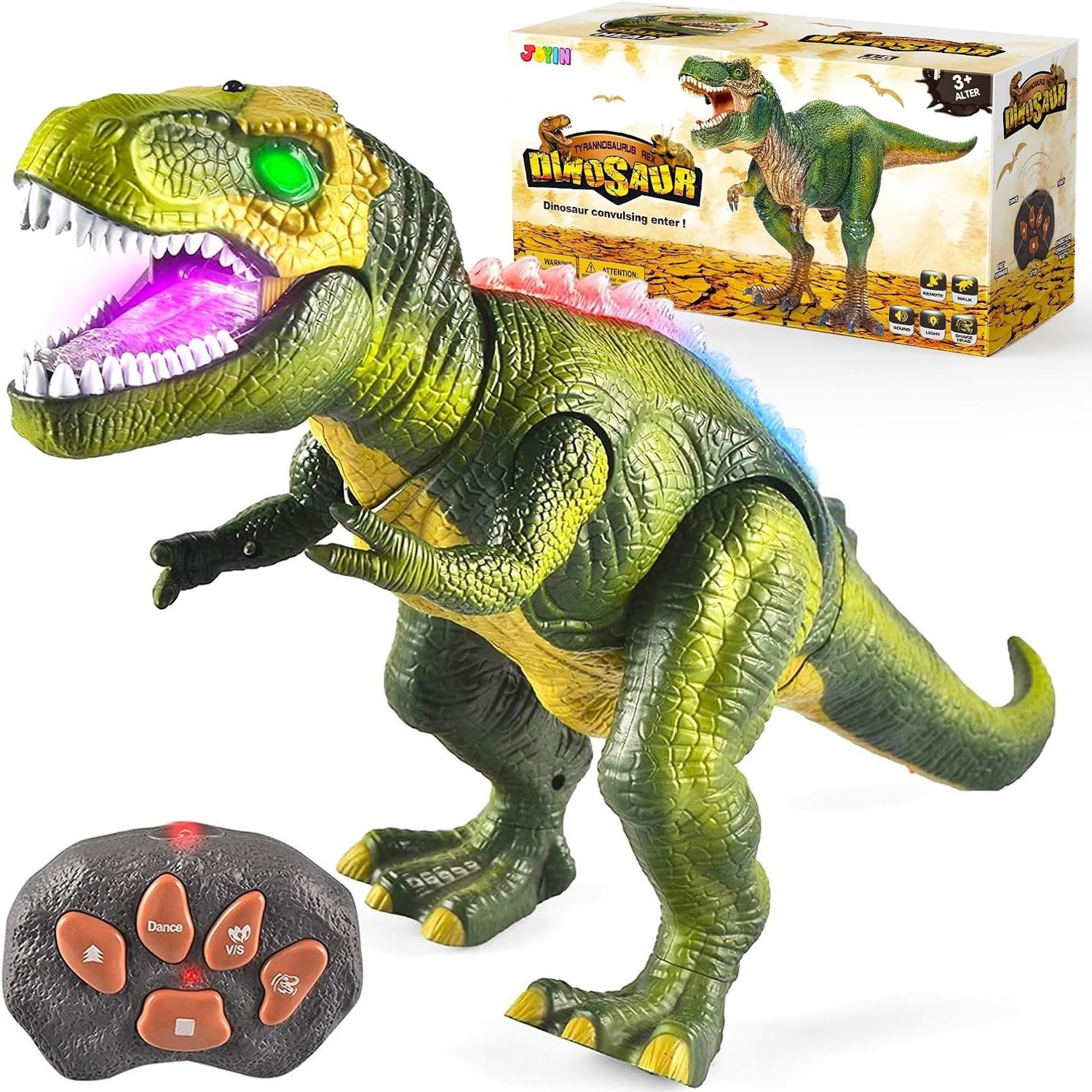
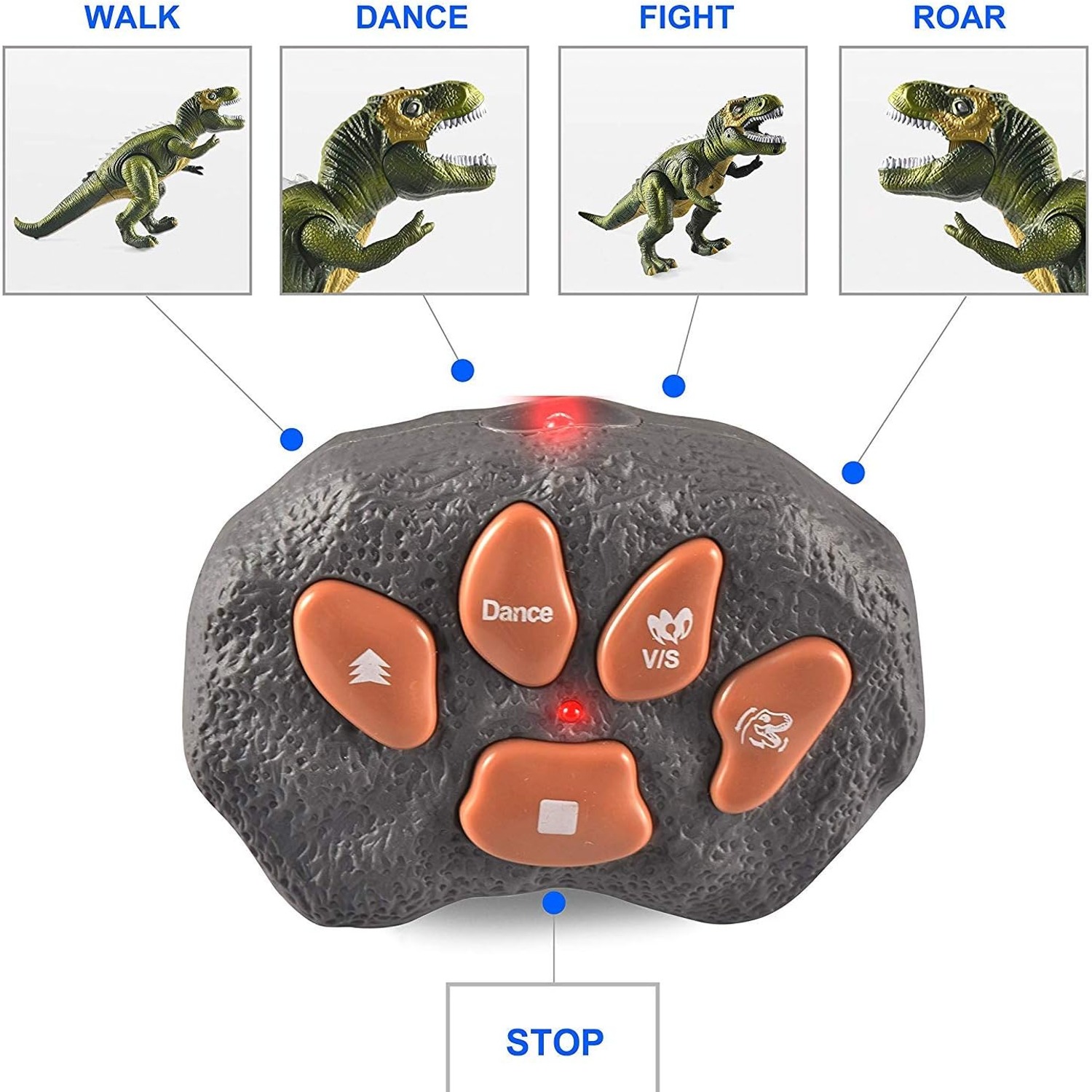
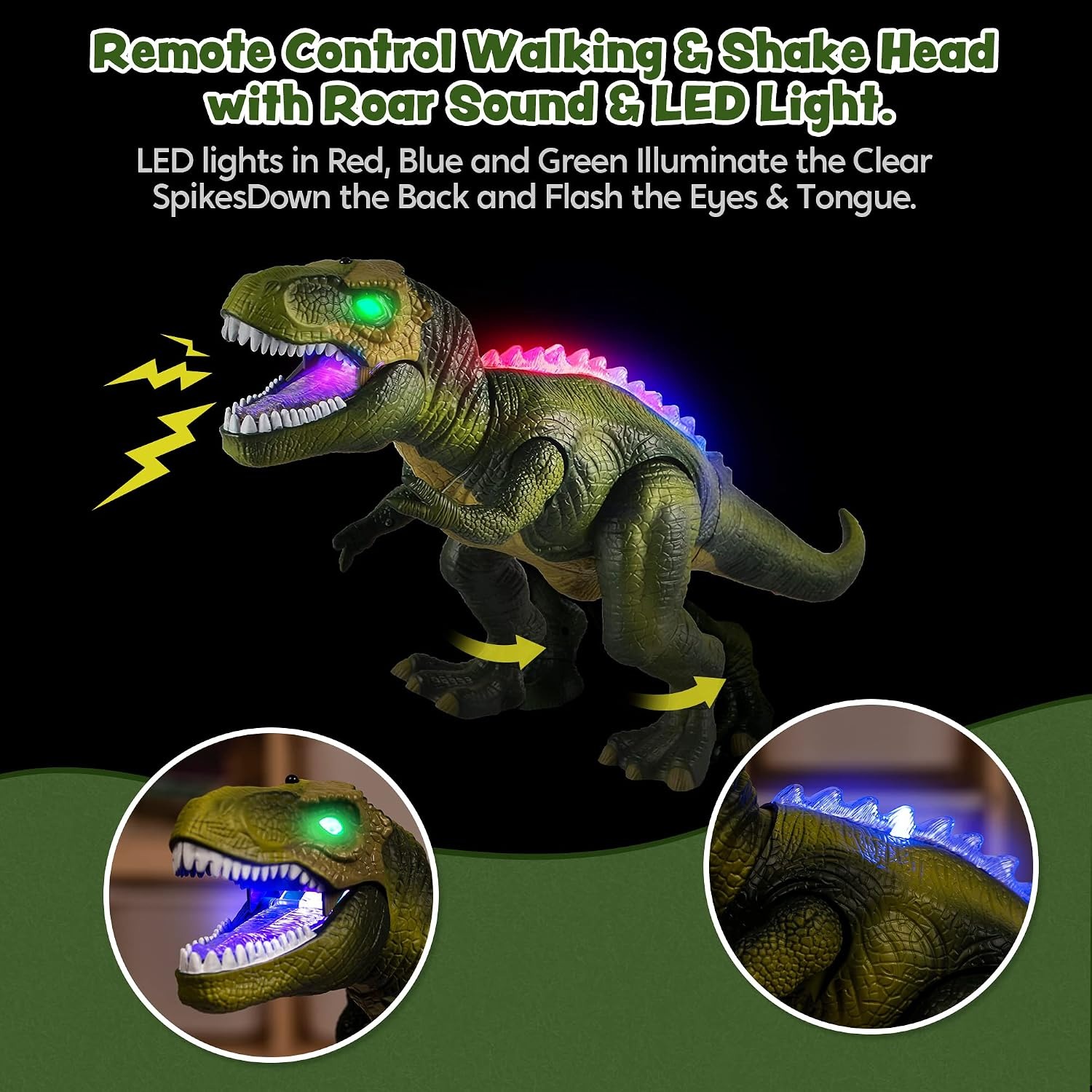
The mechanics here are simple on purpose. There is one handset. Press it, and the dinosaur steps forward across the floor while its head swings from side to side. At the same time, a roar sound plays and the lights come on.
The lighting is the part that gets the biggest reaction. Along the dinosaur's back there is a row of clear spikes. LEDs underneath shine up through them in red, blue and green, and the eyes and tongue flash as well. In a room with the curtains drawn, that is a proper little light show. In daylight it is still visible, just less theatrical.
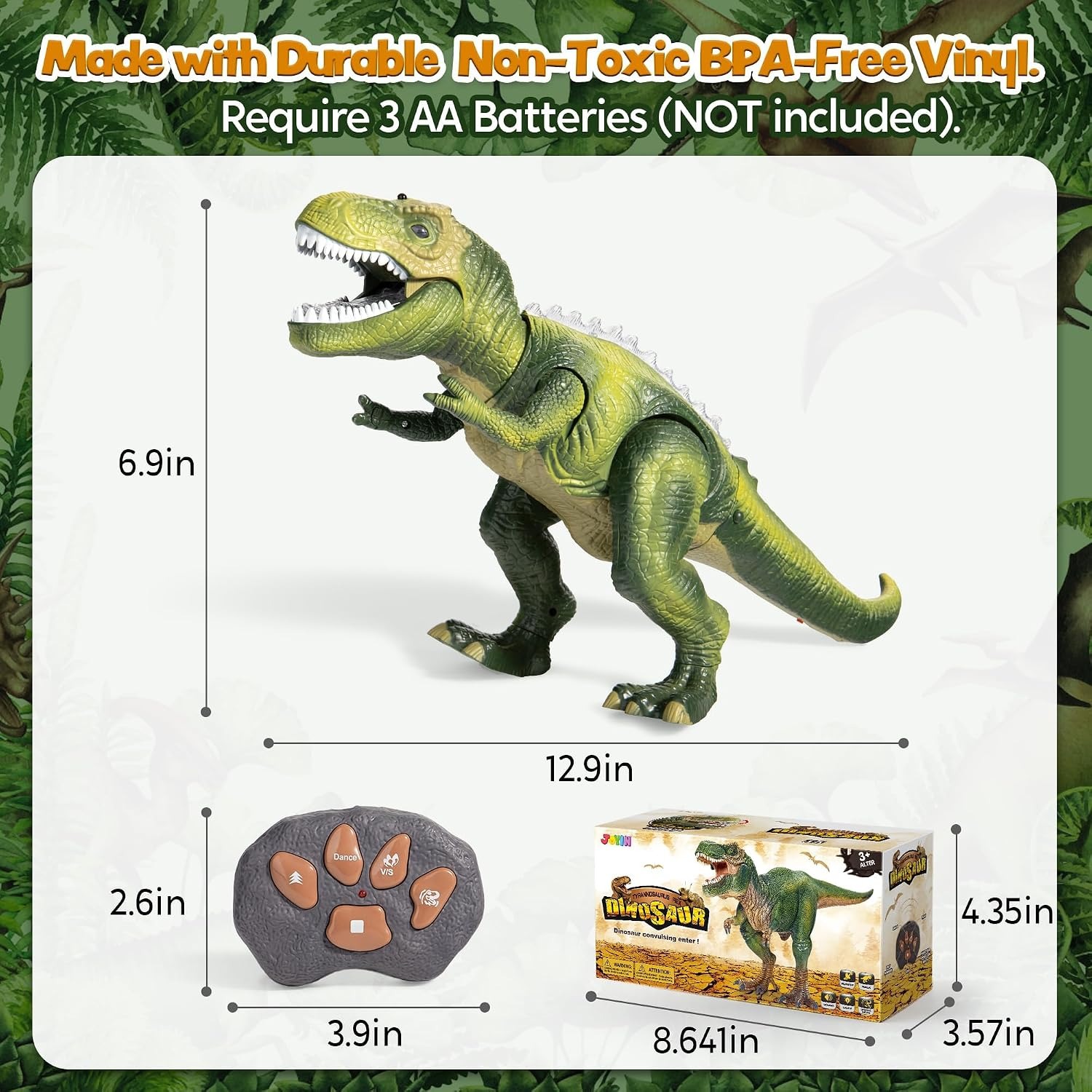
Power comes from three AA batteries. They are not supplied, which is worth planning for. There is nothing worse than a wrapped present that cannot be switched on. Grab a pack when you order and keep a spare set in the drawer, because lights and sound together drain cells faster than movement alone.
No assembly is required. It is one moulded piece of vinyl with a matte finish, so there is nothing to clip together and no fiddly tail or claw to snap off and lose under the couch.
Who it suits
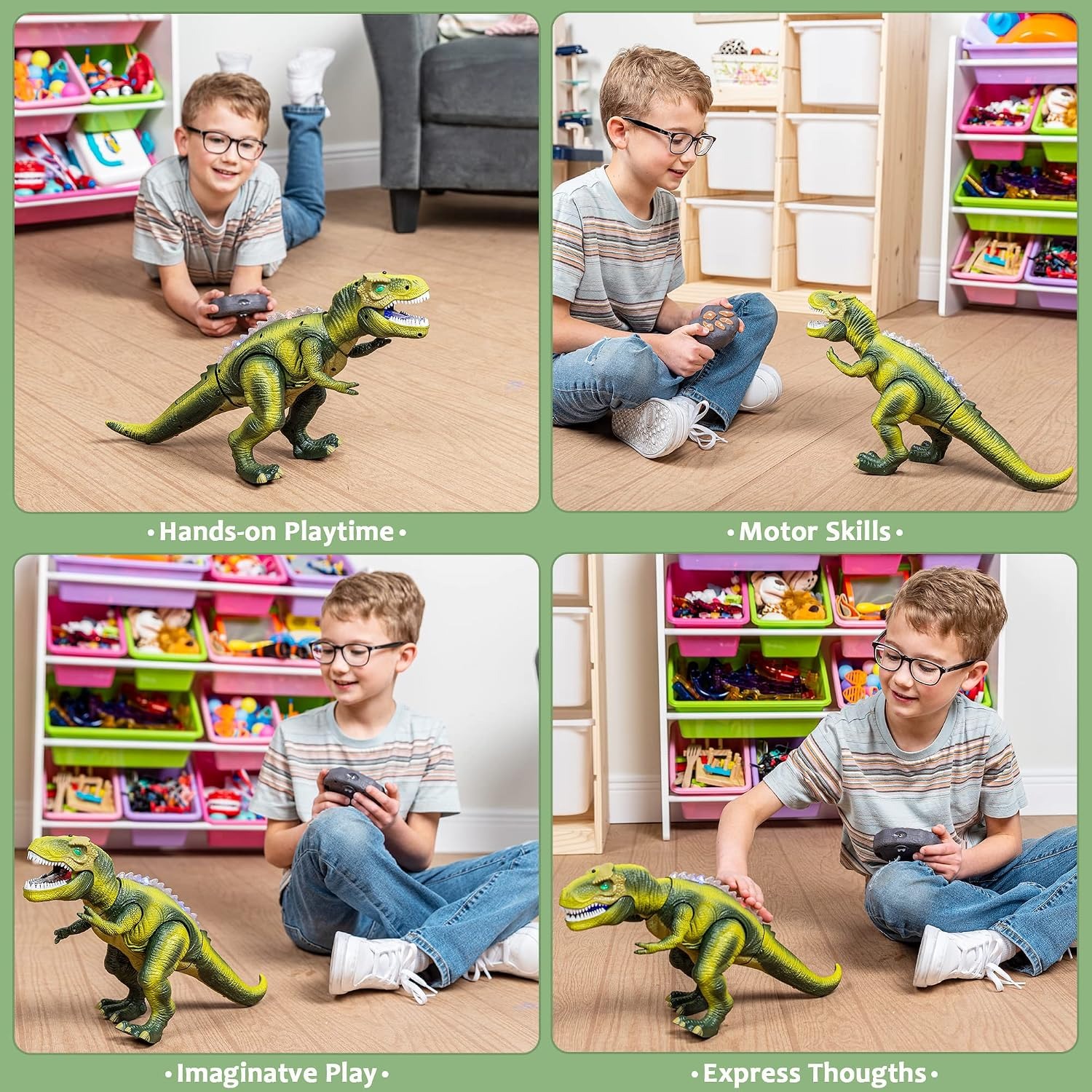
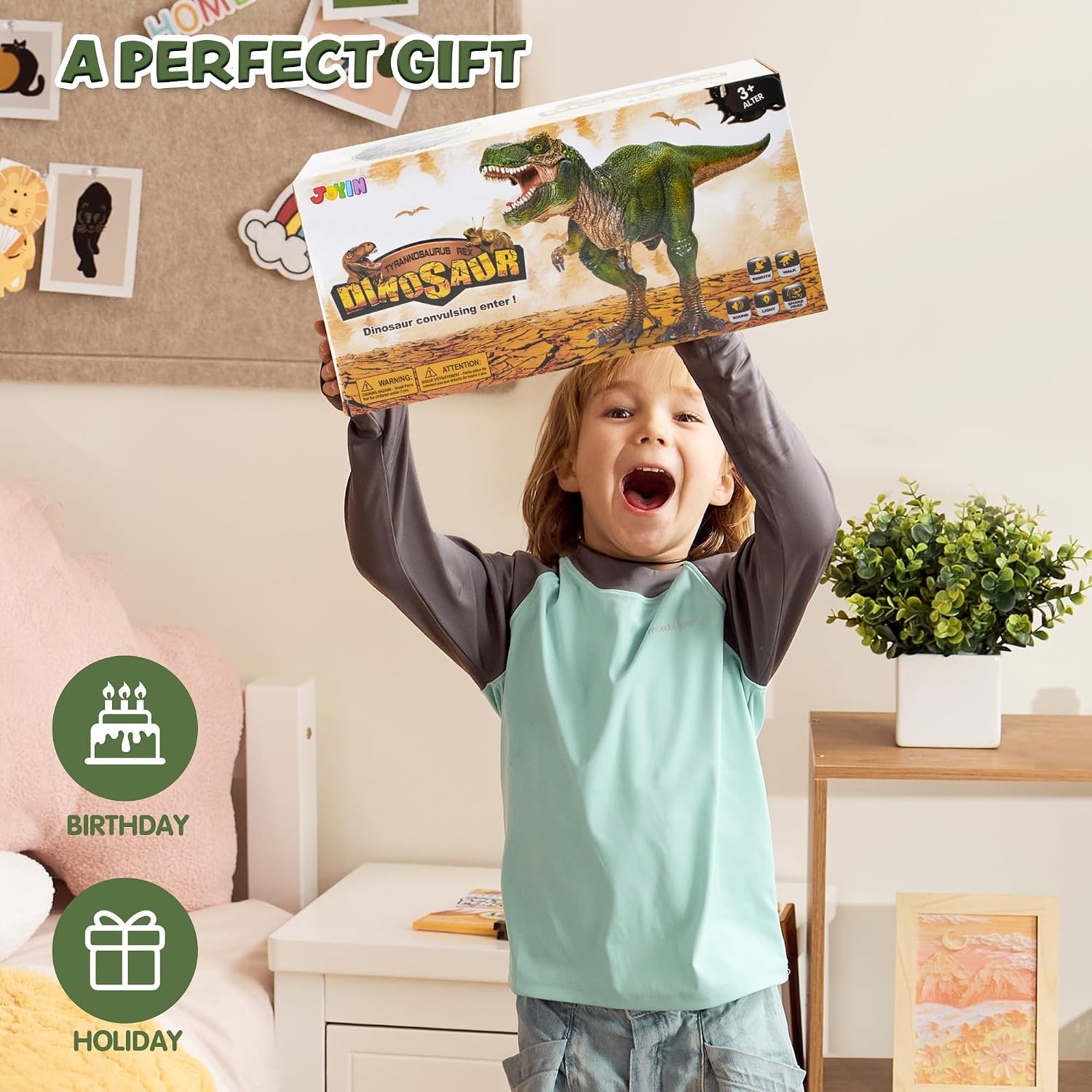
The manufacturer's recommendation is 3 years and up, and that feels about right. At three, a child can press a button and understand that they caused the dinosaur to move. That cause-and-effect loop is genuinely satisfying at that age, and it is why something like this often becomes the best rc dinosaur for preschoolers who are just past the chew-everything stage.
The sweet spot is probably four to seven. That is when kids know dinosaur names, have opinions about which ones are fastest, and will build whole stories around a walking T-Rex. A six year old will set up a cardboard box city for it to stomp through. A three year old will just laugh when it roars. Both are good outcomes.
It also works outside the home. Teachers use toys like this during dinosaur topics, as a reward on a Friday afternoon, or as a prop for group storytelling. Party hosts put it on the table at a dinosaur themed birthday. If you are after the best dinosaur classroom toy that does not need a screen or a power point, a battery-run walker is an easy choice.
Two quick notes on fit. It is indoor only, and it is a floor toy. Those two facts shape where and how it gets used.
Choosing one that lasts
If you are comparing walking dinosaurs, a few things actually matter.
Size is first. This one measures 25 x 25 x 25 cm. That is big enough to feel substantial in a child's hands and to be seen from across a room, but not so big that it dominates the toy box or becomes awkward to carry to a friend's house. Very small walkers tend to get lost; very large ones tend to get left behind.
Build is second. A single-piece vinyl body with a matte finish handles normal indoor knocks far better than something with lots of separately glued limbs and accessories. Fewer joins means fewer things to break. It is still a toy with a motor and electronics inside, so it is not indestructible, but it is built for repeat use rather than one afternoon.
Controls are third. Simple beats clever for this age group. A handset with a straightforward forward action and head movement means a child can play independently instead of asking an adult for help every two minutes. Complicated multi-function remotes sound better on a feature list and get used less in real life.
Power source is fourth. AA batteries have an advantage over built-in rechargeable packs: when they run flat, you swap them and keep going. No waiting two hours for a charge in the middle of a party.
Getting the best out of it
Surface makes a real difference. Floorboards, tiles and lino are ideal. A low-pile rug is fine. Thick shaggy carpet will fight the walking action and make it look sluggish, which is not the toy's fault. If play seems slow, move it to a hard floor before assuming anything is wrong.
Clear the runway. A hallway is a great track. So is the space between the sofa and the coffee table, if you move anything breakable off the low shelves first. Kids will naturally build obstacle courses out of cushions and books, and that is where the best play happens.
Think about noise. The roar is designed to carry, which is excellent in a playroom and less excellent at seven in the morning on a Sunday. Setting a simple rule, like the dinosaur sleeps after dinner, saves a lot of negotiation. Pulling the batteries is the reliable off switch.
For group play, bring in turn-taking early. There is one remote, so one driver at a time. The children not driving usually take on jobs anyway: setting up the course, being the chased villagers, or supplying extra roars.
Looking after it
Care is not complicated. Wipe the vinyl with a soft, slightly damp cloth and dry it right away. Skip the harsh cleaners, since solvents can dull a matte finish and leave it sticky.
Keep it away from water entirely. No baths, no paddling pools, no leaving it on a wet patio. Water and a battery compartment do not mix, and this is an indoor toy for exactly that reason. Sand is the other enemy, because it works into joints and the walking mechanism and never fully comes out.
If the toy is going into storage for a few months, take the batteries out first. Cells left in a toy for a long stretch can leak and corrode the contacts, which is the most common way a perfectly good battery toy dies. Check the compartment occasionally even during regular use.
Store it indoors, somewhere dry, and out of reach of a younger sibling who may see the spikes as a teething opportunity.
When something goes wrong
Nine times out of ten, a dinosaur that will not walk, light up or roar has a battery problem. Fresh alkaline cells, fitted the right way round, with clean contacts, fix most issues. Check the handset batteries as well as the toy's, since people often forget the remote has its own.
If the remote seems unresponsive, try again at close range on clear floor with nothing bulky in between. If a fresh set of batteries and a clear line of sight still do not help, that is when to get in touch rather than keep troubleshooting.
The short version
This is a one-piece vinyl dinosaur, 25 x 25 x 25 cm, that walks and shakes its head on remote command while LEDs in red, blue and green light the clear spikes on its back and flash its eyes and tongue. A roar plays as it moves. There is nothing to assemble, it is recommended for ages 3 and up, and it runs on three AA batteries that you will need to supply yourself.
It suits indoor floor play, birthday gifts, party tables and classrooms. It is a good first remote control toy because the controls are simple and the payoff is instant. Buy the batteries at the same time, give it a hard floor and a clear run, and it will earn its spot in the toy box.