
The complete guide
Steel Tongue Drum Buyer's Guide, How To Choose And Play Your First One
The problem with "I'd love to play something"
Most people want to play an instrument. Far fewer actually start. The reason is usually the same: the first month of a guitar, a keyboard or a violin sounds bad, feels frustrating, and asks for daily practice before anything rewarding comes out the other side. The instrument ends up in a cupboard.
A steel tongue drum skips that whole stage. The eight tongues are tuned so they belong to the same set of notes. Hit them in whatever order you like and it still sounds musical. There is no wrong note waiting to embarrass you. That single design decision is why people who have never played anything end up playing a tongue drum for half an hour on the first night.
It also solves a second problem, which has nothing to do with music. Plenty of buyers are not looking for a hobby at all. They want something to do with their hands for five minutes that is not a screen. A small steel drum on a desk or coffee table fills that gap better than almost anything else.
How a steel tongue drum actually works
The body is a sealed steel shell. Tongues are cut into the top surface, each one a slightly different length and width. Shorter, narrower tongues ring higher. Longer, wider ones ring lower. When you strike a tongue, it vibrates and the air inside the shell amplifies and sustains it, which is where the long, soft decay comes from.
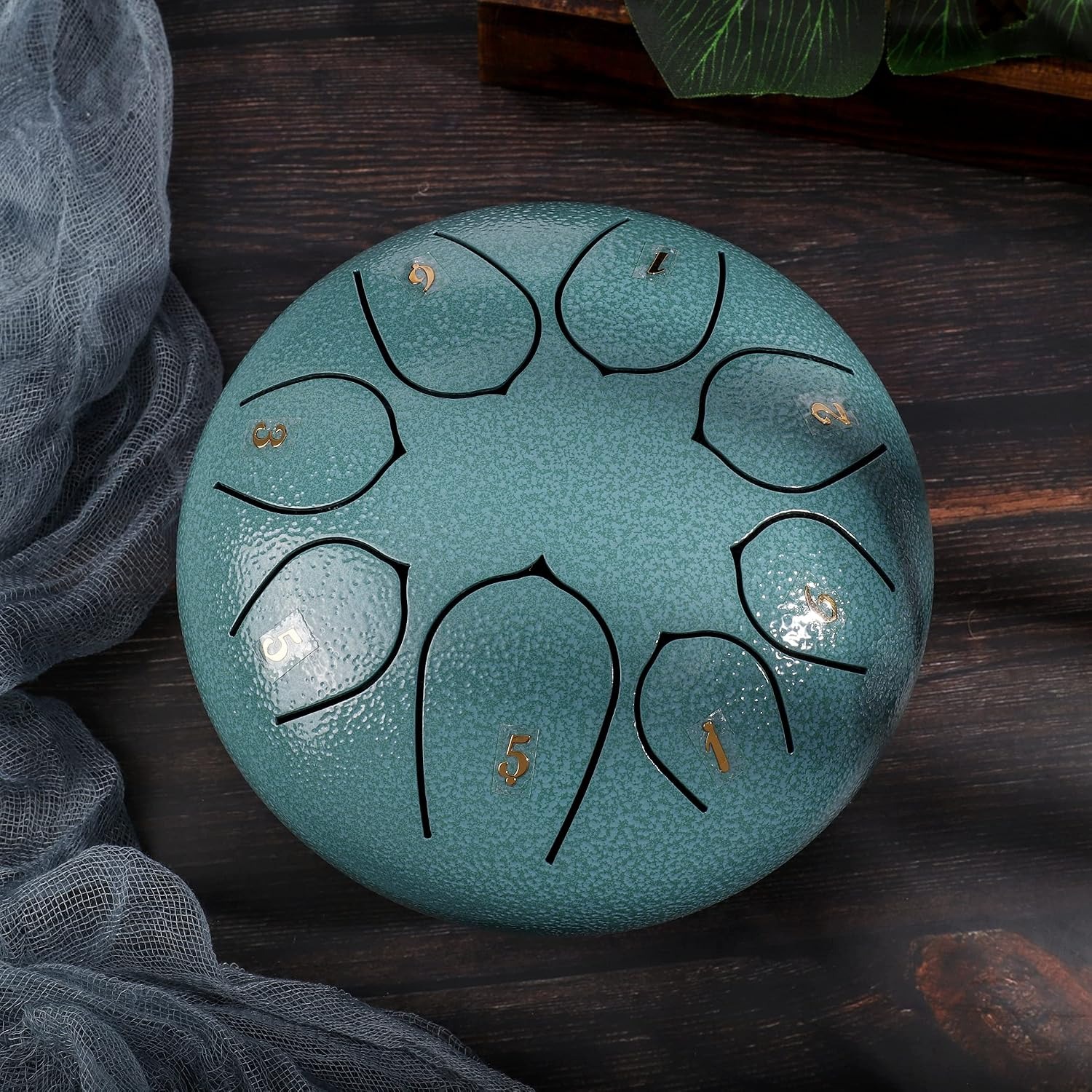
On this model the tongues are cut with lasers. That matters more than it sounds. Hand-cut or stamped tongues drift in tuning because small differences in shape change the pitch. Laser cutting keeps each tongue to a tight shape, so the eight notes line up properly against each other.
The shell here is hardened alloy steel with a polished finish. Steel holds its pitch without any adjustment. There is nothing to tighten, no head to replace, no strings to stretch. The sound you get on day one is the sound you get in year five, assuming you do not dent it.
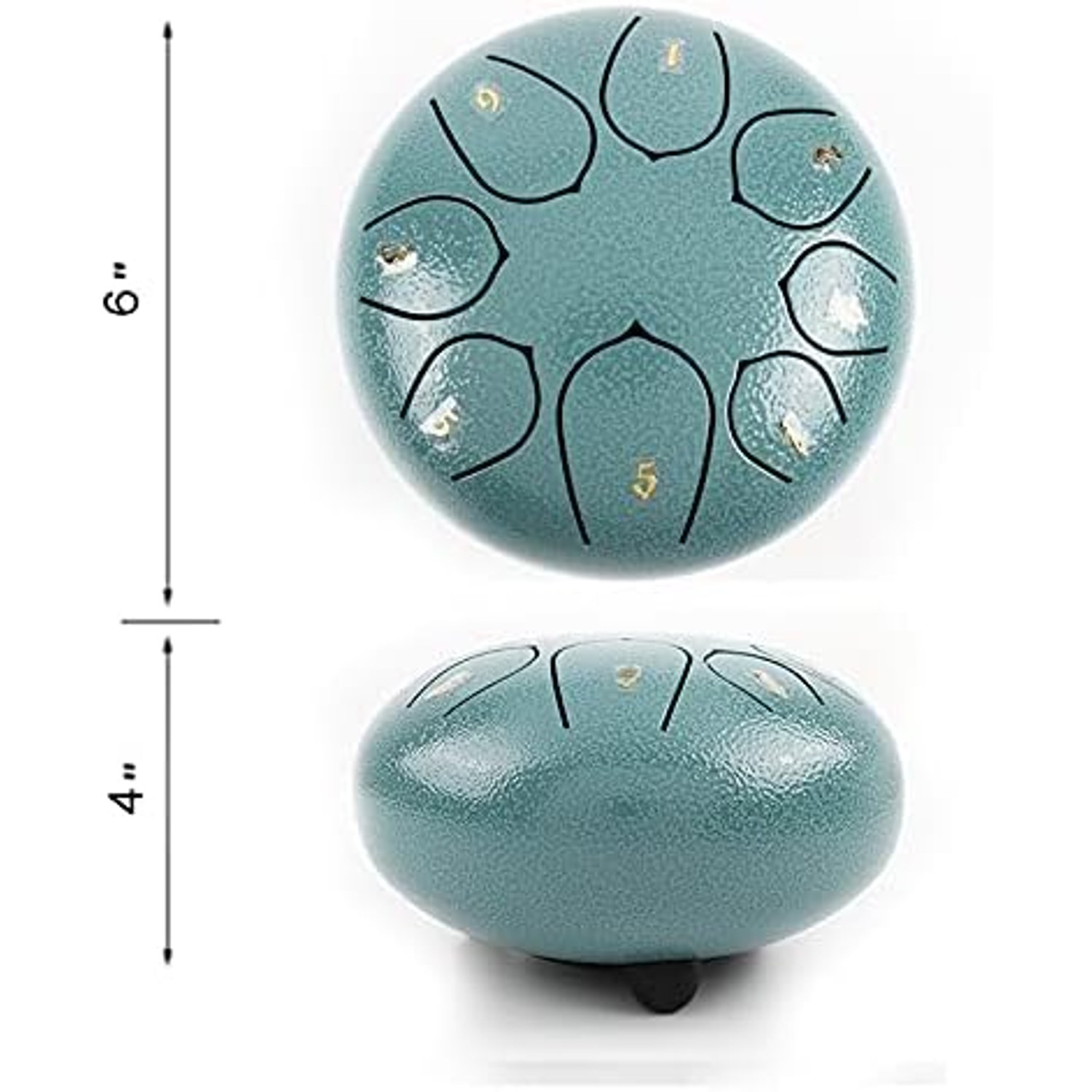
Size shapes the tone. This is a 6 inch drum, with overall dimensions of 8 x 9 x 8 cm and a weight of 500 g. Smaller drums sound brighter and more bell-like, and they carry easily. Larger drums go deeper and sustain longer, but they are heavier and awkward to travel with. A 6 inch model sits at the point where it is genuinely portable and still has enough body to sound full.
Mallets or fingers
You get two playing methods, and they are different enough that most people use both.
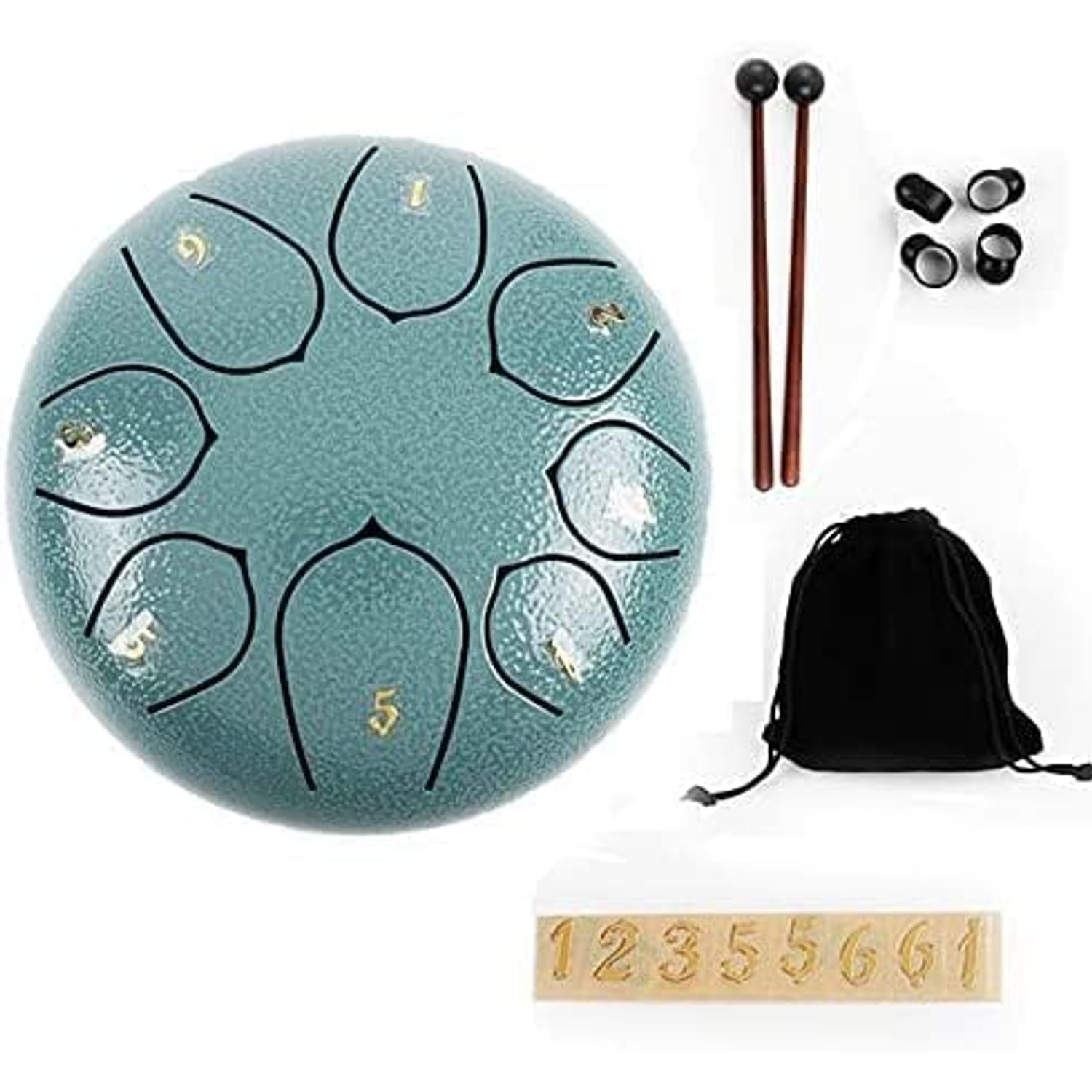
Mallets give a clear, bright attack. Each note starts sharply and stands apart from the one before it, which helps a lot when you are learning a melody or playing along with music. The two steel mallets are included, so there is nothing extra to buy.
Fingers and thumbs give a softer, warmer note with less attack. It is quieter, more intimate, and better suited to meditation, late-night playing or background sound. Some people never use the mallets at all after the first week.
A useful habit: start a session with your fingers to settle, then pick up the mallets when you want to actually play something with shape to it.
Who this suits
Complete beginners. If you have wanted to play something for years and never started, this is about as low as the barrier gets. No lessons needed and no notation to learn first.
People winding down. The slow decay of steel gives you something to breathe along with. Plenty of buyers looking for the best relaxation instrument land on a tongue drum rather than an app.
Yoga and meditation leaders. A single note is a clean way to signal a change in a session without raising your voice. At 500 g with a carry bag, it travels to class easily.
Teachers and support workers. Music education is one of the listed uses, and the reason is obvious once you watch a group pass it around. Everyone produces something that sounds fine, so nobody feels exposed.
Gift buyers. It arrives complete, it looks good, and the recipient can use it immediately. That combination is rare in instruments.
How to choose a tongue drum
A few things actually matter when you compare models.
Note count. Eight is the sweet spot for a beginner. Fewer notes limits what you can play. More notes crowd a small surface and make it harder to hit the tongue you were aiming for.
Cut quality. Look for laser-cut tongues. This is the difference between a drum that sounds in tune and one that sounds slightly sour in a way you cannot quite name.
What is included. Mallets, a bag and a tone sticker should come in the box. Buying them separately costs more than you would expect. This package includes a drum sticker and mallets, plus the drum bag.
Size against use. If it is going to live on a desk, small is better. If it will stay on a side table at home and never leave, you could go larger. For anyone who wants the best travel percussion instrument, 6 inch is the practical limit before weight becomes a nuisance.
Finish. A polished surface shows fingerprints but wipes clean in seconds and looks sharp. Matte finishes hide marks but can look flatter.
Learning your first tune
The tone sticker is the shortcut. It numbers each tongue, and once those numbers are on the drum you can follow number-based sheet music, which is widely shared online for tongue drums. No notation, no theory, just "1, 3, 5, 3, 1".
Give yourself one simple tune and play it slowly. Let each note ring out fully before you strike the next. Beginners rush, which turns a calm instrument into a clatter. Slowing down does more for how it sounds than any amount of technique.
After a few days, try improvising. Because the notes belong together, wandering around the drum without a plan produces something listenable. This is where most people stop practising and start playing, and it usually happens within the first week.
Care that takes thirty seconds
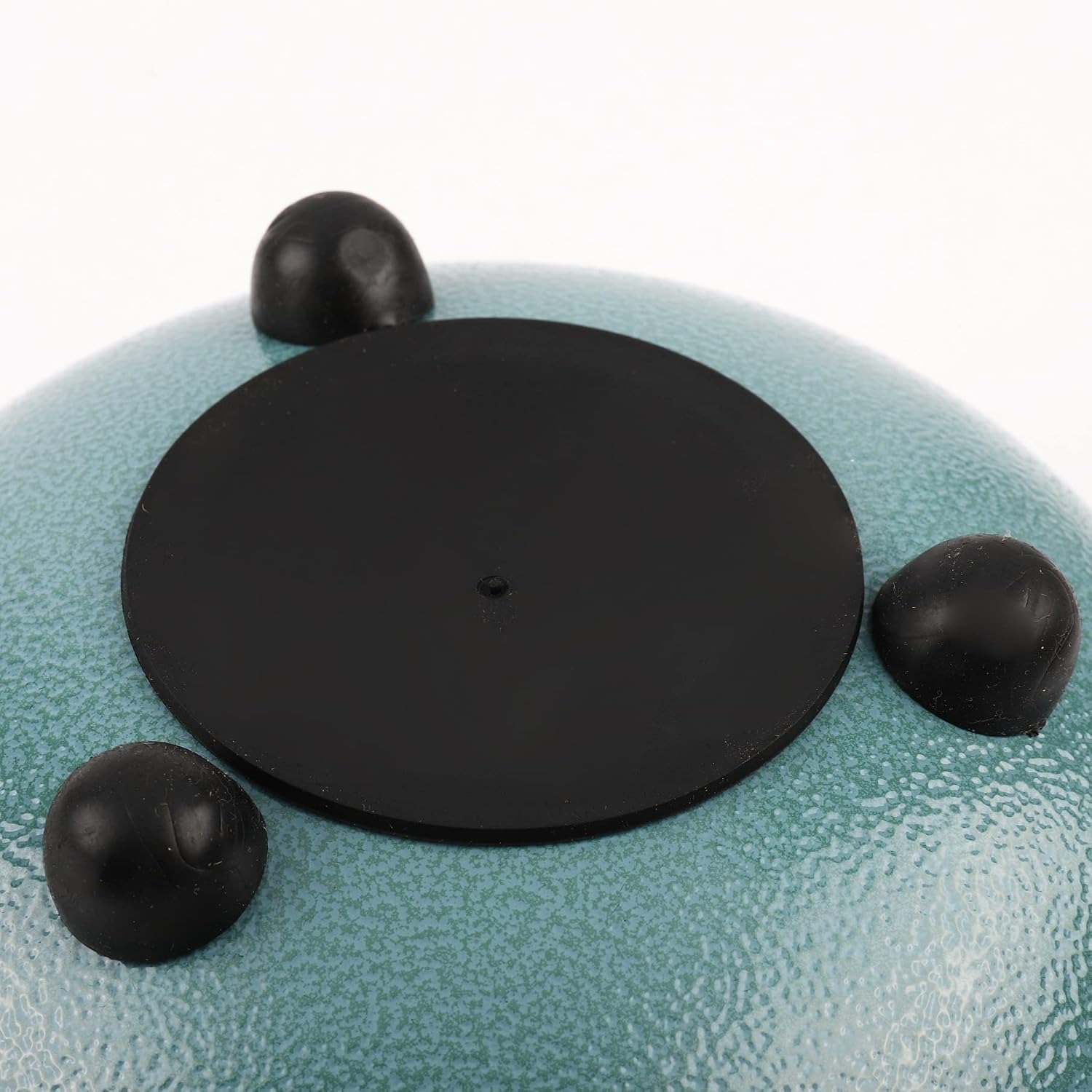
Wipe the drum with a soft dry cloth after you play. That removes skin oils and moisture, which is the main thing that shortens a steel instrument's life. Store it in the bag with both mallets inside so nothing goes wandering.
Keep it out of damp rooms and away from long spells in direct sun or near heaters. Do not strike it with anything other than the supplied mallets or your hands. Keys, pens and spoons dent tongues, and a dented tongue changes pitch permanently.
That is the whole maintenance routine. There is no oiling, restringing or servicing.
Common questions before buying
Will it annoy the neighbours? Not if you play with your fingers. Mallets carry further but it is still well below the volume of a guitar amp or a piano.
Do I need a stand? No. Knees, a cushion or a table all work. A cushion under it softens the tone slightly if you want it quieter.
Can I play it with other instruments? Yes, as long as they are in a compatible key. The exact key of this drum is not specified by the maker, so check the tone sticker when it arrives if you plan to jam with a guitar.
The short version
A 6 inch steel tongue drum with eight laser-cut tongues is about the friendliest instrument you can buy. It sounds good immediately, it needs no tuning, and it works just as well as a meditation tool as it does as a first instrument. This one comes in polished alloy steel in turquoise, weighs 500 g, measures 8 x 9 x 8 cm, and arrives with two mallets, a drum bag and a tone sticker.
If you have been meaning to play something, or you just want a quiet five minutes that is not scrolling, this is a very easy place to start.