


The complete guide
How To Choose And Fly Your First Butterfly Kite
The problem with most first kites
Plenty of people buy a kite once, take it to a park on a Sunday, spend forty minutes running back and forth, and never open the bag again. The kite usually gets the blame. Often it does not deserve it, but sometimes it absolutely does.
Two things go wrong. The first is wind. Beginners tend to pick a day based on their calendar rather than the weather, and a kite with a small sail simply will not rise in still air no matter how hard you sprint. The second is weight. A kite that is heavy for its size needs a real breeze before it does anything useful, which rules out most mild afternoons.
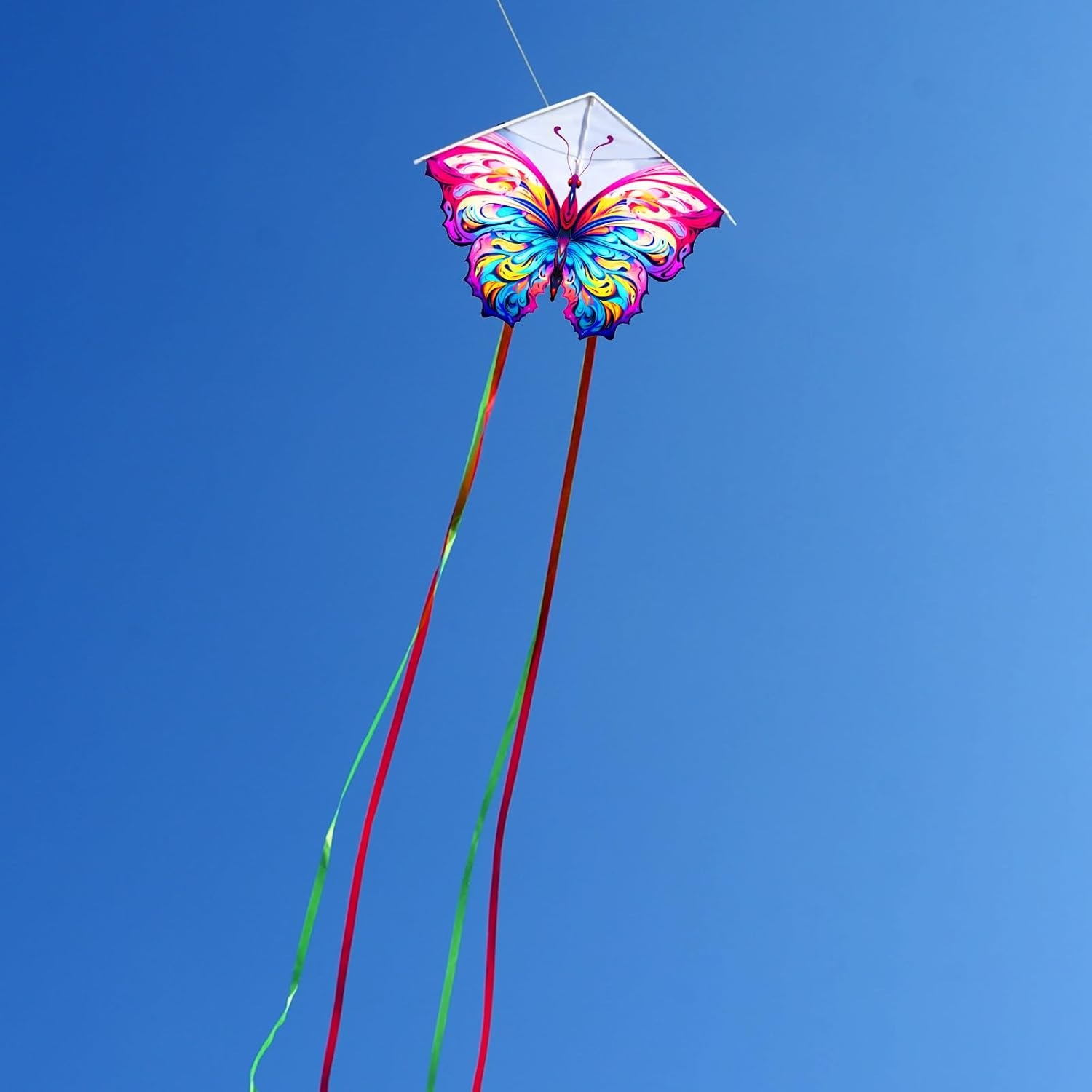
A butterfly kite with a wide, light sail sidesteps both problems. The large surface catches whatever air is moving, and nylon keeps the mass low. You feel the pull early. That early pull is what tells you the kite is working, and it is what keeps a child interested past the first five minutes.
How a single-line kite actually works
A single-line kite is a very simple machine. Air hits the angled sail, splits around it, and pushes the kite up and back. The line stops it drifting away, so the push turns into lift instead. The bridle, the short set of strings where your flying line attaches, sets the angle the sail meets the wind at.
That angle matters more than anything else. Too flat and the kite stalls and tumbles. Too steep and it climbs hard, overshoots and dives. Most kites arrive set close to right, which is why following the assembly instructions in the pack is worth the two minutes it takes.
The tail, where one is fitted, is not decoration. It adds drag at the back and keeps the kite pointing into the wind instead of spinning. If a kite is looping in circles, the answer is usually more tail, not more running.
Why a wide sail suits beginners
Think of sail area as patience. A big sail gives you more lift from less wind, which means you can fly on days when a smaller kite would stay in the bag. It also means the kite reacts more slowly, and slow reactions are forgiving. You have time to correct a dip before it becomes a crash.
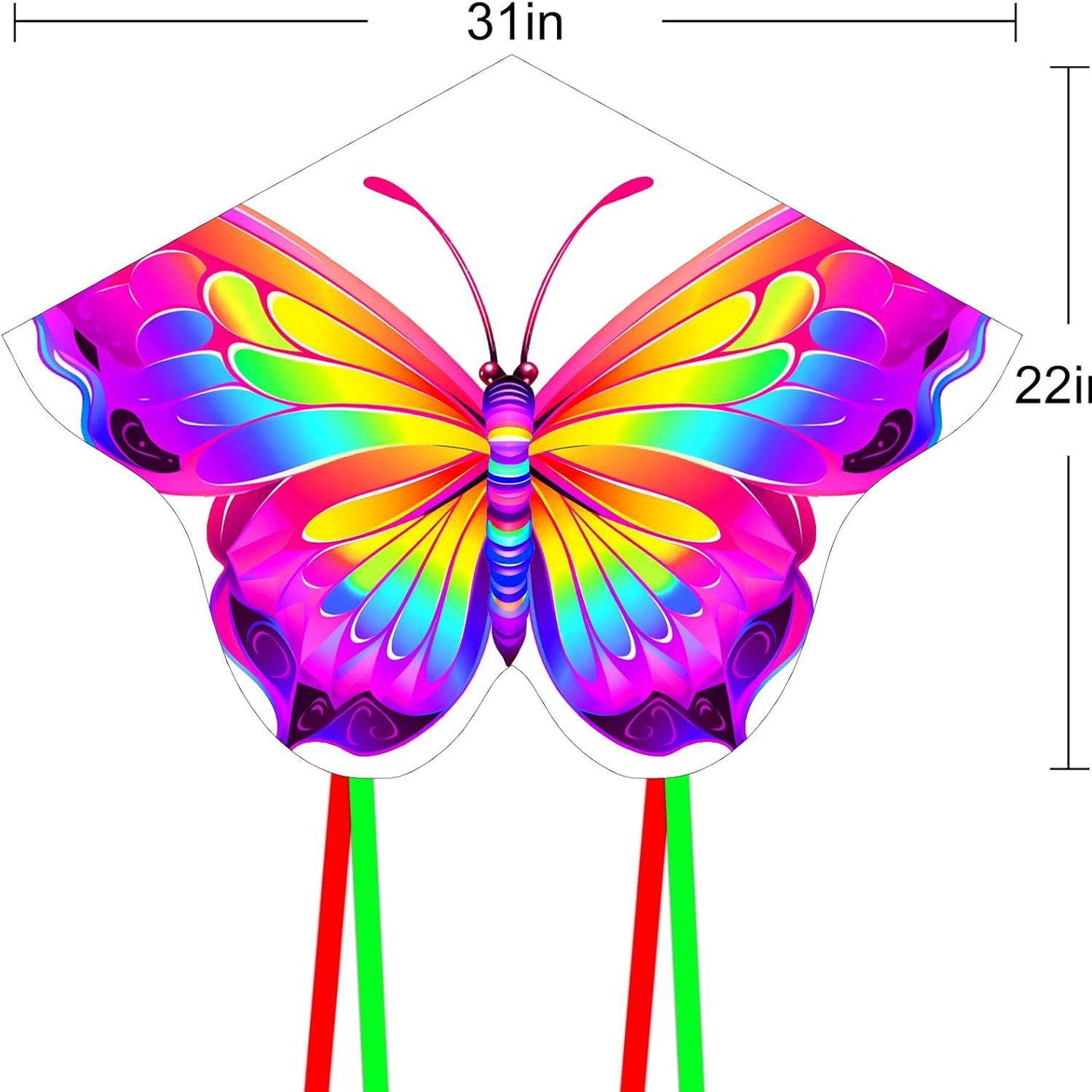
This kite measures 78 cm long by 55 cm wide, which lands in a useful middle ground. It is big enough to be clearly visible high up and to lift easily, yet small enough that a child can hold the line without being dragged forward. Very large kites pull hard enough to hurt your hands on a strong day. That is a problem you do not need on your first outing.
The sail is nylon and the frame rods are polyester. Both are light materials. Lightness is the quiet reason an easy fly kite behaves well in marginal conditions.
Reading the wind before you go
You do not need an app, though one helps. Look at trees. If the smaller branches are moving steadily and leaves are rustling, you have enough. If flags are standing straight out and dust is lifting off paths, it is probably too much for a relaxed first flight.
Steady matters more than strong. Gusty wind that comes and goes in bursts is the hardest to fly in, because the kite surges, then suddenly has nothing holding it up, and falls. Open ground near the coast usually gives the cleanest air. Parks surrounded by tall trees or buildings give the messiest.
Time of day plays a part too. On many days the wind builds through the morning and settles again in the late afternoon. Mid to late afternoon is often the sweet spot inland.
Picking your spot
Space is the thing to be fussy about. You want open ground in every direction, with no power lines, no light poles, no roads downwind, and nothing to snag a line if the kite comes down fast. Beaches, big sports fields and open hilltops all work. Small suburban parks with a ring of trees rarely do.
Keep well away from other people, especially anyone with a dog or a pram. A line under tension is thin and hard to see. And never fly anywhere near power infrastructure. Wet line conducts electricity and that situation turns dangerous instantly.
Getting it up the first time
Assemble the frame on the ground first. Slot the rods in, check the sail is taut rather than baggy, attach your line to the bridle point as the instructions show.
Then stand with your back to the wind. Hold the kite up by its frame, not the sail, and let out a few metres of line. Let go. The wind should take it. As it climbs, feed line out in short pulls rather than one long release, because steady tension keeps the sail loaded.
If it sinks, pull in a little line to add tension. If it dives to one side, let out a touch and let it recover. Running is almost never the answer. People run because the kite is falling, and all running does is confuse the airflow.
Landing is simpler. Wind in slowly while walking toward it, keeping light tension so it comes down under control instead of dropping.
Flying with kids
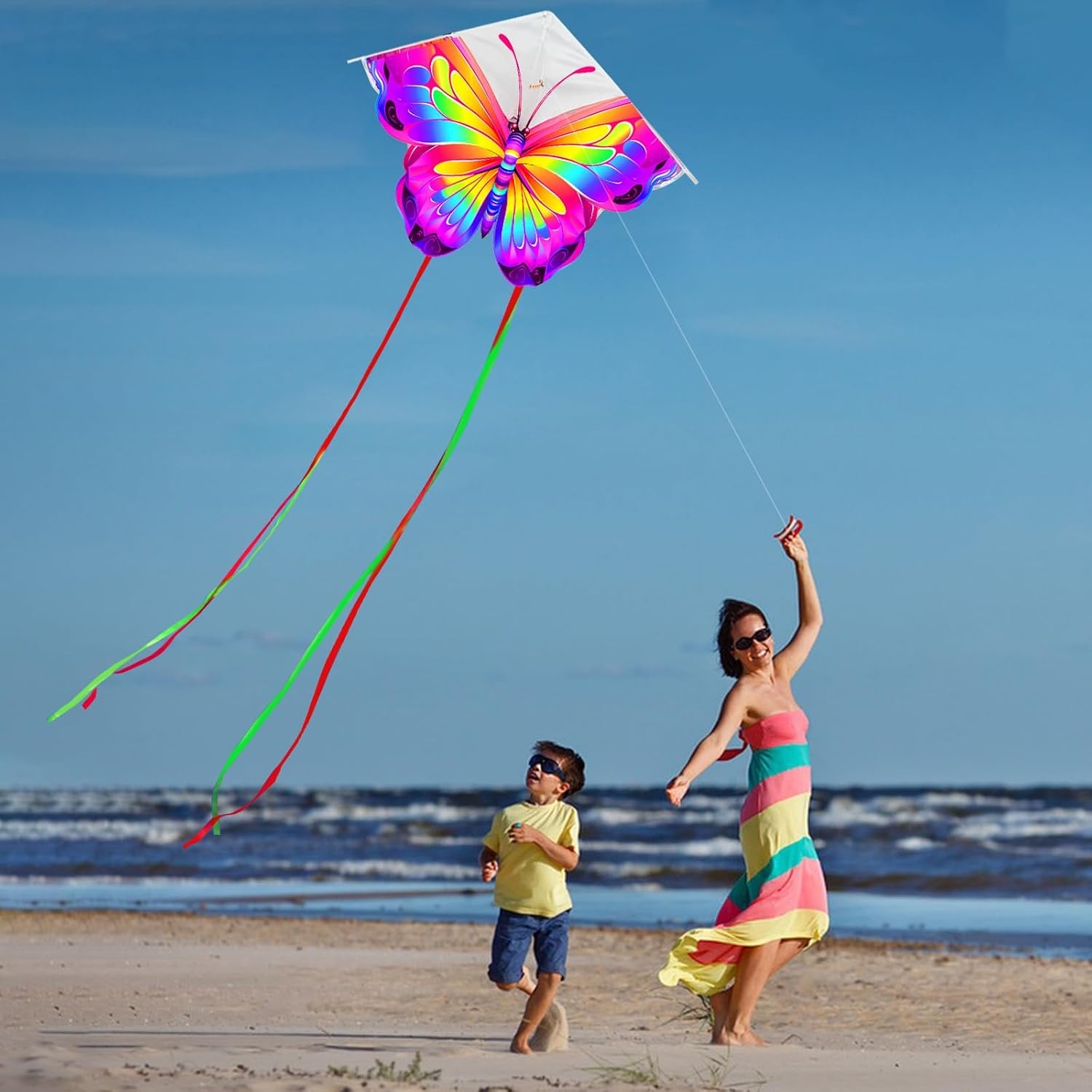
Two kites in a pack changes the dynamic. With one kite, children take turns and whoever is waiting gets bored. With two, a parent and child can fly alongside each other and the whole thing turns into shared time rather than queueing.
Give a child the line only once the kite is up and settled. Launching is the fiddly part. Flying is the fun part. Show them how to feel the tension through the line and how a small pull brings the kite back up. Stand them well apart from other flyers so lines do not cross, because crossed lines bring both kites down at once and nobody enjoys untangling that.
A loop of line around a wrist is a bad idea in strong wind. Teach the habit of holding the handle, not wearing it.
Looking after it
Kites live longer than you think if you treat the frame kindly. After a session, shake out sand or grass and wipe the sail with a damp cloth. Skip detergent. Let everything dry fully in the shade before folding, because packing nylon away damp leads to musty marks.
Take the rods out for storage rather than leaving them flexed for months. Store them straight. Wind the line onto its handle neatly while you are still at the park, since a tangle is far easier to prevent than to fix.
Frame rods are the part most likely to break, usually from a hard nose-first crash onto a path. Having a second kite in the pack means a broken rod does not end your afternoon, and generic replacement rods are easy to find.
Who this suits
This is a casual recreational kite. It fits families who want something to throw in the car for the beach, grandparents looking for a screen-free gift, and adults who just want half an hour of standing in a field watching something float. It is not a stunt kite, so if you want tricks and fast dives on two lines, look at a dual-line model instead.
If you have never flown before and want a forgiving starter kite that does not demand a gale, this is the category to buy in.
The short version
Choose a day with steady light to moderate wind. Pick wide open ground with nothing overhead. Assemble the frame carefully, launch with your back to the wind, and feed line out instead of running. Dry it before you pack it, and store the rods straight.
Do that and a butterfly kite like this one will fly on far more days than you expect, with two of them in the pack so nobody has to wait their turn.