

The complete guide
How to Choose a Fort Building Kit That Kids Actually Keep Using
The rainy afternoon problem
Every parent knows the particular quiet that comes before chaos. The park is out, the trampoline is soaked, and two children are circling the kitchen looking for something to do. The old answer was a blanket over the dining chairs, which lasts about four minutes before a chair tips and the whole thing collapses on someone's head.
A fort building kit fixes the engineering problem that blanket forts have always had. Instead of borrowing furniture, children build a proper frame out of rods and connectors, then drape fabric over it. The frame holds its shape. The chairs stay at the table. And best of all, the kids build it themselves rather than directing an adult from the floor.
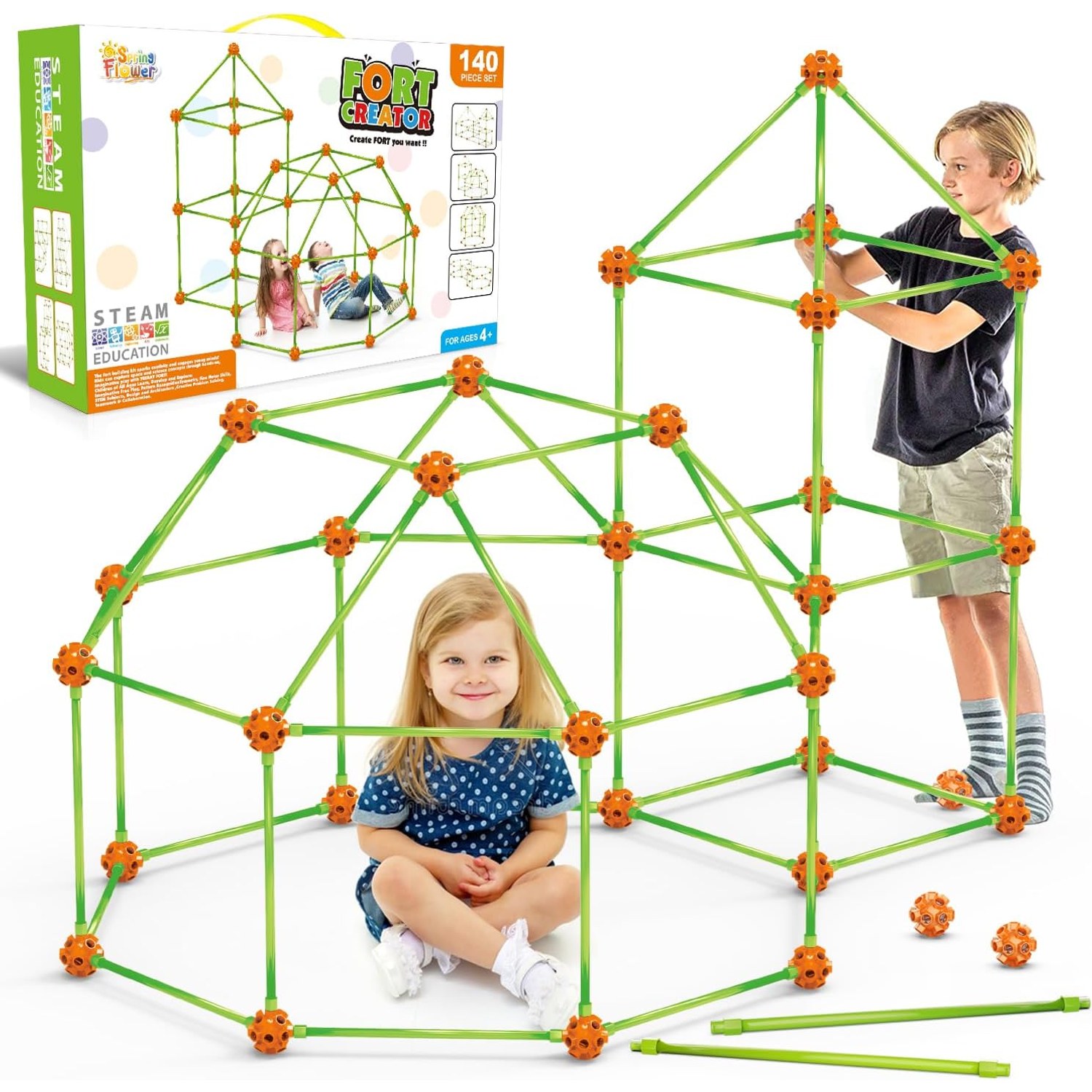
This set has 140 pieces, which is a useful number. It is enough for a den that two or three children can sit in, and enough to split into two smaller builds when nobody wants to share.
How a rod and connector system works
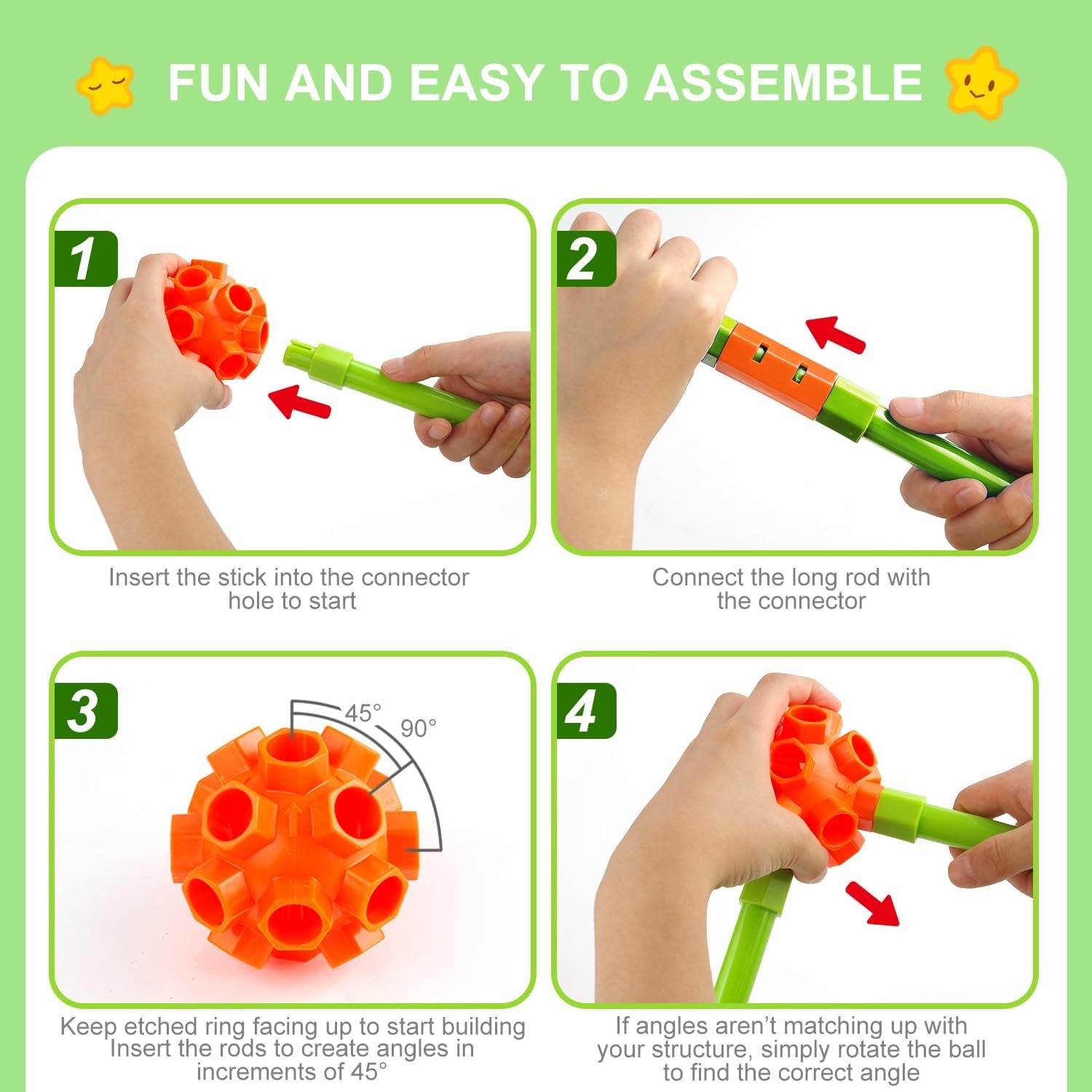
The idea is simple and it has been around in various forms for a long time, because it works. You get straight plastic rods and you get connectors with multiple sockets. Push a rod into a socket and it holds. Push three more into the same connector and you have a corner that goes up, across and back.
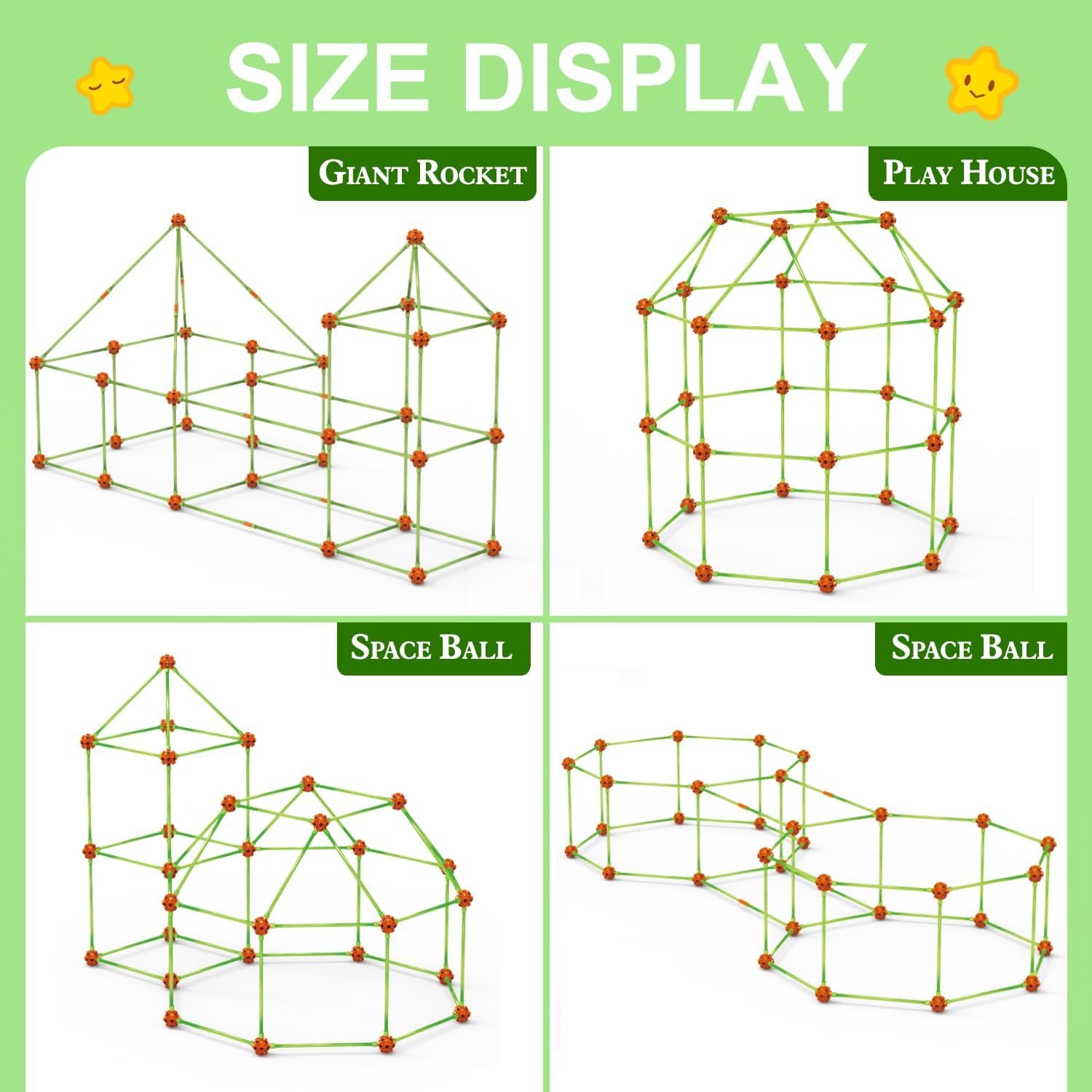
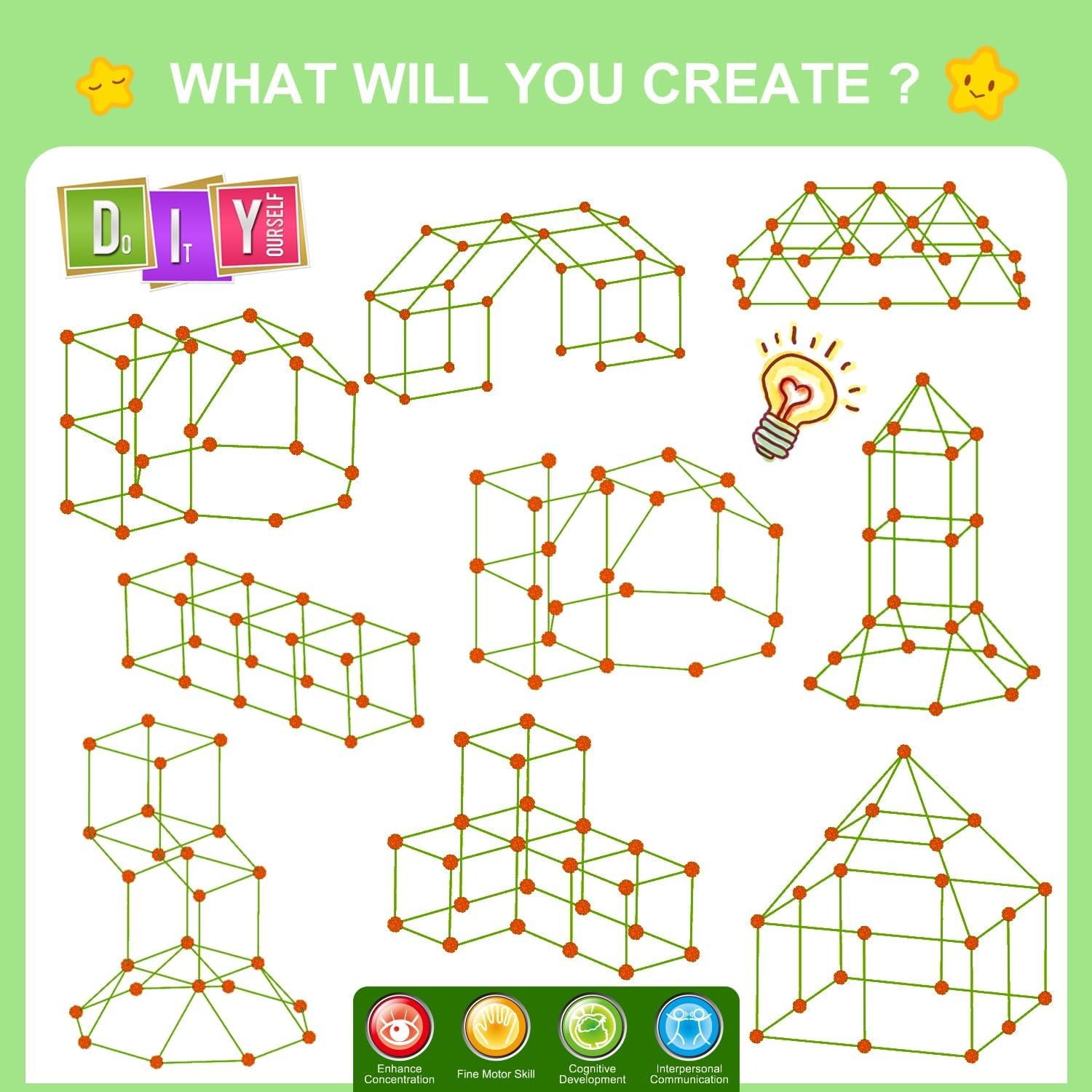
From there, everything is just repetition. A square base, four uprights, a square top, and you have a cube. Angle the top rods in and you have a tent or a teepee shape. Chain two cubes together and you have a tunnel between two rooms. Children work this out faster than most adults expect, usually within the first half hour.
There is nothing to screw, glue or charge. The operation mode on this set is listed as manual, and assembly is required every single time, which is the point rather than a drawback. The building is the toy.
What it teaches without trying
Watch a child build one of these for the first time and you will see them learn something the hard way. A tall narrow tower wobbles. A wide low base does not. A roof made of long rods sags in the middle unless something supports it. Nobody has to explain any of this. The structure explains it by falling over.
That is why these sets get grouped with STEM toys. Spatial reasoning, planning ahead, testing an idea and fixing it, all of it happens naturally when a child has a goal (make a cave big enough to sit in) and a limited set of parts. It is one of the better engineering toys for primary school age children because the feedback is immediate and the stakes are zero.
There is a social side too. Holding one wall while someone else attaches the next rod is genuine cooperation. Siblings who argue about most things tend to negotiate surprisingly well when a roof is at stake.
Who this suits
The manufacturer recommends ages 36 months to 12 years, with a target audience of kids aged 3 to 12. That is a wide band, and in practice children use it differently at different ages.
Three and four year olds mostly enjoy connecting pieces and knocking things down, often with a parent doing the structural work. Around five or six, children start building recognisable shapes on their own and get properly attached to the result. From seven upward, the designs get ambitious, and this is where you see multi room builds, tunnels and forts with doors.
It also suits households where screen time is already a negotiation. There is no app, no sound and no battery compartment, so it competes with a tablet on fun rather than on volume. For a lot of families, that alone makes it one of the best screen free toys they buy in a year.
Choosing a kit: what actually matters
If you are comparing fort building sets, a few things are worth checking.
Piece count is the obvious one, but context matters more than the number. Around 140 pieces is a good family sized set. Much less than that and you are limited to one small build. Much more and storage becomes a project of its own.
Weight is the second thing. Light components are easier for young children to lift overhead when they are adding a roof, and they hurt less when a wall falls. This set is listed as lightweight.
Connector flexibility is the third. The more directions a connector allows, the more shapes a child can make. A system that only builds cubes gets boring faster than one that also allows angles.
Finally, think about how it stores. A toy that lives in a tub and goes away cleanly gets used far more than one that colonises a corner of the lounge. A mesh bag or a lidded box is enough.
Making the most of it at home
The frame is only half the fort. A flat sheet is the classic cover because it is light and drapes well. Doona covers work but can be heavy on a tall build. Beach towels are good for walls and bad for roofs.
Pegs or clips are the best upgrade you can make for almost nothing. Clipping fabric to the frame stops the roof sliding off every time somebody crawls in. A few cushions and a small lamp turn it from a frame with a sheet on it into somewhere a child will sit for an hour with a book.
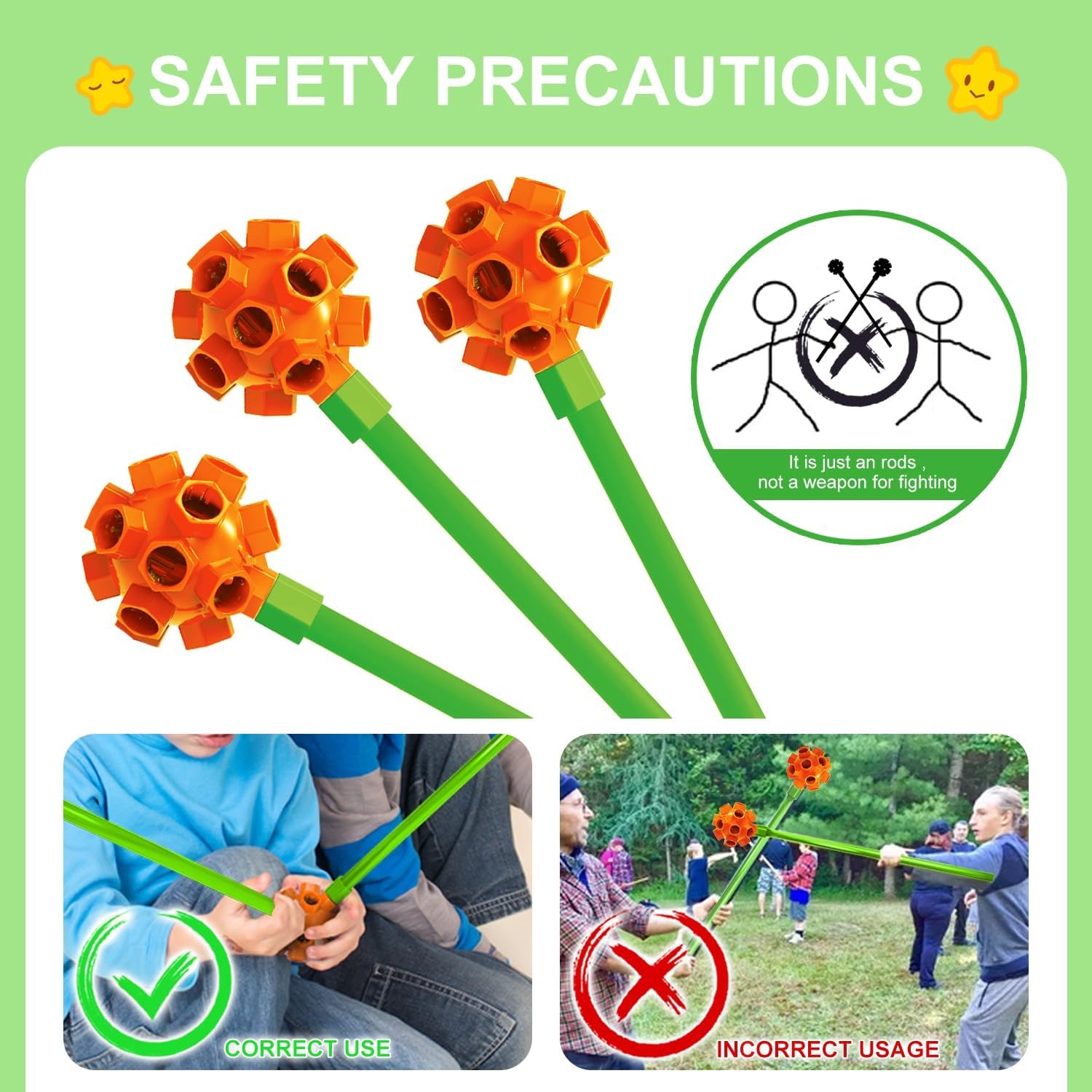
Set a rule early that nobody leans or climbs on the structure. It is a light plastic frame, not furniture, and that one rule prevents most breakages. Sitting inside is fine, hanging off a wall is not.
Give the kids a job at pack up time too. Counting pieces back into the box is dull on its own but works well as a race or a competition. Lost connectors are the main thing that shortens the life of a set like this.
Care and keeping it going
Plastic is easy. Wipe pieces with a damp cloth and a bit of mild soap when they get sticky, then let them dry before packing away. Avoid dishwashers and washing machines, since heat can warp plastic parts and ruin the fit of a connector.
Store the set out of long periods of direct sun and away from heaters. Check pieces occasionally and retire any that have cracked or bent badly, since a damaged connector tends to make a whole wall unreliable.
Beyond that, there is almost nothing to maintain. No batteries, no charging, no firmware. The set either has all its pieces or it does not, and that is the only thing to keep an eye on.
Good gift, low risk
Toys that work across a wide age range are the safest gifts, because they survive the year the child suddenly declares something babyish. A fort kit sits in that category. A five year old builds caves, a nine year old builds a base with a tunnel, and the same box covers both.
It also travels well to grandparents' houses and holiday rentals, where the usual toy collection is thin and the weather is often the reason you are indoors in the first place.
The short version
If your house needs a reliable answer to wet weekends, this does the job. 140 lightweight plastic pieces, push fit by hand, no tools and no batteries, recommended for ages 36 months to 12 years. Children build the structure, you supply a sheet, and the lounge room becomes a castle for the afternoon.
It packs down into a tub when you are done. That combination, big build and small storage, is what makes a fort building kit one of the few large toys that keeps earning its space.