
The complete guide
How to Choose a Gesture Control Stunt Car That Actually Gets Played With
The problem with most remote control cars
Buy a cheap RC car and you can usually predict the week that follows. Big excitement on day one. A flat battery twenty minutes later. A long charge, a shorter second run, and then the car ends up under the bed with one wheel pointing the wrong way.
There are three things that usually cause that. The first is runtime. One battery with a two hour charge time kills momentum faster than anything. The second is controls that feel fiddly, especially for a child under about nine, where two thumbsticks means the car is in the skirting board before they have worked out which stick does what. The third is fragility. A car that cannot survive landing on its roof will spend most of its life being picked up.
A gesture control stunt car deals with all three, which is why this style of toy has grown so quickly. The control method is instinctive, the double-sided body means a flip is part of the fun rather than the end of it, and a second battery turns a short burst into a proper afternoon.
How gesture control works
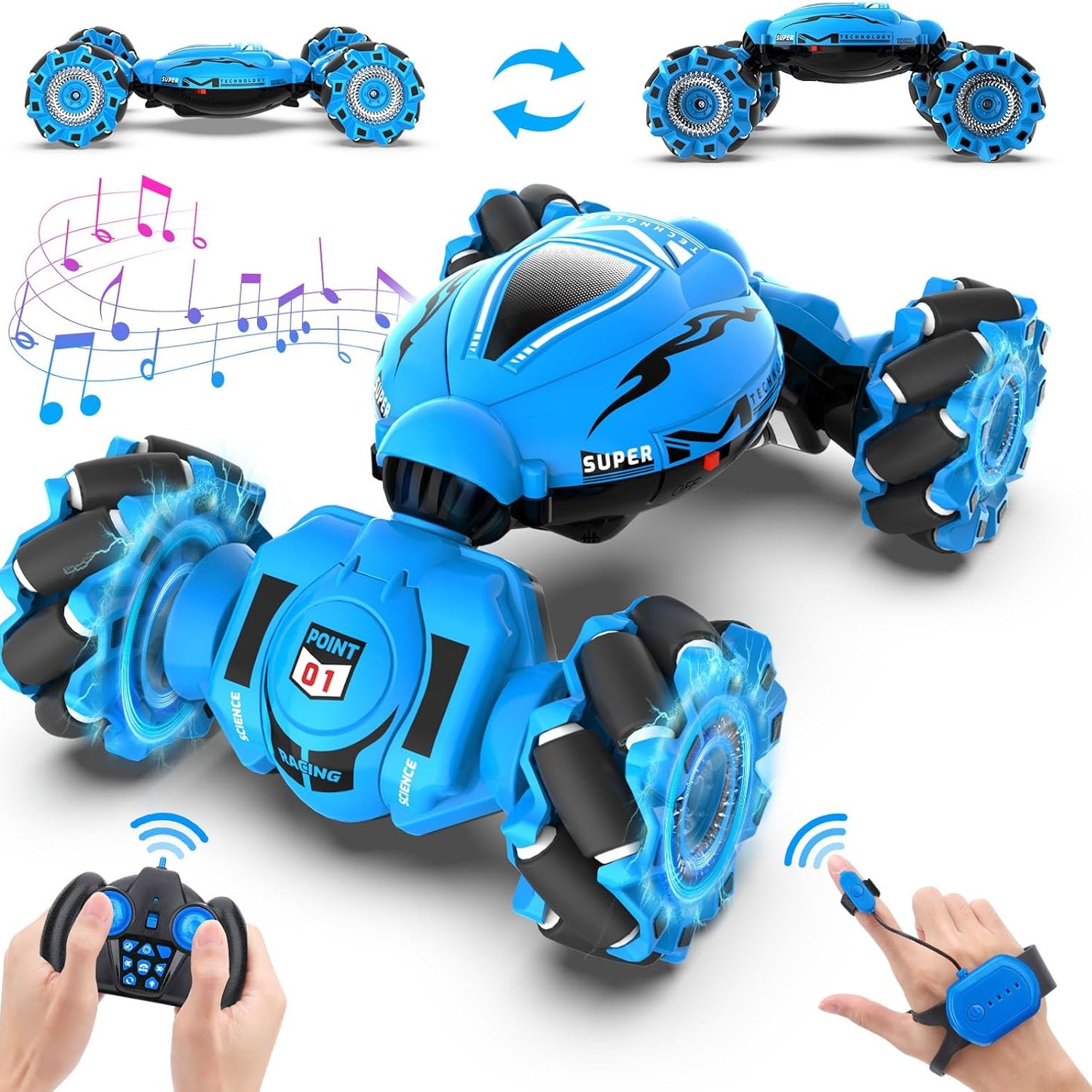
Inside the watch there is a motion sensor and a 2.4GHz transmitter. The sensor reads the tilt and movement of your hand. The transmitter sends that information to a receiver inside the car, which translates it into motor commands. Tilt forward, it drives forward. Tilt back, it reverses. Lean your hand left or right and the car turns.
The 2.4GHz part matters more than people realise. Older RC toys used fixed frequencies, which meant two cars in the same room would fight each other and both would drive badly. A 2.4GHz system picks a clear channel, so several of these can run at the same time without interference. If a friend has one too, you can race rather than queue.
Response time is the thing that separates a good gesture system from a gimmick. If there is a visible delay between your hand moving and the car moving, the illusion breaks and the child goes back to the remote. This model is built for quick response, which is what makes the watch the control most kids reach for.
The handheld 2.4GHz remote is still in the box, and that is a sensible bit of design. Some children prefer a controller. Some parents want to drive while the kid wears the watch. Having both means nobody is stuck with a control method they do not enjoy.
What the stunts actually look like
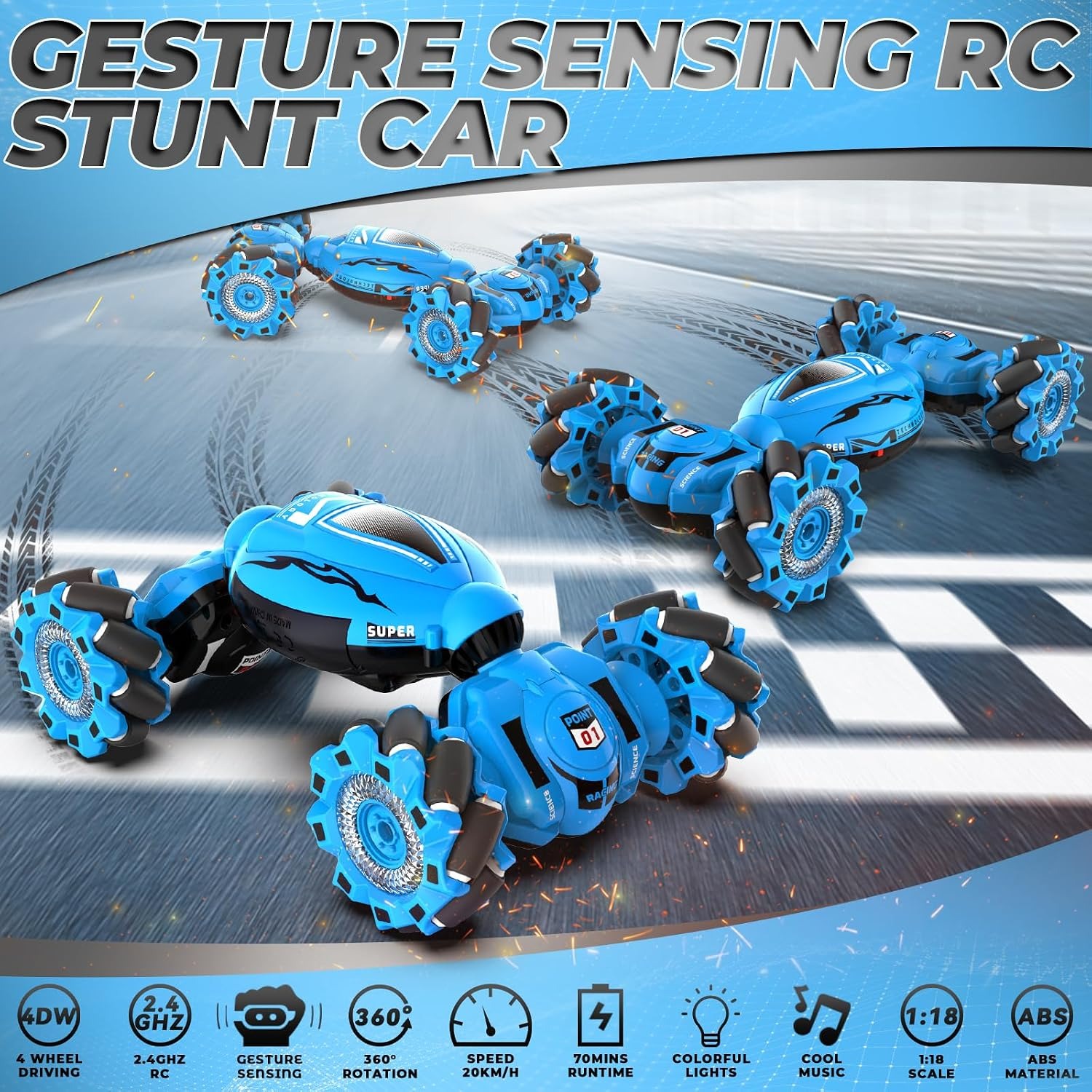
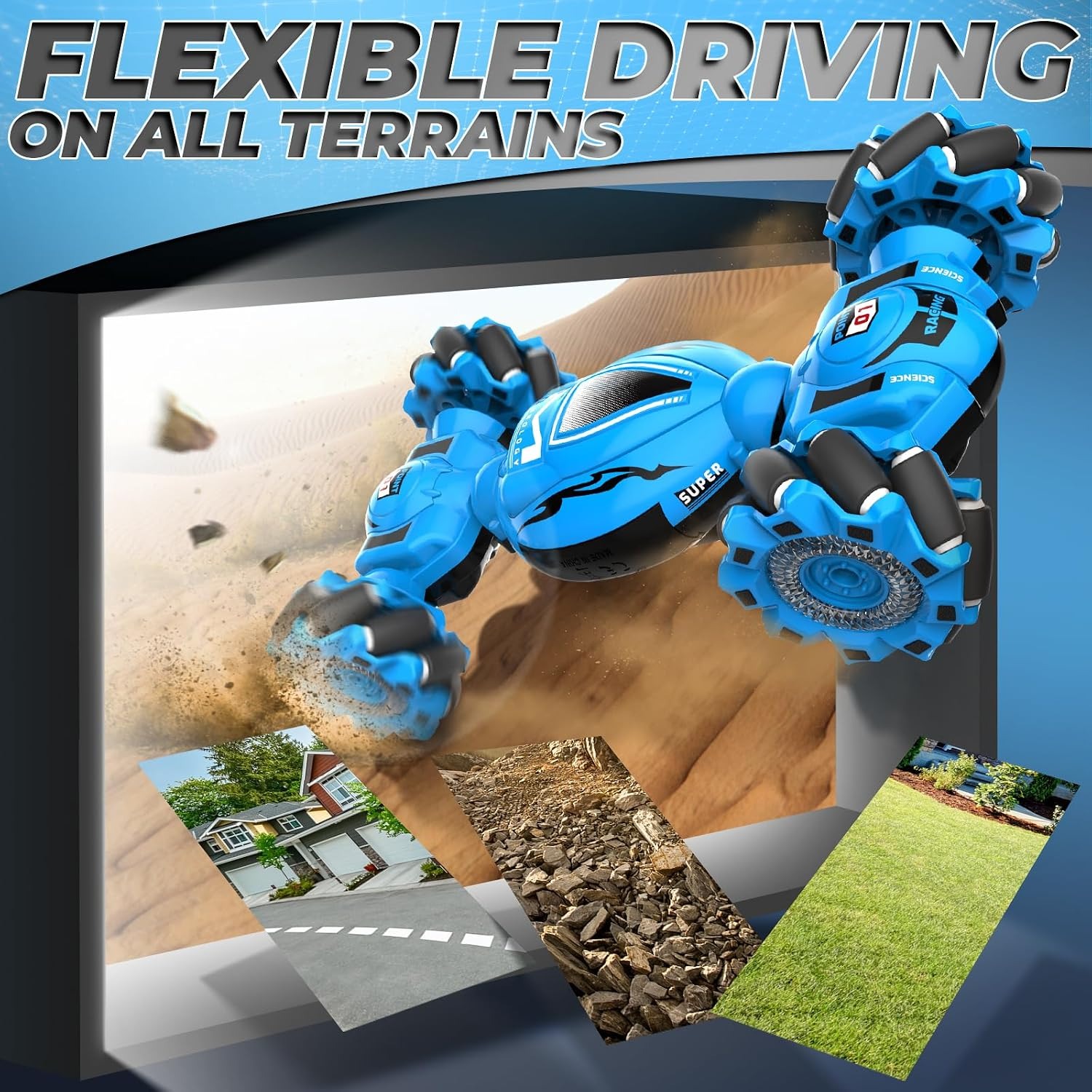
The car is 4WD and symmetrical, meaning it has no real top or bottom. Both faces are driveable. That changes the whole feel of the toy. Instead of a crash ending a run, the car rolls, lands on its other side, and keeps going.
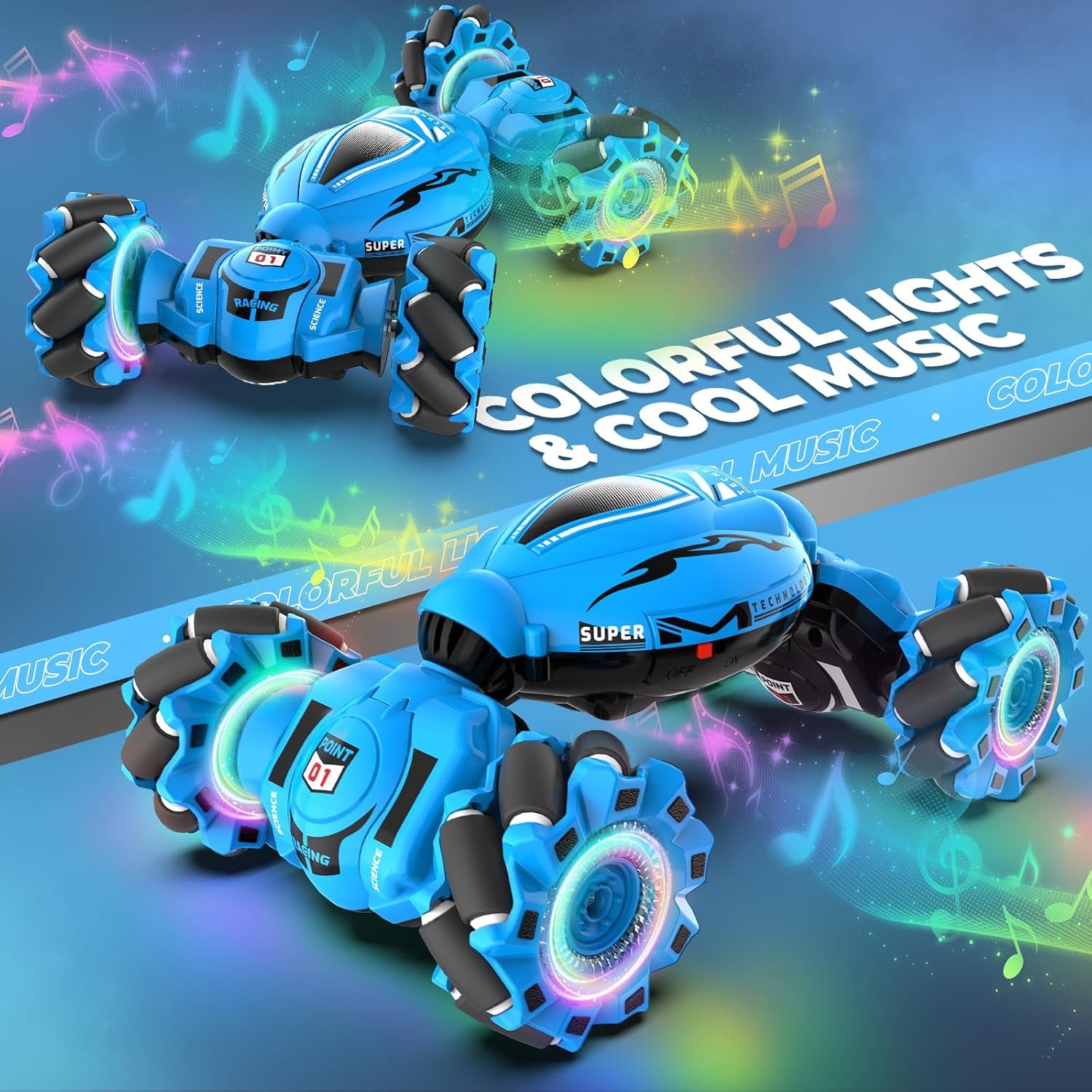
Beyond that, it will spin through a full 360 degrees on the spot, flip itself, and drift sideways when you ask it to. You can switch between on-road and off-road handling with a gesture, so the car behaves differently when you move from the kitchen tiles to the lawn. Coloured lights run while it drives, and there are sound effects to match, which makes evening play indoors noticeably more fun.
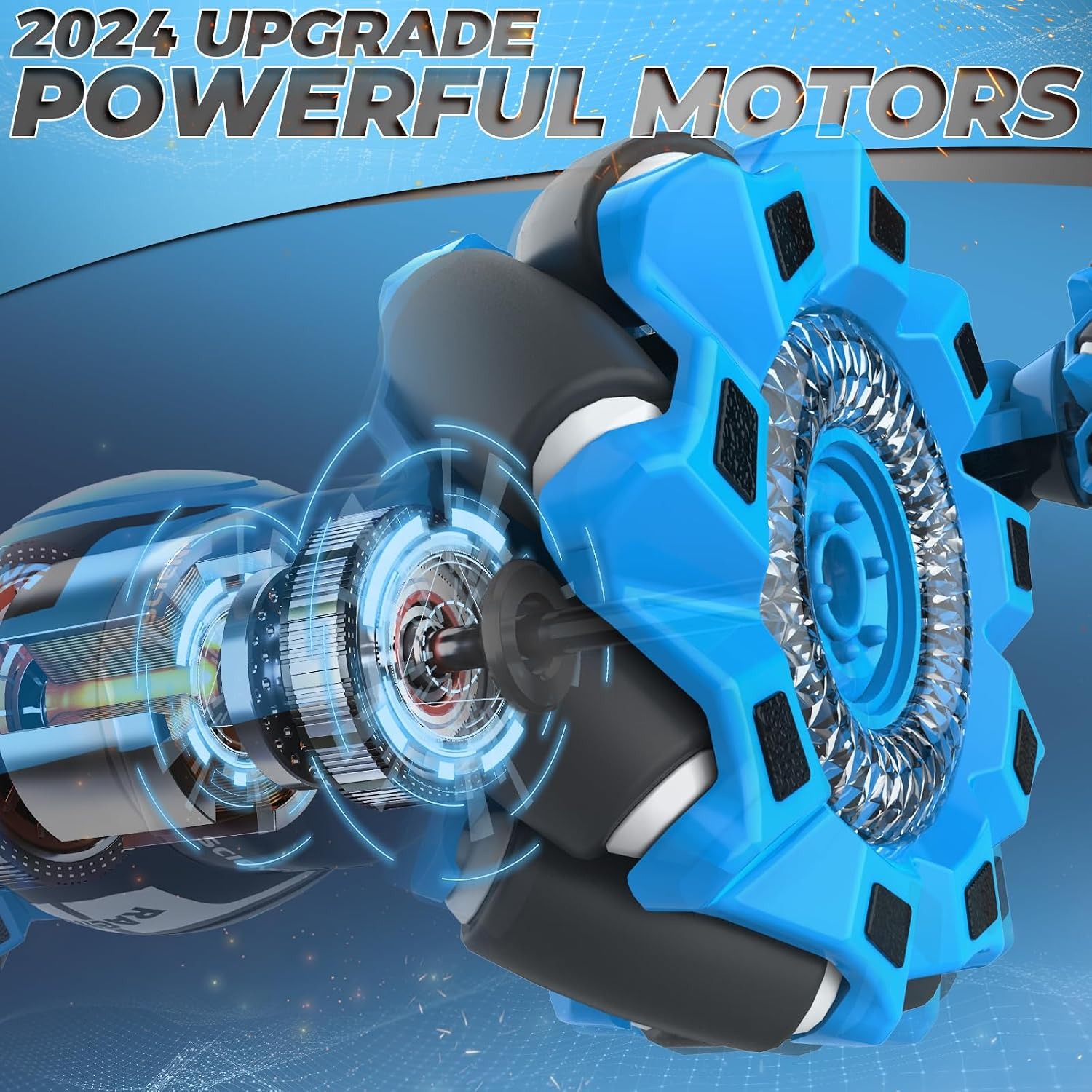
The suspension uses what the maker calls a bionic joint design. In plain terms, the wheels move independently of each other with a lot of travel. That is why it climbs over a garden hose or a low step instead of stalling against it.
Who it suits
Dysaim recommends ages 6 to 12, and that band is about right. At the younger end, the gesture watch does the heavy lifting because a six year old can wave a hand long before they can co-ordinate two thumbsticks. At the older end, the stunts and the drift mode hold interest, and the 20 km/h top speed gives a ten or eleven year old something to actually chase down the driveway.
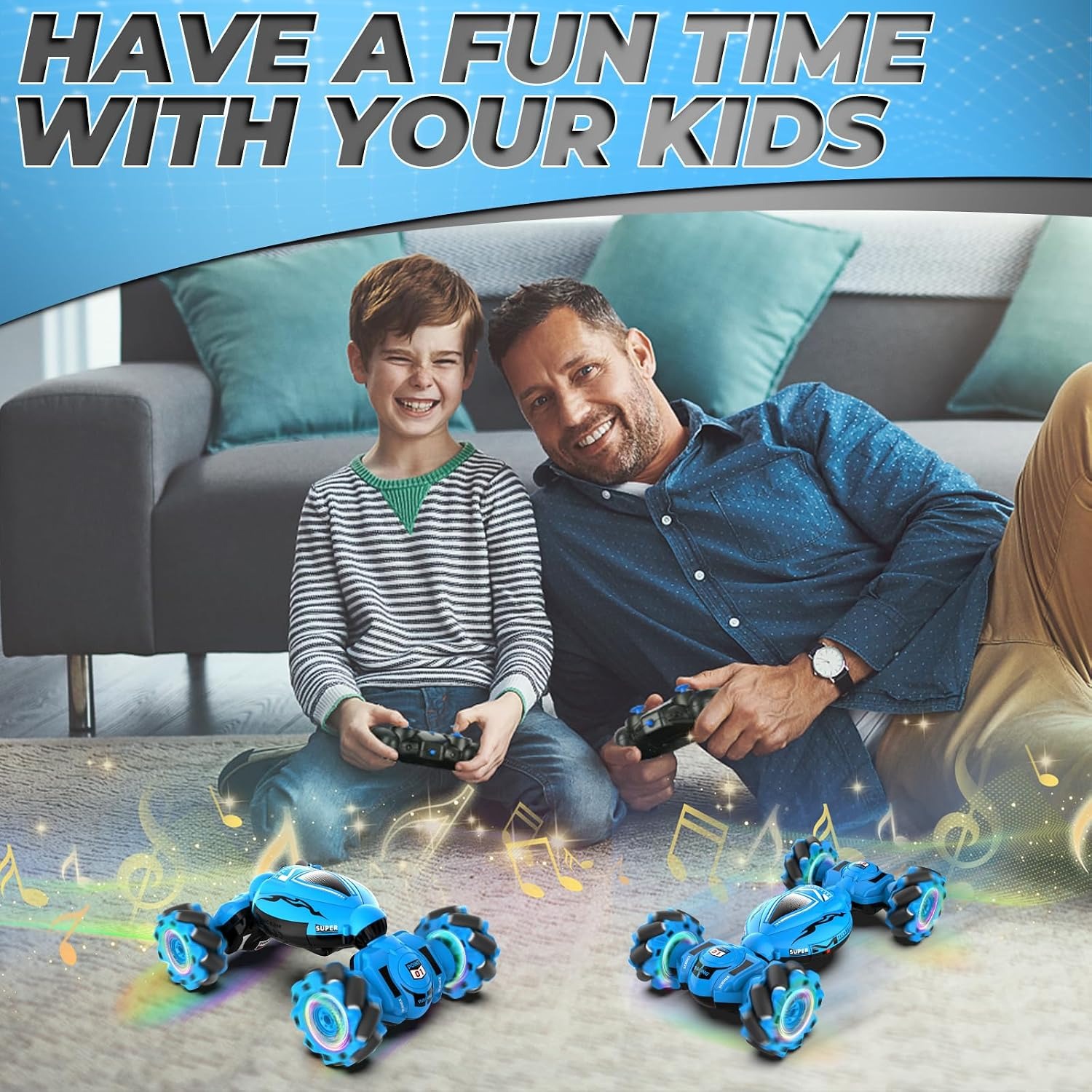
It also works well as a shared toy. Two children, one watch and one remote, means both are driving at once rather than one watching and getting bored.
Where it suits less well is very small spaces and very soft ground. At 20 km/h this is not a toy for a crowded flat with a glass coffee table in the middle. And while it handles short grass and gravel happily, deep sand and thick lawn will bog it down.
How to choose between models
If you are comparing a few options, these are the points worth checking.
Battery count comes first. One battery means short sessions. Two, as supplied here, means one charges over USB while the other is being used, which roughly doubles your usable play time without any extra spending.
Then look at how it is driven. A hand control rc car is far easier for a first-time driver than a twin-stick remote. The ideal is a set that includes both, so the toy grows with the child instead of being outgrown.
Check the drive setup too. Two wheel drive cars look the same in photos but struggle outdoors. A 4WD chassis with real suspension travel is the difference between a toy that works on the lawn and one that only works on the lino.
Finally, check the build material and scale. ABS plastic is standard for a reason, as it absorbs knocks without shattering. The 1:18 scale here gives a car that is big enough to see clearly from across a garden but small enough to carry in one hand at 680 g.
Looking after it
None of this is complicated, but a few habits make the car last considerably longer.
Keep it dry. There is no waterproof rating listed for this model, so wet grass, puddles and pool edges are off limits. After an outdoor run, wipe the body down with a dry cloth and clear any grit out of the wheels and joints. Carpet fibre and long hair wrapped around an axle is the single most common cause of an RC car slowing down, and a minute with your fingers fixes it.
Charge sensibly. Use the supplied USB cable, unplug once the pack is full, and try not to store the batteries completely flat. If the car is going away for a few months, take the battery out first.
Store it indoors. A shed in summer or a car boot in winter puts lithium-ion packs through temperature swings they do not enjoy.
The short version
This is a gesture control stunt car that a child can drive confidently within five minutes. The 2.4GHz sensing watch reads hand movements, the backup remote covers anyone who prefers a controller, and the 4WD double-sided body means flips and spins are part of the game rather than an interruption.
Two rechargeable lithium-ion batteries come in the box along with the USB cable, so there is no trip to the shop before the first drive and no long gap between runs. At 1:18 scale, 32.5 cm long and 680 g, it is solid in the hand without being unwieldy, and the ABS body is built for the knocks that come with stunt driving.
For a birthday or Christmas present aimed at a six to twelve year old, it hits a good balance. Easy enough to be fun immediately, capable enough to still be interesting a month later.