
The complete guide
How To Choose Your First Soprano Ukulele
The problem with starting an instrument
Most people who want to play music never get past the first week. Not because they lack talent, but because the instrument they picked fought back. Steel strings cut into soft fingertips. Six strings mean six things to think about. A full-size guitar on a ten year old's lap is awkward before a single note is played.
The ukulele side-steps nearly all of that. Four strings instead of six. Nylon instead of steel. A body small enough that a child can wrap an arm around it. And a soprano, at 21 inches, is the smallest and most traditional version of the lot.
That is the whole appeal. It gets you from "I wish I could play something" to "listen to this" faster than almost any other instrument.
What a soprano actually is
Ukuleles come in four main sizes. Soprano is the smallest, then concert, then tenor, then baritone. As the body grows, the scale length grows with it, the frets spread further apart and the voice gets deeper.
The soprano keeps the shortest scale and the tightest fret spacing. That tight spacing is the thing new players notice first, and it works in two directions. For a child or anyone with small hands, it means chord shapes are genuinely within reach. For an adult with large fingers, it can feel crowded for the first few sessions until muscle memory takes over.
Soprano is also the sound people associate with the word ukulele. Bright, light, a little cheeky. This one is listed with a balanced sound profile, which means it is not pushed hard towards any one part of the range.
Why the wood matters
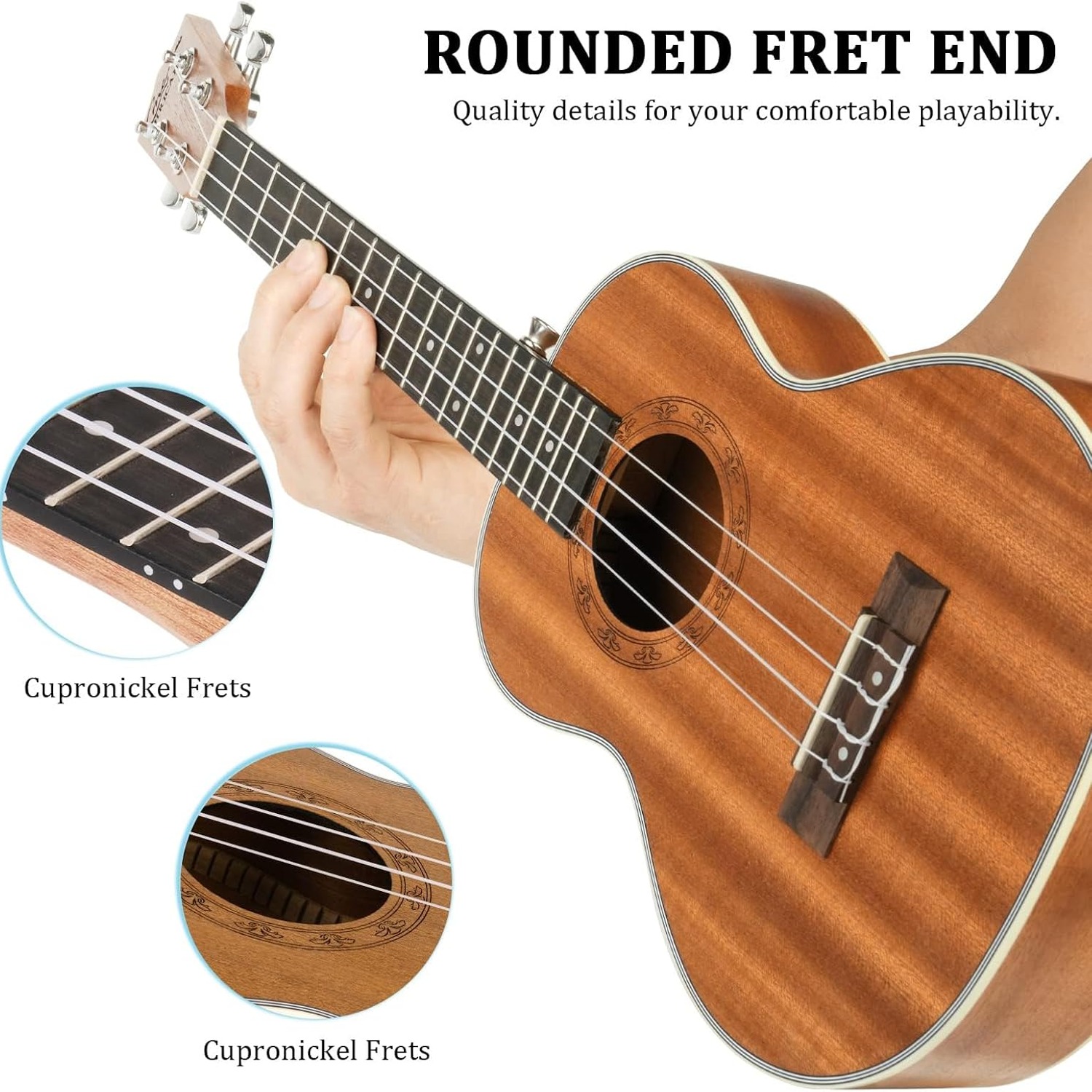
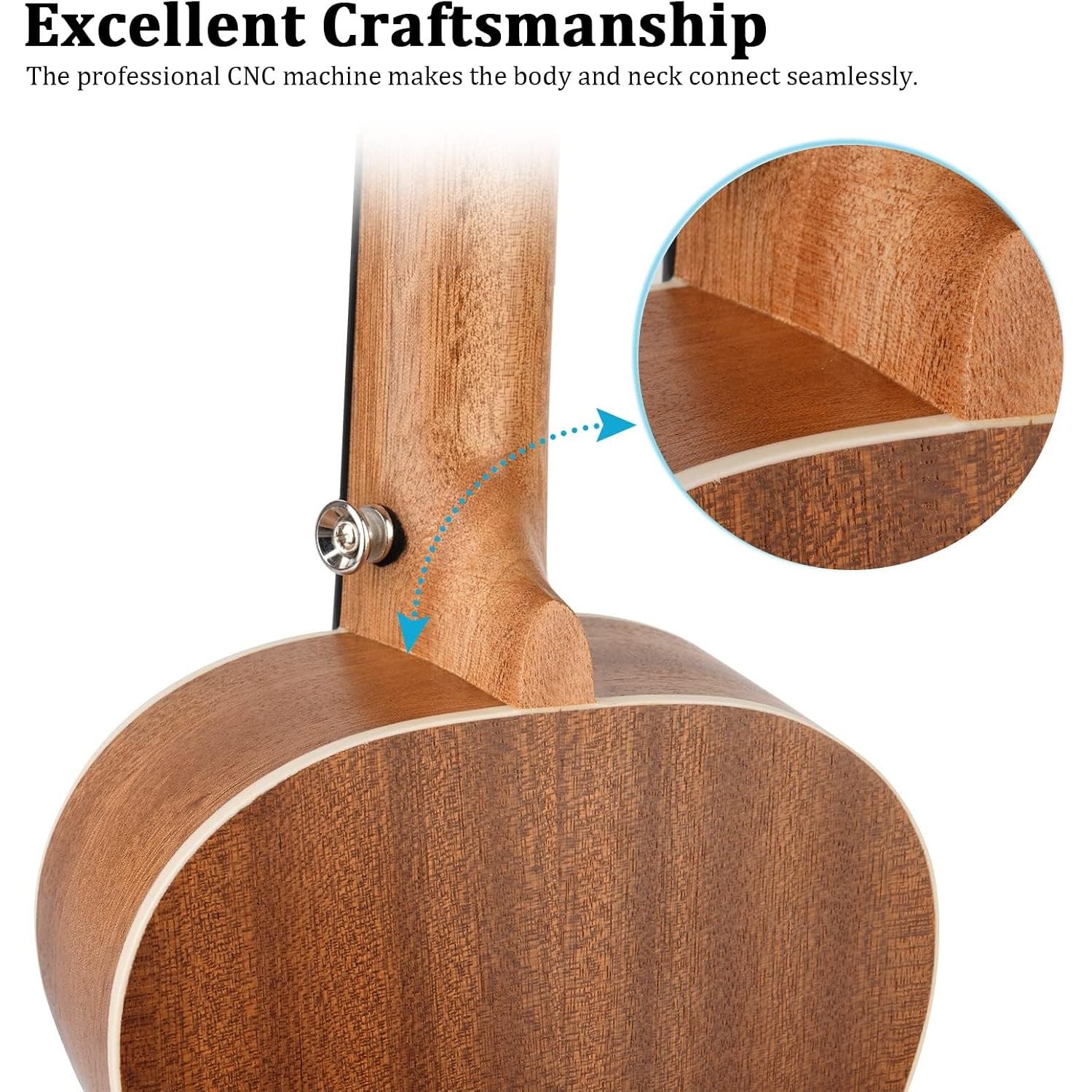
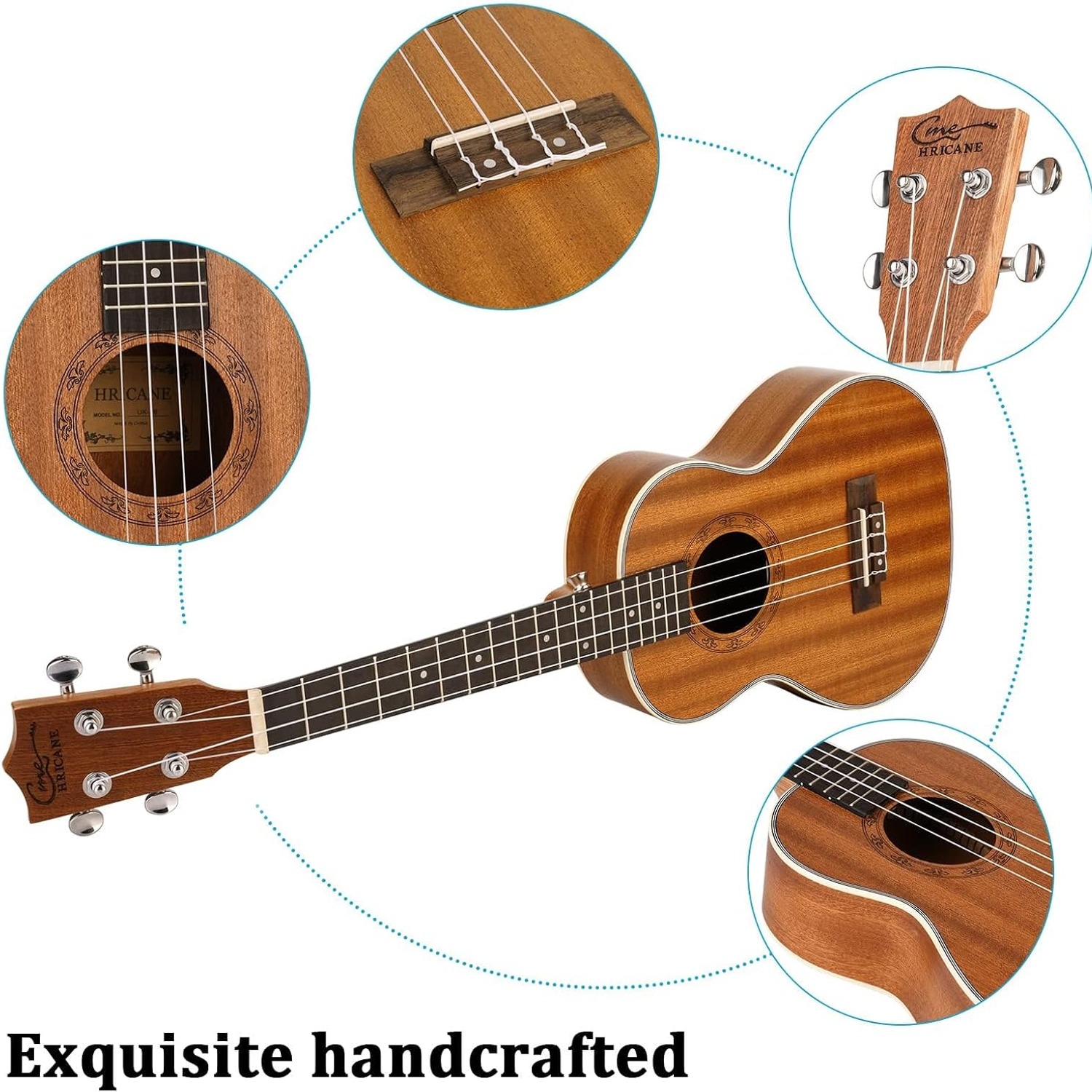
This instrument uses sapele for the top, the back and the body, with a walnut fretboard. Sapele is a common choice in acoustic instruments because of the warmth it adds to the tone.
Wood is also why care matters more on a wooden ukulele than on a plastic one. Wood responds to the room around it. Leave it next to a radiator all winter and the dryness works against it. Leave it in a damp garage and the opposite happens. Nothing dramatic, but a wooden instrument kept in sensible conditions holds its tuning better and lasts longer.
The finish here is polished, so a dry cloth is all the cleaning it needs. No sprays, no polish, nothing damp.
Nylon strings and new fingertips
The four strings are nylon. If you have ever tried a steel string guitar for the first time, you will remember the sore fingertips that followed. Nylon is far gentler. That is not a small detail for a beginner, because sore fingers are one of the top reasons people stop practising in week two.
Nylon does come with one quirk. New strings stretch. For the first few days of playing you will be retuning often, sometimes more than once in a session. This is completely normal and it settles down. A spare string set comes in the box, which is handy because strings do eventually break and nobody wants to pause their learning for a week waiting on a delivery.
Who this suits
A child starting music lessons. The light 0.9 kg weight means it will not pull them off balance, and the short scale means they can actually reach the chords.
An adult who always meant to learn something. Short daily practice on a soprano gets you to a real song quickly, and there is no amp, no cable and no setup to deal with. You pick it up and play.
Someone who travels. At 54 cm long it fits in luggage, and the included carry bag keeps it safe on the way.
A family looking for a shared instrument. Nothing needs adjusting between players, so it passes from hand to hand easily. It also works as a straightforward gift, since the bag and spare strings mean the recipient can start the same day.
Where it may not be the right call is for an adult with particularly large hands who already knows they want a deeper tone. A concert or tenor would serve them better.
How to choose between sizes
Start with the hands. If the player is a child, go soprano. If they are an adult who wants the classic bright sound and the smallest footprint, go soprano. If they have big hands and want a fuller, warmer voice closer to a small guitar, look at a concert or tenor.
Next, think about where it will live. A soprano is the easiest to store, carry and pick up on impulse, and an instrument you can reach for in two seconds gets played more than one that lives in a cupboard behind the hoover.
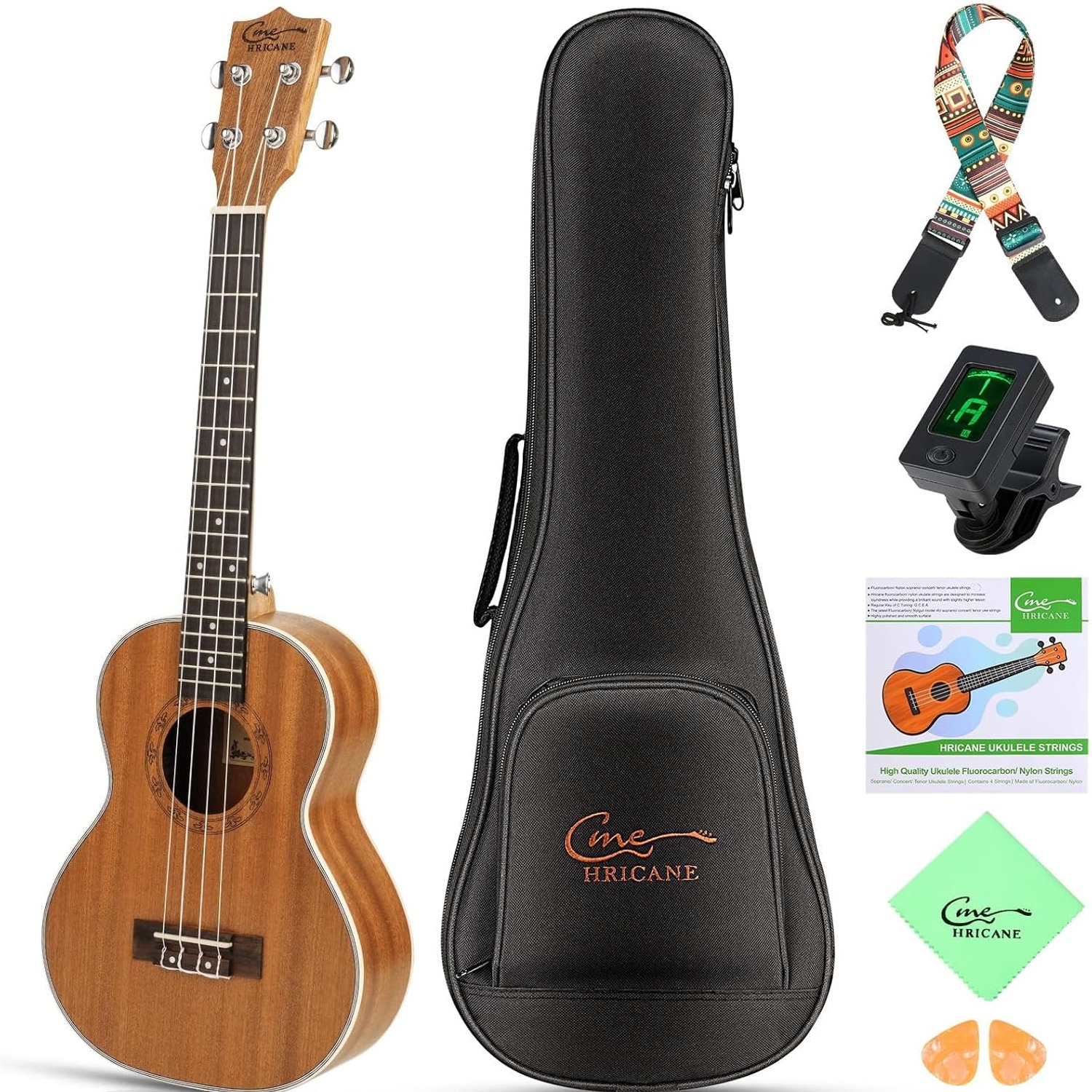
Finally, check what comes with it. An instrument on its own is a start. One that includes a bag and a spare string set is closer to ready, and that is what you get here. A clip-on tuner is a cheap extra worth adding, though a free phone app will do the job just as well at first.
Getting the first week right
Tune it before you play. Every stringed instrument arrives out of tune after shipping, and standard soprano tuning is G C E A. A free app or a clip-on tuner will get you there in under a minute.
Then learn two chords. Not ten, two. Most beginners can play a recognisable song with two or three chords, and the win of actually playing something is what keeps you coming back. Ten minutes a day beats two hours on a Sunday.
Expect the tuning to drift for the first few days while the strings settle. Retune, play, repeat. By the end of the second week it will hold pitch far better.
Keep it in the bag when you are not playing, but keep the bag somewhere you can see it. An instrument out of sight gets forgotten.
Looking after it
The care list is short. Wipe the strings and body with a dry cloth after playing so finger oils do not build up on the wood. Keep it out of direct sun, away from heaters and out of damp rooms. If it is going into long storage, loosening the strings a little takes some tension off the neck.
Avoid household cleaners and furniture polish entirely. They are made for furniture, not for instrument finishes, and they can do damage you cannot undo.
Change the strings when they sound dull or stop holding pitch. Casual players often get six months to a year out of a set.
A note on what we do not know
The maker's details for this ukulele lists the brand as Hricane, model UKS-1, with a sapele body, walnut fretboard and nylon strings. It does not specify a country of origin or a separate warranty term, so we have left those fields empty rather than fill them with a guess. Hand orientation is listed as left in the maker's details, so if that matters for your player, message us before ordering and we will confirm what ships.
The short version
A 21 inch soprano ukulele is the easiest common instrument to start on. Four nylon strings, a short scale and a body light enough for a child to hold. This one has a sapele top, back and body with a walnut fretboard, weighs 0.9 kg, and arrives with a carry bag and a spare string set.
Tune it, learn two chords, play every day for ten minutes. That is the whole plan, and it works more often than people expect.