
The complete guide
Choosing a Kids Wooden Tool Set That Actually Gets Played With
The toy that solves the "I want to help" problem
Every house with a preschooler in it hits the same moment. An adult pulls out a screwdriver to tighten a loose cupboard handle, and within seconds there is a small person at their elbow with a hand out. They do not want to watch. They want a turn.
Saying no works for about three minutes. Handing over a real tool is not an option. What actually works is giving the child their own version of the job, with their own kit, at their own size. That is the whole idea behind a kids wooden tool set.
It also answers a second problem, which is the toy that gets opened on a birthday and abandoned by the weekend. Toys with a single trick run out fast. A tool kit does not have a trick. It has a job, and the job changes every time the child decides what they are building.
How this set works
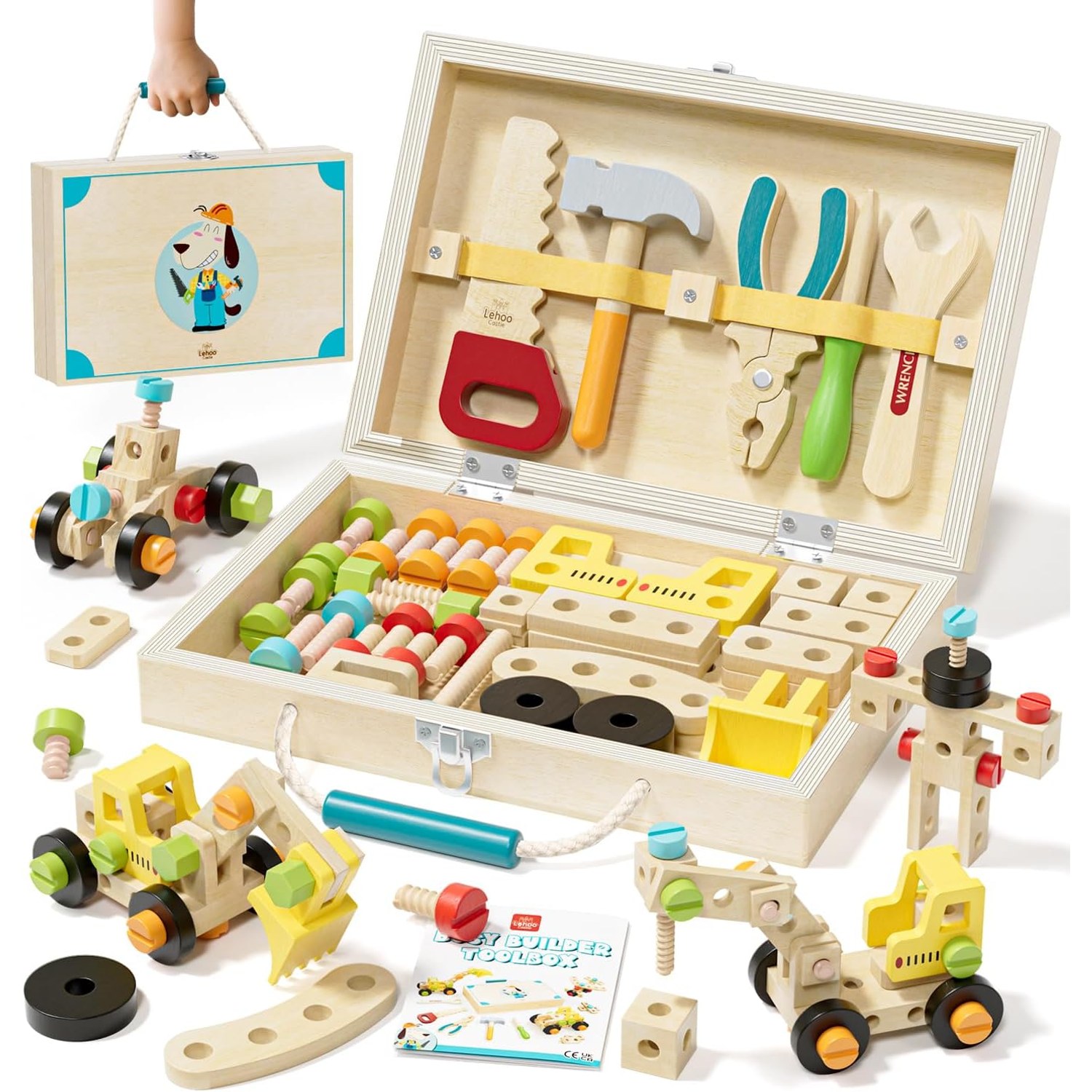
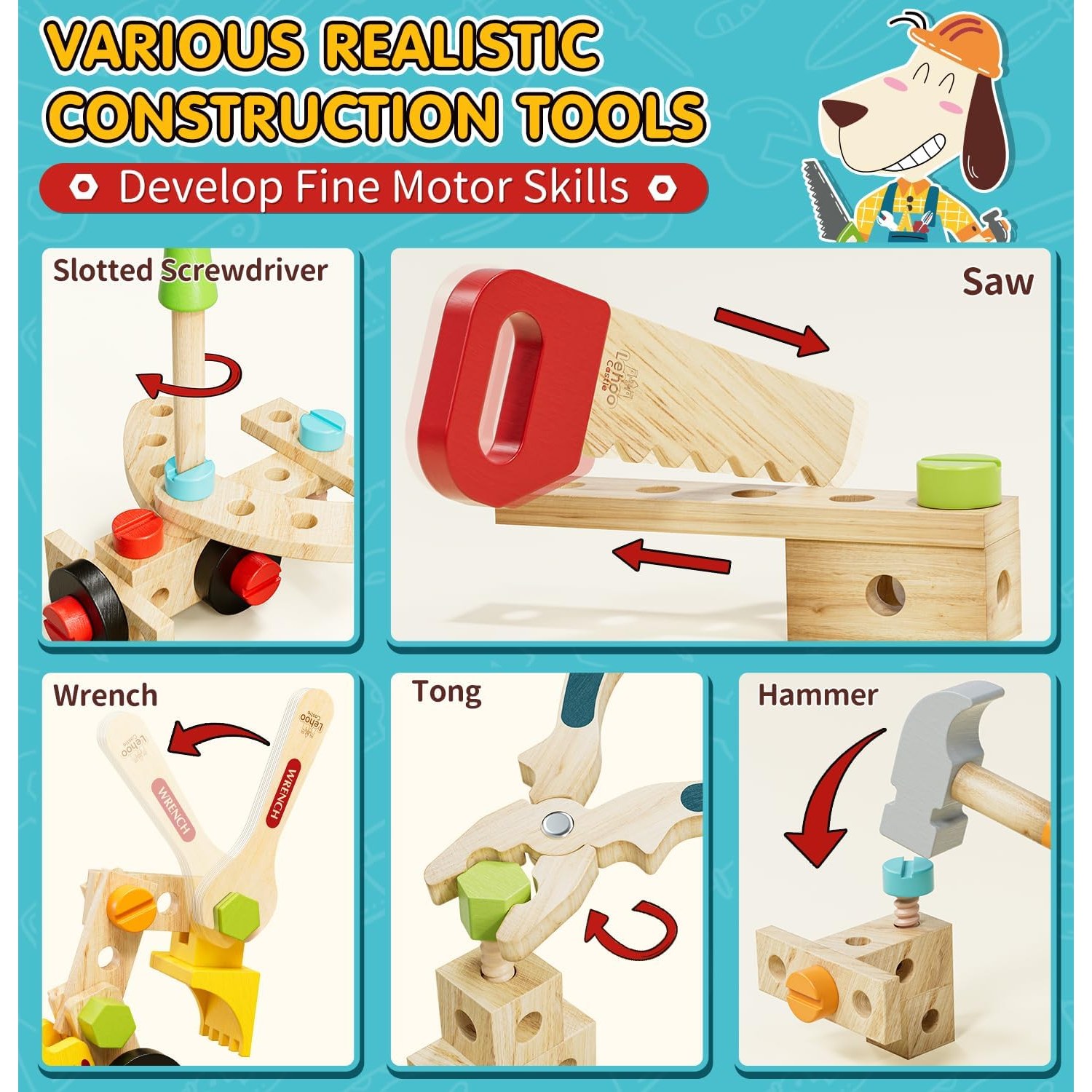
The contents are simple. Wooden tools, including a hammer, screwdriver and saw, plus pieces that join together into shapes and models. Everything lives in a wooden toolbox with a carry handle.
There is nothing electronic in it. The power source is listed as manual, and no batteries are required. That matters more than it sounds. Battery toys do the entertaining for the child, which is why attention drops off once the novelty fades. A manual toy makes the child the source of the action, so the play lasts as long as their interest does.
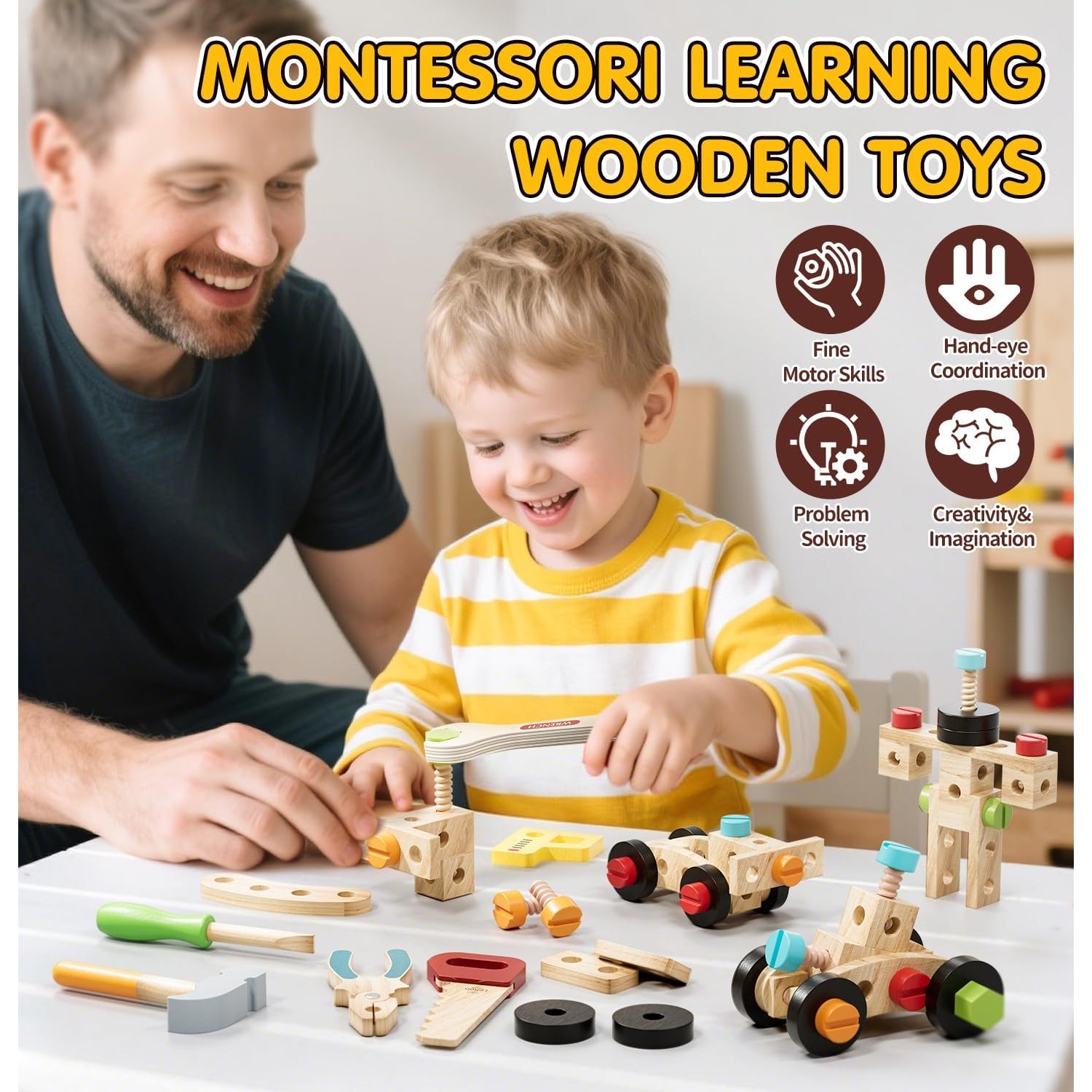
The learning happens inside the repetition. A child lines up the screwdriver, turns it, slips, and tries again. Each attempt is practice at grip, wrist rotation and aim. The listed educational objectives for this wooden toy tool kit are fine motor skills, problem solving, STEM thinking, imagination development and social skills, and you can watch each one show up in a normal play session if you pay attention.
The set measures 28.5 x 21 x 5.8 cm and weighs 680 g. That is a genuinely child-portable size. Most kids in the age range can carry it from the lounge room to the bedroom without help.
Who it suits
The manufacturer recommends ages 36 months to 6 years.
At three, play is mostly physical. Children hammer things, sort pieces by colour, fill the box, empty the box, fill it again. They are not building to a plan. They are getting used to how the pieces behave in their hands, and that stage is worth more than it looks.
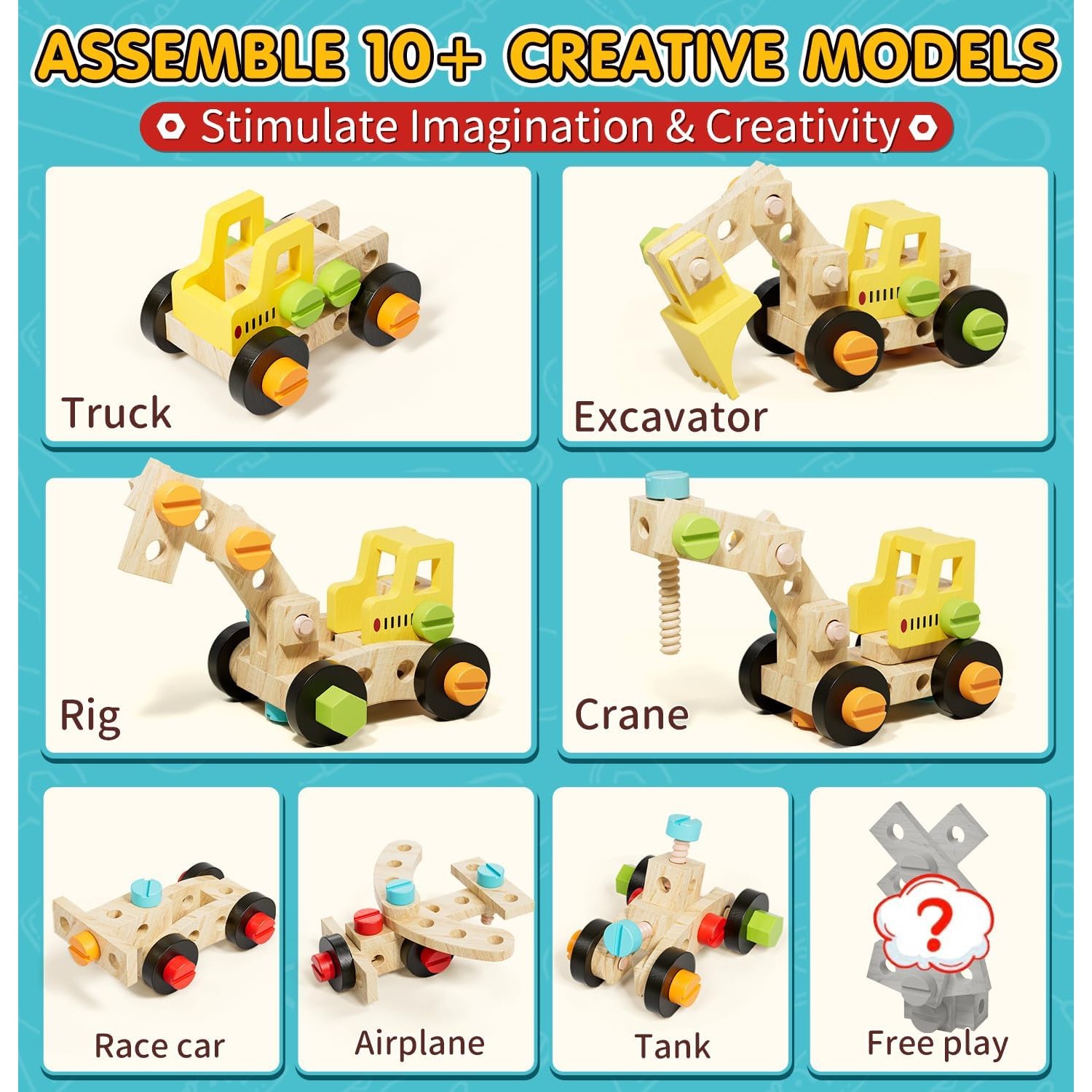
At four and five, something shifts. The child starts saying what they are making before they make it. A pile of parts becomes a truck or a crane, and they will tell you so. This is the sweet spot for this kind of pretend play tool box, because imagination and hand control have caught up with each other.
At six, the play usually gets more social. Children build with a sibling, assign roles, and narrate a whole job from start to finish. Some six year olds have moved on to more complex construction toys by then, so it depends on the kid.
It is listed as a one-player set, though in real households that number is rarely accurate for long.
How to choose between wooden tool sets
A few things separate the sets that get used from the ones that gather dust.
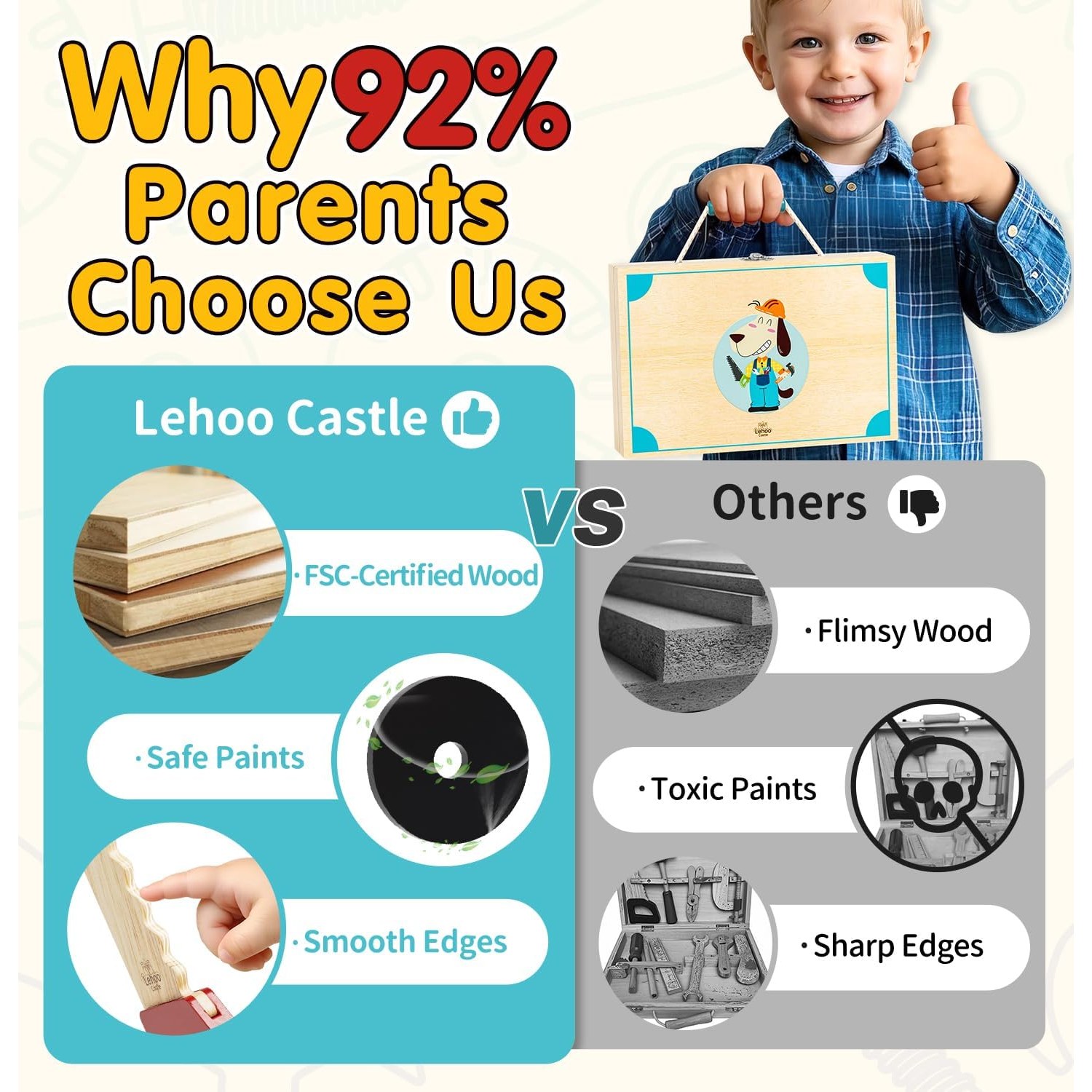
Hand size. Child-size matters. Tools built to adult proportions are frustrating to hold and the child gives up. This set is listed as child-size, which is the right call for the age range.
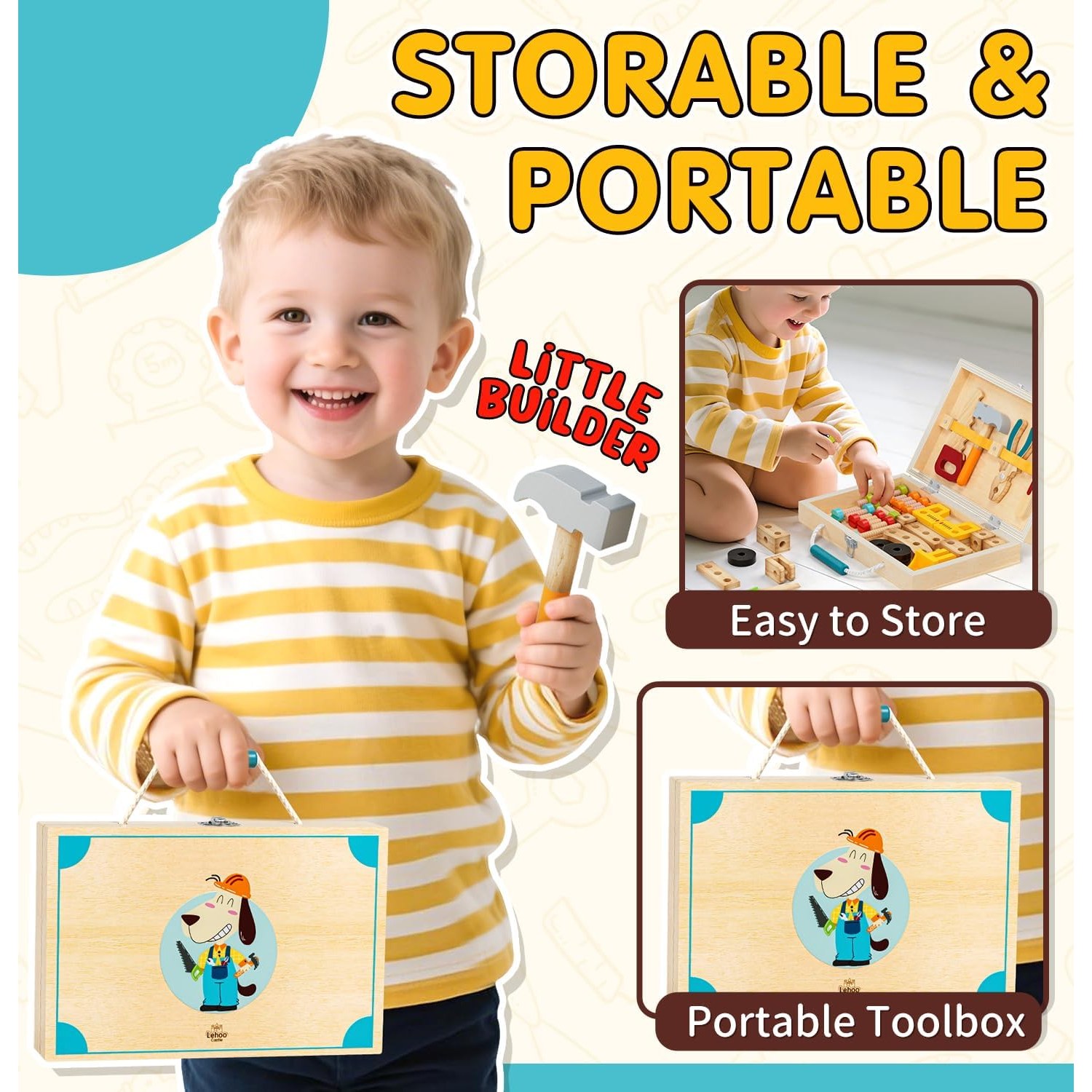
Storage. A tool kit without a box is a tool kit scattered across three rooms by Thursday. A proper toolbox with a handle means the pieces stay together, and it teaches pack-away as part of the game rather than as a chore that happens afterwards. For a lot of parents this is the single most useful feature.
Material feel. Wood has weight and grain. When a child taps something, they feel it. That feedback is part of how they learn to control force, and it is one reason a wooden construction toy tends to feel more satisfying than a light plastic alternative.
Open-ended play. Avoid kits that only build one model. The more ways the pieces can go together, the longer the toy stays interesting. Sets built around generic parts rather than one fixed project age much better.
No screens, no batteries. If you are deliberately reducing electronic toys at home, a manual set fits straight into that plan. There is nothing to charge and nothing to mute.
Making it last
Wood is tough but it has rules.
Keep it dry. Wipe pieces and the box with a barely damp cloth, then dry them right away. Do not soak anything, do not run parts under a tap, and keep everything out of the dishwasher. Water sitting on timber raises the grain and can work loose any glued joints.
Store it somewhere with steady indoor conditions. A cupboard or shelf is fine. A garage, shed or damp laundry is not, because swings in humidity make wood swell and shrink.
Keep it out of long sun exposure. Painted wood fades, and the primary colours are a big part of the appeal.
Check the pieces every so often. Look for cracks, chips or any rough edge that has developed. Retire a damaged piece rather than sanding it yourself, since you cannot be sure what finish sits underneath.
Outdoor play is fine on a dry deck or patio for a short stretch. Just bring the box back inside afterwards rather than leaving it out overnight.
Giving it as a gift
This set presents well as a birthday or Christmas present. The toolbox does most of the work visually, so you do not need much wrapping to make it look like a proper gift.
The practical advantage is that nothing needs charging on the day and there are no batteries to hunt for at 7am. The child can open it and start playing immediately, which is exactly what you want when a room is full of relatives waiting to see a reaction.
It also suits parents who are quietly trying to reduce the amount of plastic and noise in the house. A wooden toy with no speaker is an easy gift to give to someone else's child without stepping on their preferences.
The short version
A kids wooden tool set works because it gives a child a real job in a form they can actually handle. The tools are sized for small hands, the pieces join in more than one way, and everything packs back into a wooden carry box so the set survives past the first fortnight.
This one is made by Lehoo Castle, model TT-004. It is wood, in primary colours, 28.5 x 21 x 5.8 cm and 680 g. No batteries, no assembly, recommended for 36 months to 6 years. The stated learning aims are fine motor skills, problem solving, STEM, imagination and social skills.
If you have a preschooler who follows you around every time you pick up a screwdriver, this is a straightforward answer to that. And if it turns out not to be right once it arrives, let us know and we will sort it out.