
The complete guide
Dinosaur Transport Truck Set Buyer's Guide
The toy that does not stay interesting
Every family has the pile. A dozen small cars, half of them from party bags, scattered across the living room rug. Kids love small vehicles, but a car on its own only does one thing. It rolls. After a week the novelty is gone, and what is left is a tripping hazard and a vacuum cleaner that keeps eating wheels.
The problem is not the cars. It is that there is nothing for them to do and nowhere for them to go. A dinosaur transport truck set fixes that by adding a destination, a vehicle to carry the fleet, and a story to hang it all on. Suddenly the cars are not twelve separate toys. They are cargo, and cargo needs loading, hauling, unloading and racing.
What this set actually is
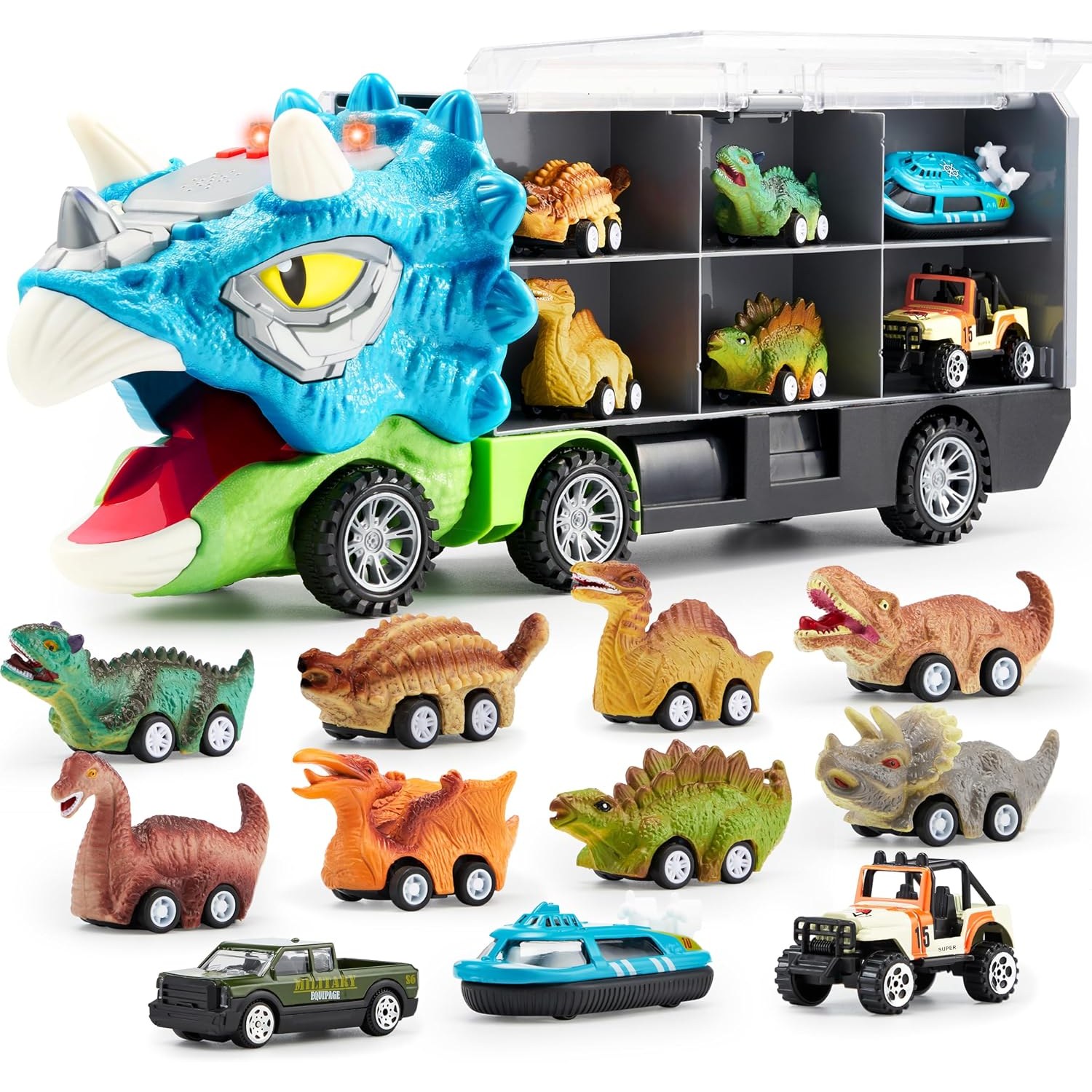
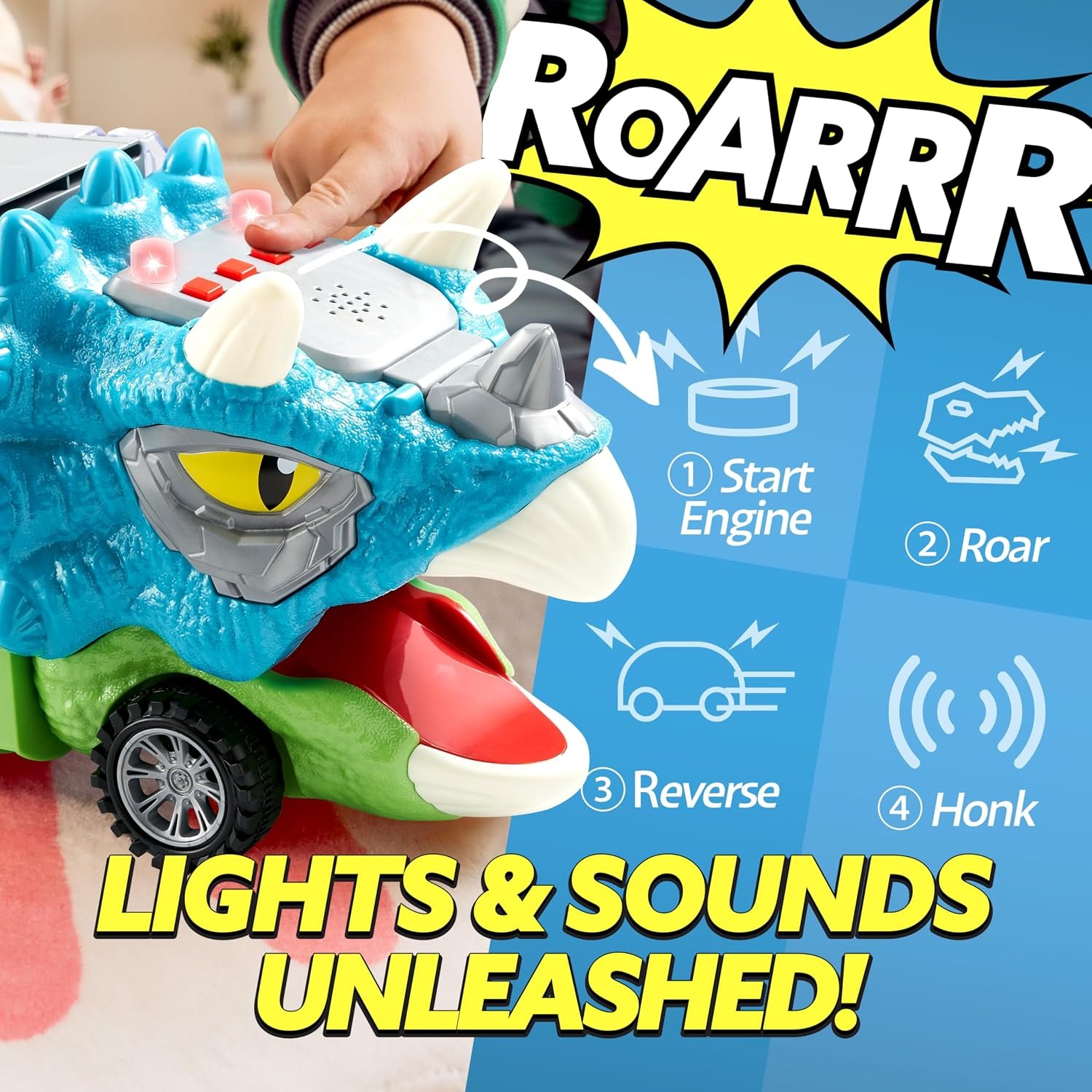
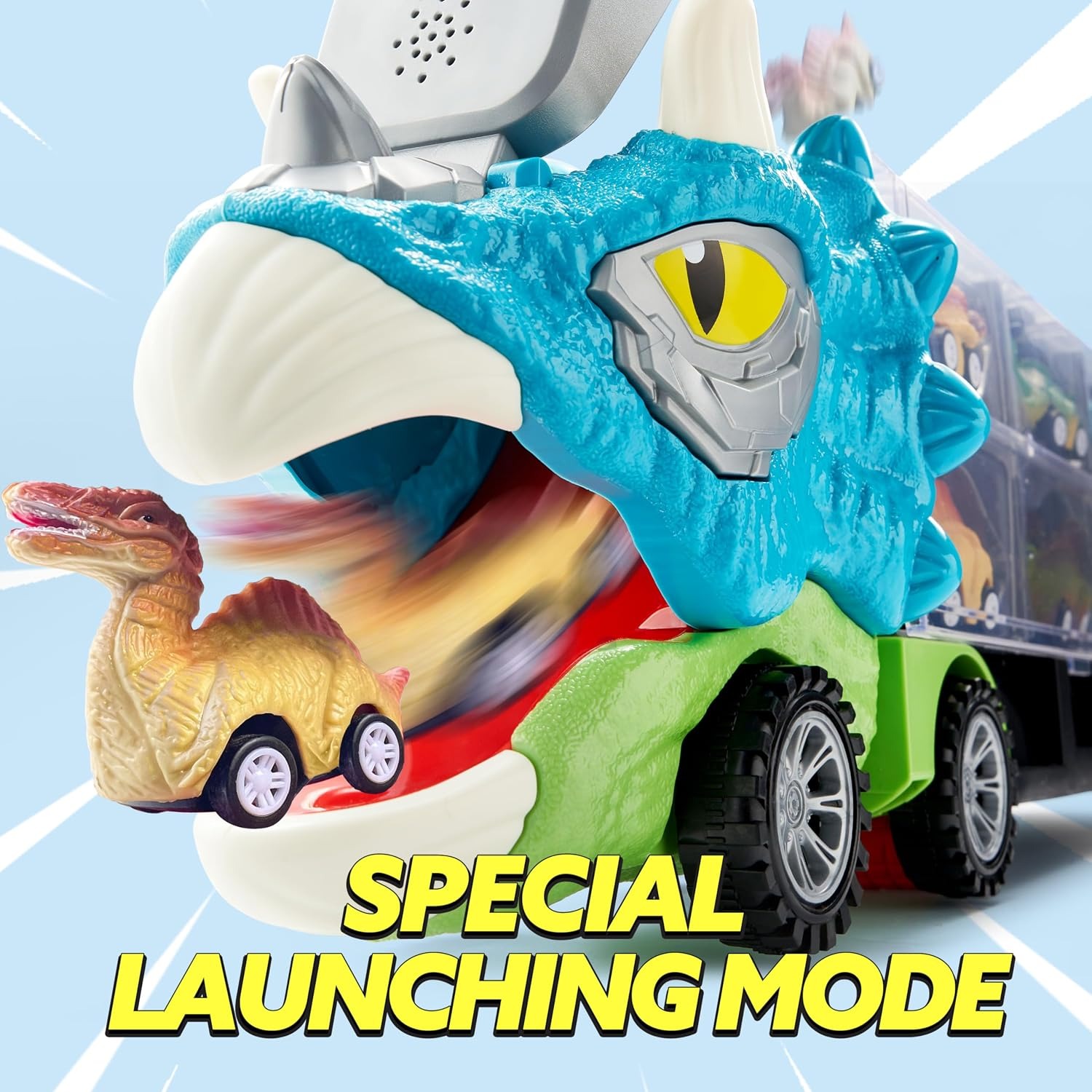
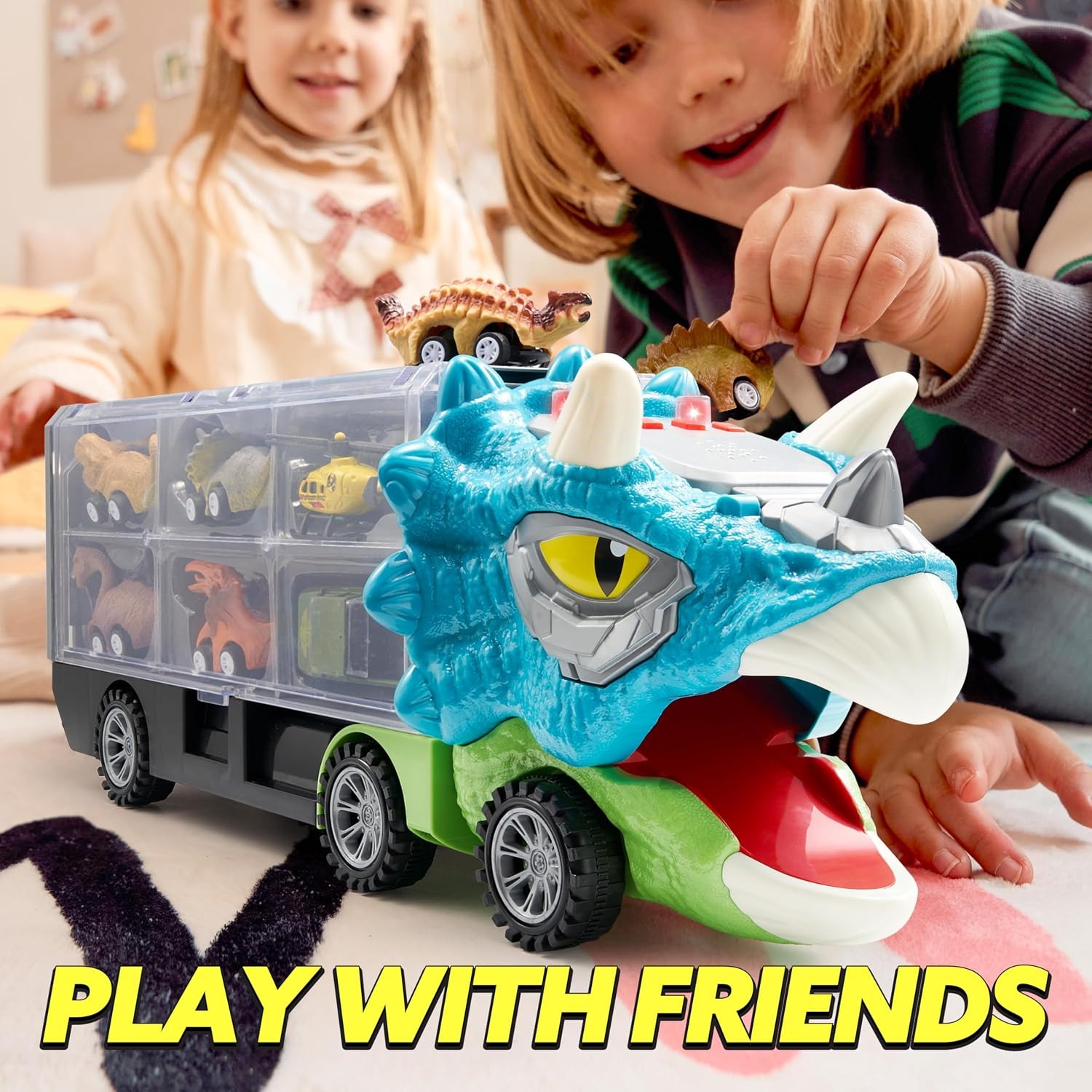
At the centre is a large carrier truck styled as a Triceratops, 44 cm long and finished in red. The head flips open and the small vehicles slide in and out of the body. There is a sound button that triggers seven different noises, including an engine starting, a reversing sound, dinosaur roars, a horn and an emergency siren, with lights playing alongside.
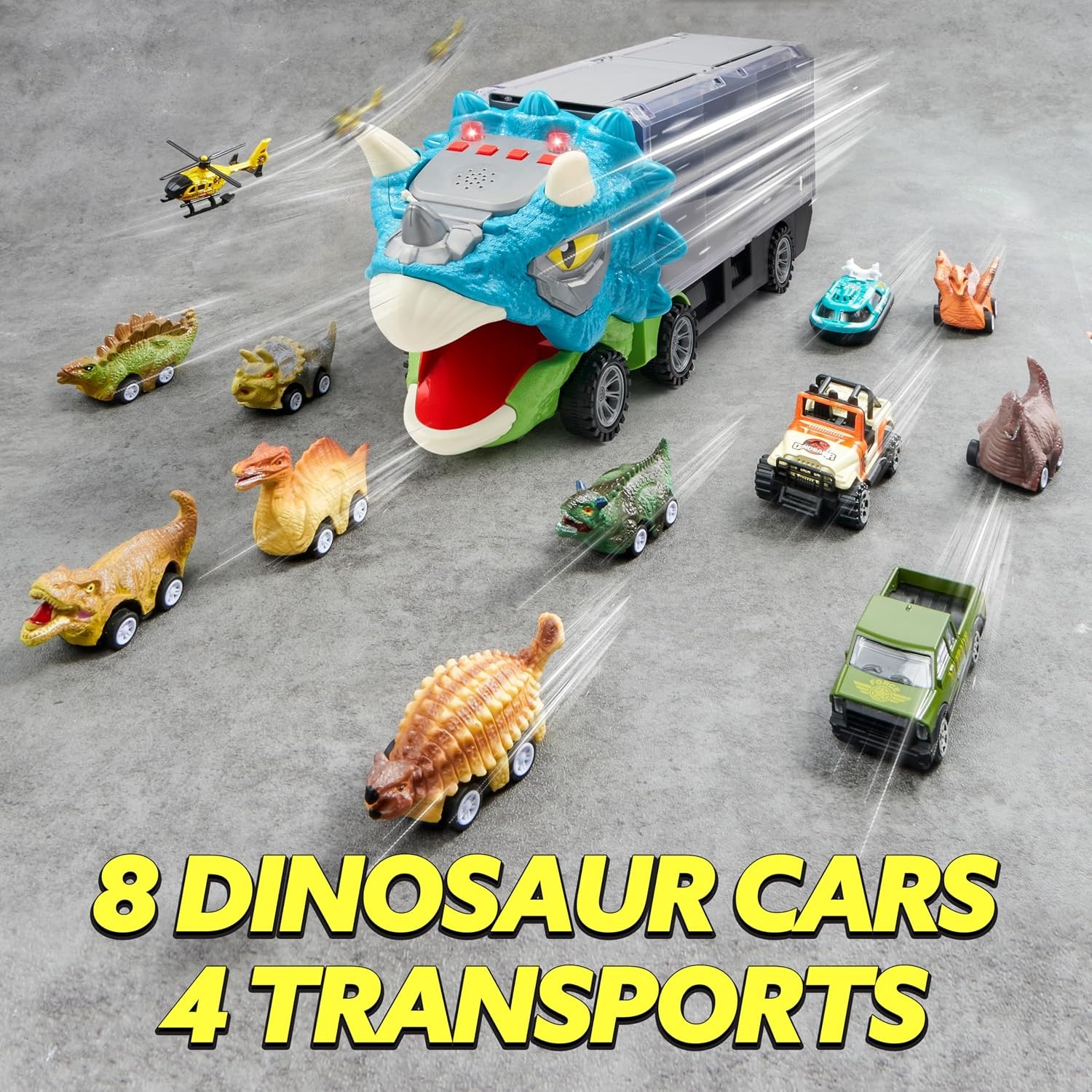
Inside the truck live twelve smaller vehicles. Eight are pull back dinosaur cars, three are die-cast dinosaur vehicles with some heft to them, and one is a helicopter. Add the truck itself and you have thirteen pieces, which is where the 13 in 1 name comes from.
The whole thing weighs 1.15 kg and needs no assembly. It is made from plastic. The manufacturer recommends it for ages 3 and up.
How pull back cars work, and why kids love them
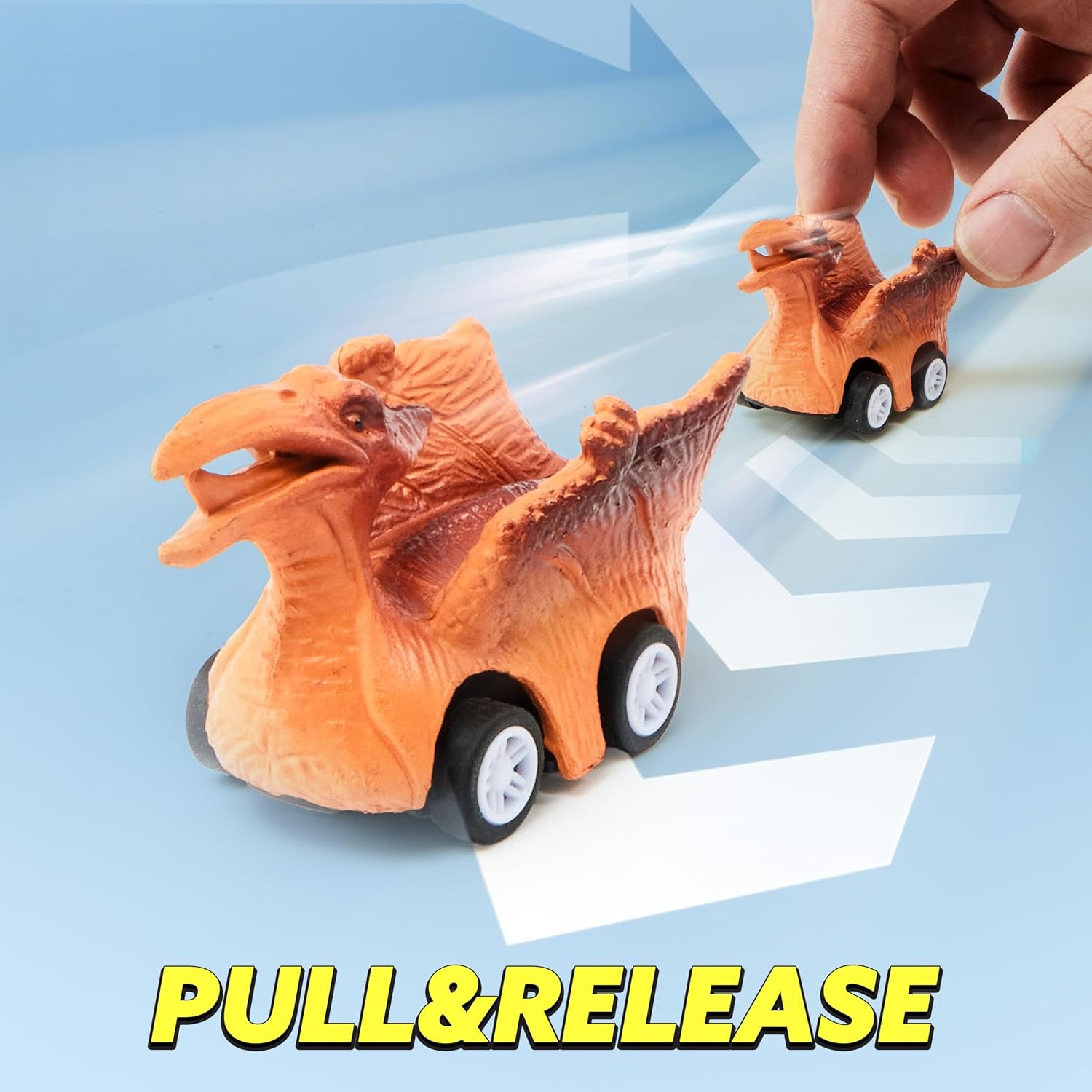
If you have not handled one in a while, pull back cars are simple mechanical toys. There is a coiled spring inside connected to the rear axle. Drag the car backwards across a hard surface and you wind that spring. Let go and it unwinds, driving the wheels forward on its own.
No batteries, no charging, nothing to forget. For a three year old it is a small piece of magic that they control completely, and that control is a big part of the appeal. They learn fast that a longer pull means a longer run, which is about as clear a cause-and-effect lesson as you will find in a toy.
The catch is surface. The best pull back cars for kids need something hard and smooth to work properly. Floorboards, tiles and laminate are ideal. A long hallway is better than a living room because it gives the cars room to actually travel. Thick carpet will eat most of the energy before the car gets anywhere, which tends to disappoint. If your house is fully carpeted, a large chopping board or a flattened cardboard box makes a serviceable race track.
Who this suits
The sweet spot is roughly three to seven. At three, a child is mostly interested in the truck itself, the button, the lights and the satisfaction of putting things in and taking them out. That is a legitimate play pattern and it will carry them for months.
By five or six, the play gets more elaborate. The truck becomes part of a story. Vehicles get names, there are rescues and crashes and deliveries, and the helicopter gets a job. This is where a set with thirteen pieces earns its keep, because there is enough variety to build a scenario rather than just a single action.
It also works well for a child who already has a car collection. The carrier does not care whose cars go inside it. Plenty of kids load their existing fleet in alongside the dinosaur cars and treat the truck as the home base for everything. If you are hunting the best car carrier truck toy for a preschooler who already owns plenty of vehicles, that compatibility matters more than the number of pieces included.
Two children can share it comfortably. With twelve small vehicles there is enough to split without a fight, although who gets to press the sound button remains a point of negotiation in most households.
How to choose between sets like this
A few things separate a toy truck that lasts from one that does not.
The first is whether the storage actually works. A carrier truck that only holds four cars leaves eight on the floor, which defeats the purpose. This one holds all twelve, which means cleanup is a single action instead of a hunt.
The second is build quality. Plastic that flexes and cracks on the first drop is a waste of money, because a floor toy at this age will be dropped, stood on and thrown at least once. Look for a mention of crash-resistant plastic. The maker also states approval to ASTM F963, a United States toy standard that covers things like small parts and sharp edges.
The third is sound. Some parents actively want a loud toy and some will do anything to avoid one. A button-triggered sound is the middle ground. The truck sits silent until a child chooses to press it, unlike motion-activated toys that fire off every time someone walks past. If you need absolute quiet for a flight or a long drive, taking the batteries out is a reliable fallback.
The fourth is whether it needs assembly. On a birthday morning, a toy that needs a screwdriver and twenty minutes of adult attention is a problem. This one comes ready.
Getting the most out of it
Set up a run before you hand it over. Clear a stretch of hard floor, open the truck, and show how the cars load and launch. Kids pick it up in seconds but a first demonstration frames what the toy is for, and it usually buys you a longer first play session.
Make loading part of pack-up from day one. If the rule is that the cars sleep in the truck, you avoid the slow scattering that kills most vehicle sets. It takes about thirty seconds and it is the single habit that determines whether all thirteen pieces still exist in six months.
Keep an eye on the pull back wheels. Hair and carpet lint wrap around the axles and the car stops running properly. Turn it over, clear the wheels with fingers or tweezers, and the action comes straight back. People throw out perfectly good pull back cars for this reason every day.
Care and keeping
Cleaning is simple. A slightly damp cloth over the truck and vehicles, then dry them off. Keep water well away from the sound and light section, since electronics and moisture do not mix. No dishwasher, no washing machine, no microwave, no matter how convincing the argument sounds.
Store it indoors. Long periods in direct sun will fade plastic over time, and heat in a parked car is worse. Hard outdoor surfaces like a smooth patio are fine for a play session, but sand and dirt get into pull back mechanisms and are difficult to remove.
If the truck's sound starts getting faint or the lights dim, the batteries are usually the culprit before anything else is.
The short version
This is a 13-piece dinosaur transport truck set built around one good idea, that a carrier truck gives small vehicles a purpose and a home. You get a 44 cm Triceratops-themed truck with seven sounds and lights, eight pull back dinosaur cars, three die-cast dinosaur vehicles and a helicopter, all of which store inside the truck.
It is made from plastic, weighs 1.15 kg and needs no assembly. The recommended age is 3 and up.
If you want a floor toy that a young child can play with the moment the box opens, and that packs itself away in one move at the end of the day, this does the job well. If your floors are entirely carpeted, plan a hard surface for the pull back cars and you will get far more out of it.