
The complete guide
The Buyer's Guide to Insect Figures and Toy Bug Sets
Why a box of plastic bugs still works
Most children go through a stage where insects are the most interesting thing on the planet. They crouch over an ant trail. They want to know why a beetle shines. They are half-scared of spiders and completely fascinated by them at the same time.
The trouble is that real insects do not cooperate. You cannot keep a ladybird on the kitchen table for an hour of study. You cannot hand a cockroach to a four-year-old and talk about segments and legs. And you certainly cannot bring one into a classroom for show and tell.
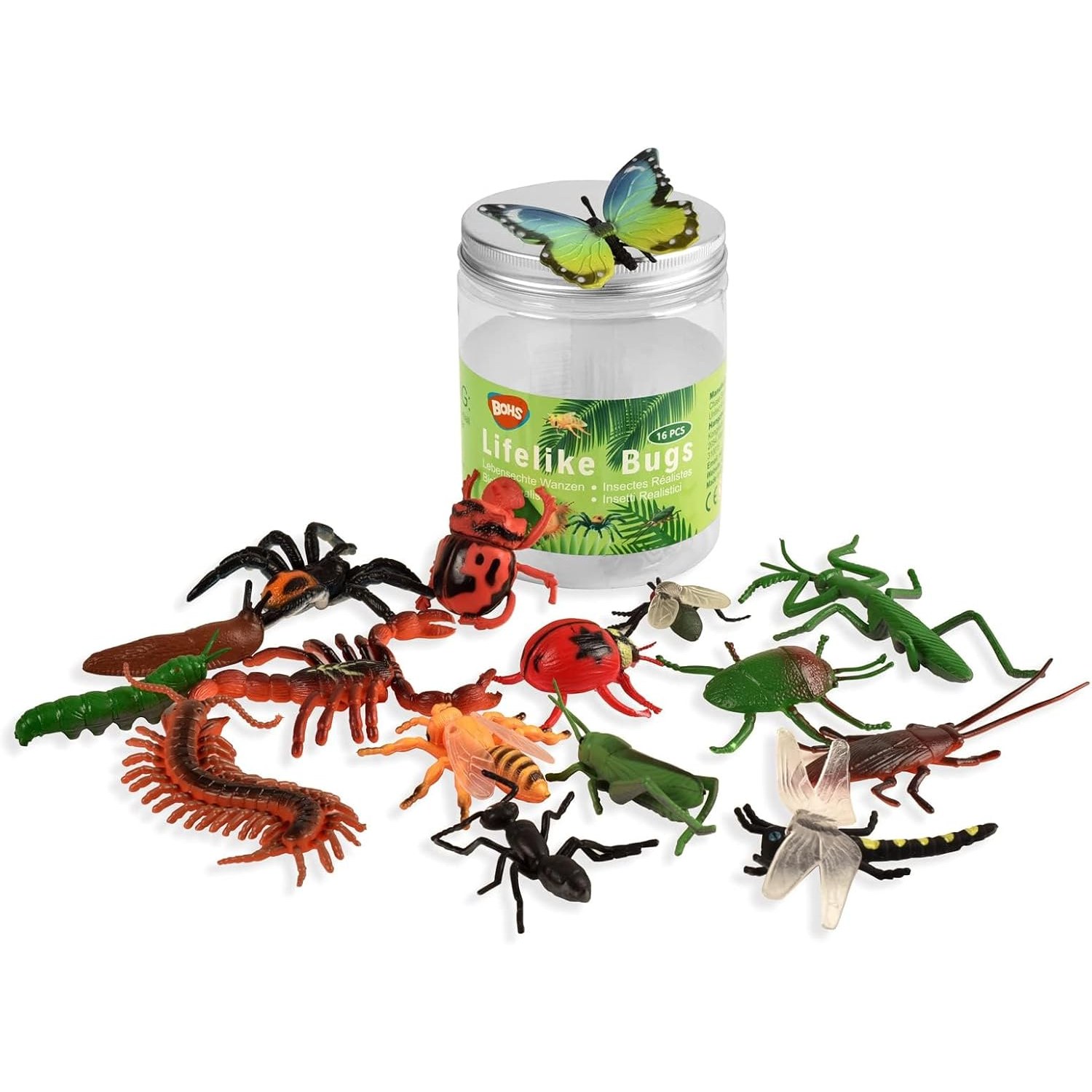
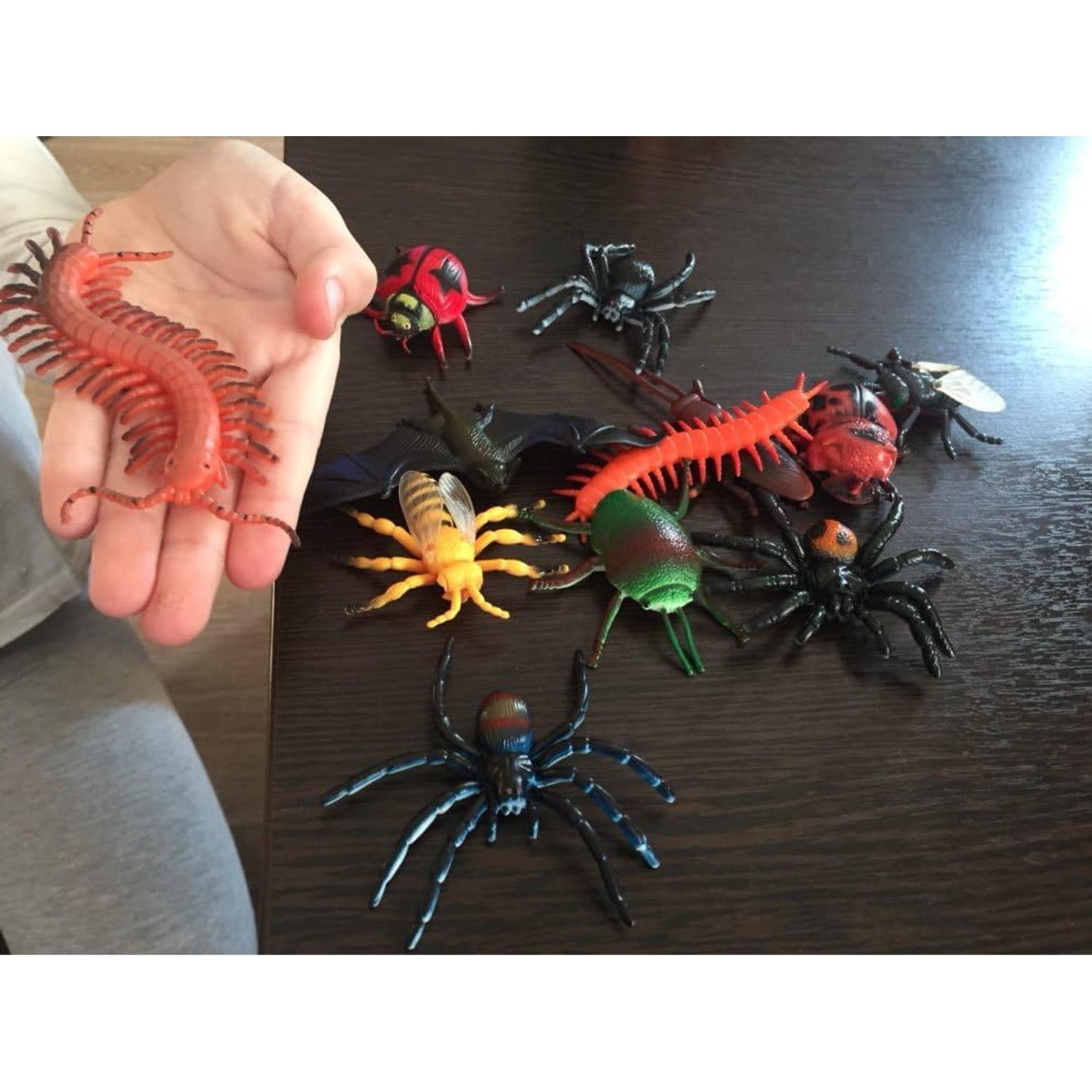
That is the gap a toy bug set fills. Sixteen figures, each between 5 and 7.5 cm, give a child something to hold while the curiosity is hot. They can be counted, sorted, hidden, lined up, buried in sand and dug out again. The bug is no longer a fleeting thing that scuttles away. It stays put and waits to be looked at properly.
How this set is built
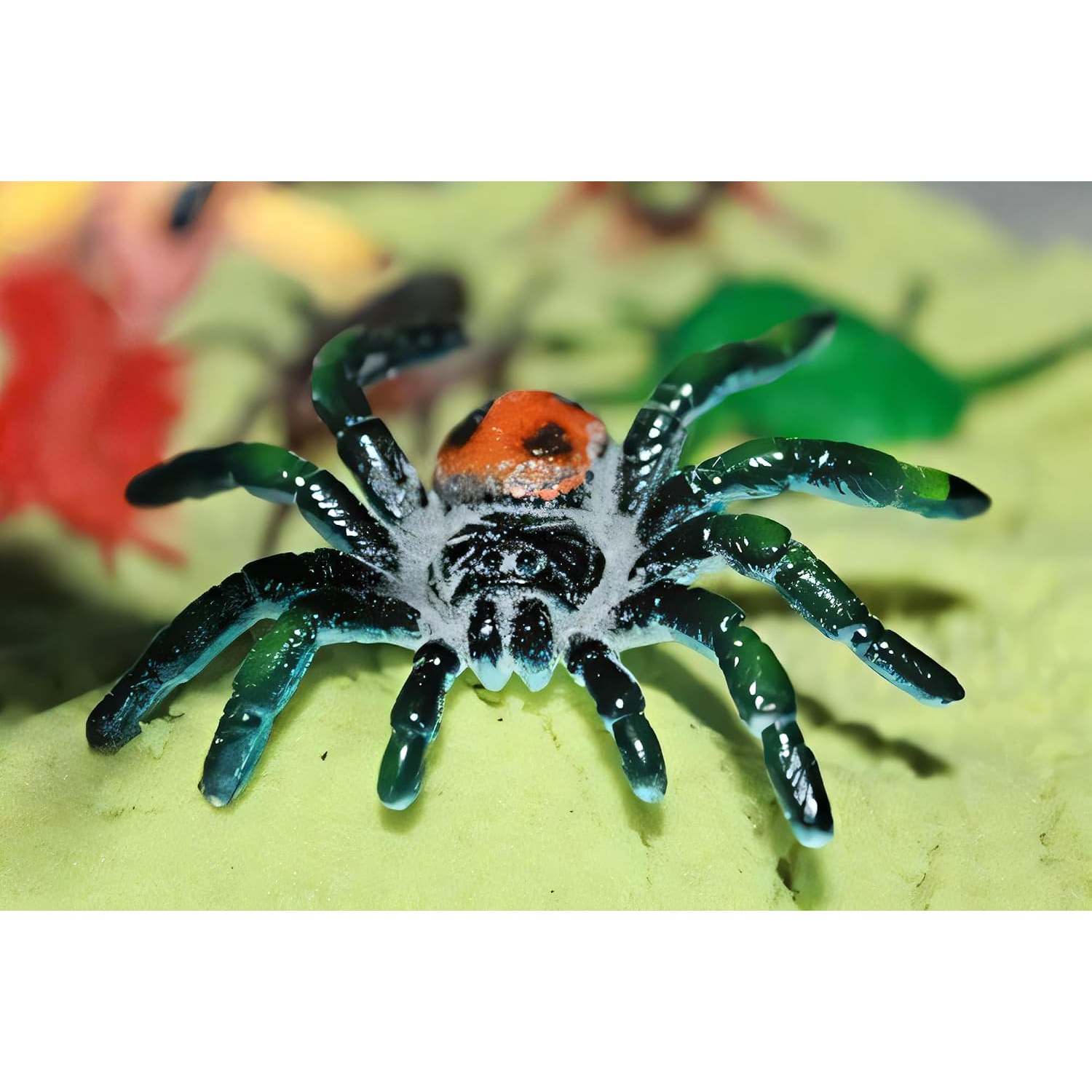
There is nothing complicated going on here, and that is the point. The figures are moulded plastic with painted detail. There are no batteries, no switches, no app and no assembly. Open the pack, tip them out, and play begins.
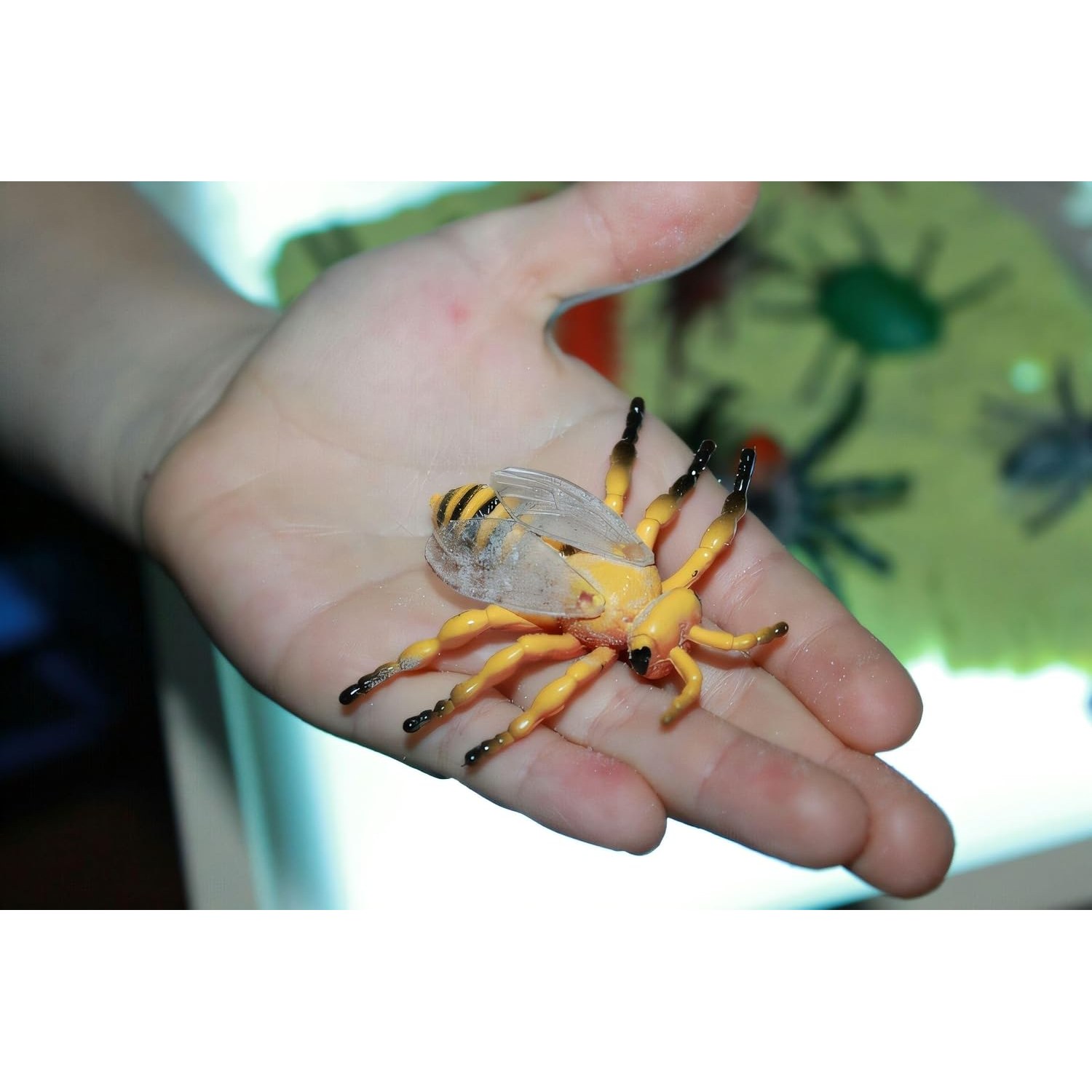
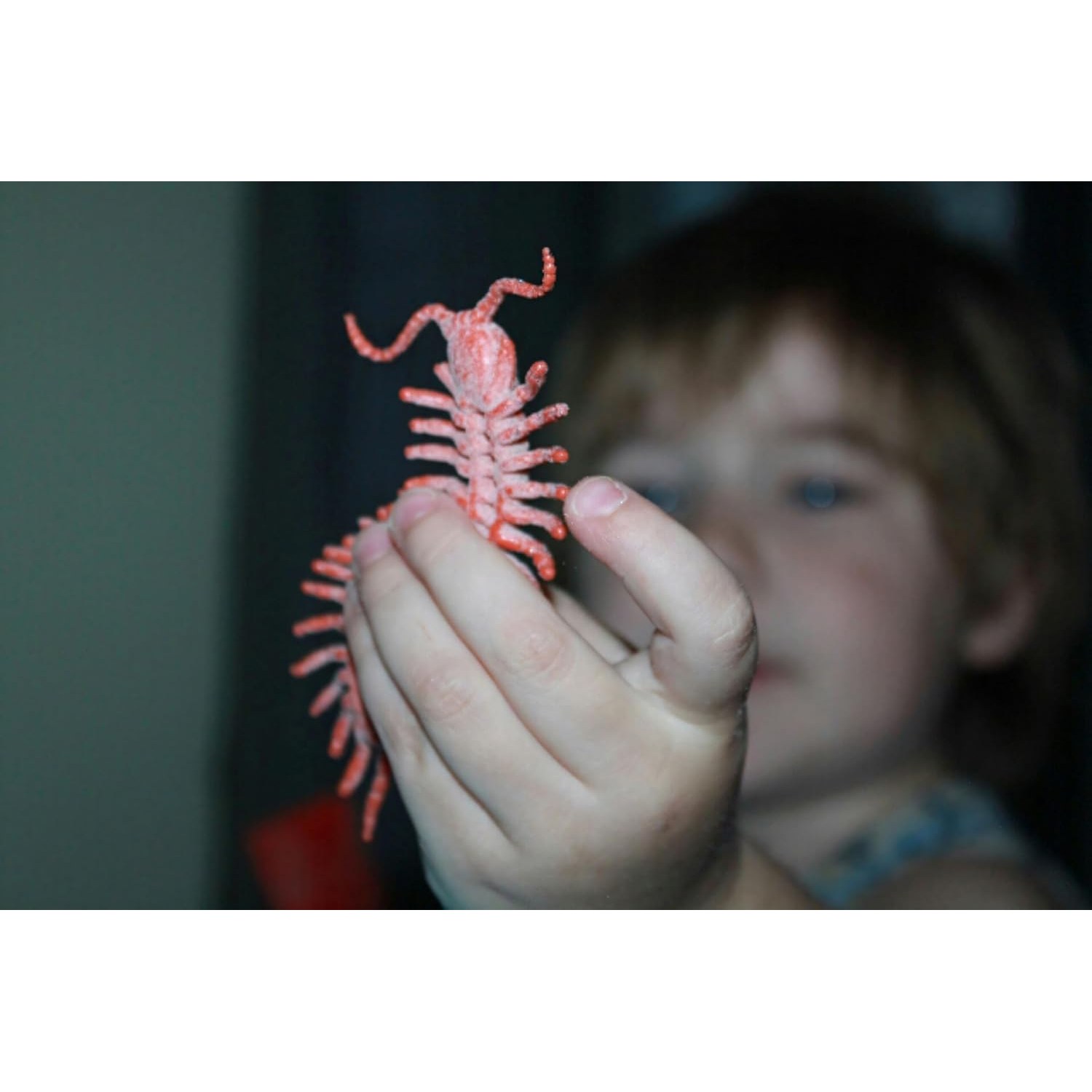
The size range matters more than it sounds. At 5 to 7.5 cm, each figure is big enough for small fingers to grip firmly and big enough that the moulded detail actually reads as a specific insect rather than a generic blob. At the same time, they are small enough to scatter across a tray, drop into a sensory bin or sit on a shelf without taking over the room.
The pack itself is slim, listed at 24 x 16 x 1 cm, which is handy when you are posting a gift or tucking something into a bag.
What children actually do with them
The honest answer is "a lot of different things", and that variety is what makes plastic bug figures better value than a single-function toy.
Sorting comes first for most young children. Which ones have wings? Which ones have lots of legs? Which ones are shiny and which are dull? That simple grouping work builds early classification skills without feeling like a lesson.
Then there is small world play. A tray of soil, a few twigs, some torn paper for leaves, and a child has built a habitat. The bugs move through it, hunt each other, hide under bark and come out again. This is where imagination does the heavy lifting and the toy just gets out of the way.
Sensory bins are a reliable third use. Rice, dried lentils, kinetic sand or plain water all work. Bury the figures, hand over a scoop, and you have twenty quiet minutes. Bug sorting toys like these hold up well to repeated digging because there is no electronics inside to worry about.
Older children often shift towards projects. Species recognition, labelling, drawing and simple reports. Insect models for school are useful precisely because they stay still and can be passed around a group.
And finally, there is the bit most parents discover by accident. These make very good prank toys. A spider on a pillow, a cockroach by the kettle. Plenty of households get as much mileage out of that as out of the educational side.
Who this suits
The recommended age starts at 36 months. That is a sensible line. Below three, children are still exploring with their mouths, and small plastic figures are not appropriate for that stage without close adult supervision.
From three upwards, the set opens up gradually. A three-year-old will hold, name and hide them. A five-year-old will sort, count and build scenes. An eight-year-old will use them for a project or arrange a prank. The same box gets used differently as a child grows, which is more than you can say for a lot of toys.
Teachers and home educators are the other obvious group. A set of realistic insect toys sitting in a science corner invites handling in a way a poster never will. Party planners use them too, since 16 pieces spread neatly across loot bags or a cake board.
How to choose a bug set
A few things separate a set that gets played with from one that ends up in the donation bag.
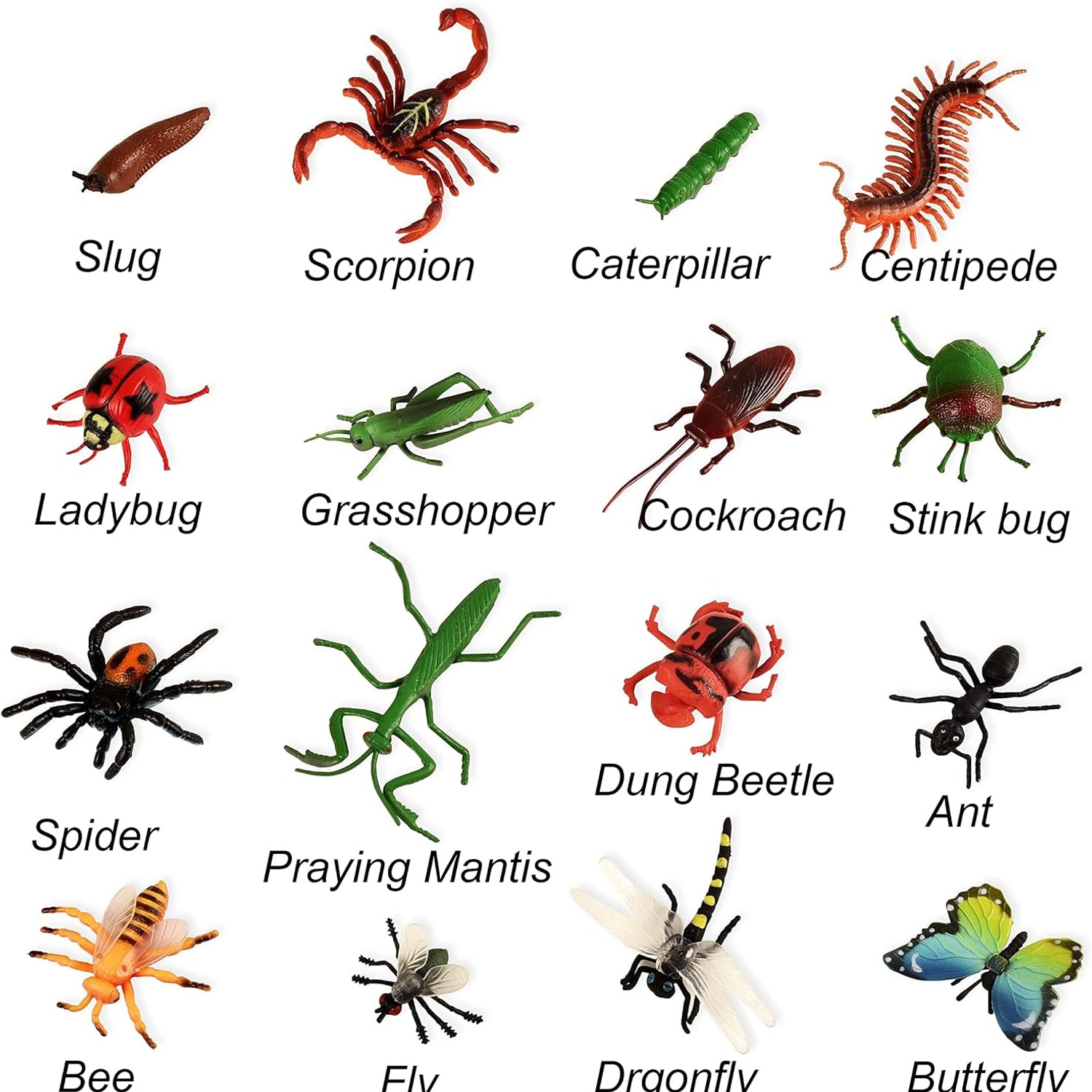
Detail quality is the first. A bug that is recognisably a particular insect gives a child something to learn. A vaguely bug-shaped lump does not. Look for moulded texture, defined legs and painted markings.
Size is the second. Anything much under 4 cm becomes fiddly and easy to lose. Anything much over 10 cm stops fitting in bins and trays. The 5 to 7.5 cm band is a good middle ground for mixed ages.
Variety is the third. A set that repeats the same beetle four times is less interesting than a set with different species. Sorting and comparison games depend on having genuine differences to work with.
Then think about what else you want from the box. If you plan to use the figures for cake decorating or party favours, plain plastic with no electronics is the only practical option, since you can wash them and you do not care if one goes missing.
Looking after them
Plastic figures are forgiving, but a little care keeps them looking right.
Wipe them with a damp cloth and a small amount of mild soap after messy play. Rinse briefly, then dry fully before they go back in the box. Trapped moisture in a sealed container is the main cause of that stale smell toy bins develop.
Skip the dishwasher. The combination of heat and strong detergent is hard on both the plastic and the painted detail. For the same reason, keep the set out of hot cars, off radiators and away from long stretches of direct sun. Softened or warped plastic does not recover.
Storage is simple. A lidded box, a craft tray with compartments or a zip bag all work. Compartment trays have a side benefit, since a child can see at a glance when one bug is missing, and missing bugs always turn up under the sofa eventually.
Getting more out of the set
A magnifying glass turns the whole thing up a level. Children look harder at a model under magnification than they do with the naked eye, and they start noticing things like how many body sections an insect has.
A simple identification chart is the other low-cost addition. Print one, tape it to the wall near the play area, and let children match figure to picture. That matching habit carries straight over to the garden, which is really the point of nature study toys.
If you want a game rather than free play, hide the figures around a room and call it a bug hunt. Set a count so everyone knows when it is finished. Sixteen is a good number for that, large enough to take a while and small enough to finish.
The short version
This is a 16-piece plastic insect set, sized between 5 and 7.5 cm, with lifelike moulded detail and no batteries or assembly needed. It is recommended for ages three and up.
It covers sensory bins, sorting trays, small world play, school biology work, party bags, cake decorating and the odd prank. For one slim box, that is a lot of ground.
If your child is in the bug-obsessed phase, or you need a science corner refresh that will not stop working when the batteries die, this is a straightforward pick. And if it does not suit once it arrives, get in touch and we will sort it out.