
The complete guide
The Buyer's Guide to Kids Tool Sets: Choosing a Pretend Play Tool Kit That Lasts
The problem with most toy tool sets
Walk down any toy aisle and you will find a dozen plastic tool kits that look almost identical. Buy one and the pattern is usually the same. A child opens it, bangs the hammer on the floor for ten minutes, and the whole lot ends up scattered under the bed by Thursday.
The reason is not that children dislike tools. It is that a bag of loose tools is not a game. There is no role to step into and nothing to finish, so the play has nowhere to go. A child needs a reason to pick up the spanner, and once the novelty of the object wears off, that reason disappears.
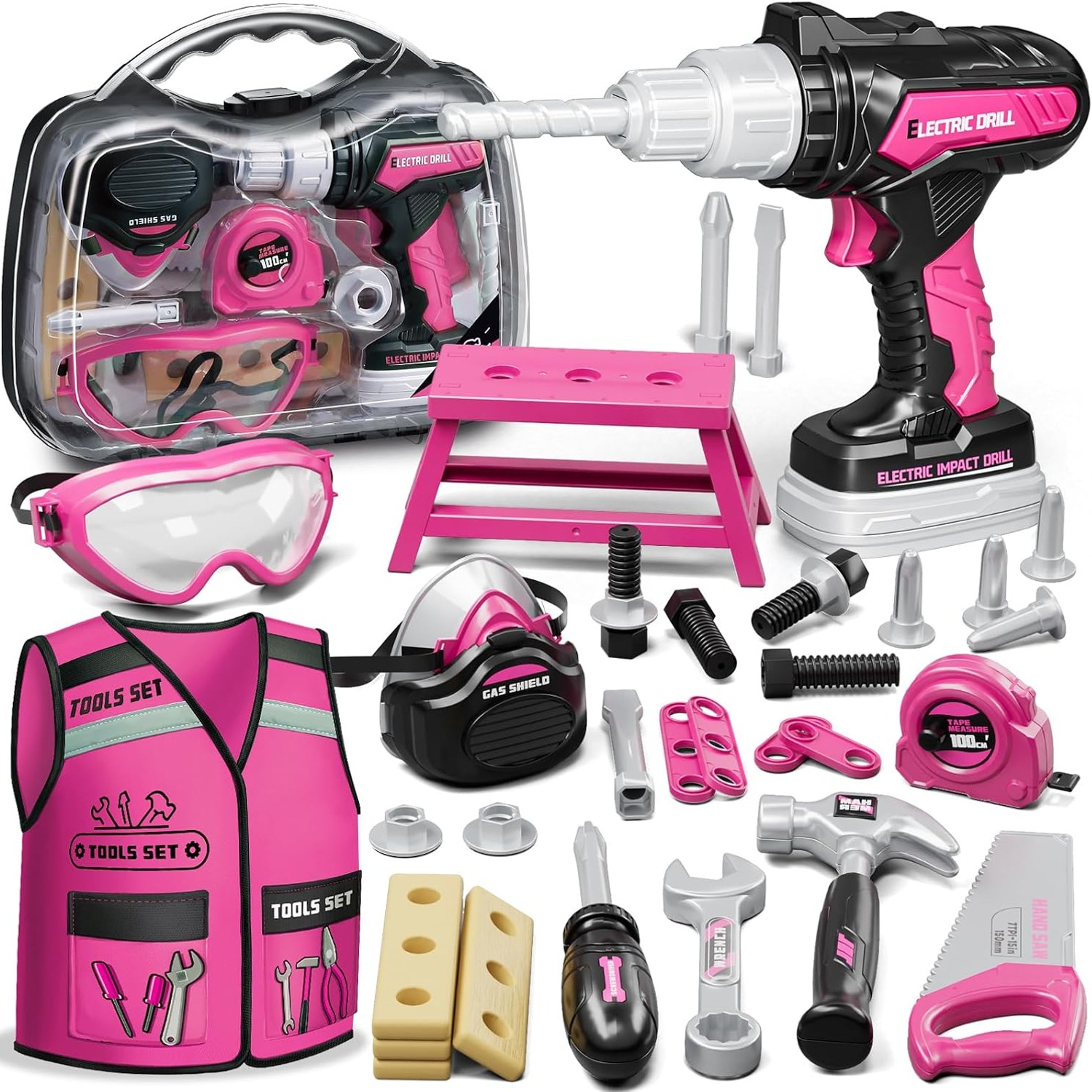
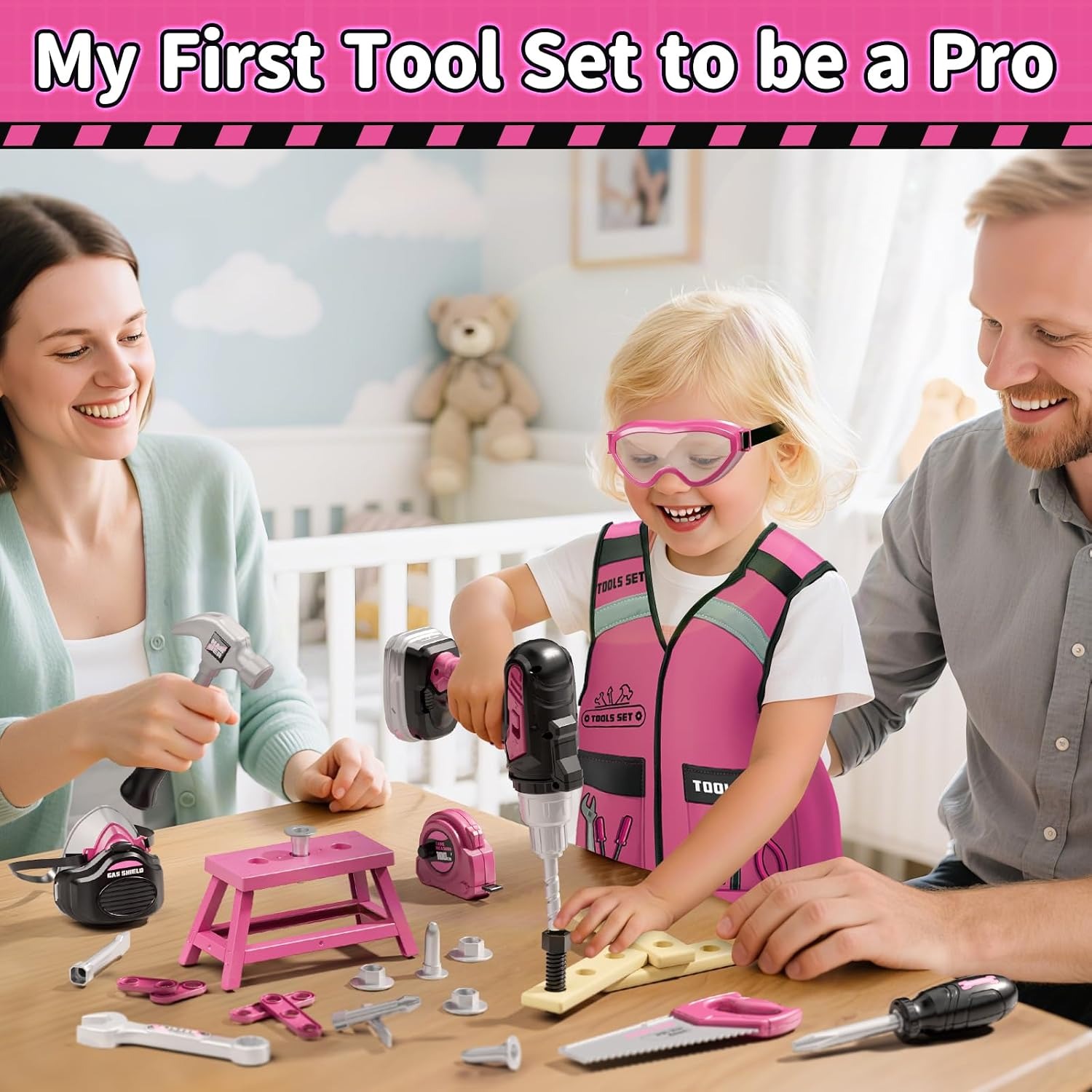
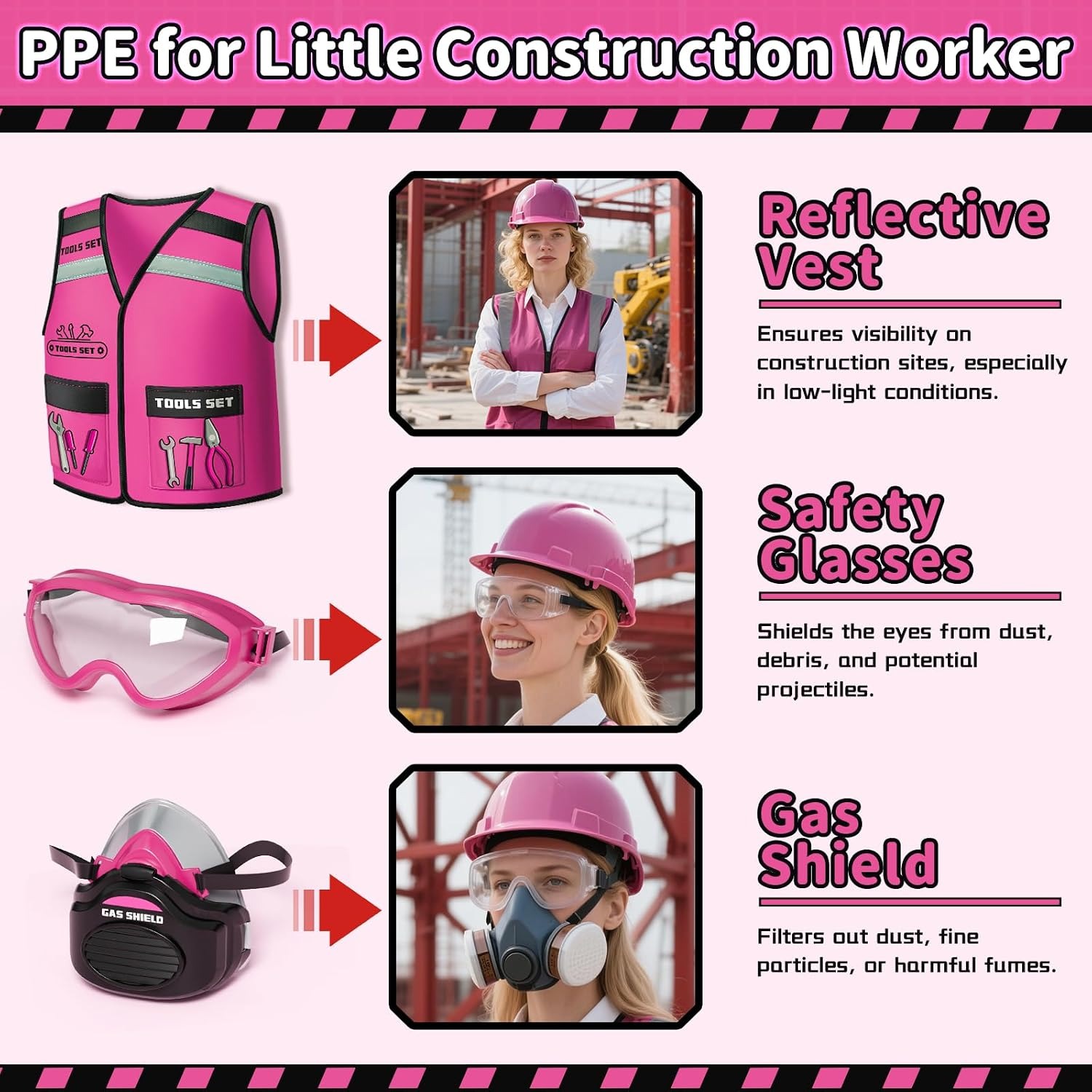
This is where a kids tool box with vest works differently. The vest, the goggles and the face mask give a child something to become before they pick anything up. That small ritual of getting dressed for the job changes the whole shape of the play session. It stops being "here is a plastic hammer" and starts being "I am the person who fixes things."
How a pretend play tool kit actually works
Pretend play sounds soft, but there is real work happening underneath. When a child decides the chair leg is broken and chooses a tool to fix it, they are doing several things at once. They are setting a goal, picking a method, holding a story in their head and using their hands to carry it out.
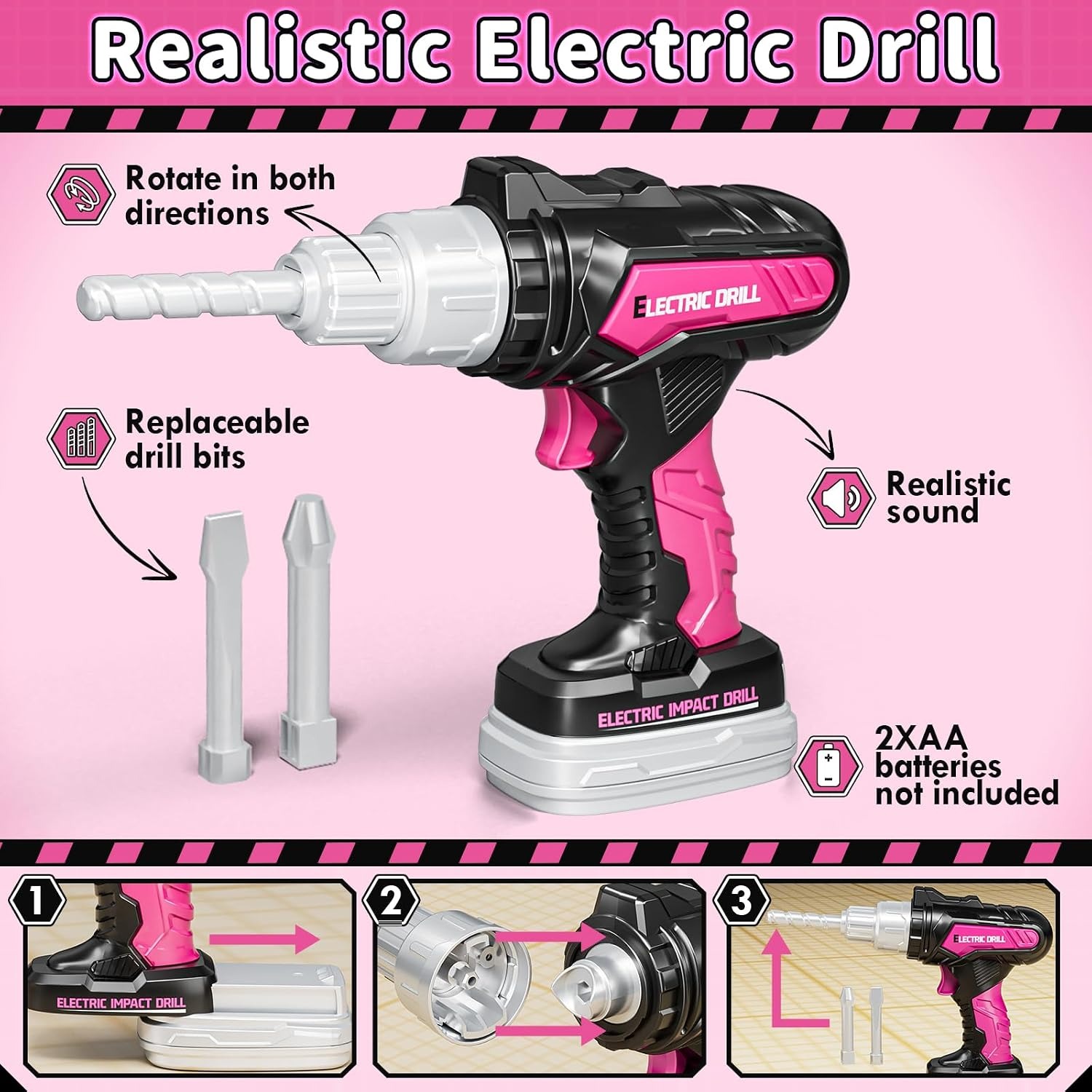
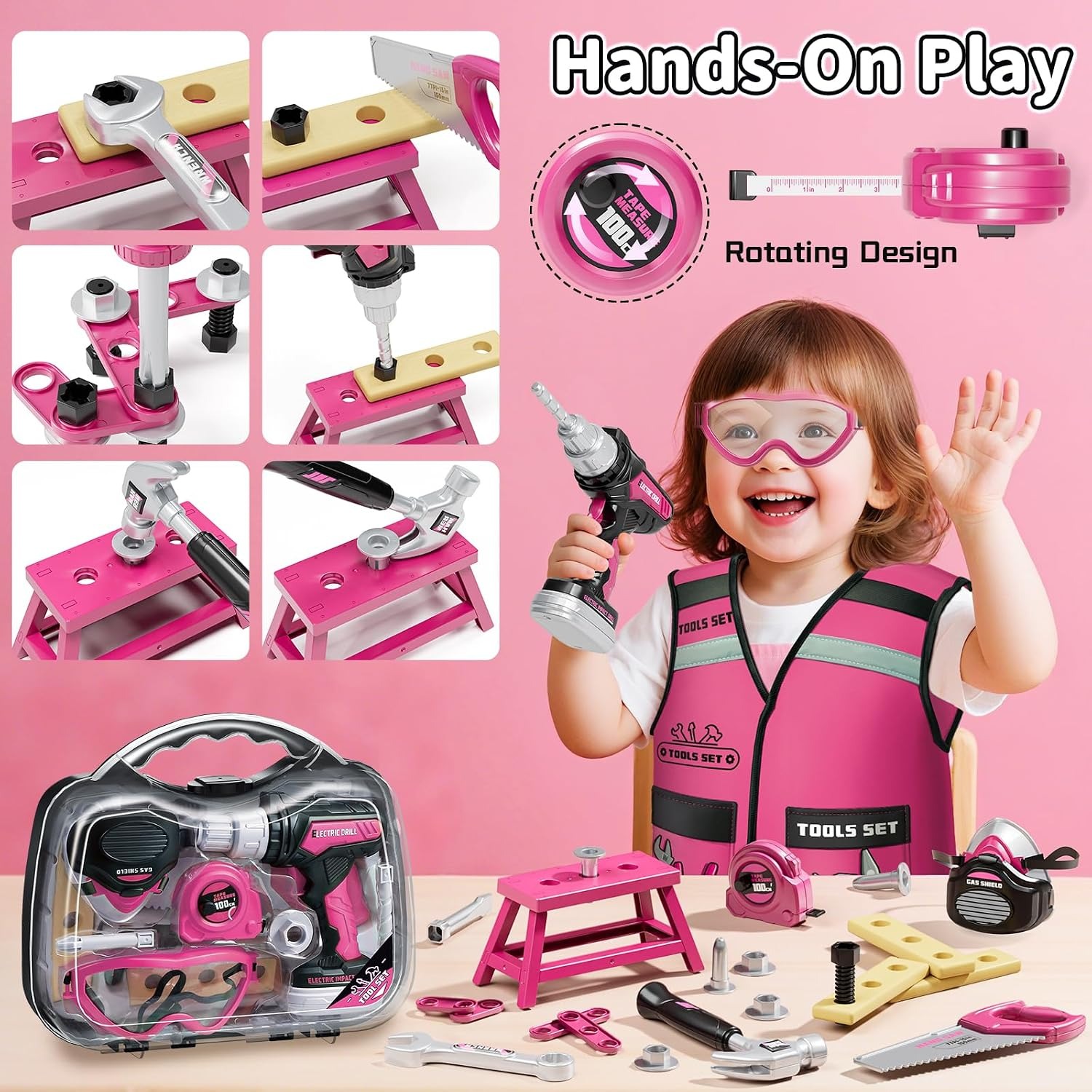
The physical side is the easiest to see. Turning a bolt, lining up a drill bit and fitting two pieces together all take fine motor control that does not come naturally at three. Every repetition makes the movement a little smoother. The maker lists hand-eye coordination as the educational objective of this set, and that is an accurate description of what gets practised.
The language side is quieter but just as useful. Children narrate pretend play constantly. They explain what is wrong, what they are going to do about it and whether it worked. That running commentary is vocabulary practice that no flashcard will match, because the child cares about what they are saying.
Then there is attention span. A toy that does one thing holds a child for as long as the thing is novel. A role holds a child for as long as the story is interesting, which is a much longer and more elastic measure. Parents often notice that imaginative play sets for kids produce the longest stretches of quiet focus in the house.
Who this set suits
The recommended age starts at 3, with a listed range running up to 12 years. That is a wide span, and children use the same set very differently across it.
A three year old is mostly interested in the handling. They will put the vest on, carry the case around, take the tools out, put them back, and declare several things fixed. The satisfaction is in the actions themselves. You do not need to add much beyond asking what they are working on.
By five or six, a story appears. There is a customer, a problem, a price and sometimes a complaint about the quality of the work. This is the sweet spot for pretend play construction toys, and it is when a set like this earns its keep.
Older children, seven and up, use it as a prop rather than the main event. It becomes part of a bigger game with other toys, or a costume for a performance, or the kit for a pretend business. The play is less about the tools and more about the world they fit into.
It also suits households that want a break from screens without a fight. There is no setup, no charging and no instructions. You hand over the case and the child does the rest.
What to look for when choosing
Size of the pieces. Small hands need chunky grips. Tools scaled down to look realistic end up too fiddly, and fiddly turns into frustrated. Anything a three year old can wrap a whole fist around is about right.
Whether dress-up is included. This is the single biggest difference between a set that gets played with and one that does not. A vest and goggles cost very little to include but they change the behaviour of the child completely. If a set is tools only, expect shorter play sessions.
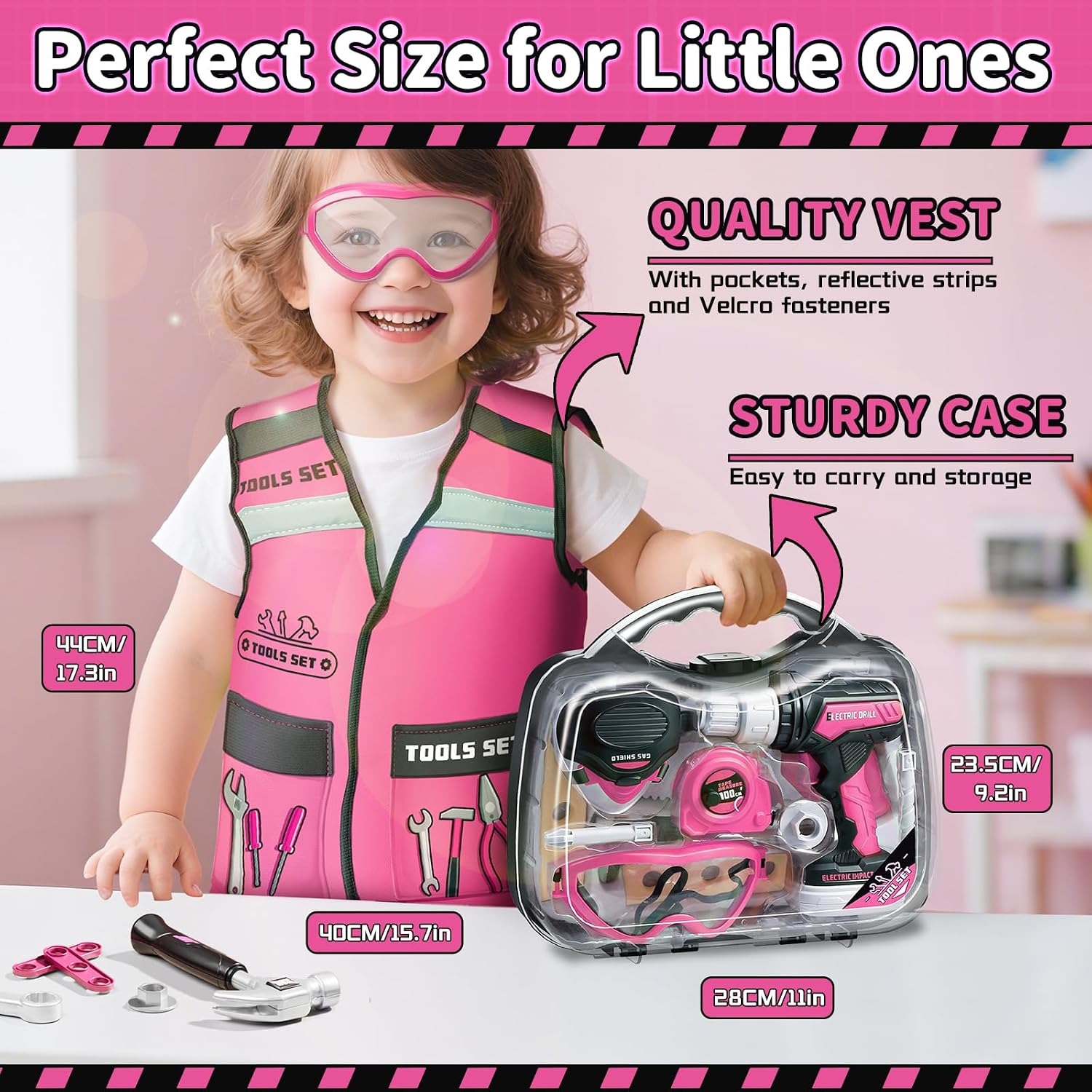
Storage. A toy tool carry case is not a bonus, it is the thing that keeps the set alive past the first month. Loose pieces migrate. Pieces in a case come back. The case here measures 27.5 x 8.5 x 23.5 cm and holds all 16 pieces, which means tidy-up is a thirty second job rather than a hunt.
Weight. At 400 grams for the complete set, a small child can carry it themselves. That matters more than you would think, because a toy a child can transport is a toy that follows them around the house and out to the garden.
Piece count versus usefulness. More pieces is not automatically better. Sixteen is enough to give variety without overwhelming a young child or guaranteeing something goes missing in week one.
Getting more out of it at home
The easiest way to stretch the play is to give the child jobs. Walk around the room and point out things that need attention. A wobbly cushion, a door that squeaks, a teddy with a loose arm. Children are much more engaged when the problem comes from outside their own head.
Writing is another good extension for older kids. A notepad for job orders, a list of what was fixed and how much it cost. This dresses up handwriting practice as part of the game, and most children do not notice the swap.
Pairing works well too. The set sits comfortably alongside building blocks, toy vehicles or a dolls house that needs renovating. Pretend play rarely stays in its own lane, and the tools become more interesting when there is something to use them on.
If interest fades, put the case away for three or four weeks and bring it out again. Toy rotation is dull advice but it works almost every time. The set comes back feeling new without you spending anything.
Looking after it
Plastic toys are forgiving, which is most of the reason they are used for children's tool kits in the first place. A damp cloth and a little mild soap will handle anything that happens in normal play. Dry the pieces before they go back in the case so you are not shutting moisture in.
Skip the dishwasher and the microwave. Heat warps moulded plastic and can leave edges that were smooth feeling rough. The vest and face mask are best spot cleaned and air dried rather than put through a wash cycle.
Give the set a quick look over every few months. Check for cracks, especially around any join or hinge, and retire anything that has split. One damaged piece is not worth risking, and the rest of the set carries on fine without it.
Outdoors is fine for short spells. Long term sun exposure will fade the colour and make plastic brittle, so bring it back in rather than leaving it on the patio over summer.
As a gift
A complete set in a carry case makes an easy gift because there is nothing left to arrange. No batteries to chase on the morning, no assembly, no second purchase needed to make it work. The case gives it enough bulk to feel like a proper present too.
It suits birthdays across a wide age window, which helps when you do not know a child well. Three, four, five and six all work. It is also a reasonable choice for a child who already owns a lot of toys, since role play sets slot in next to whatever else they have rather than competing with it.
If you are buying for someone else's child, the pink construction theme is worth a quick check with the parent. Not because of the colour, but because some children already have a tool set and a second one adds little.
The short version
This is a 16 piece pretend play tool kit built around a simple idea. Give a child the tools, the vest, the goggles and a box to keep it all in, and they will supply the imagination themselves.
It is made from plastic, weighs 400 grams, measures 27.5 x 8.5 x 23.5 cm and is recommended from age 3. The stated educational focus is hand-eye coordination, which is exactly what turning, fitting and tightening deliver.
If you want a toy that holds attention without a screen, packs away in half a minute and still gets used six months later, this is a sensible place to spend the money.