
The complete guide
The Parent's Guide to Choosing a Kids Dentist Play Set
The problem with first dental visits
A first trip to the dentist is a strange experience for a small child. The chair moves on its own. There is a light aimed at their face. A stranger wearing a mask asks them to open their mouth and then puts metal things in it. We explain it in the car on the way there and hope for the best.
The trouble is that explaining and experiencing are different things. A three or four year old does not build understanding from a short talk. They build it from doing, repeating, and doing again. Which is exactly what pretend play is for.
A kids dentist play set gives a child the chance to run the whole scene themselves, on their own terms, with no time pressure and no stranger involved. They hold the mirror. They decide when the check-up starts. They tell the patient to open wide. Control is the thing that is missing in a real surgery, and play hands it straight back to them.
How this set works
The idea behind this kit is simple. Give a child recognisable versions of the tools they will see, plus something to use them on, and get out of the way.
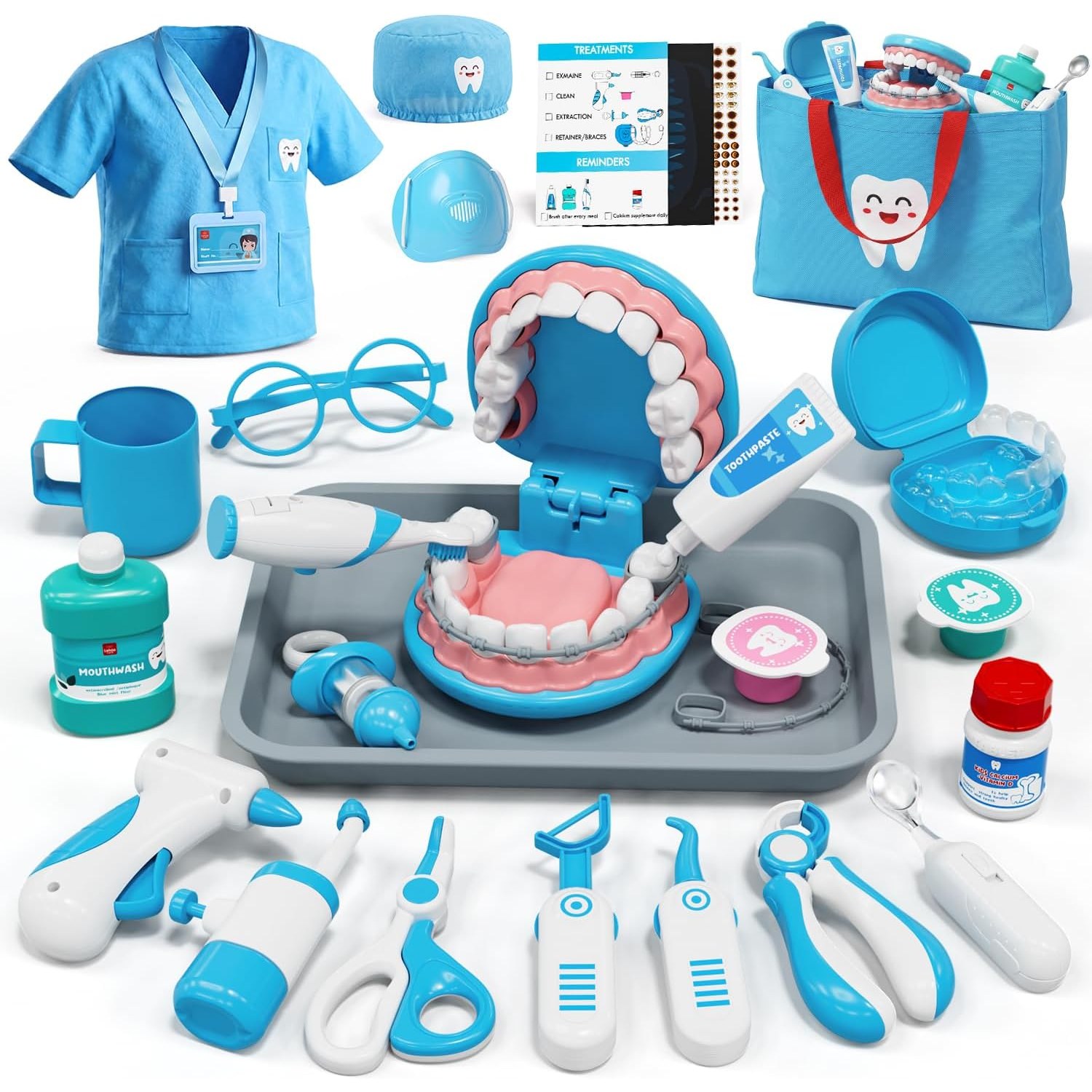
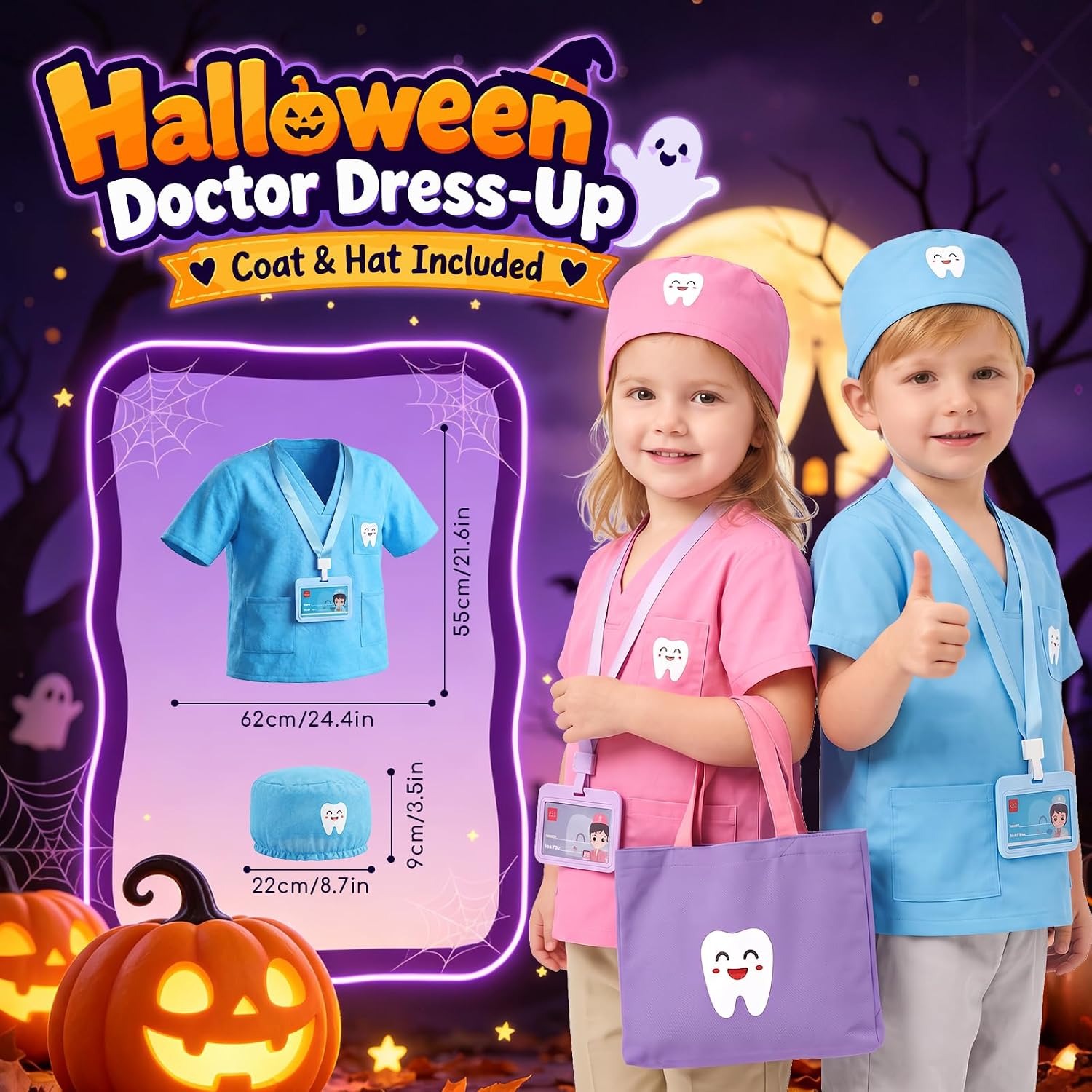
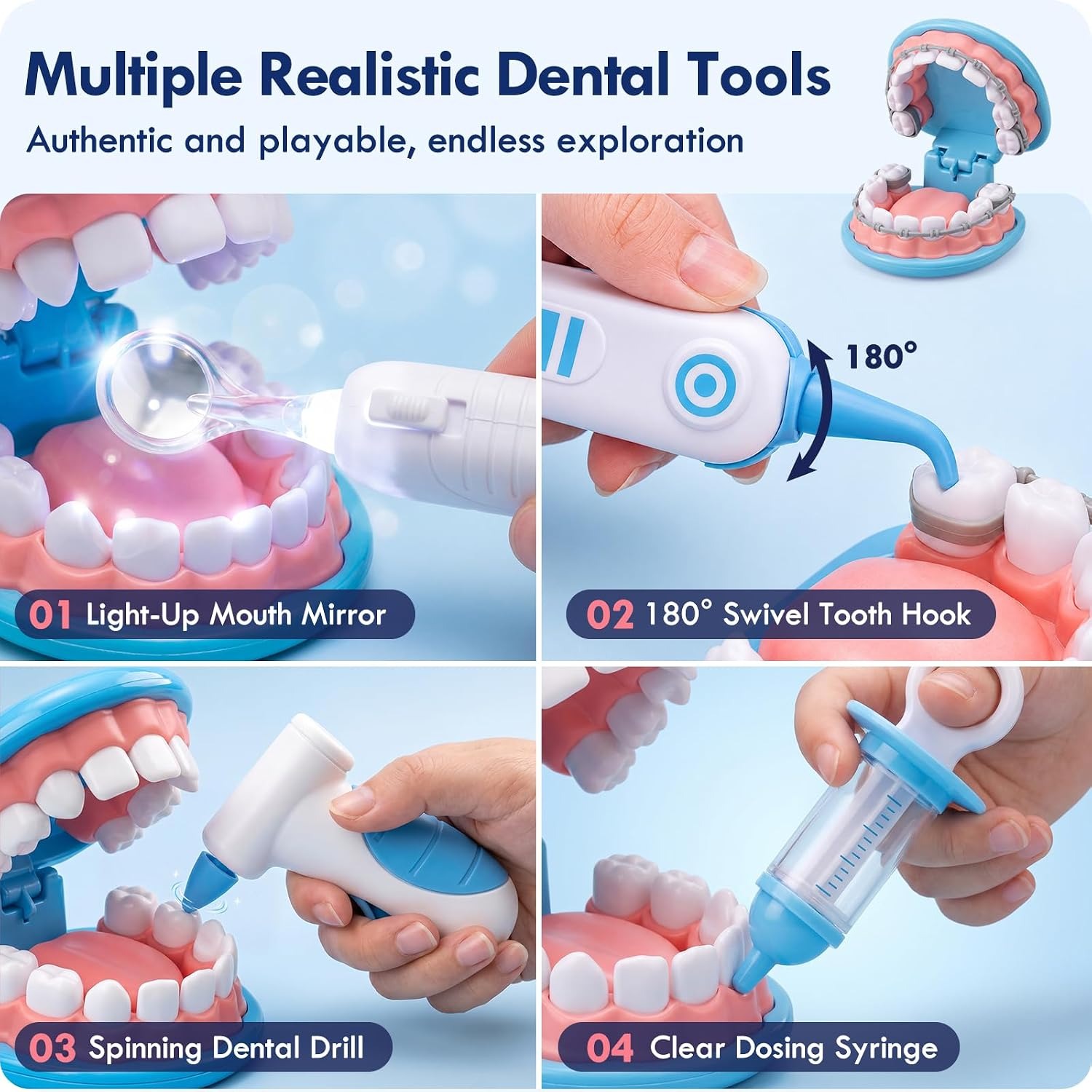
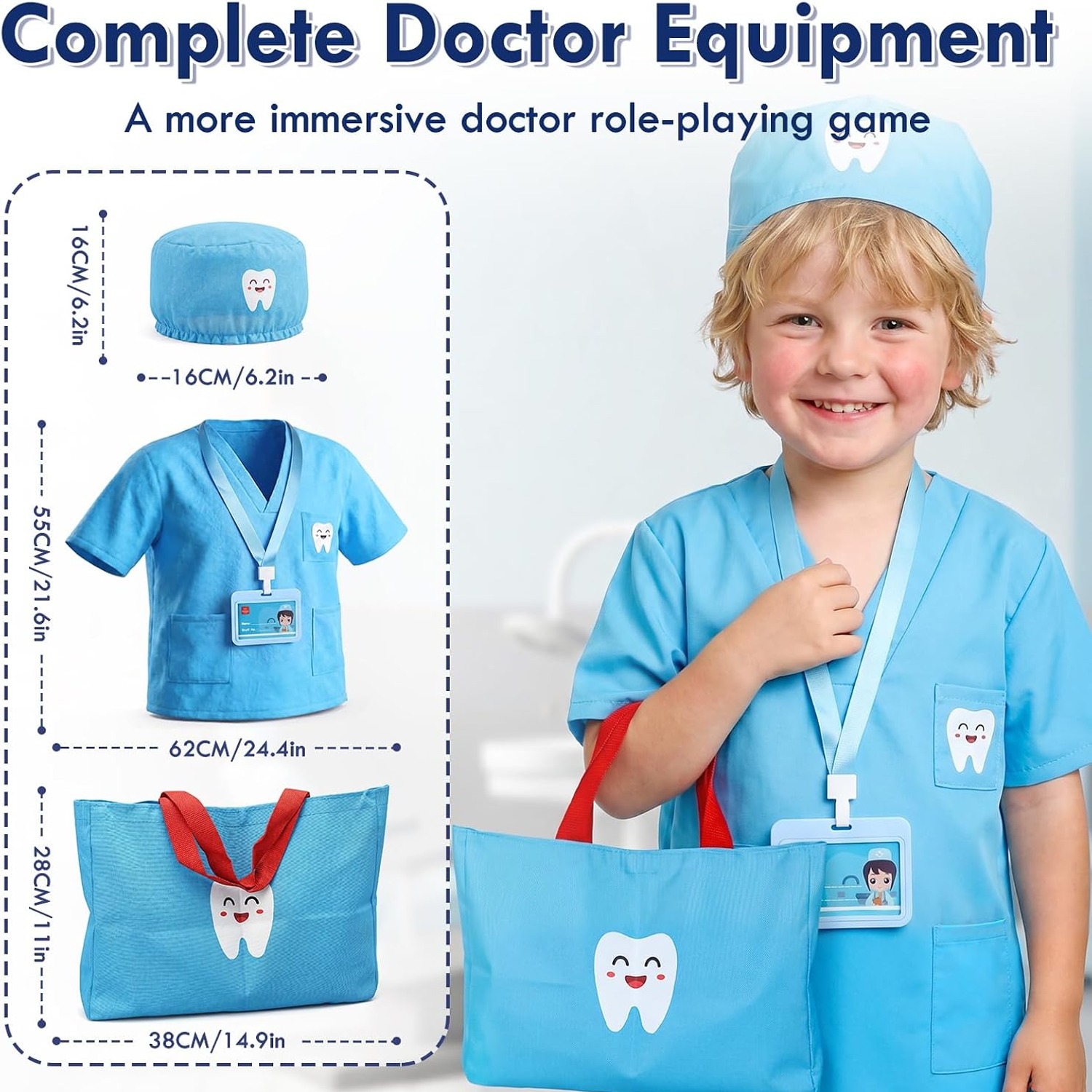
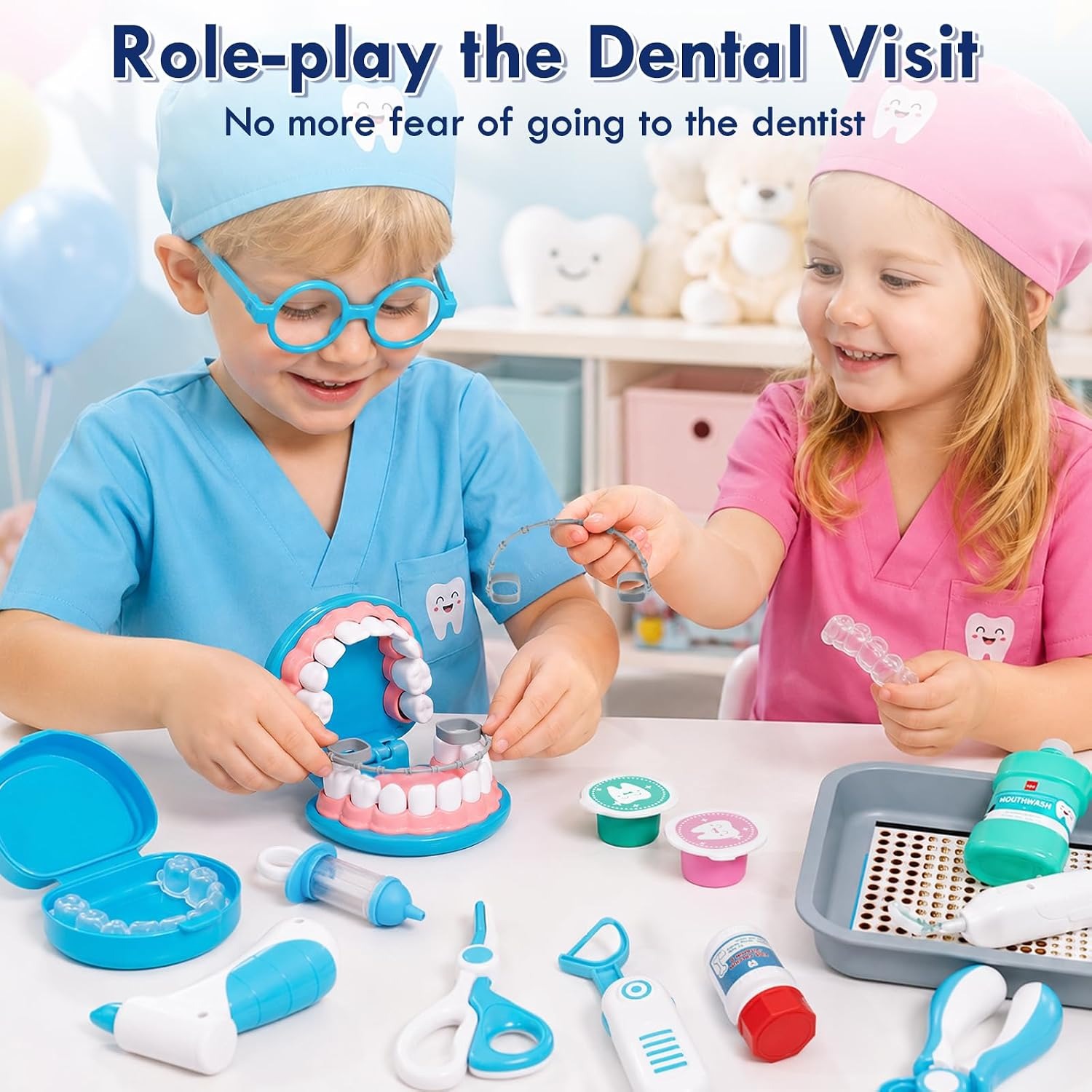
The set includes a child-size doctor costume, a doctor bag, dental models and a set of plastic dentist tools. The tools are shaped like the real instruments, a mirror and a probe style tool among them, but they are simplified and rounded so small hands can grip them easily. Nothing is sharp. Nothing needs an adult to switch it on.
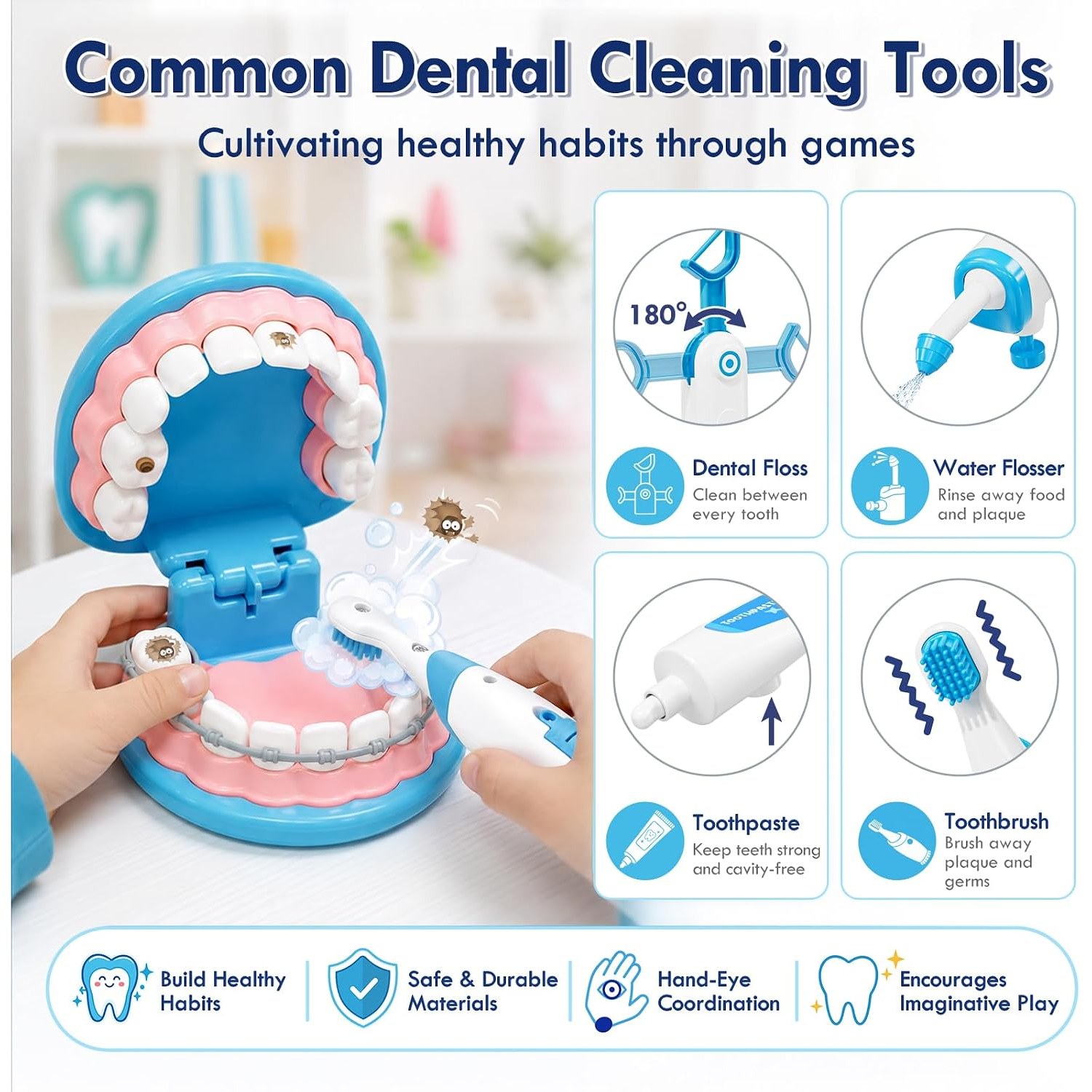
The dental models are the heart of it. Most children have never seen teeth from the outside, only felt them with a toothbrush in a dark mouth they cannot look into. Having a model in front of them changes that. They can see the gaps, the back molars, the places a brush skates over. They notice things.
The costume does more work than you might expect. Something happens when a child puts on the outfit. Their posture changes, their voice drops into a slightly more serious register, and they start narrating. "Now I am going to check your back teeth." That running commentary is language practice, but it is also how a child rehearses a situation until it stops being scary.
Who it suits
The manufacturer recommends this for 36 months up to 8 years, which is a wide window, and the play looks different at each end of it.
At three, it is mostly costume and brushing. They will put on the outfit, brush the model teeth with great enthusiasm and possibly very little technique, and announce that the patient is fixed. That is fine. The familiarity is still building.
At five or six, the play gets structured. There is a waiting room now. There are appointments. The patient has a specific problem that needs a specific tool. Children at this age often insist on doing the steps in the right order, and they will correct you if you get it wrong.
At seven or eight, it tends to become social. They run a clinic with friends or siblings, assign roles, and invent complications. Some older children also start using it to explain things to a younger sibling, which is when you realise how much they actually absorbed.
It also suits a specific moment rather than just an age. If you have a first dental appointment coming up, or a child who has had a bad experience and is now dug in about going back, a set like this gives you something to do together in the weeks beforehand that is not a lecture.
Choosing the right kit
There are a lot of pretend play medical kits out there and they are not all aiming at the same thing. A few things worth thinking about before you buy.
Dentist focus or general doctor focus. A lot of kits are general medical sets with a stethoscope, a thermometer and a syringe. Useful, but they do not help with dental anxiety specifically. The dental models in this set are what make it a genuine dentist role play toy rather than a doctor kit with a toothbrush thrown in. If the dentist is the reason you are shopping, look for the model teeth.
Whether the costume is included. Some sets sell the tools and the outfit separately. Having the costume in the box matters more than it sounds, because dressing up is the trigger that starts the role play for a lot of children.
Storage. This is the unglamorous one that parents care about six weeks later. A kit with a bag stays a kit. A kit without one becomes seven loose bits of plastic in three different rooms. The doctor bag here is doing real work.
Material and finish. The tools in this set are plastic, which is standard for the category and easy to wipe clean. Run your hand over new pieces when they arrive and check for any rough moulding edges, as you would with any plastic toy.
Size and portability. The whole set packs to 25 x 19 x 11 cm and weighs 0.77 kg. That matters if you want to take it to a grandparent's house or keep it in a cupboard rather than letting it own a corner of the lounge room.
Making it part of the brushing routine
The best pretend play set earns its keep outside of playtime. The easiest way to use this one is to link it to the nightly brush.
Let the child brush the model teeth first, then their own, using the same motions. Having just done it on a model they can see makes the invisible version easier. Some parents reverse it and let the child brush their teeth afterwards, which turns the whole thing into a game of swapping roles.
Counting teeth is another simple one. Count the models together, then count their own. Children who have counted their teeth tend to be much calmer about someone else counting them.
You can also use it to rehearse the specific thing your child is worried about. If it is the chair, tip them back on the couch. If it is the light, use a torch. Doing it at home, in a silly voice, with a teddy going first, takes a surprising amount of the sting out.
Keeping it in good shape
Care is straightforward. Wipe the plastic tools and the dental models with a damp cloth and a bit of mild soap, then dry them properly before they go back in the bag. Skip the dishwasher and anything involving heat, because plastic parts of this type can warp or crack.
Fabric costume pieces can be washed gently and air dried. Avoid high heat there too.
Keep the toy tools for the models and soft toys rather than real mouths. Real brushing stays with a real toothbrush. That keeps the hygiene simple and the habit correct.
Every so often, tip the bag out and check the pieces for cracks or sharp edges, especially if the set gets heavy use. Retire anything that has split. And do a quick headcount of the parts at pack-up time, because that two minute habit is what keeps a set complete for years.
The short version
A kids dentist play set is one of those toys that does something useful without feeling like a teaching tool. The child thinks they are playing. They are, but along the way they are learning what a check-up involves, practising how to brush properly, and getting comfortable with a situation that catches a lot of children off guard.
This kit covers the main bases. Costume, bag, dental models and child-friendly plastic tools, recommended for ages three to eight, packed into something small enough to carry. If you have a first appointment coming up, or a child who needs convincing that the dentist is not the enemy, it is a practical place to start.