
The complete guide
Buying A Pull Back Cars 30 Pack, A Practical Guide
The problem with buying toy cars one at a time
Most households end up in the same place. There are four cars, three of them are the wrong colour, one has lost a wheel, and two children both want the survivor. Then a birthday invitation arrives and you need twenty party bag fillers by Saturday.
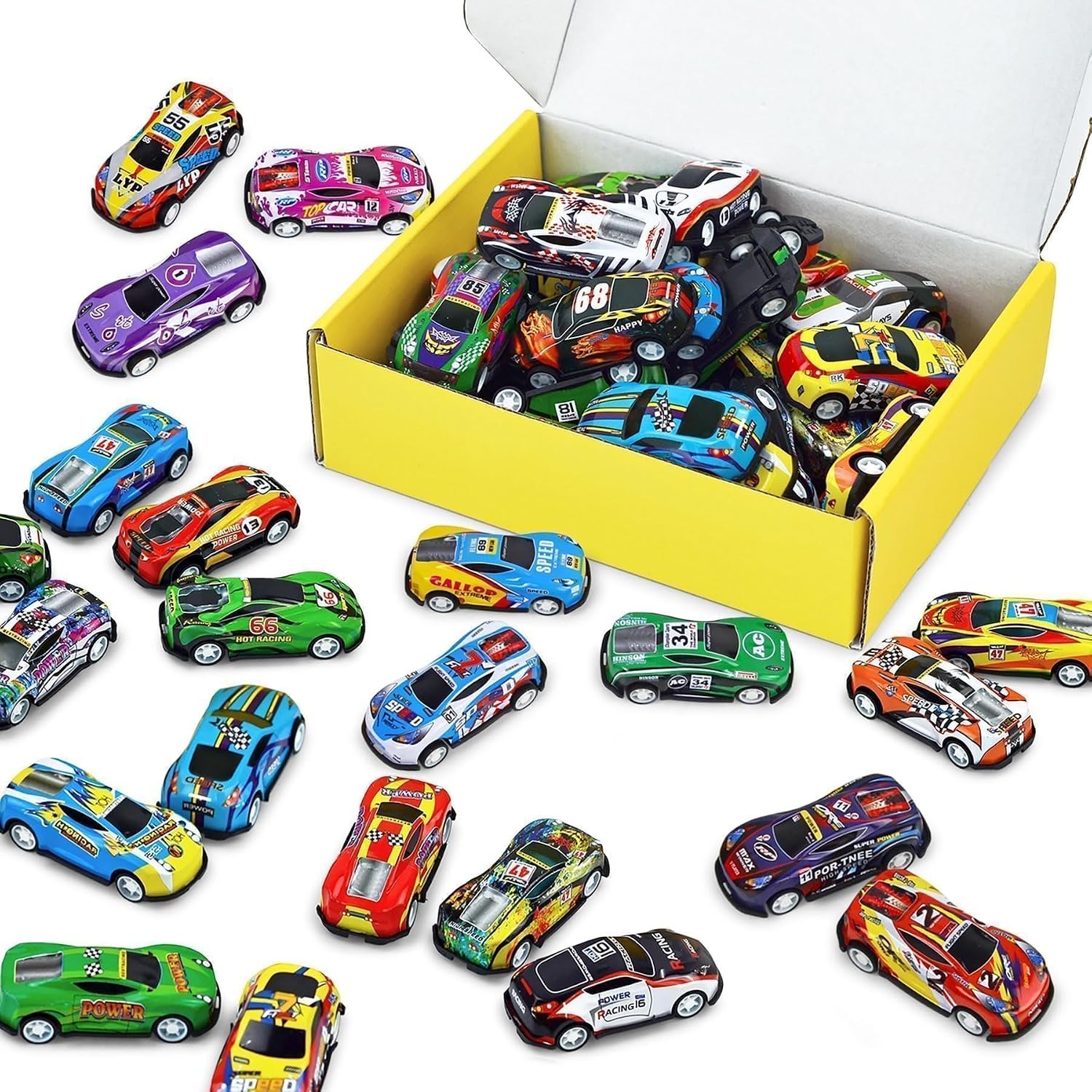
Buying in bulk fixes both problems at once. A pull back cars 30 pack gives you enough cars that nobody has to negotiate, enough spares that losing one under the sofa does not ruin an afternoon, and enough stock that the next party, prize box or long flight is already covered. That is the honest reason these sets sell. It is not that a thirty-pack is better than a single collectible car. It is that thirty cheap, cheerful, functioning cars solve more real problems in a week than one special car solves in a year.
How pull back cars actually work
There is no mystery inside. Each car has a small spring wound around a shaft connected to the rear axle. When you drag the car backwards along a surface, the wheels turn, the shaft turns, and the spring tightens. Let go and the spring releases, spinning the wheels forward until the stored energy runs out.
This is why no batteries are needed or included. It is also why these cars keep working long after an electronic toy has gone flat in a drawer. There is nothing to charge, nothing to unscrew, and no tiny button cell to worry about.
The practical consequence is that the surface matters more than the car does. Hard floors, tabletops, kitchen benches and large hardback books all give a clean run. Thick carpet eats the momentum almost immediately. If a car seems weak, try it on tiles before assuming it is faulty.
One more thing worth knowing. Pulling the car backwards over a rough surface, or dragging it repeatedly without letting it run, puts extra strain on the mechanism. Teach children to pull back smoothly and then release. It takes ten seconds to show and it makes the cars last.
Who this set actually suits
The manufacturer recommends ages 36 months to 10 years. That is a wide range, and different ages use the same car in different ways.
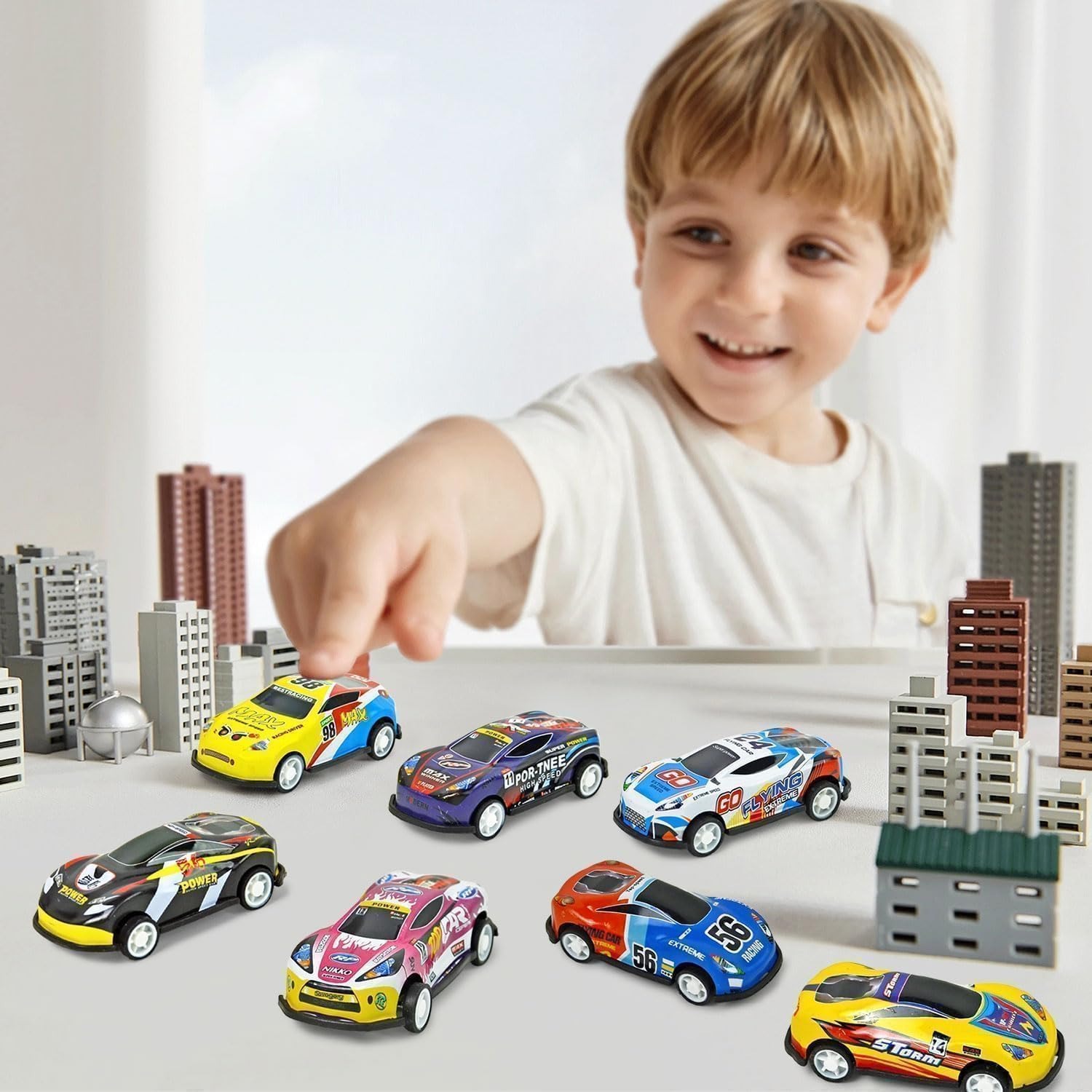
At three and four, the attraction is cause and effect. The child does something small, the car does something big, and that loop is genuinely satisfying. This is the age where the listed educational objective of fine motor skills and hand-eye coordination does real work, because aiming a car at a target is harder than it looks when your grip is still developing.
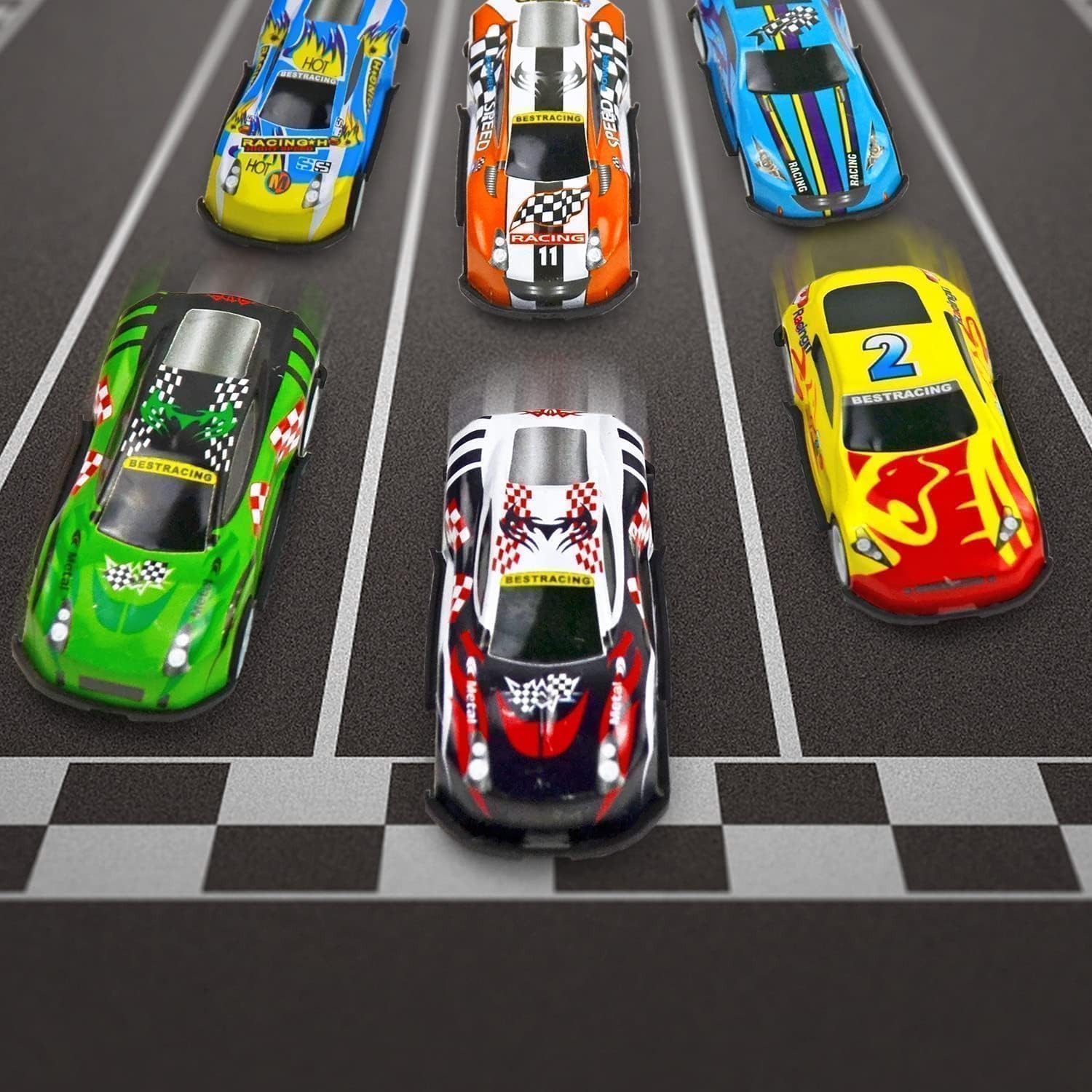
At five to seven, racing starts. Two cars, one starting line, a book propped up as a ramp. This is where having thirty cars rather than three changes the game entirely.
At eight to ten, it becomes organised. Tournaments, brackets, track layouts built from whatever is on the floor. Some children lose interest at this age, and that is fine. By then the set has usually paid for itself several times over.
Below three years, these are not suitable. Small toys and children who still put things in their mouths do not mix.
Choosing a bulk car set without getting burned
A few things separate a set you are glad you bought from one that sits in a cupboard.
Count against need. Thirty is the sweet spot for most buyers. It covers a full class, a large party with spares, or a family that loses things. If you only need six, a thirty-pack is still often cheaper than six individually, which is why bulk is usually the sensible route for party favours.
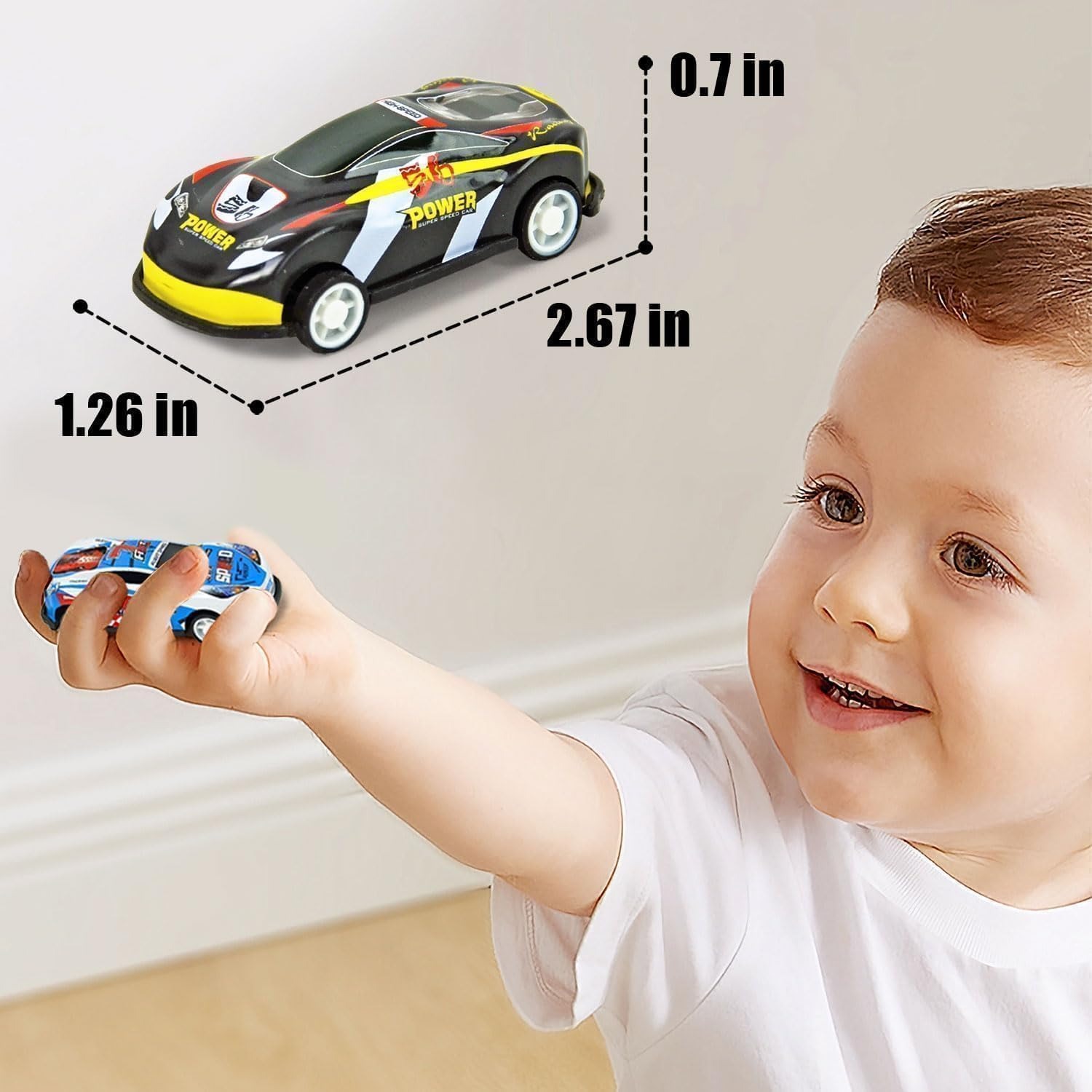
Size against hands. These measure 6.7 x 3.2 x 2.5 cm. That is deliberately in the range where a small hand can wrap around the whole car. Larger cars are harder for a three year old to pull back cleanly. Much smaller cars get lost instantly and become a hazard for younger siblings.
Power type. Friction-powered beats battery-powered for a set this size, for the obvious reason. Thirty battery-powered cars would be thirty sets of batteries. Looking for the best no battery toys is not just about cost, it is about the set still working in six months.
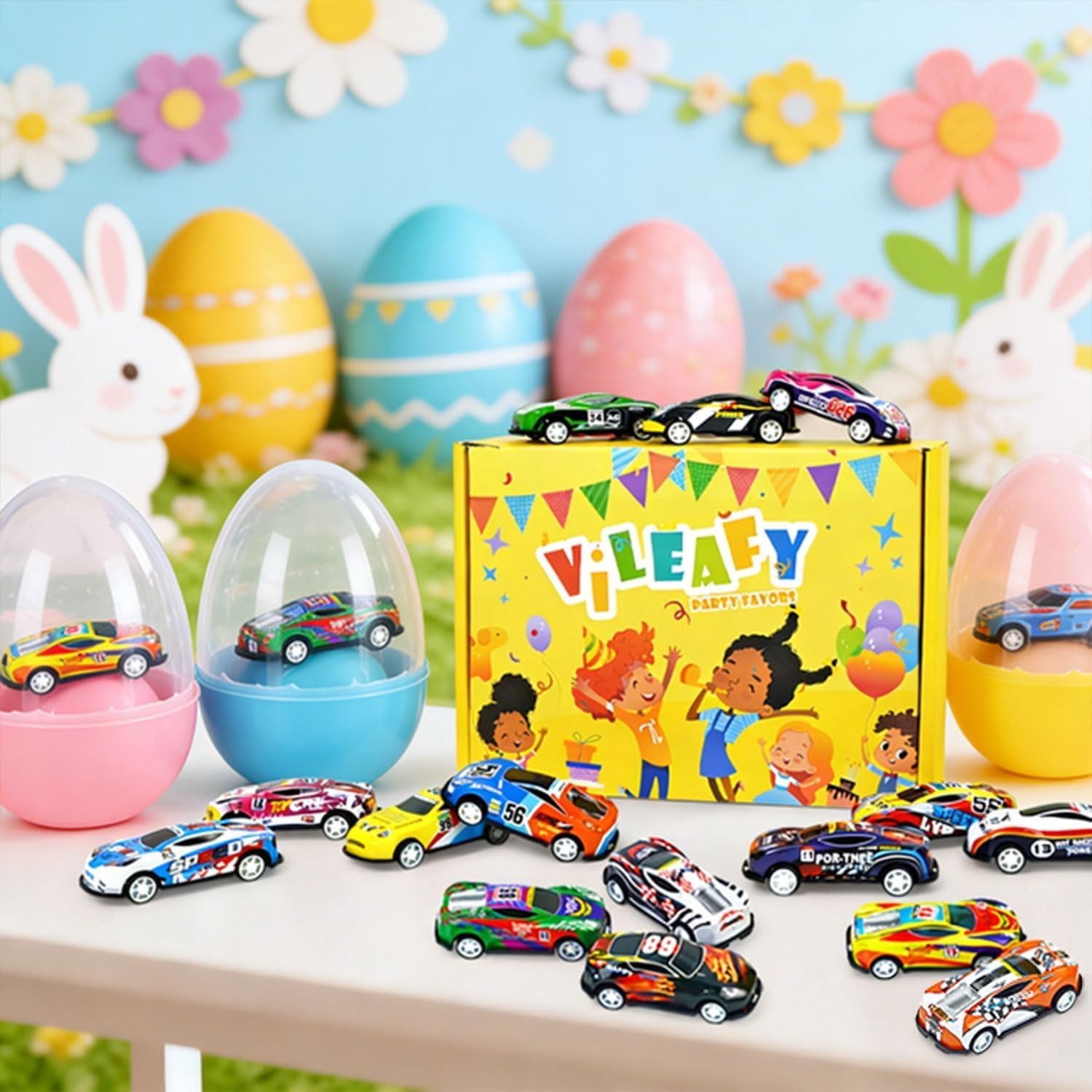
Random versus chosen colours. This set ships in assorted colours and styles. If you specifically need matching cars for a themed table, a random assortment is the wrong choice. For everything else, random is a plus. Children enjoy the lucky-dip element, and trading becomes part of play.
Materials. Metal and plastic together give enough weight for a decent roll without making the box heavy. All-plastic cars can feel too light and skitter rather than run.
Where they earn their keep
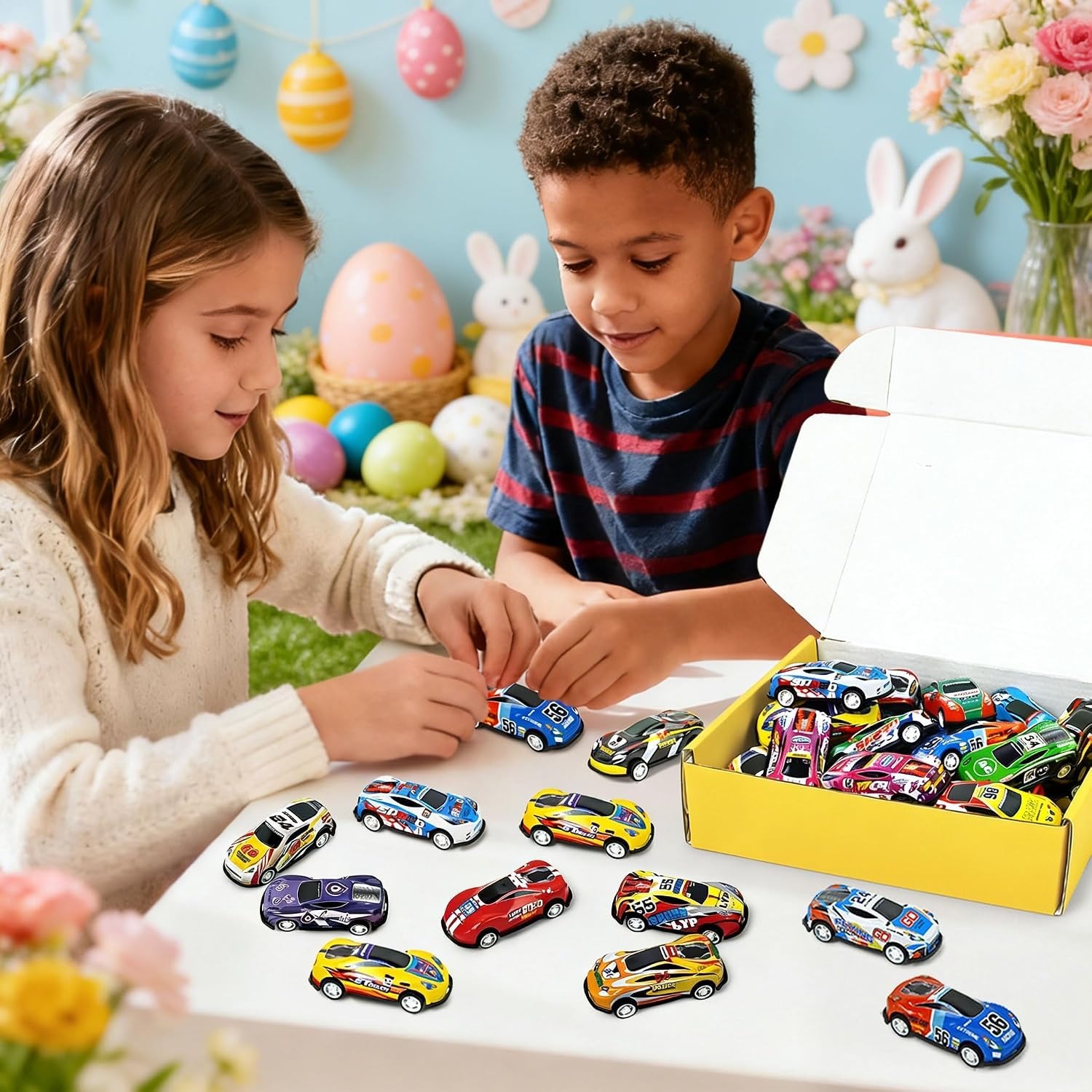
Party bags are the headline use. One car per bag, thirty guests covered, done. They sit well next to other favours because they are flat enough not to bulk out the bag.
Classroom prize boxes are the second big one. Teachers burn through small rewards faster than almost anyone, and a single box of thirty restocks a drawer properly rather than for a fortnight.
Then there is the quiet category. Waiting rooms, restaurants, planes, long car trips. The cars make no electronic noise at all, so they do not annoy anyone nearby. Two cars in the side pocket of a bag can rescue the last half hour of a meal. This is honestly where parents report getting the most value, even though it is rarely why they bought the set.
Finally, stocking fillers and pocket money gifts. One box becomes a dozen small presents across a year.
Looking after them
These are not delicate, but a little care doubles their life.
Wipe them with a dry or barely damp cloth. Do not soak them, because water inside the pull-back housing can make the mechanism stick, and the metal parts will not thank you for it. Let them dry completely before they go back in the box.
Keep them away from sand and grit. A beach trip is the fastest way to kill a pull-back car, because fine particles get into the wheel housings and jam the gears. The set is listed as indoor use for good reason.
If a car stops running, check the axles for hair and carpet fibres first. That accounts for most sudden failures, and clearing it with tweezers usually brings the car straight back.
Store the whole set in one lidded box or a zip bag. Thirty loose cars spread across a house in about four days. One container keeps them findable, and findable toys get played with.
The short version
This is a thirty-piece set of mini pull back race cars, each 6.7 x 3.2 x 2.5 cm, made from metal and plastic, with no batteries and no assembly. Colours and styles come at random. The recommended age is 36 months to 10 years, and the set is intended for indoor use.
Buy it if you need party favours, classroom prizes, travel toys, or simply enough cars that your children stop arguing over the good one. Skip it if the child is under three, if you need matching colours for a themed event, or if you want one detailed collectible rather than a crowd of cheerful runners.
For most families, the thirty-pack is the version that actually gets used.