
The complete guide
How To Choose A Solar System Floor Puzzle For Your Child
The problem with most "educational" toys
Plenty of toys promise to teach something. Most of them do the teaching for the child. Press a button, hear a planet name, move on. The child is entertained for four minutes and learns almost nothing, because nothing was asked of them.
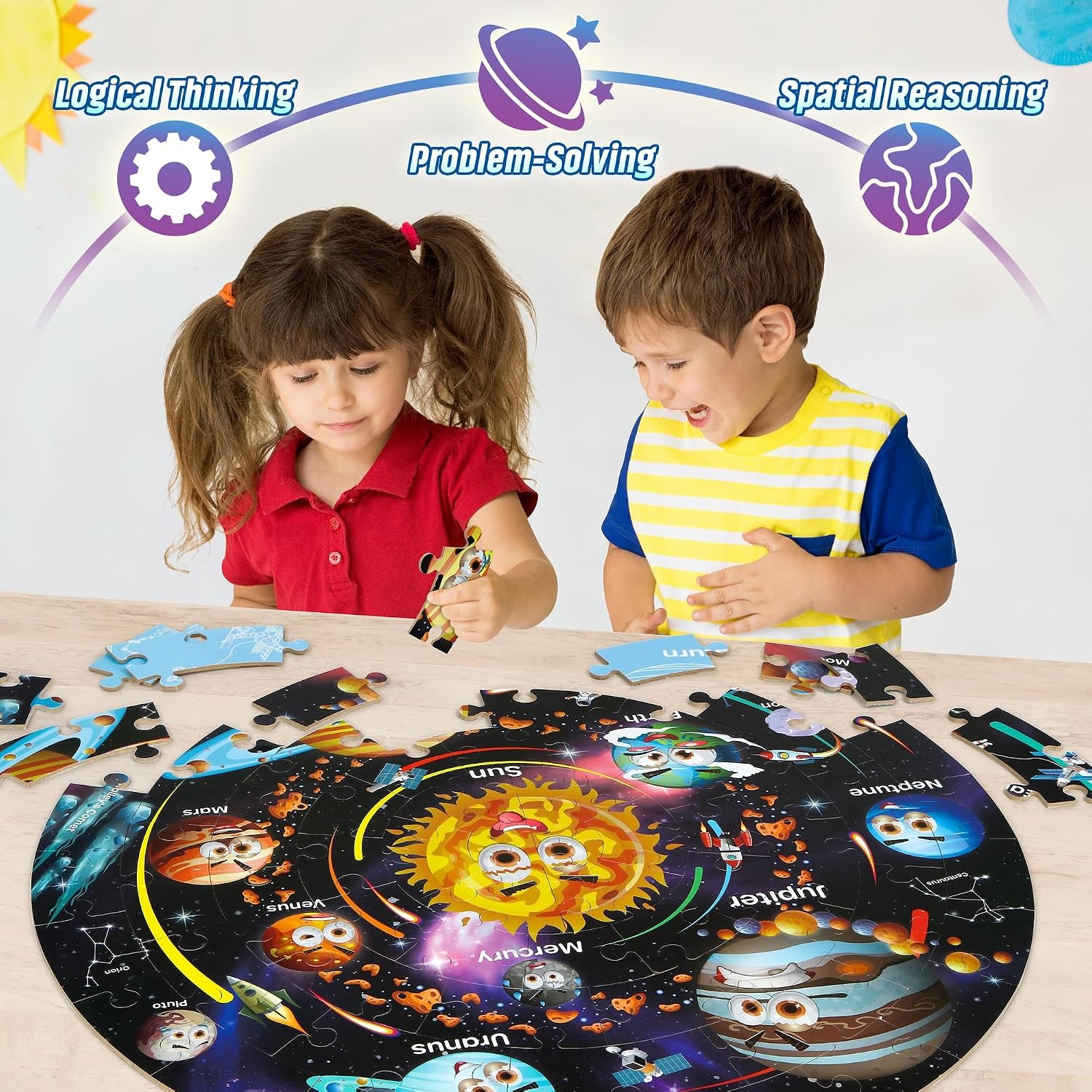
A puzzle is the opposite. Nothing happens unless the child makes it happen. They have to look at a shape, hold it, compare it to a gap, get it wrong, turn it, try again. That loop is slow and a little frustrating, and that is exactly why it works. The planets stop being a list to memorise and become things with a position, a size and a relationship to each other.
A solar system floor puzzle also solves a smaller, more practical problem. It gives a child something to do with their hands at the end of a day when they are tired, overstimulated and not ready for bed. Parents who keep a puzzle in the lounge room tend to reach for it in that awkward hour before dinner.
What this puzzle actually is
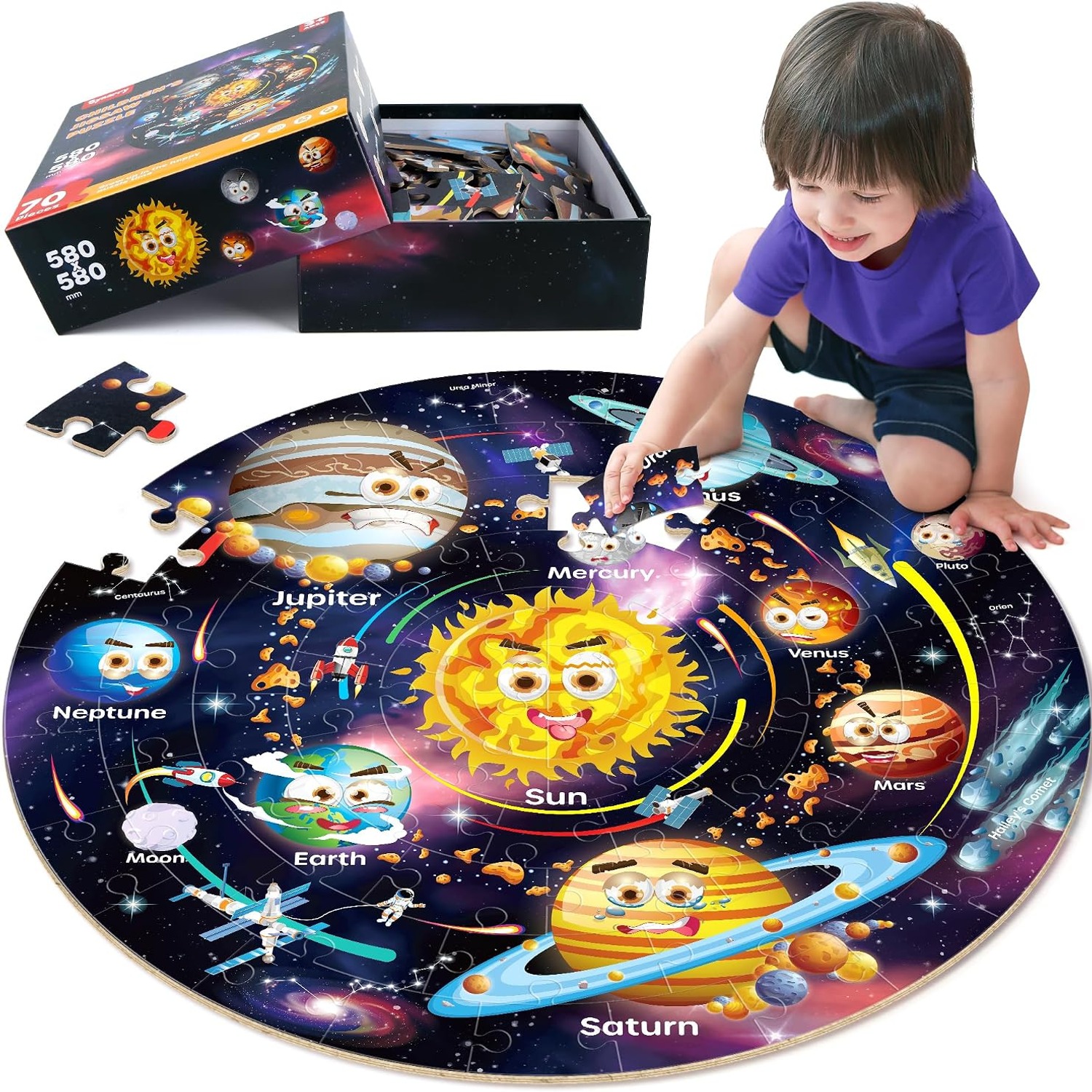
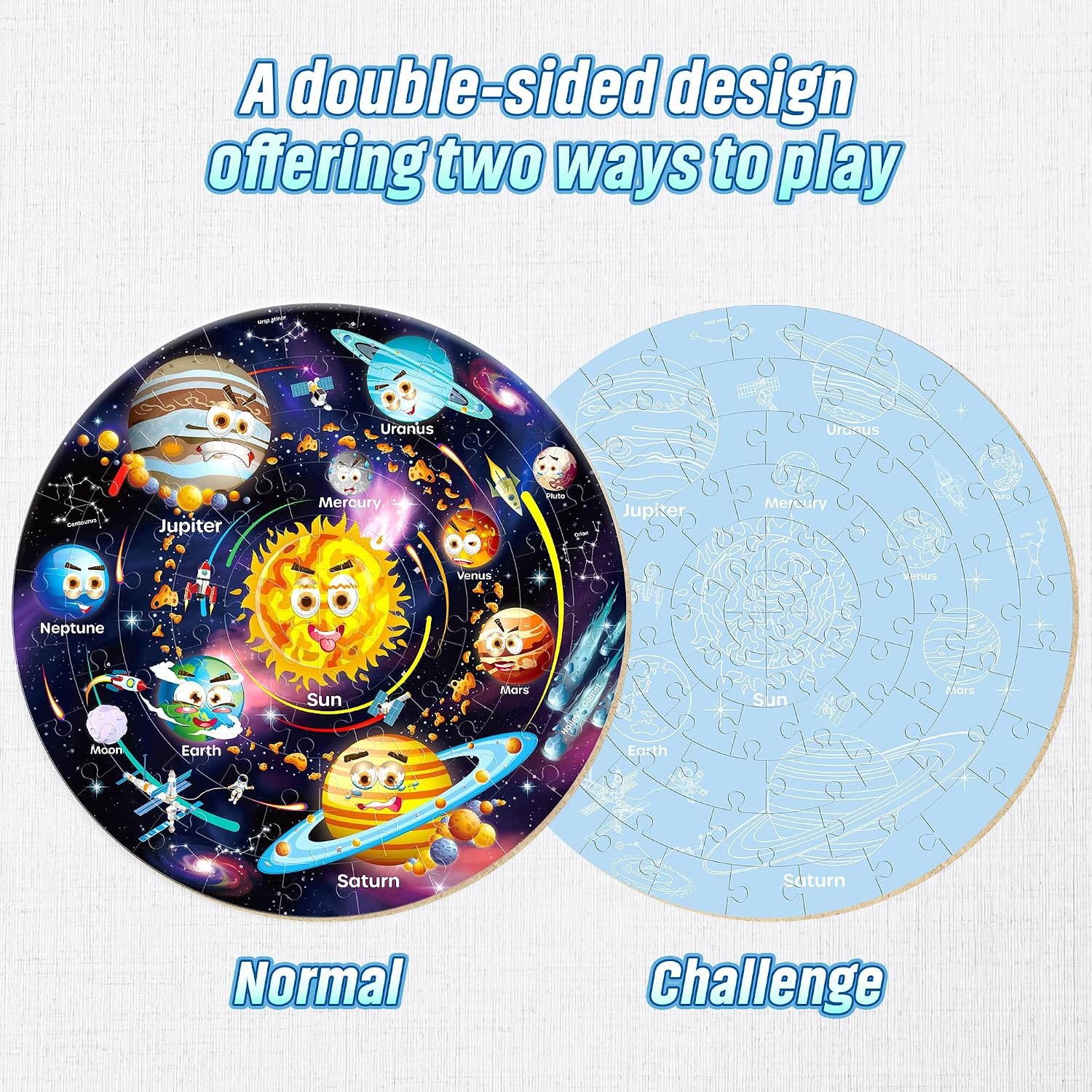
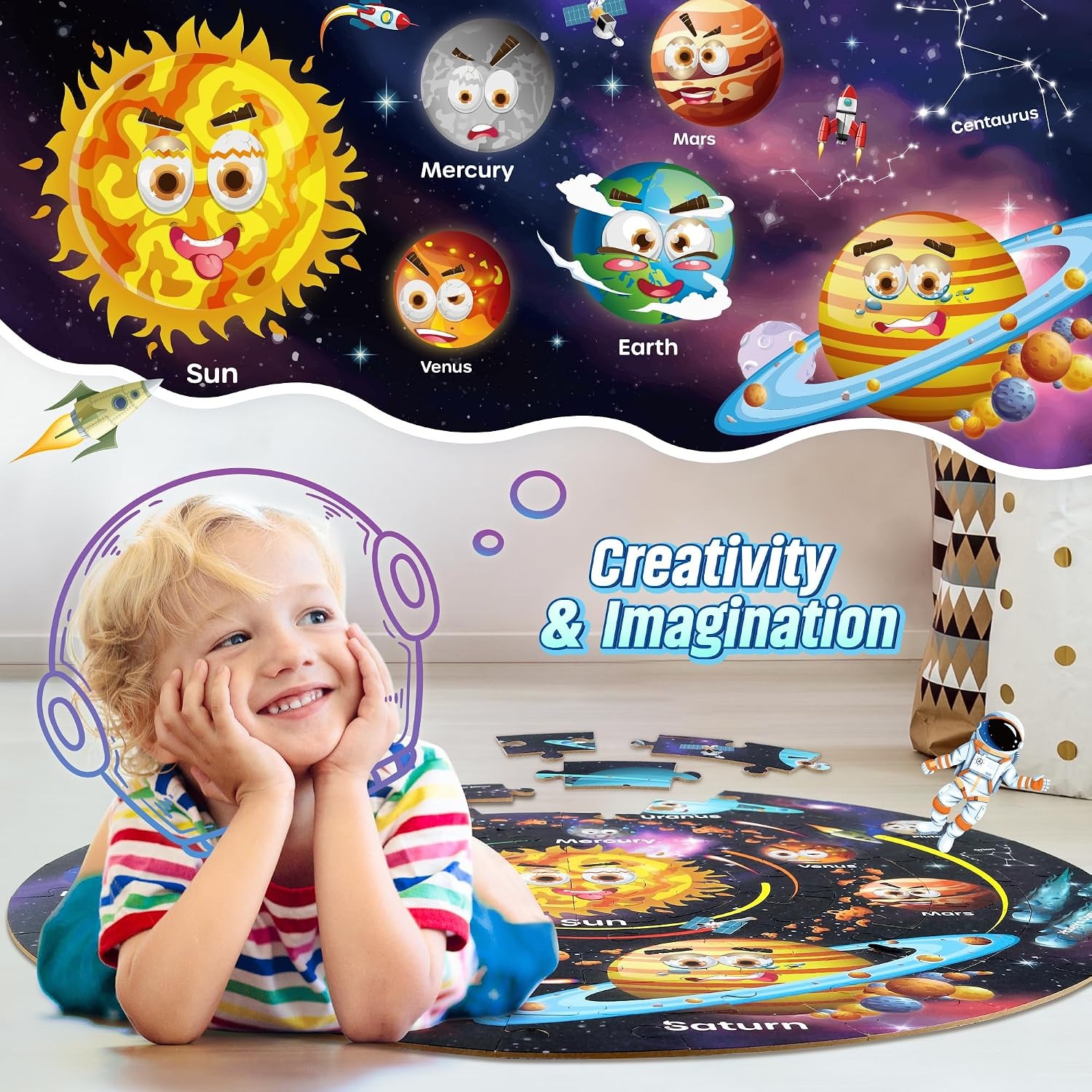
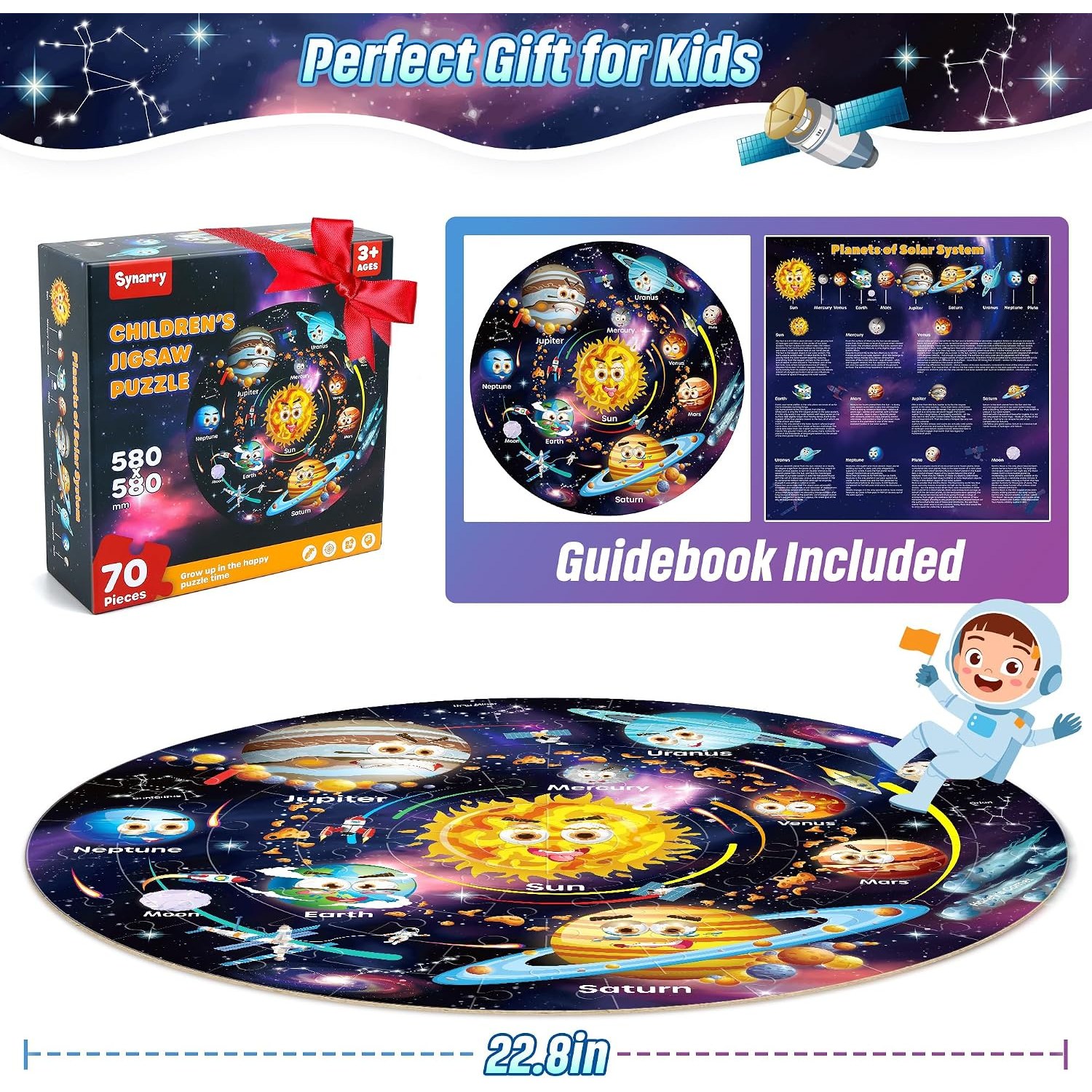
This is a 70-piece round jigsaw with a solar system scene. The sun and the planets sit in the artwork along with rockets, spaceships and astronauts, in bright multiple colours. The finished puzzle measures 21 x 21 cm, and the whole item weighs 816 g.
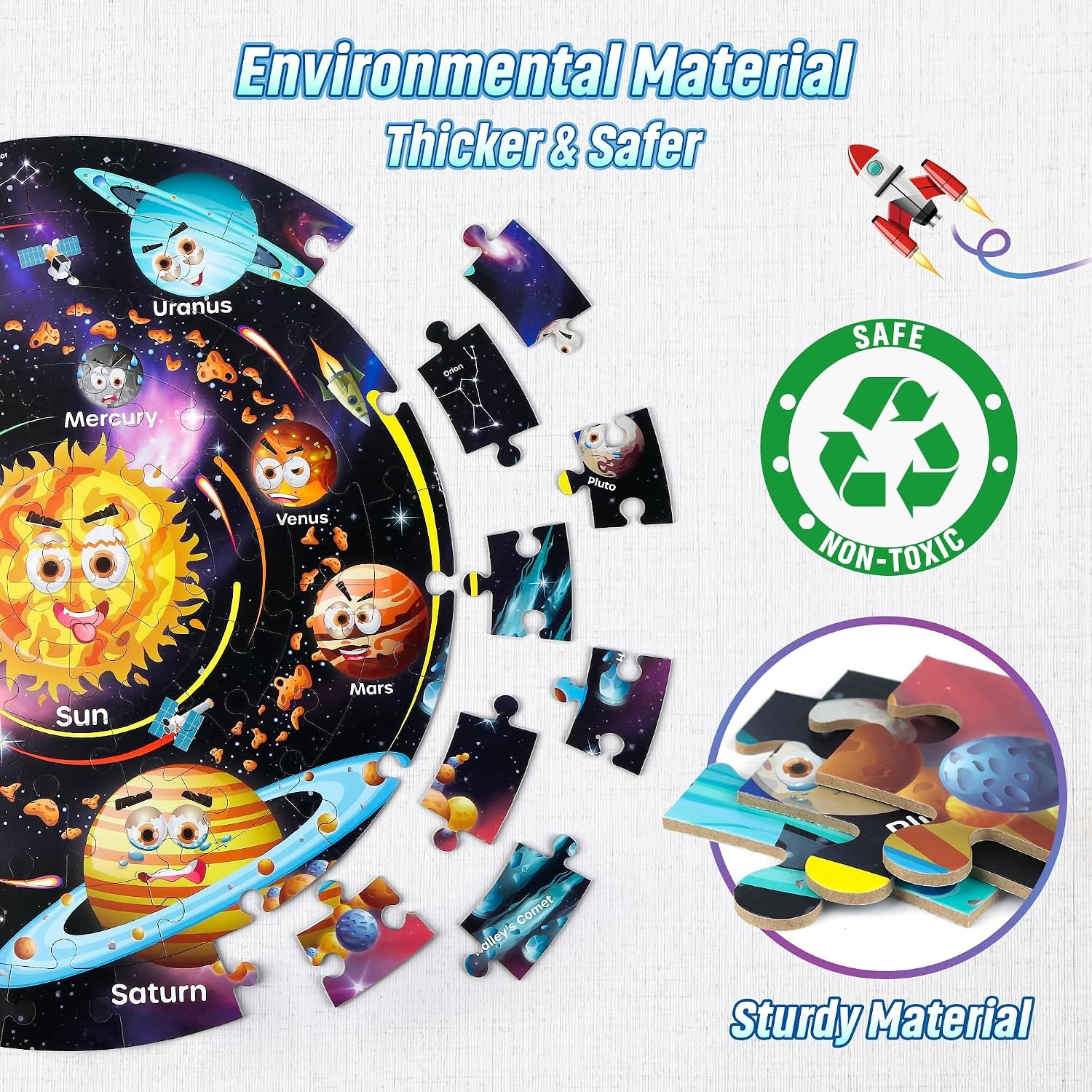
The pieces are listed as wood with polished edges. That matters for two reasons. Wood pieces hold their shape better than thin card after dozens of builds, and polished edges mean a child can run a thumb along a piece without catching it. The material is listed as PVC free, latex free, phthalate free, BPA free and lead free.
No batteries, no app, no assembly. Operation mode is manual, which is a formal way of saying your child does the work.
Why the piece count is the number that matters
When people shop for a puzzle they usually look at the picture first and the piece count second. Flip that order.
Piece count is what decides whether the puzzle gets built again or shoved under the bed. Too few pieces and a capable child finishes it once and loses interest. Too many and they stall halfway, feel bad about it and avoid the box next time.
Seventy pieces sits in a good middle. It is a real build with a clear sense of progress, and a child at the older end of the range can finish it in one go without a break. For a younger child, 70 pieces is a project you do together across a couple of sittings, which is fine. Nobody says it has to be finished in one afternoon.
If you are comparing this against the best floor puzzle for 4 year olds in general, the honest guide is this. A four-year-old doing their first few jigsaws wants somewhere between 24 and 100 pieces, with artwork they can describe out loud. This one fits.
Who it suits
It suits a child aged roughly three to eight who already likes space, or who you would like to get interested. The manufacturer gives a recommended age of 36 months to 8 years.
It suits families who want fewer screens in the evening but do not want to fight about it. Setting out a puzzle is a quiet invitation rather than an instruction, and most children will drift over and start sorting pieces without being asked twice.
It suits classrooms, after-school programs and childcare rooms. The small footprint means it works on a desk, and the round shape makes the edge easy to find for children who are still learning jigsaw strategy.
It also suits grandparents who want something to do with a visiting grandchild that is not telly. You do not need to be good at puzzles to help with this one.
Who it does not suit: a child under three, because of piece size, and a confident nine or ten-year-old puzzler who will want several hundred pieces to feel stretched.
How to choose between puzzle types
A few things separate a puzzle that lasts from one that does not.
Material. Wood pieces, as here, resist bending and peeling. Thin cardboard pieces start to fluff at the corners after a few builds and the tabs stop gripping. If you plan on repeat use, wood earns its keep.
Shape. Most puzzles are rectangles. A round one changes the build strategy slightly, since the outer curve is a continuous edge rather than four straight sides with corners. Children usually find the curve easy to spot, and the central sun gives a second anchor.
Artwork density. Space scenes can go two ways. A mostly black background with small details is hard, because large areas look identical. A scene with big, distinct, brightly coloured planets is far easier to sort by eye, which is what makes it workable for the younger end of the age range.
Age honesty. Manufacturer age ranges are a guide, not a rule. Judge by your own child's puzzle experience, not their birthday. A four-year-old who has done twenty puzzles will handle this better than a six-year-old who has done none.
Getting the most out of it
Start by turning every piece face up before building anything. It feels like a chore but it saves the whole session, and it teaches a child to set up before they start.
Then sort. Edge pieces in one pile, sun and planets in another, the rest in a third. Sorting is where most of the learning happens, because the child is comparing and grouping without realising it.
Build the outer edge first. On a round puzzle that means finding every piece with a smooth curved side. Then work inwards from the sun.
Talk while you build. Ask which planet is biggest, which one has rings, which one is closest to the sun. You will get the order wrong occasionally and your child will enjoy correcting you, which is half the point.
If your child stalls, hand them a piece rather than placing it yourself. Narrowing the choice keeps them in charge.
Looking after it
Puzzles die from damp and from lost pieces, in that order.
Build on a dry surface and keep drinks off the table. If something spills, lift the pieces straight away, wipe them with a barely damp cloth and dry them immediately. Never soak them.
Count the pieces back into the box at the end of every session. Seventy is a quick count and it is the single habit that keeps a puzzle complete for years. Store the box flat in a cupboard, out of direct sun, with nothing heavy stacked on top.
If you want to keep a finished build, slide it onto a thin board or a tray and move it as one unit rather than carrying the table.
The short version
This is a 70-piece round wooden jigsaw showing the solar system, finished size 21 x 21 cm, weight 816 g, recommended for ages three to eight. The material is listed as PVC free, latex free, phthalate free, BPA free and lead free, and the edges are polished for small hands.
It asks a child to look carefully, sort, compare and keep going when a piece does not fit. That is a useful set of habits dressed up as a space scene. It needs no power, no screen and no instructions, and it packs back into a box when you are done.
If you have a child who asks questions about planets, or one you would like to start asking, this is an easy and inexpensive way in.