
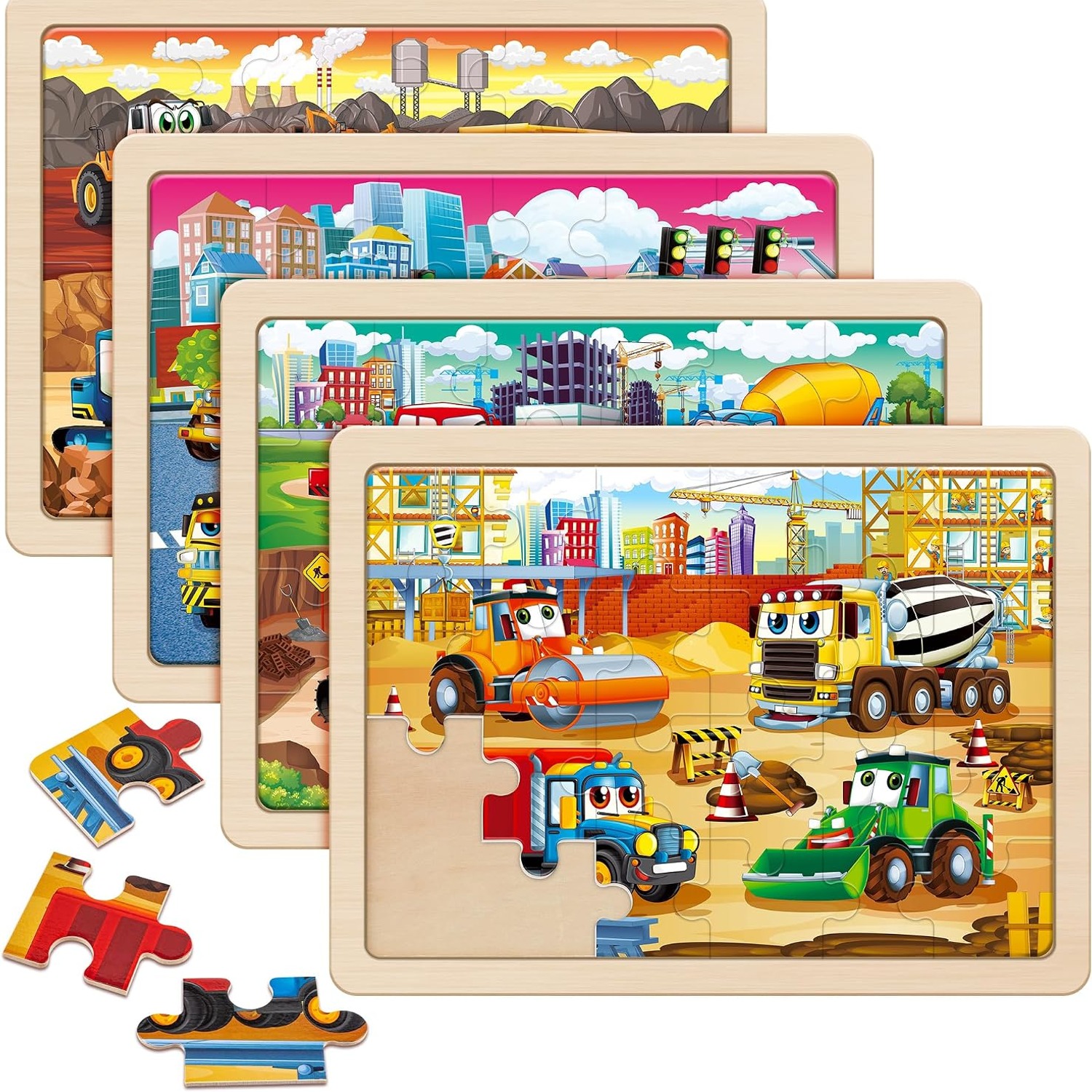
The complete guide
Choosing Wooden Construction Vehicle Puzzles - A Parent's Buying Guide
The afternoon problem
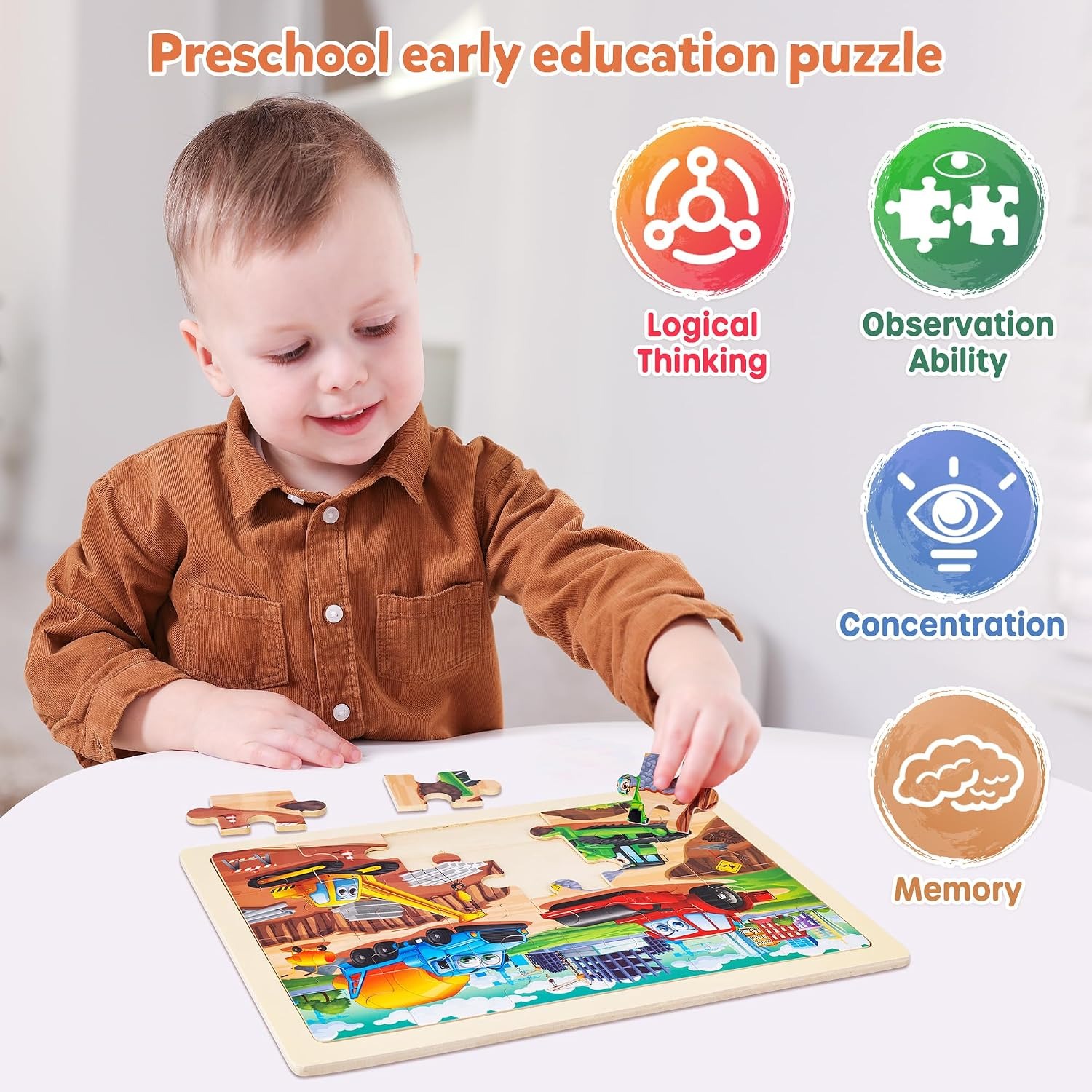
There is a window, usually somewhere between four and six in the evening, where a three or four year old has run out of energy for running but is nowhere near ready to sit still. That window is where a lot of screens get handed over. It is also where a puzzle on the kitchen table earns its keep.
Wooden construction vehicle puzzles work in that window for a specific reason. The subject is already interesting. A child who stops at every roadworks site and points at the excavator does not need to be talked into building a picture of one. The motivation comes built in, which means the adult does not have to sell the activity. You put it on the table and walk away.
What makes a puzzle work at this age
A good first jigsaw is a balancing act. Too few pieces and the child finishes before they are properly engaged. Too many and they hit a wall, get frustrated and push the whole thing on the floor. Twenty-four pieces sits in a useful spot for ages three to five. It takes real effort the first time and gets faster with practice, which is exactly the feeling you want.
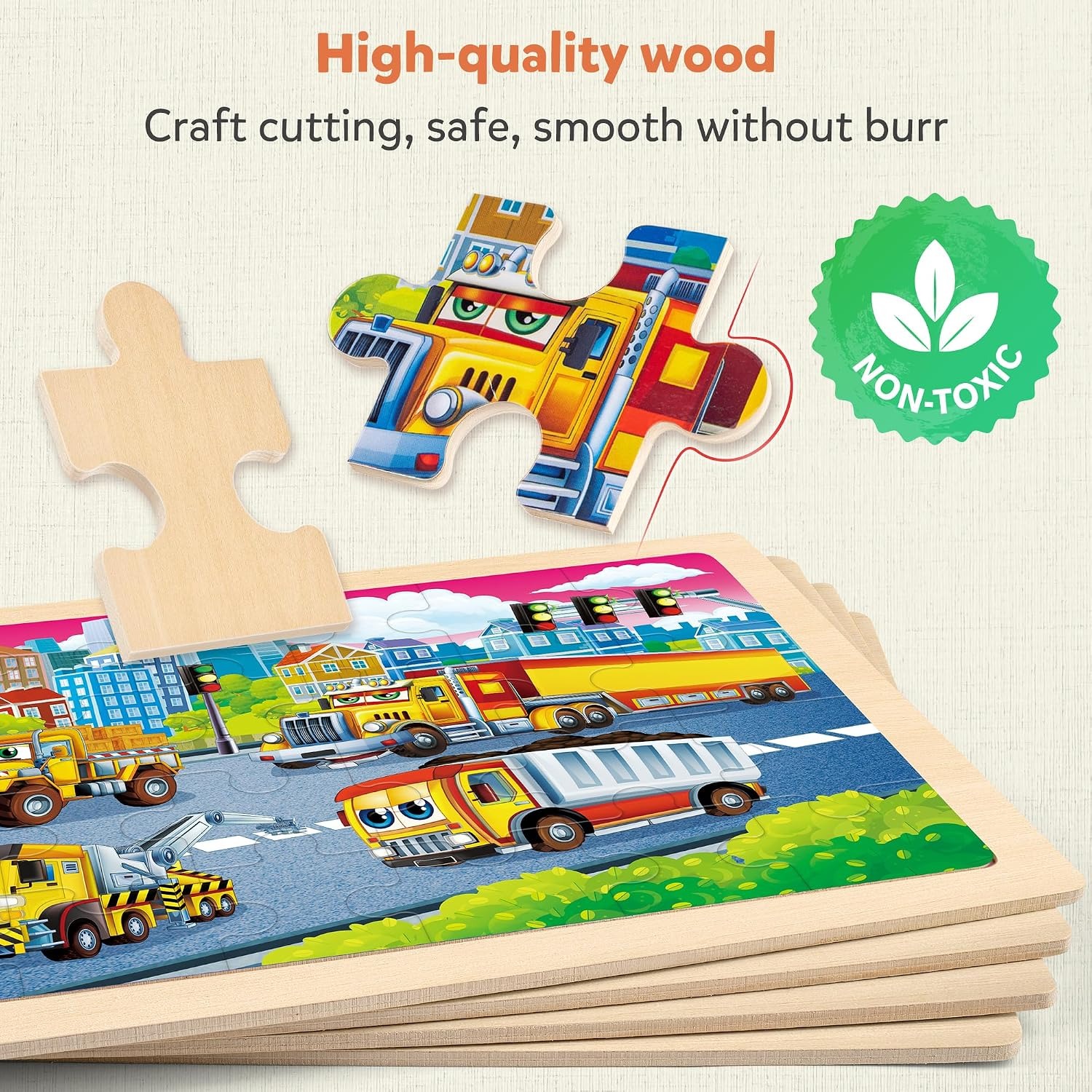
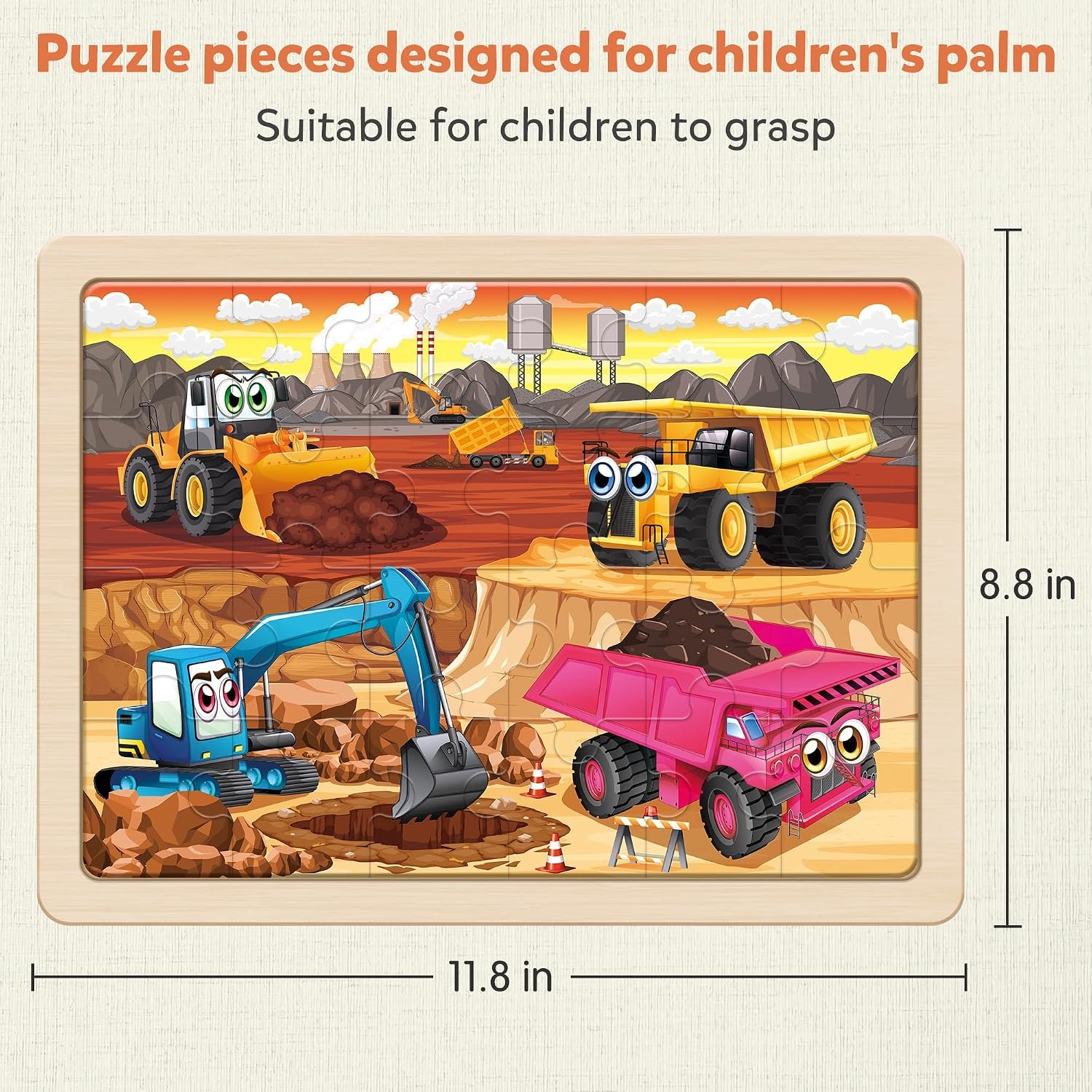
The second thing that matters is the physical piece. Cardboard puzzles are cheap and fine for older kids, but a three-year-old grips hard and does not always line things up before pressing. Cardboard tabs bend, then tear, then stop holding. Wooden pieces, cut thick and polished smooth, take that treatment and keep their shape. The pieces in this set are cut from wood and finished so the edges sit comfortably in small hands.
The third thing is the frame. Every puzzle here sits inside its own wooden frame, and this does more work than it looks like. A frame gives the child an outside edge that is already done, which removes the hardest part of starting. It stops pieces sliding when someone leans on the table. And it means a half-built puzzle can be carried to a shelf and finished after dinner instead of being swept back into the box.
The picture underneath
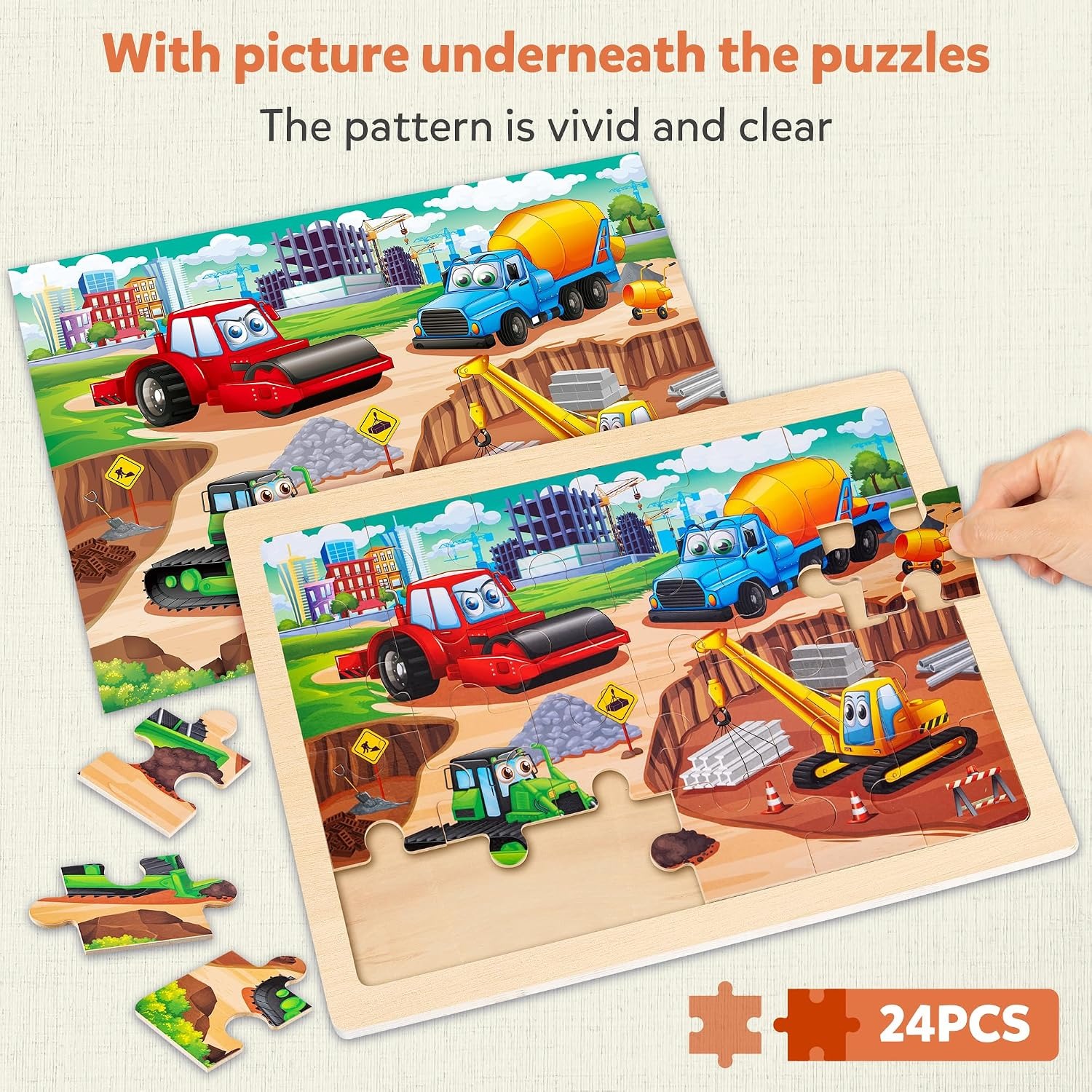
Underneath each puzzle sits a removable paper illustration of the finished scene. This is a small design choice that changes how a child learns.
With the guide in place, a stuck child can lift a corner, see where the yellow digger arm belongs, and carry on. They solve it themselves rather than asking an adult, which keeps the sense of ownership intact. Once they know the scene well, take the paper out. The same puzzle is now genuinely harder, and you have effectively bought a second stage of difficulty without buying a second product.
That is worth remembering when you compare prices. A set with a guide underneath has a longer useful life than one without.
Why four puzzles instead of one
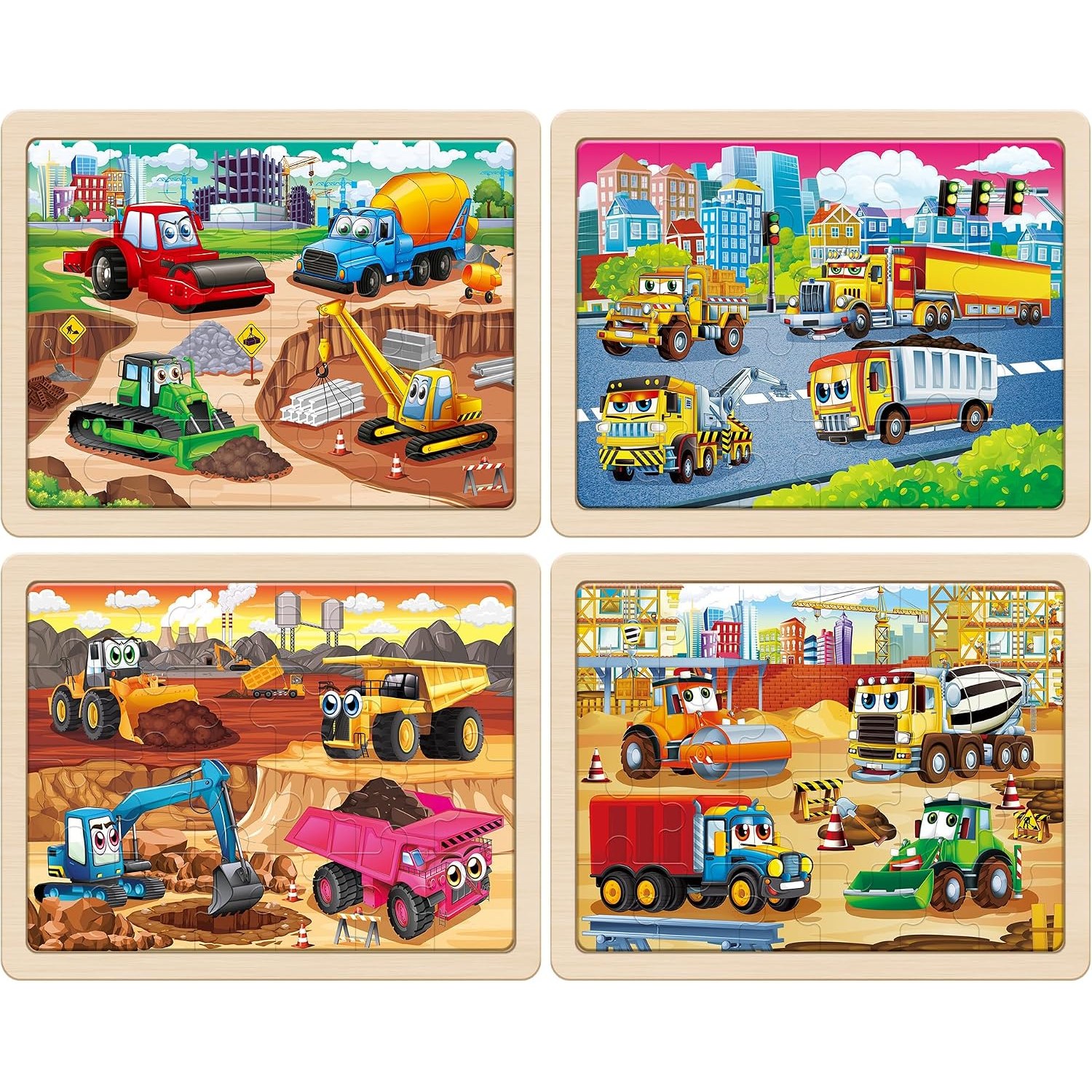
Four separate 24-piece puzzles, 96 pieces in total, is a different proposition from a single large board.
Children at this age rebuild the same puzzle many times. Repetition is how the skill sticks. But after a week or so, one scene becomes automatic and the interest drops off. With four scenes you can rotate. Put two away, bring them out a month later, and they feel fresh again.
Four boards also solves the sibling problem. Two children working on one puzzle rarely ends well. Two children with a board each, sitting opposite one another, usually does. The same goes for playdates and rainy afternoons at the grandparents.
Who this set suits
The recommended age range is 36 months to five years, and the skill level is listed as beginner. In practice:
A child who has mastered chunky peg puzzles and simple six-piece trays is ready. A child who has never done a jigsaw at all may need an adult sitting alongside for the first few attempts, which is fine and usually only takes a session or two.
A child of five or six who already does 50-piece puzzles will find these quick. They may still enjoy them for speed runs or for helping a younger sibling, but if the child is the only one in the house, look a size up.
The theme is construction vehicles throughout, so this is a strong pick for a child in a digger phase and a weaker one for a child who only cares about dinosaurs. That sounds obvious, but theme matters more than almost anything else at three.
How to choose between puzzle sets
A few things to compare when you are looking at wooden puzzles for preschoolers.
Count the pieces per puzzle, not just the total. A set advertising 96 pieces might be one big puzzle, which is a very different task from four small ones. Here it is four boards of 24.
Check whether there is a frame. Framed trays are far more forgiving for young children than loose puzzles built on an open table.
Check the finished size. These measure 23.8 by 31.3 cm each, which is big enough that individual pieces are easy to handle and small enough to fit on a child-sized table.
Check the material. Wood costs more than card but survives the age group it is sold to. For a toy that will be built and dismantled dozens of times, that usually pays off.
Looking after them
Wooden toys ask very little, but they do ask for dryness. Wipe the pieces with a dry or slightly damp cloth and let them dry completely before they go away. Never soak them, never put them in a dishwasher, and bring them inside if they end up in the garden.
Store the pieces in their frames inside the box, lying flat. That one habit prevents most missing-piece dramas, because the frame shows a gap immediately if something is not there. A quick count to 24 before the lid goes on makes it a game rather than a chore.
Keep the box out of direct sun. Printed colour on any toy fades eventually under a sunny window.
As a gift
This set gifts well for a few practical reasons. It arrives as one box containing four things, so it reads as generous without being a mountain of plastic. It needs no batteries, no charging and no adult setup, which matters when a child opens it mid-party. It is quiet. And it works for boys and girls without any awkward assumptions.
If you are buying for a child you do not know well, construction vehicles are one of the safest themes at three and four. Most children in that bracket have an opinion about diggers, and the opinion is usually positive.
The short version
Four wooden puzzles, 24 pieces each, built around construction vehicles, each one framed with a picture guide underneath. Aimed at ages three to five, beginner level, no batteries, no assembly, 0.72 kg in total.
It solves a real problem, which is finding something a young child will sit down with and finish on their own. The wooden pieces hold up to the handling they will get. The frames keep the work tidy. The guide underneath means the puzzle grows slightly harder once you remove it.
If you have a child who points at every excavator on the way to nursery, this is an easy yes. If they are already building 50-piece puzzles, buy a size up instead.